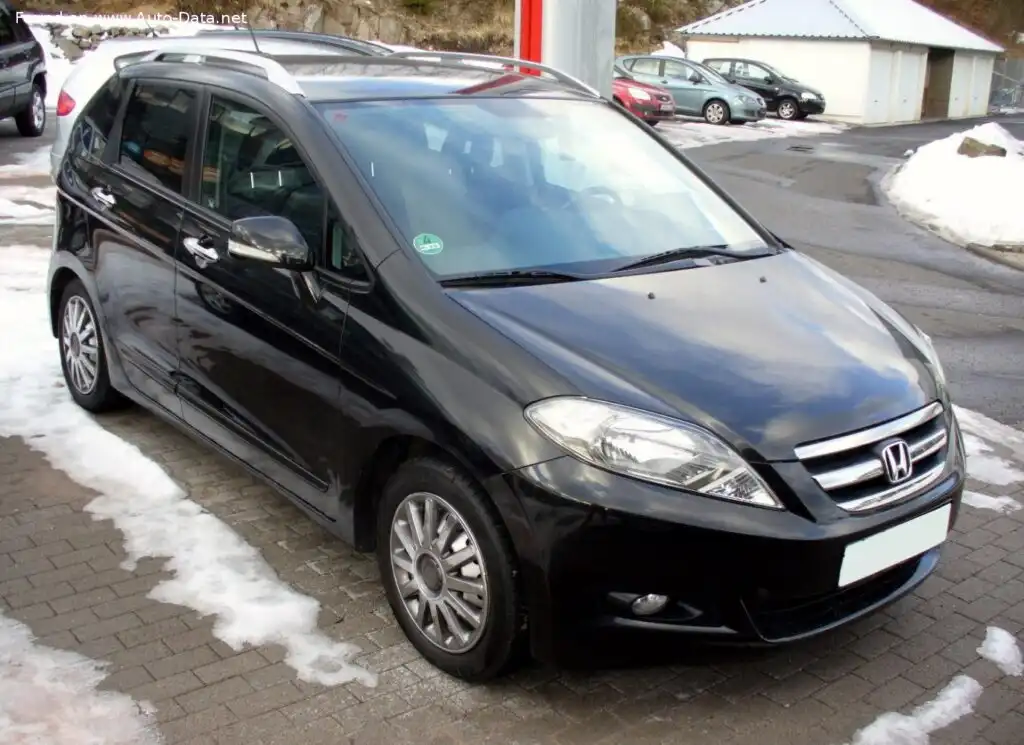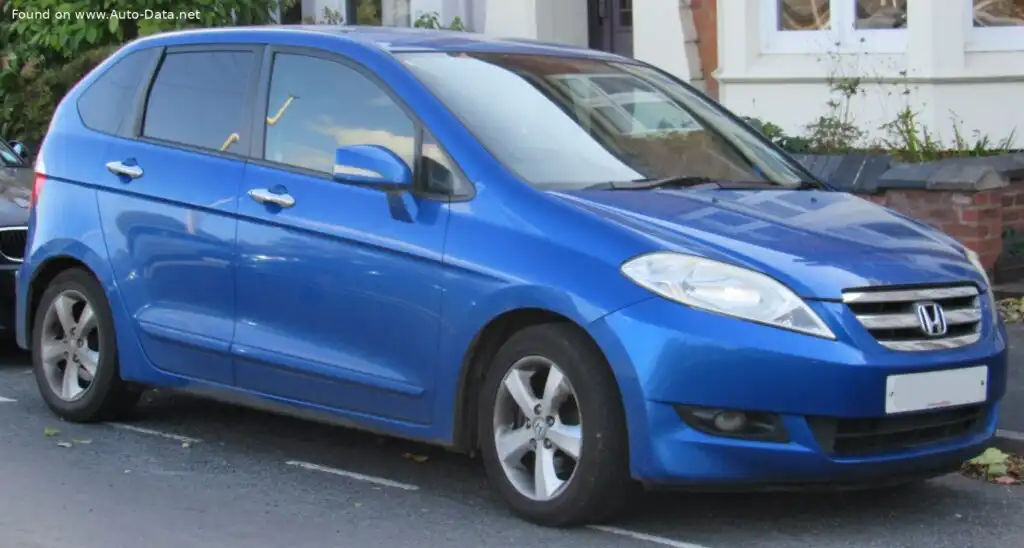
The Honda FR-V, marketed as the Honda Edix in Japan, was a unique and somewhat unconventional MPV (Multi-Purpose Vehicle) produced by Honda between 2004 and 2007. Distinguished by its three-abreast seating configuration in both rows – a rarity in the segment – the FR-V aimed to provide six-passenger capacity in a relatively compact footprint. The 1.7 i 16V variant, producing 125 horsepower, represented the entry-level engine option in many European markets, offering a balance between affordability and practicality. This model played a niche role, appealing to families prioritizing passenger space over outright performance.
Technical Specifications
| Brand | Honda |
| Model | FR-V |
| Generation | FR-V/Edix |
| Type (Engine) | 1.7 i 16V (125 Hp) |
| Start of production | 2004 |
| End of production | 2007 |
| Powertrain Architecture | Internal Combustion engine |
| Body type | MPV |
| Seats | 6 |
| Doors | 5 |
| Fuel consumption (urban) | 9.3 l/100 km (25.3 US mpg) |
| Fuel consumption (extra urban) | 6.5 l/100 km (36.2 US mpg) |
| Fuel consumption (combined) | 7.5 l/100 km (31.4 US mpg) |
| Fuel Type | Petrol (Gasoline) |
| Acceleration 0 – 100 km/h | 12.3 sec |
| Acceleration 0 – 62 mph | 12.3 sec |
| Acceleration 0 – 60 mph | 11.7 sec |
| Maximum speed | 182 km/h (113.09 mph) |
| Weight-to-power ratio | 11.2 kg/Hp |
| Weight-to-torque ratio | 9.1 kg/Nm |
| Power | 125 Hp @ 6300 rpm |
| Torque | 154 Nm @ 4800 rpm (113.58 lb.-ft. @ 4800 rpm) |
| Engine layout | Front, Transverse |
| Engine Model/Code | D17A2 |
| Engine displacement | 1668 cm3 (101.79 cu. in.) |
| Number of cylinders | 4 |
| Engine configuration | Inline |
| Cylinder Bore | 75 mm (2.95 in.) |
| Piston Stroke | 94.4 mm (3.72 in.) |
| Compression ratio | 9.9:1 |
| Number of valves per cylinder | 4 |
| Fuel injection system | Multi-port manifold injection |
| Engine aspiration | Naturally aspirated engine |
| Valvetrain | DOHC |
| Engine oil capacity | 3.5 l (3.7 US qt | 3.08 UK qt) |
| Coolant capacity | 5.5 l (5.81 US qt | 4.84 UK qt) |
| Kerb Weight | 1395 kg (3075.45 lbs.) |
| Max. weight | 1890 kg (4166.74 lbs.) |
| Max load | 495 kg (1091.29 lbs.) |
| Trunk (boot) space – minimum | 439 l (15.5 cu. ft.) |
| Trunk (boot) space – maximum | 1049 l (37.05 cu. ft.) |
| Fuel tank capacity | 58 l (15.32 US gal | 12.76 UK gal) |
| Length | 4285 mm (168.7 in.) |
| Width | 1810 mm (71.26 in.) |
| Height | 1610 mm (63.39 in.) |
| Wheelbase | 2680 mm (105.51 in.) |
| Front track | 1550 mm (61.02 in.) |
| Rear track | 1560 mm (61.42 in.) |
| Drivetrain Architecture | Front wheel drive |
| Number of gears | 5 |
| Gearbox type | Manual transmission |
| Front suspension | Spring Strut |
| Rear suspension | Double wishbone |
| Front brakes | Ventilated discs |
| Rear brakes | Disc |
| Assisting systems | ABS (Anti-lock braking system) |
| Steering type | Steering rack and pinion |
| Tires size | 195/65 R15 |
INTRODUCTION
The Honda FR-V 1.7 i 16V, launched in 2004, was a key component of Honda’s attempt to carve out a unique space in the European MPV market. Built on the same platform as the Honda Civic (the 1HX0/A3 platform), the FR-V distinguished itself with its innovative seating arrangement. Unlike most MPVs that offered a 2-3 or 2-2-2 configuration, the FR-V provided three individual seats in both the front and second rows, eliminating the traditional bench seat and offering greater flexibility and individual comfort. The 1.7-liter engine variant was positioned as the entry point to the FR-V range, targeting budget-conscious families who still desired the practicality of a six-seater.
Powertrain & Engine Architecture
The heart of the FR-V 1.7 i 16V is the D17A2 engine, a 1.7-liter inline-four cylinder gasoline engine. This engine utilizes a single overhead camshaft (SOHC) design, although it features four valves per cylinder (16V) for improved breathing. Fuel delivery is managed by a multi-point fuel injection system, providing precise fuel metering for optimal combustion. The engine produces 125 horsepower at 6300 rpm and 154 Nm (113.58 lb-ft) of torque at 4800 rpm. The engine is transversely mounted, driving the front wheels. The FR-V 1.7 was typically paired with a five-speed manual transmission, although a four-speed automatic transmission was also available, albeit less common. The automatic transmission was designed for smooth operation and ease of use, prioritizing comfort over sporty performance.
Driving Characteristics
The 1.7-liter engine in the FR-V, coupled with the manual transmission, provided adequate, but not exhilarating, performance. Acceleration from 0 to 60 mph took around 11.7 seconds, and top speed was approximately 113 mph. The engine felt somewhat strained when fully loaded with passengers and luggage, requiring frequent downshifts to maintain momentum, especially on inclines. Compared to the more powerful 1.8-liter and 2.0-liter variants, the 1.7-liter model offered a more economical driving experience but lacked the punch for quick overtaking maneuvers. The automatic transmission further dulled performance, increasing 0-60 times to around 12.3 seconds. The gear ratios were optimized for fuel efficiency rather than outright acceleration.
Equipment & Trim Levels
The FR-V 1.7 i 16V typically came with a reasonable level of standard equipment. This included power steering, central locking, electric front windows, and an audio system. Air conditioning was often standard, but could be optional on some base models. Safety features included ABS brakes and front airbags. Higher trim levels, such as the SE and ES, added features like alloy wheels, rear electric windows, climate control, and upgraded audio systems. Interior upholstery was typically cloth, with a functional and durable design. Optional extras included metallic paint, sunroof, and parking sensors.
Chassis & Braking
The FR-V’s chassis utilized a MacPherson strut suspension at the front and a double wishbone suspension at the rear, providing a comfortable ride quality. The suspension was tuned for everyday driving, prioritizing comfort over sporty handling. The front brakes were ventilated discs, while the rear brakes were solid discs. ABS (Anti-lock Braking System) was standard, enhancing braking performance and stability. The relatively lightweight nature of the 1.7-liter model, weighing in at around 1395 kg (3075 lbs), contributed to its manageable handling characteristics. Stabilizer bars were fitted to both the front and rear axles to reduce body roll during cornering.
Market Reception & Comparison
The Honda FR-V 1.7 i 16V received mixed reviews from automotive critics. While the unique seating arrangement was widely praised, the 1.7-liter engine was often criticized for being underpowered, particularly when the vehicle was fully occupied. Fuel economy was generally considered good, averaging around 31.4 US mpg in combined driving. Compared to other MPVs in its class, such as the Renault Scenic and Citroën Picasso, the FR-V offered a more distinctive design and a more engaging driving experience, but lacked the overall refinement and practicality of some competitors. The 1.8-liter FR-V offered a noticeable performance improvement, while the diesel variants provided superior fuel economy but at a higher initial cost.
Legacy
The Honda FR-V, despite its relatively short production run, remains a somewhat sought-after vehicle among those seeking a unique and practical MPV. The 1.7-liter engine, while not known for its blistering performance, has proven to be reasonably reliable, provided it has been properly maintained. Common issues include occasional oil leaks and wear on the suspension components. Today, the FR-V 1.7 i 16V can be found on the used car market at affordable prices, making it an attractive option for budget-conscious buyers looking for a spacious and versatile vehicle. Its distinctive design and innovative seating arrangement continue to set it apart from more conventional MPVs.