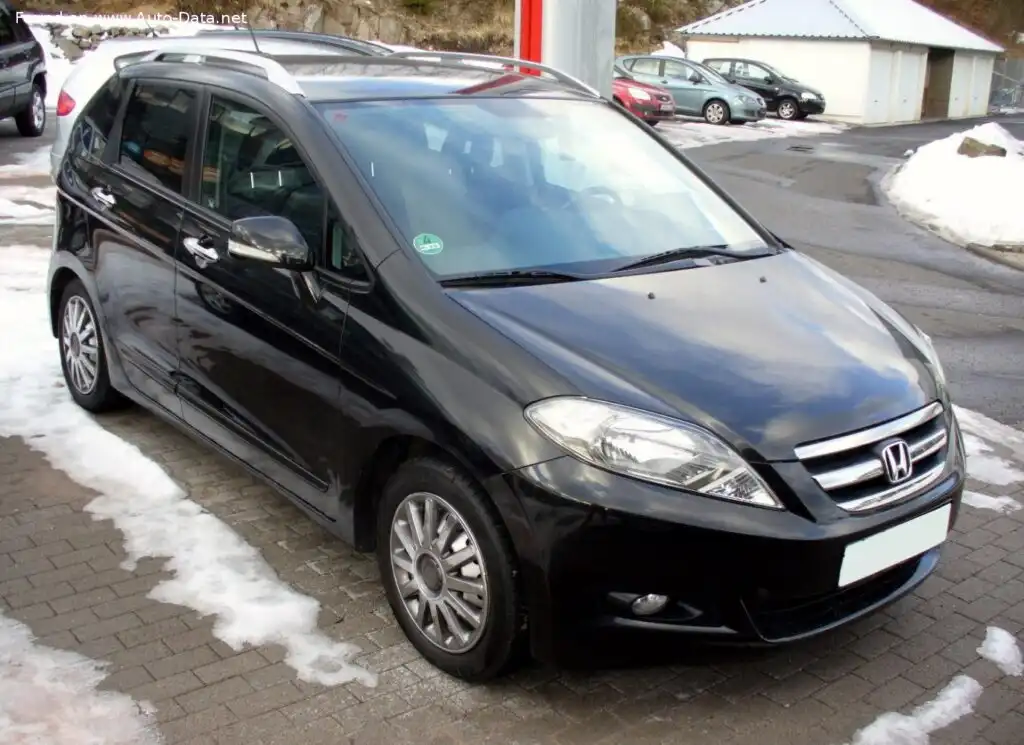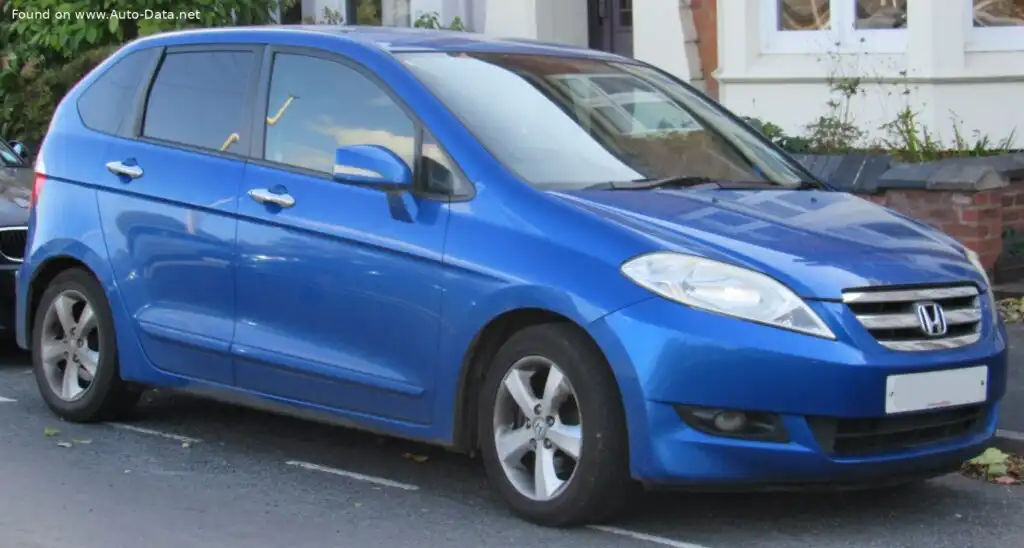
The Honda FR-V, marketed as the Honda Edix in Japan, was a unique and innovative multi-purpose vehicle (MPV) produced by Honda between 2004 and 2007. Distinguished by its distinctive six-seat configuration – three seats in both the front and second rows – the FR-V aimed to provide a more sociable and flexible interior than traditional five or seven-seat MPVs. The 2.0 i-VTEC 16V variant, producing 155 horsepower, represented a mid-range offering within the FR-V lineup, positioned between the base 1.7-liter engine and potentially higher-performance or limited-edition models depending on the market. This model was primarily sold in Europe and Japan, offering a practical and relatively efficient option for families seeking a versatile vehicle.
Technical Specifications
| Brand | Honda |
| Model | FR-V |
| Generation | FR-V/Edix |
| Type (Engine) | 2.0 i-VTEC 16V (155 Hp) |
| Start of production | 2004 |
| End of production | 2007 |
| Powertrain Architecture | Internal Combustion engine |
| Body type | MPV |
| Seats | 6 |
| Doors | 5 |
| Fuel consumption (urban) | 11.7 l/100 km (20.1 US mpg, 24.1 UK mpg, 8.5 km/l) |
| Fuel consumption (extra urban) | 7.3 l/100 km (32.2 US mpg, 38.7 UK mpg, 13.7 km/l) |
| Fuel consumption (combined) | 8.9 l/100 km (26.4 US mpg, 31.7 UK mpg, 11.2 km/l) |
| Fuel Type | Petrol (Gasoline) |
| Acceleration 0 – 100 km/h | 10.5 sec |
| Acceleration 0 – 62 mph | 10.5 sec |
| Acceleration 0 – 60 mph | 10 sec |
| Maximum speed | 195 km/h (121.17 mph) |
| Weight-to-power ratio | 9.5 kg/Hp, 105.4 Hp/tonne |
| Weight-to-torque ratio | 7.7 kg/Nm, 129.3 Nm/tonne |
| Power | 155 Hp @ 6000 rpm |
| Power per litre | 77.6 Hp/l |
| Torque | 190 Nm @ 4500 rpm (140.14 lb.-ft. @ 4500 rpm) |
| Engine layout | Front, Transverse |
| Engine displacement | 1998 cm3 (121.93 cu. in.) |
| Number of cylinders | 4 |
| Engine configuration | Inline |
| Cylinder Bore | 86 mm (3.39 in.) |
| Piston Stroke | 86 mm (3.39 in.) |
| Compression ratio | 9.8:1 |
| Number of valves per cylinder | 4 |
| Fuel injection system | Multi-port manifold injection |
| Engine aspiration | Naturally aspirated engine |
| Valvetrain | DOHC |
| Engine oil capacity | 4.2 l (4.44 US qt | 3.7 UK qt) |
| Coolant capacity | 6.3 l (6.66 US qt | 5.54 UK qt) |
| Kerb Weight | 1470 kg (3240.8 lbs.) |
| Max. weight | 1970 kg (4343.11 lbs.) |
| Max load | 500 kg (1102.31 lbs.) |
| Trunk (boot) space – minimum | 439 l (15.5 cu. ft.) |
| Trunk (boot) space – maximum | 1049 l (37.05 cu. ft.) |
| Fuel tank capacity | 58 l (15.32 US gal | 12.76 UK gal) |
| Length | 4285 mm (168.7 in.) |
| Width | 1810 mm (71.26 in.) |
| Height | 1610 mm (63.39 in.) |
| Wheelbase | 2680 mm (105.51 in.) |
| Front track | 1550 mm (61.02 in.) |
| Rear track | 1560 mm (61.42 in.) |
| Drivetrain Architecture | Front wheel drive |
| Number of gears | 6 |
| Gearbox type | Manual transmission |
| Front suspension | Spring Strut |
| Rear suspension | Double wishbone |
| Front brakes | Ventilated discs |
| Rear brakes | Disc |
| Assisting systems | ABS (Anti-lock braking system) |
| Steering type | Steering rack and pinion |
| Tires size | 205/55 R16 |
| Wheel rims size | 6.5J X 16 |
Powertrain & Engine Architecture
The heart of the FR-V 2.0 i-VTEC was Honda’s K20A series engine, a 1.998-liter (2.0L) inline-four cylinder powerplant. This engine utilized Honda’s intelligent Variable Valve Timing and Lift Electronic Control (i-VTEC) system, which allowed for optimized valve timing and lift based on engine speed and load. This technology contributed to a balance of fuel efficiency and performance. The engine featured multi-point fuel injection and a compression ratio of 9.8:1. The 6-speed manual transmission was the standard offering, providing drivers with precise control over the engine’s power delivery. The transmission was chosen to complement the engine’s characteristics, offering relatively short ratios for responsive acceleration.
Driving Characteristics
The 155 hp 2.0-liter engine in the FR-V provided adequate performance for everyday driving. Acceleration from 0 to 60 mph took around 10 seconds, and the top speed was approximately 121 mph. While not a particularly sporty vehicle, the FR-V offered a smooth and refined driving experience. The six-speed manual transmission allowed drivers to keep the engine in its optimal power band, providing decent responsiveness. Compared to the base 1.7-liter engine, the 2.0-liter offered a noticeable improvement in acceleration and overall drivability, making it a more suitable choice for drivers who frequently carried passengers or cargo. The relatively light curb weight of around 3240 lbs helped to mitigate the effects of the engine’s modest power output.
Equipment & Trim Levels
The FR-V 2.0 i-VTEC typically came equipped with a reasonable level of standard features. These included air conditioning, power windows and locks, a CD player, and ABS brakes. Higher trim levels, depending on the market, could add features such as alloy wheels, a sunroof, and upgraded interior trim. The interior was designed with practicality in mind, featuring durable materials and a functional layout. The unique six-seat configuration offered individual seats for all passengers, enhancing comfort and convenience. Optional extras often included navigation systems and premium audio systems.
Chassis & Braking
The FR-V utilized a front-wheel-drive layout with a MacPherson strut suspension in the front and a double wishbone suspension in the rear. This suspension setup provided a comfortable ride and decent handling characteristics. The front brakes were ventilated discs, while the rear brakes were solid discs, providing adequate stopping power for the vehicle’s weight and performance. ABS (Anti-lock Braking System) was standard, enhancing safety during emergency braking situations. The steering was a rack and pinion system, offering precise and responsive steering feel.
Market Reception & Comparison
The Honda FR-V received generally positive reviews from automotive critics, who praised its unique seating configuration, spacious interior, and comfortable ride. However, some critics noted that the styling was somewhat unconventional and that the performance of the 2.0-liter engine was not particularly exciting. Compared to other MPVs in its class, the FR-V offered a more distinctive and sociable interior layout. Fuel economy was respectable, averaging around 26.4 US mpg in combined driving. Reliability was generally good, as expected from a Honda product. The 2.0L version was often seen as a sweet spot, offering a good balance between price, performance, and fuel efficiency compared to the base 1.7L.
Legacy
The Honda FR-V, while not a massive sales success, remains a fondly remembered vehicle for its innovative design and practicality. The K20A engine is known for its durability and reliability, and well-maintained FR-V models continue to be seen on the roads today. In the used car market, the FR-V 2.0 i-VTEC is often sought after by buyers looking for a unique and versatile MPV. Its six-seat configuration and Honda’s reputation for reliability make it a compelling option for families who prioritize practicality and durability. The FR-V demonstrated Honda’s willingness to experiment with unconventional designs and offer vehicles that cater to specific niche markets.