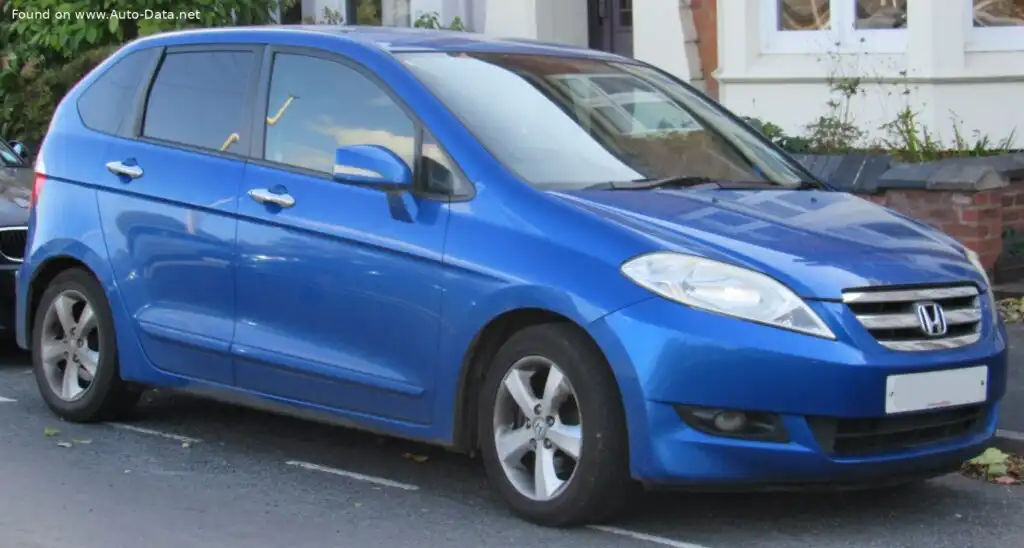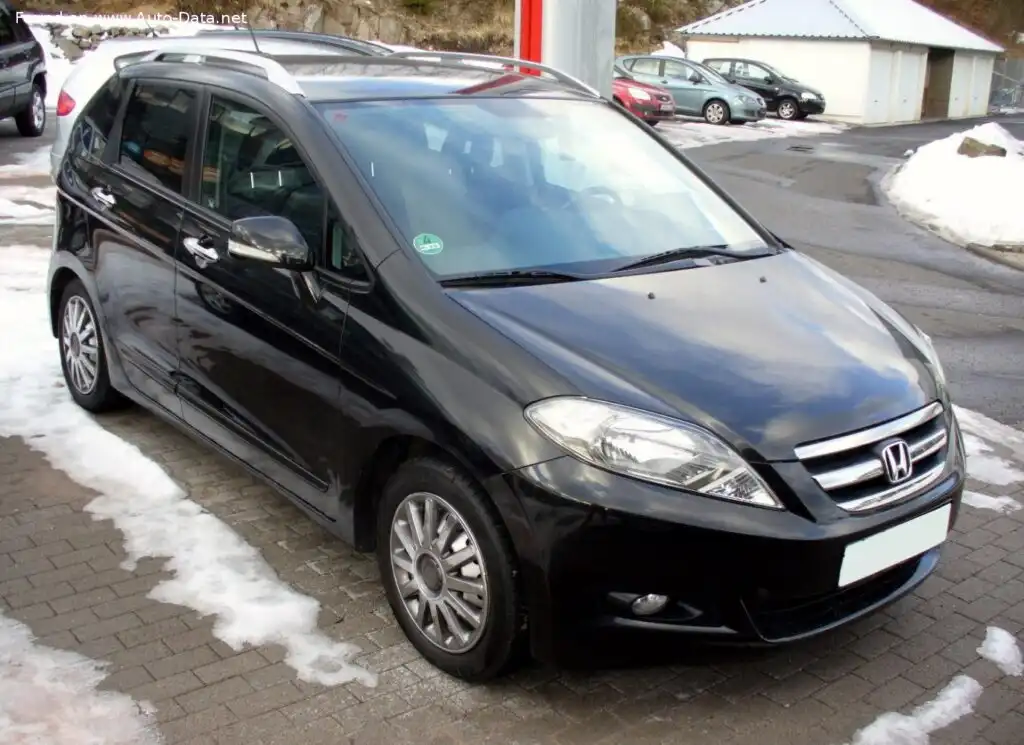
The Honda FR-V, marketed as the Honda Edix in Japan, was a unique and somewhat unconventional MPV (Multi-Purpose Vehicle) produced by Honda between 2004 and 2009. The facelifted version, introduced in 2007, brought styling revisions and minor mechanical updates. This article focuses specifically on the 1.8 i-VTEC variant, producing 140 horsepower, which was available throughout the facelifted model’s production run (2007-2009). This engine and trim level represented a mid-range offering within the FR-V lineup, positioned between the base 1.7-liter engine and the more powerful 2.0-liter variants.
Technical Specifications
| Brand | Honda |
| Model | FR-V |
| Generation | FR-V/Edix (facelift 2007) |
| Type (Engine) | 1.8 i-VTEC (140 Hp) |
| Start of production | 2007 |
| End of production | 2009 |
| Powertrain Architecture | Internal Combustion engine |
| Body type | MPV |
| Seats | 6 |
| Doors | 5 |
| Fuel consumption (urban) | 9.4 l/100 km (25 US mpg, 30.1 UK mpg) |
| Fuel consumption (extra urban) | 6.3 l/100 km (37.3 US mpg, 44.8 UK mpg) |
| Fuel consumption (combined) | 7.5 l/100 km (31.4 US mpg, 37.7 UK mpg) |
| CO2 emissions | 177 g/km |
| Fuel Type | Petrol (Gasoline) |
| Acceleration 0 – 100 km/h | 10.6 sec |
| Acceleration 0 – 62 mph | 10.6 sec |
| Acceleration 0 – 60 mph | 10.1 sec |
| Maximum speed | 190 km/h (118.06 mph) |
| Weight-to-power ratio | 10.2 kg/Hp |
| Weight-to-torque ratio | 8.2 kg/Nm |
| Power | 140 Hp @ 6300 rpm |
| Torque | 174 Nm @ 4300 rpm (128.34 lb.-ft. @ 4300 rpm) |
| Engine layout | Front, Transverse |
| Engine Model/Code | R18A1 |
| Engine displacement | 1799 cm3 (109.78 cu. in.) |
| Number of cylinders | 4 |
| Engine configuration | Inline |
| Fuel injection system | Multi-port manifold injection |
| Engine aspiration | Naturally aspirated |
| Engine oil capacity | 3.7 l (3.91 US qt, 3.26 UK qt) |
| Coolant capacity | 4.9 l (5.18 US qt, 4.31 UK qt) |
| Kerb Weight | 1423 kg (3137.18 lbs) |
| Max. weight | 1975 kg (4354.13 lbs) |
| Max load | 552 kg (1216.95 lbs) |
| Trunk (boot) space – minimum | 439 l (15.5 cu. ft.) |
| Trunk (boot) space – maximum | 1049 l (37.05 cu. ft.) |
| Fuel tank capacity | 58 l (15.32 US gal, 12.76 UK gal) |
| Permitted trailer load with brakes (12%) | 1500 kg (3306.93 lbs) |
| Permitted trailer load without brakes | 500 kg (1102.31 lbs) |
| Permitted towbar download | 90 kg (198.42 lbs) |
| Length | 4285 mm (168.7 in) |
| Width | 1810 mm (71.26 in) |
| Width including mirrors | 2113 mm (83.19 in) |
| Height | 1610-1770 mm (63.39 – 69.69 in) |
| Minimum turning circle | 10.4 m (34.12 ft) |
| Drivetrain Architecture | Front wheel drive |
| Number of gears and type of gearbox | 6 gears, manual transmission |
| Front brakes | Ventilated discs |
| Rear brakes | Disc |
| Assisting systems | ABS (Anti-lock braking system) |
| Tires size | 205/55 R16 91V |
| Wheel rims size | 16 |
INTRODUCTION
The Honda FR-V, launched in 2004, distinguished itself with its unique seating arrangement – three seats in both the front and rear rows. This configuration, combined with its MPV body style, aimed to provide a versatile and spacious vehicle for families. The 2007 facelift brought revised front and rear styling, along with updates to the interior. The 1.8 i-VTEC variant, powered by the R18A1 engine, was a key part of the FR-V range, offering a balance between fuel efficiency and acceptable performance. It was primarily sold in European markets, where the demand for compact MPVs was strong.
Powertrain & Engine Architecture
The heart of the 1.8 i-VTEC FR-V is the R18A1 engine, a 1.8-liter (1799 cc) inline-four cylinder gasoline engine. This engine belongs to Honda’s K-series family, though it’s a distinct design optimized for fuel efficiency and smooth operation. It features a single overhead camshaft (SOHC) and Honda’s intelligent Variable Valve Timing and Lift Electronic Control (i-VTEC) system. The i-VTEC system allows for variable valve timing and lift, optimizing engine performance across a wider range of engine speeds. Fuel delivery is managed by a multi-point fuel injection system. The engine produces 140 horsepower at 6300 rpm and 174 Nm (128.34 lb-ft) of torque at 4300 rpm. The engine is transversely mounted in the front of the vehicle. The 1.8L engine was typically paired with a 6-speed manual transmission, although an automatic transmission was also available, though less common.
Driving Characteristics
The 1.8 i-VTEC FR-V offered a comfortable and refined driving experience, prioritizing usability over outright performance. Acceleration from 0 to 60 mph took around 10.1 seconds, and the top speed was approximately 118 mph. While not particularly sporty, the engine provided sufficient power for everyday driving and highway cruising. The 6-speed manual transmission allowed drivers to keep the engine in its optimal power band, while the automatic transmission offered convenience, albeit with a slight reduction in responsiveness. Compared to the 2.0-liter FR-V, the 1.8L felt less powerful, especially when fully loaded with passengers and luggage. However, it offered better fuel economy and a more relaxed driving experience.
Equipment & Trim Levels
The 1.8 i-VTEC FR-V typically came equipped with a reasonable level of standard features. These included air conditioning, power windows, power door locks, and a basic audio system. Higher trim levels added features such as alloy wheels, a more advanced audio system with CD changer, climate control, and optional extras like parking sensors and a sunroof. Interior upholstery was typically cloth, with options for upgraded materials on higher trims. The dashboard layout was functional and straightforward, with easy-to-read gauges and controls. The unique seating arrangement meant that the rear seats could be folded flat or even removed completely, providing a versatile cargo space.
Chassis & Braking
The FR-V utilized a front-wheel-drive platform with independent MacPherson strut suspension in the front and a torsion beam suspension in the rear. The braking system consisted of ventilated discs on the front wheels and solid discs on the rear. Anti-lock Braking System (ABS) was standard. The suspension was tuned for comfort, providing a smooth ride over most road surfaces. The torsion beam rear suspension was a cost-effective solution, but it didn’t offer the same level of handling precision as a fully independent rear suspension. The 1.8L models, being lighter than the 2.0L variants, generally exhibited slightly more agile handling.
Market Reception & Comparison
The Honda FR-V was generally well-received by automotive critics for its innovative seating arrangement and practicality. However, its somewhat unconventional styling and limited performance were points of criticism. The 1.8 i-VTEC variant was praised for its fuel efficiency and smooth engine, making it a good choice for drivers who prioritized economy and comfort. Compared to other MPVs in its class, such as the Renault Scenic and Citroën C4 Picasso, the FR-V offered a unique seating configuration but lacked the overall refinement and spaciousness of some competitors. The 1.8L engine offered better fuel economy than the 2.0L, but at the expense of performance. The 1.7L engine was even more economical but felt underpowered.
Legacy
The Honda FR-V, while not a massive sales success, remains a distinctive and interesting vehicle. The R18A1 engine is known for its reliability and durability, and well-maintained examples can still provide years of service. On the used car market, the 1.8 i-VTEC FR-V represents a relatively affordable and practical option for families seeking a versatile MPV. Its unique seating arrangement and Honda’s reputation for reliability continue to appeal to a niche group of buyers. While it may not be the most exciting vehicle on the road, the FR-V offers a unique blend of practicality, efficiency, and reliability.