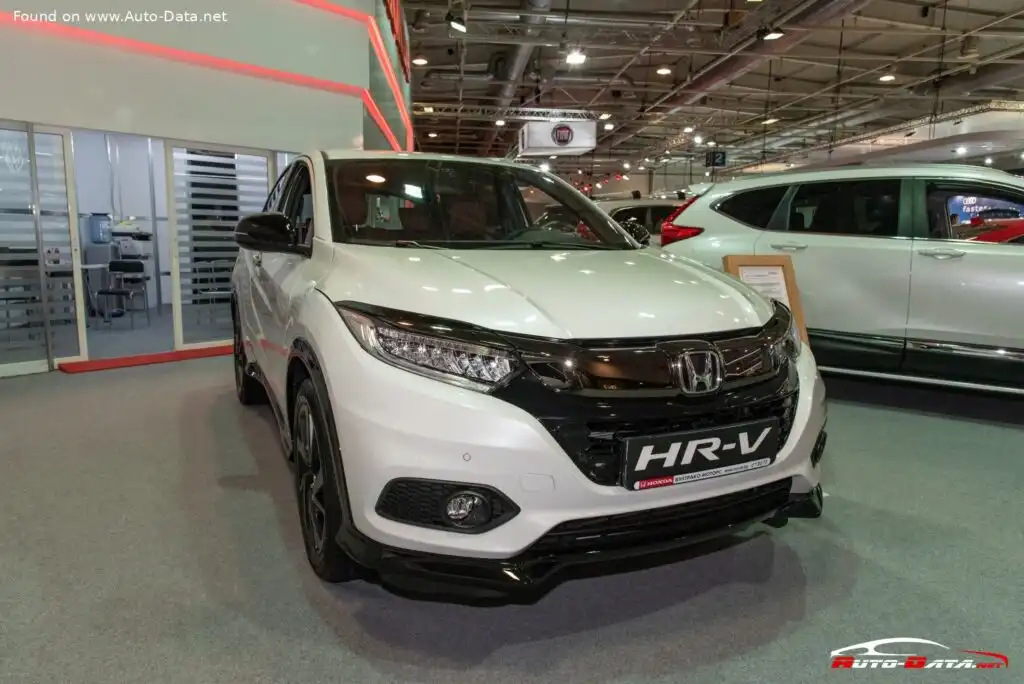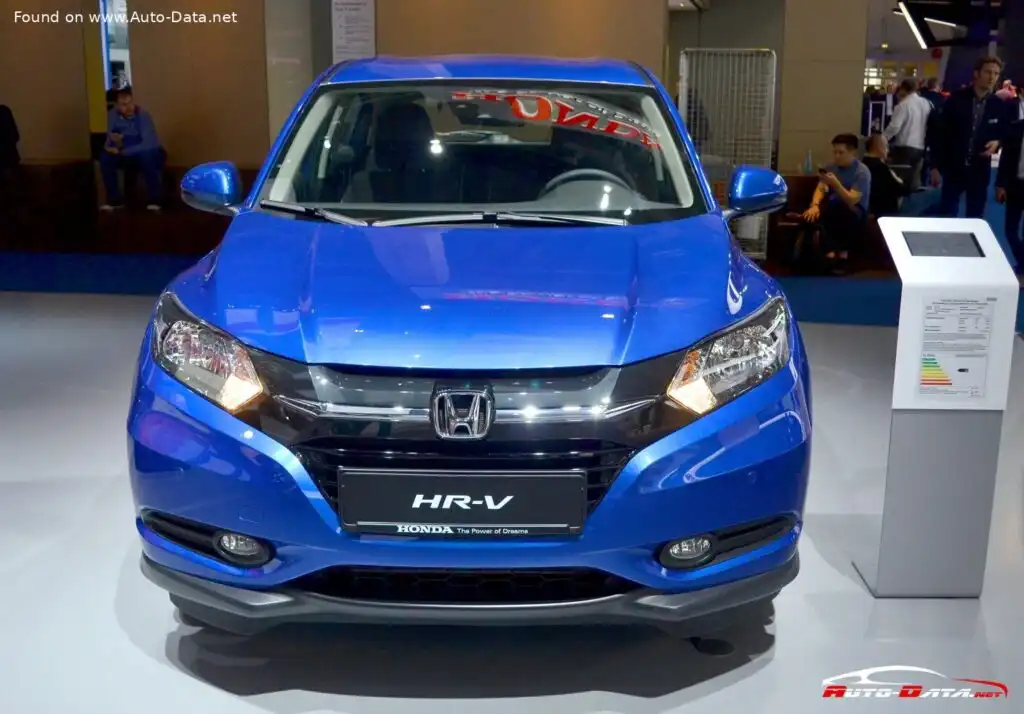
The Honda HR-V II 1.8 i-VTEC (141 hp) was a front-wheel-drive subcompact crossover SUV produced by Honda from 2016 to 2018. Positioned as a mid-range offering within the second-generation HR-V lineup (RU series), it served as a more accessible alternative to the higher-trim levels, offering a balance of fuel efficiency and practicality for the North American market and beyond. This model represented Honda’s entry into the burgeoning subcompact SUV segment, aiming to attract buyers seeking a versatile and economical vehicle. It was based on the Honda Global Small Platform, shared with the Honda Fit, emphasizing space efficiency and a relatively lightweight construction.
Technical Specifications
| Brand | Honda |
| Model | HR-V |
| Generation | HR-V II |
| Type (Engine) | 1.8 i-VTEC (141 Hp) |
| Start of production | 2016 |
| End of production | 2018 |
| Powertrain Architecture | Internal Combustion engine |
| Body type | SUV, Crossover |
| Seats | 5 |
| Doors | 5 |
| Fuel consumption (urban) | 9.4 l/100 km (25 US mpg) |
| Fuel consumption (extra urban) | 7.1 l/100 km (33.1 US mpg) |
| Fuel consumption (combined) | 8.4 l/100 km (28 US mpg) |
| Fuel Type | Petrol (Gasoline) |
| Weight-to-power ratio | 9.3 kg/Hp |
| Weight-to-torque ratio | 7.6 kg/Nm |
| Power | 141 Hp @ 6500 rpm |
| Power per litre | 78.4 Hp/l |
| Torque | 172 Nm @ 4300 rpm (126.86 lb.-ft. @ 4300 rpm) |
| Maximum engine speed | 6700 rpm |
| Engine layout | Front, Transverse |
| Engine Model/Code | R18Z9 |
| Engine displacement | 1799 cm3 (109.78 cu. in.) |
| Number of cylinders | 4 |
| Engine configuration | Inline |
| Cylinder Bore | 81 mm (3.19 in.) |
| Piston Stroke | 87.3 mm (3.44 in.) |
| Compression ratio | 10.6:1 |
| Number of valves per cylinder | 4 |
| Fuel injection system | Multi-port manifold injection |
| Engine aspiration | Naturally aspirated engine |
| Valvetrain | SOHC i-VTEC |
| Engine oil capacity | 3.7 l (3.91 US qt | 3.26 UK qt) |
| Coolant capacity | 5.24 l (5.54 US qt | 4.61 UK qt) |
| Kerb Weight | 1310 kg (2888.06 lbs.) |
| Trunk (boot) space – minimum | 431 l (15.22 cu. ft.) |
| Trunk (boot) space – maximum | 1456 l (51.42 cu. ft.) |
| Fuel tank capacity | 50 l (13.21 US gal | 11 UK gal) |
| Length | 4294 mm (169.06 in.) |
| Width | 1772 mm (69.76 in.) |
| Width including mirrors | 2019 mm (79.49 in.) |
| Height | 1605 mm (63.19 in.) |
| Wheelbase | 2610 mm (102.76 in.) |
| Front track | 1535 mm (60.43 in.) |
| Rear track | 1540 mm (60.63 in.) |
| Ride height (ground clearance) | 170 mm (6.69 in.) |
| Minimum turning circle | 11.4 m (37.4 ft.) |
| Drivetrain Architecture | Front wheel drive |
| Number of gears | 6 |
| Gearbox type | Manual transmission |
| Front suspension | Independent type McPherson |
| Rear suspension | Semi-independent, coil spring |
| Front brakes | Ventilated discs |
| Rear brakes | Disc |
| Assisting systems | ABS (Anti-lock braking system) |
| Steering type | Steering rack and pinion |
| Tires size | 215/55 R17 94V |
| Wheel rims size | 17 |
INTRODUCTION
The Honda HR-V II 1.8 i-VTEC (141 hp) debuted in 2016 as part of the second generation of the HR-V, a model that had been discontinued for many years and revived to meet the growing demand for compact SUVs. This iteration of the HR-V was a significant departure from its predecessor, adopting a more modern and refined design. The 1.8L engine and manual transmission combination was aimed at buyers who prioritized fuel economy and a more engaging driving experience, though it was often overshadowed by the continuously variable transmission (CVT) equipped models. It was sold in North America, Europe, Asia, and other global markets, with slight variations in trim and features depending on the region.
Powertrain & Engine Architecture
At the heart of the HR-V 1.8 i-VTEC was the R18Z9 engine, a 1.8-liter inline-four cylinder gasoline engine. This engine belonged to Honda’s K-series family, known for its reliability and efficiency. The “i-VTEC” system (intelligent Variable Valve Timing and Lift Electronic Control) allowed for variable control of both valve timing and lift, optimizing performance and fuel economy across a wide range of engine speeds. The R18Z9 utilized multi-point fuel injection, delivering fuel directly into the intake ports. The engine’s architecture was relatively simple, contributing to its durability. The 6-speed manual transmission provided drivers with direct control over gear selection, offering a more connected feel compared to the CVT option. This transmission was chosen for its affordability and relatively lightweight design.
Driving Characteristics
The 141 horsepower and 172 Nm (126.86 lb-ft) of torque produced by the 1.8L engine, coupled with the 6-speed manual transmission, resulted in adequate, but not exhilarating, performance. Acceleration was reasonably brisk for everyday driving, but the HR-V wasn’t designed for sporty driving. The manual transmission allowed for precise gear changes, and the engine was willing to rev, but the overall experience was geared towards efficiency rather than outright speed. The gear ratios were tuned for fuel economy, meaning that highway cruising was comfortable, but passing maneuvers required downshifting. Compared to the higher-output engine options available in some markets, the 1.8L felt noticeably less powerful, especially when fully loaded with passengers and cargo.
Equipment & Trim Levels
The HR-V 1.8 i-VTEC typically came standard with features such as air conditioning, power windows and locks, a basic audio system with Bluetooth connectivity, and a rearview camera. Higher trim levels added features like alloy wheels, a touchscreen infotainment system, Honda’s LaneWatch blind spot display, and automatic climate control. Interior upholstery was typically cloth, with options for upgraded materials on higher trims. The interior design prioritized practicality and space utilization, with Honda’s “Magic Seat” system allowing for versatile cargo configurations. Optional extras included a sunroof, navigation system, and premium audio system.
Chassis & Braking
The HR-V II utilized a front-wheel-drive chassis with an independent McPherson strut suspension in the front and a semi-independent torsion beam suspension in the rear. This setup provided a comfortable ride quality, suitable for everyday commuting. The front brakes were ventilated discs, while the rear brakes were solid discs. Anti-lock Braking System (ABS) was standard. The suspension was tuned for comfort rather than sporty handling, resulting in a slight degree of body roll during cornering. The relatively lightweight construction of the HR-V helped to mitigate the effects of the suspension setup.
Market Reception & Comparison
The Honda HR-V II 1.8 i-VTEC was generally well-received by critics for its fuel efficiency, spacious interior, and versatile cargo area. However, some reviewers noted that the engine felt underpowered, especially when compared to competitors. The manual transmission was praised by enthusiasts for providing a more engaging driving experience, but it was less popular among mainstream buyers who preferred the convenience of an automatic transmission. Compared to the higher-trim HR-V models with more powerful engines, the 1.8L version offered a more affordable entry point into the HR-V lineup, but at the expense of performance. Fuel economy was competitive within its class, and reliability was generally considered to be excellent, typical of Honda products.
Legacy
The Honda HR-V II 1.8 i-VTEC has proven to be a reliable and durable vehicle in the used car market. The R18Z9 engine is known for its longevity, and the manual transmission is relatively simple and robust. While not a performance standout, the 1.8L HR-V remains a popular choice for buyers seeking a fuel-efficient and practical subcompact SUV. Its reputation for reliability and Honda’s strong brand image continue to make it a desirable option in the used car market, often commanding reasonable prices compared to other vehicles in its class. The model helped solidify Honda’s position in the growing subcompact SUV segment and paved the way for future iterations of the HR-V.