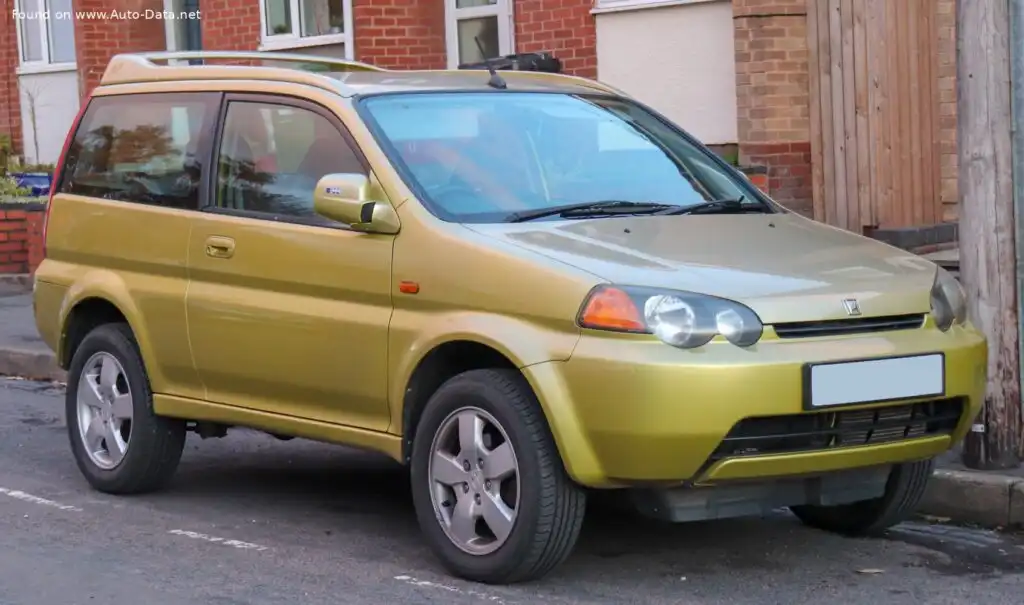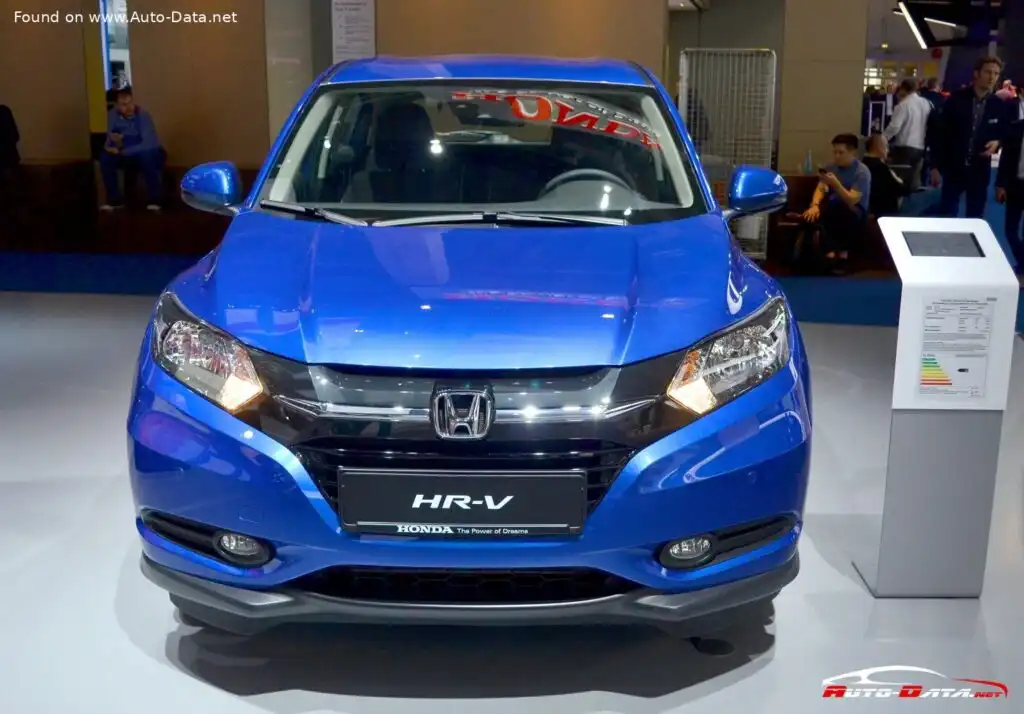
The Honda HR-V III 2.0 (158 Hp) CVT, marketed in the United States from June 2022 to May 2025, represents the third generation of Honda’s popular subcompact crossover SUV. Positioned as a mainstream offering within the HR-V lineup, this variant aimed to balance fuel efficiency, practicality, and affordability for the North American market. It’s built upon the Honda Global Small Platform, shared with other Honda models like the Civic, and represents a significant redesign compared to the previous generation HR-V sold in the US. This version replaced the previous, smaller HR-V and offered a more spacious interior and improved driving dynamics.
Technical Specifications
| Brand | Honda |
| Model | HR-V |
| Generation | HR-V III |
| Type (Engine) | 2.0 (158 Hp) CVT (USA) |
| Start of production | June, 2022 |
| End of production | May, 2025 |
| Powertrain Architecture | Internal Combustion engine |
| Body type | SUV, Crossover |
| Seats | 5 |
| Doors | 5 |
| Fuel consumption (urban) | 9 l/100 km (26.1 US mpg) |
| Fuel consumption (extra urban) | 7.4 l/100 km (31.8 US mpg) |
| Fuel consumption (combined) | 8.4 l/100 km (28 US mpg) |
| Fuel Type | Petrol (Gasoline) |
| Emission standard | LEV3-SULEV30 |
| Weight-to-power ratio | 9.1 kg/Hp |
| Weight-to-torque ratio | 7.7 kg/Nm |
| Power | 158 Hp @ 6500 rpm |
| Power per litre | 79.2 Hp/l |
| Torque | 187 Nm @ 4200 rpm (137.92 lb.-ft. @ 4200 rpm) |
| Maximum engine speed | 6800 rpm |
| Engine layout | Front, Transverse |
| Engine Model/Code | K20Z5 |
| Engine displacement | 1996 cm3 (121.8 cu. in.) |
| Number of cylinders | 4 |
| Engine configuration | Inline |
| Cylinder Bore | 86 mm (3.39 in.) |
| Piston Stroke | 85.9 mm (3.38 in.) |
| Compression ratio | 10.8:1 |
| Number of valves per cylinder | 4 |
| Fuel injection system | Multi-port manifold injection |
| Engine aspiration | Naturally aspirated engine |
| Valvetrain | DOHC, VTEC, Dual VTC |
| Engine oil capacity | 4.2 l (4.44 US qt | 3.7 UK qt) |
| Coolant capacity | 5.93 l (6.27 US qt | 5.22 UK qt) |
| Kerb Weight | 1433-1460 kg (3159.22 – 3218.75 lbs.) |
| Trunk (boot) space – minimum | 691 l (24.4 cu. ft.) |
| Trunk (boot) space – maximum | 1560 l (55.09 cu. ft.) |
| Fuel tank capacity | 53 l (14 US gal | 11.66 UK gal) |
| Length | 4567 mm (179.8 in.) |
| Width | 1839 mm (72.4 in.) |
| Height | 1610-1621 mm (63.39 – 63.82 in.) |
| Wheelbase | 2654 mm (104.49 in.) |
| Front track | 1590 mm (62.6 in.) |
| Rear track | 1605 mm (63.19 in.) |
| Ride height (ground clearance) | 178-185 mm (7.01 – 7.28 in.) |
| Minimum turning circle | 10.7-11.3 m (35.1 – 37.07 ft.) |
| Front brakes | Ventilated discs, 312.42 mm |
| Rear brakes | Disc, 309.88 mm |
| Gearbox | automatic transmission CVT |
INTRODUCTION
The 2022-2025 Honda HR-V 2.0 CVT represents a significant shift for the HR-V in the US market. Unlike its predecessor, which was based on a smaller platform and offered a more budget-focused experience, the third-generation HR-V aimed for a more refined and competitive position against rivals like the Mazda CX-5, Toyota Corolla Cross, and Hyundai Kona. The 2.0-liter engine paired with a continuously variable transmission (CVT) was the sole powertrain option for the US market during its production run, designed to prioritize fuel economy and smooth operation. This configuration was positioned as the standard offering, providing a balance between performance and efficiency for everyday driving.
Powertrain & Engine Architecture
At the heart of the HR-V 2.0 CVT lies the K20Z5 engine, a 1.996-liter inline-four cylinder naturally aspirated gasoline engine. This engine utilizes Honda’s i-VTEC (Variable Valve Timing and Lift Electronic Control) technology, along with Dual VTC (Variable Timing Control) on both intake and exhaust camshafts, to optimize performance and fuel efficiency across the rev range. The engine employs multi-point fuel injection. The K20Z5 produces 158 horsepower at 6,500 rpm and 187 Nm (137.92 lb-ft) of torque at 4,200 rpm.
The engine is mated to a CVT, which provides seamless and stepless gear changes. While CVTs are known for their efficiency, they sometimes receive criticism for their driving feel. Honda addressed this by programming the CVT to simulate traditional gear shifts in certain driving modes, offering a more engaging experience. The CVT is designed for durability and smooth operation, contributing to the HR-V’s overall refinement.
Driving Characteristics
The HR-V 2.0 CVT delivers adequate performance for daily commuting and highway driving. Acceleration is not particularly brisk, with 0-60 mph times estimated around 8.6 seconds. The CVT contributes to a smooth and linear power delivery, but can sometimes feel less responsive than a traditional automatic transmission, especially during quick acceleration maneuvers. The simulated gear shifts in Sport mode help to mitigate this, providing a more connected feel. Compared to potential higher-output engine options (which were not offered in the US market for this generation), the 2.0L CVT prioritizes fuel economy over outright performance. The gear ratios are optimized for efficiency, resulting in lower engine speeds at highway cruising speeds.
Equipment & Trim Levels
The HR-V 2.0 CVT was offered in LX and Sport trims. The LX trim served as the entry-level model, featuring standard equipment such as a 7-inch touchscreen infotainment system with Apple CarPlay and Android Auto compatibility, LED headlights, and Honda Sensing suite of safety features (including adaptive cruise control and lane keeping assist). The Sport trim added features like 18-inch alloy wheels, a leather-wrapped steering wheel, and a more aggressive exterior styling. Optional extras included a larger 9-inch touchscreen, wireless phone charging, and premium audio system. Interior upholstery was primarily cloth, with the Sport trim offering upgraded fabric options.
Chassis & Braking
The HR-V III utilizes a MacPherson strut front suspension and a multi-link rear suspension, providing a comfortable and controlled ride. Stabilizer bars are included on both axles to reduce body roll during cornering. The braking system consists of ventilated discs at the front and solid discs at the rear. Anti-lock brakes (ABS) and electronic brake-force distribution (EBD) are standard features. The HR-V’s chassis is designed to balance ride comfort with handling stability, making it suitable for a variety of driving conditions.
Market Reception & Comparison
Critics generally praised the HR-V III for its spacious interior, comfortable ride, and standard safety features. However, the 2.0-liter engine and CVT combination received mixed reviews. Some reviewers found the powertrain adequate for everyday driving, while others criticized its lack of power and the sometimes-uninspiring driving experience. Compared to the previous generation HR-V, the third generation offered a significant improvement in refinement and interior space. Fuel economy was a strong point, with the HR-V achieving an EPA-estimated 28 mpg combined. Compared to competitors like the Mazda CX-5, the HR-V offered a more affordable price point but lacked the Mazda’s sporty driving dynamics.
Legacy
The Honda HR-V III 2.0 CVT has established itself as a reliable and practical subcompact crossover in the used car market. The K20Z5 engine is known for its durability and relatively low maintenance costs. The CVT, while sometimes criticized, has proven to be generally reliable when properly maintained. As of late 2023/early 2024, these HR-Vs are becoming increasingly popular among buyers seeking an affordable and fuel-efficient vehicle with a spacious interior and a strong reputation for reliability. The HR-V’s continued presence on the road is a testament to Honda’s engineering and build quality.