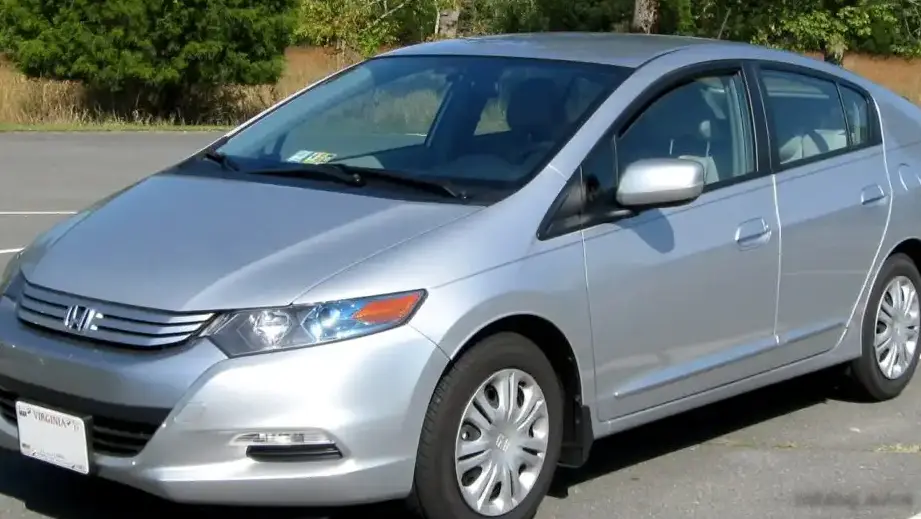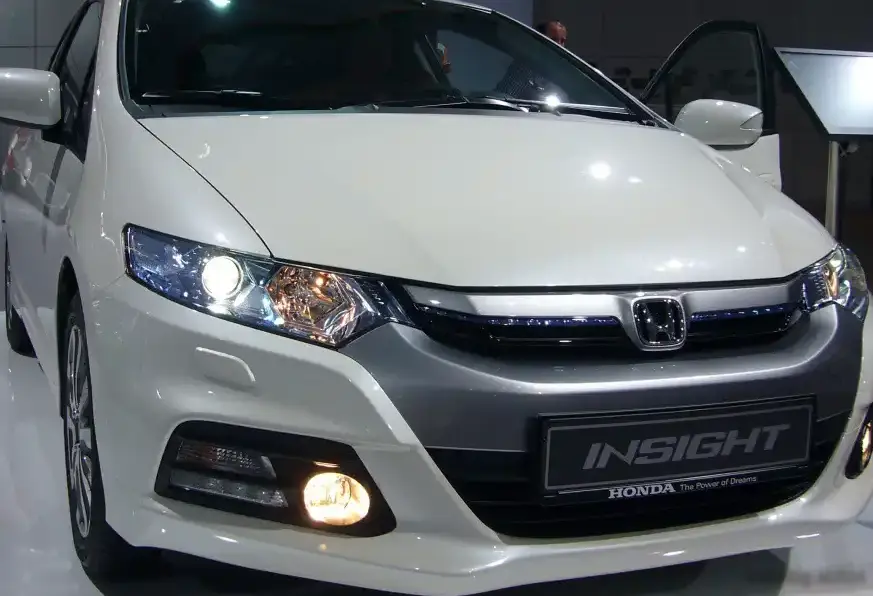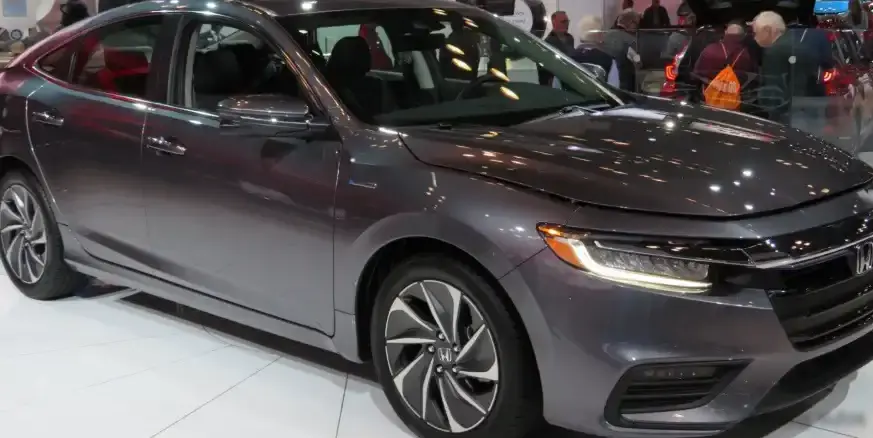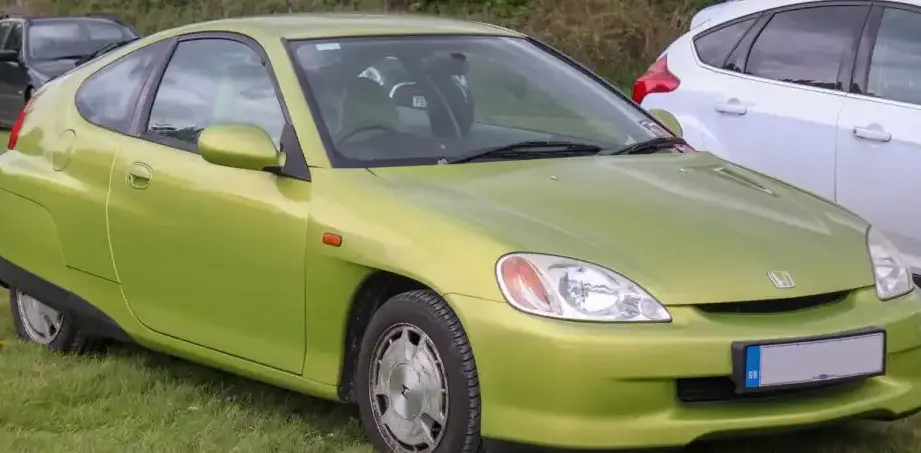
The Honda Insight 1.0, produced from 1999 to 2006, represents Honda’s initial foray into the hybrid vehicle market. This first-generation Insight (internal code: GD) was a radical departure from conventional automotive design, prioritizing fuel efficiency above all else. Offered exclusively as a two-seater coupe with a three-door hatchback configuration, the 1.0-liter variant served as the entry point to the Insight lineup, targeting environmentally conscious consumers seeking exceptional gas mileage. It was a key model in demonstrating Honda’s commitment to alternative fuel technologies and paved the way for the more mainstream hybrid models that followed. The Insight 1.0 was primarily sold in Japan, Europe, and limited quantities in the United States.
Technical Specifications
| Brand | Honda |
| Model | Insight |
| Generation | Insight (GD) |
| Type (Engine) | 1.0 (68 Hp) |
| Start of production | 1999 |
| End of production | 2006 |
| Powertrain Architecture | Internal Combustion engine + Electric Motor |
| Body type | Coupe |
| Seats | 2 |
| Doors | 3 |
| Fuel consumption (urban) | 4.1 l/100 km (57.4 US mpg) |
| Fuel consumption (extra urban) | 3 l/100 km (78.4 US mpg) |
| Fuel Type | Petrol (Gasoline) |
| Acceleration 0 – 100 km/h | 12 sec |
| Acceleration 0 – 62 mph | 12 sec |
| Acceleration 0 – 60 mph | 11.4 sec |
| Maximum speed | 180 km/h (111.85 mph) |
| Weight-to-power ratio | 12.4 kg/Hp |
| Weight-to-torque ratio | 9.2 kg/Nm |
| Power | 68 Hp @ 5700 rpm |
| Torque | 91 Nm @ 4800 rpm (67.12 lb.-ft. @ 4800 rpm) |
| Engine layout | Front, Transverse |
| Engine displacement | 995 cm3 (60.72 cu. in.) |
| Number of cylinders | 3 |
| Engine configuration | Inline |
| Cylinder Bore | 72 mm (2.83 in.) |
| Piston Stroke | 81.5 mm (3.21 in.) |
| Compression ratio | 10.8:1 |
| Number of valves per cylinder | 2 |
| Fuel injection system | Multi-port manifold injection |
| Engine aspiration | Naturally aspirated |
| Valvetrain | OHC |
| Kerb Weight | 840 kg (1851.88 lbs.) |
| Trunk (boot) space (minimum) | 140 l (4.94 cu. ft.) |
| Fuel tank capacity | 40 l (10.57 US gal | 8.8 UK gal) |
| Length | 3945 mm (155.31 in.) |
| Width | 1695 mm (66.73 in.) |
| Height | 1360 mm (53.54 in.) |
| Wheelbase | 2400 mm (94.49 in.) |
| Front track | 1435 mm (56.5 in.) |
| Rear track | 1325 mm (52.17 in.) |
| Drivetrain Architecture | ICE + Electric Motor, Front Wheel Drive |
| Drive wheel | Front wheel drive |
| Number of gears and type of gearbox | 5 gears, manual transmission |
| Front suspension | Spring Strut |
| Rear suspension | Coil spring |
| Front brakes | Ventilated discs |
| Rear brakes | Drum |
| Assisting systems | ABS (Anti-lock braking system) |
| Steering type | Steering rack and pinion |
| Power steering | Hydraulic Steering |
| Tires size | 165/65 R14 |
Powertrain & Engine Architecture
The heart of the Insight 1.0 is its 995cc inline-three cylinder engine, designated as the G10 engine family. This engine, while modest in displacement, was designed specifically for efficiency. It features a single overhead camshaft (OHC) and two valves per cylinder. Fuel delivery is managed by a multi-port fuel injection system. The engine’s 10.8:1 compression ratio contributes to its thermal efficiency. However, the Insight’s defining feature is its Integrated Motor Assist (IMA) hybrid system. This system utilizes a 10kW (13 hp) electric motor integrated between the engine and the transmission. The electric motor provides assistance during acceleration and can also recapture energy during braking through regenerative braking. The combined output of the engine and motor is 68 horsepower at 5700 rpm and 91 Nm (67.12 lb-ft) of torque at 4800 rpm. The transmission is a five-speed manual, chosen to maximize fuel economy. An automatic transmission was not offered on this specific variant.
Driving Characteristics
The 1.0-liter Insight, with its limited horsepower and torque, offers a driving experience focused on economy rather than performance. Acceleration is leisurely, taking approximately 12 seconds to reach 60 mph. The electric motor provides a noticeable boost during initial acceleration, smoothing out the power delivery. The five-speed manual transmission requires frequent shifting to maintain momentum, especially when climbing hills or overtaking. Compared to potential higher-output variants (which were not offered in this generation), the 1.0-liter version prioritizes fuel efficiency over spirited driving. The steering is light and precise, contributing to a nimble feel in city driving. The regenerative braking system feels somewhat different from conventional brakes, requiring some acclimation for smooth stops.
Equipment & Trim Levels
The Insight 1.0 was relatively sparsely equipped, reflecting its focus on affordability and efficiency. Standard features included air conditioning, power windows, and a basic audio system. The interior featured a minimalist design with durable, though basic, cloth upholstery. Safety features were limited to ABS brakes and dual airbags. Optional extras were few, typically consisting of alloy wheels and upgraded audio systems. The trim level was essentially a single specification, with limited customization options available.
Chassis & Braking
The Insight 1.0 utilizes a lightweight chassis constructed from high-strength steel to minimize weight and maximize fuel efficiency. The front suspension consists of MacPherson struts, while the rear suspension employs a coil spring setup. The front brakes are ventilated discs, providing adequate stopping power, while the rear brakes are drums, a cost-saving measure. The lightweight construction and relatively modest power output mean that the braking system is generally sufficient for everyday driving. The car’s narrow tires (165/65 R14) contribute to low rolling resistance, further enhancing fuel economy.
Market Reception & Comparison
The Honda Insight 1.0 received generally positive reviews for its exceptional fuel economy and innovative hybrid technology. Critics praised its environmental credentials and its smooth, quiet operation. However, the car was also criticized for its limited performance, cramped interior, and lack of practicality due to its two-seat configuration. Compared to other vehicles in its class, the Insight 1.0 stood out for its unique styling and its commitment to fuel efficiency. It was a niche product, appealing to a specific segment of environmentally conscious buyers. Its fuel economy significantly surpassed that of conventional gasoline-powered vehicles of the time.
Legacy
The Honda Insight 1.0, while not a commercial blockbuster, played a crucial role in establishing Honda as a leader in hybrid technology. It demonstrated the feasibility of combining an internal combustion engine with an electric motor to achieve significant fuel savings. The lessons learned from the first-generation Insight informed the development of subsequent Honda hybrid models, such as the Civic Hybrid and the Accord Hybrid, which achieved greater mainstream success. Today, the Insight 1.0 is considered a collectible car, appreciated by enthusiasts for its pioneering technology and its unique design. While maintenance can be challenging due to the age of the vehicle and the specialized hybrid components, well-maintained examples are sought after by those interested in a piece of automotive history. The powertrain, while not known for exceptional longevity, can provide reliable service with proper care and attention.