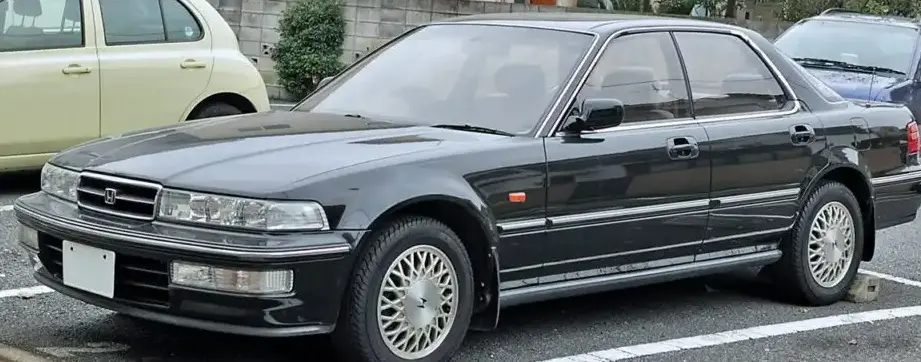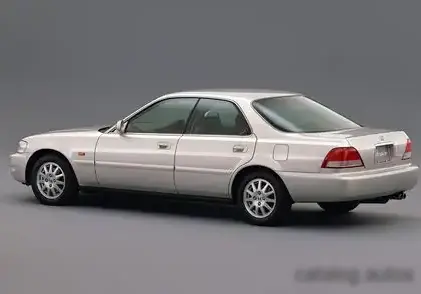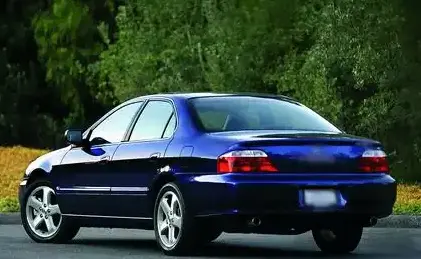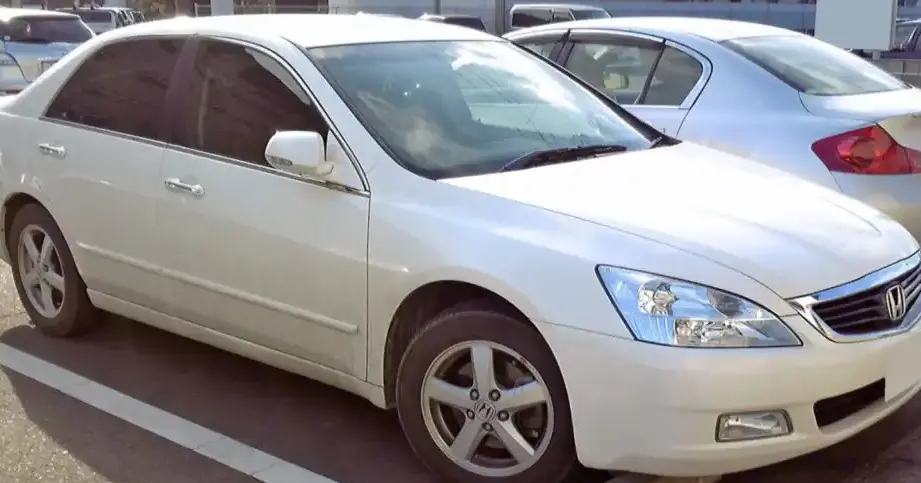
The Honda Inspire V (CP3), specifically the facelifted version produced from August 2010 to September 2012, represented a sophisticated offering in the Japanese executive sedan market. Positioned as a more premium alternative to the Honda Accord, the Inspire V aimed to provide a comfortable and technologically advanced driving experience. This particular variant featured a 3.5-liter V6 engine paired with Honda’s ECT (Electronically Controlled Transmission), a 5-speed automatic. The CP3 facelift brought subtle styling revisions and continued the Inspire’s tradition of understated elegance and refined performance.
Technical Specifications
| Brand | Honda |
| Model | Inspire |
| Generation | Inspire V (CP3, facelift 2010) |
| Type (Engine) | 3.5 V6 (280 Hp) ECT |
| Start of production | August, 2010 |
| End of production | September, 2012 |
| Powertrain Architecture | Internal Combustion engine |
| Body type | Sedan |
| Seats | 5 |
| Doors | 4 |
| Fuel consumption (combined) | 10.4 l/100 km (22.6 US mpg, 27.2 UK mpg, 9.6 km/l) |
| Fuel Type | Petrol (Gasoline) |
| Weight-to-power ratio | 5.7 kg/Hp, 175 Hp/tonne |
| Weight-to-torque ratio | 4.7 kg/Nm, 213.8 Nm/tonne |
| Power | 280 Hp @ 6200 rpm |
| Power per litre | 80.7 Hp/l |
| Torque | 342 Nm @ 5000 rpm (252.25 lb.-ft. @ 5000 rpm) |
| Engine layout | Front, Longitudinal |
| Engine Model/Code | J35A |
| Engine displacement | 3471 cm3 (211.81 cu. in.) |
| Number of cylinders | 6 |
| Engine configuration | V-engine |
| Cylinder Bore | 89 mm (3.5 in.) |
| Piston Stroke | 93 mm (3.66 in.) |
| Compression ratio | 10.5:1 |
| Number of valves per cylinder | 4 |
| Fuel injection system | Multi-port manifold injection |
| Engine aspiration | Naturally aspirated engine |
| Valvetrain | SOHC |
| Kerb Weight | 1600 kg (3527.4 lbs.) |
| Fuel tank capacity | 70 l (18.49 US gal | 15.4 UK gal) |
| Length | 4960 mm (195.28 in.) |
| Width | 1845 mm (72.64 in.) |
| Height | 1475 mm (58.07 in.) |
| Wheelbase | 2800 mm (110.24 in.) |
| Front track | 1580 mm (62.2 in.) |
| Rear track | 1580 mm (62.2 in.) |
| Ride height (ground clearance) | 145 mm (5.71 in.) |
| Minimum turning circle | 11.4 m (37.4 ft.) |
| Drivetrain Architecture | Front wheel drive, Internal Combustion engine (ICE) |
| Number of gears and type of gearbox | 5 gears, automatic transmission ECT |
| Front suspension | Double wishbone |
| Rear suspension | Independent multi-link suspension |
| Front brakes | Ventilated discs |
| Rear brakes | Disc |
| Assisting systems | ABS (Anti-lock braking system) |
| Steering type | Steering rack and pinion |
| Power steering | Electric Steering |
| Tires size | 225/50 R17 |
| Wheel rims size | 7.5J x 17 |
Powertrain & Engine Architecture
The heart of the Inspire V was the J35A engine, a 3.5-liter naturally aspirated V6. This engine was a member of Honda’s well-regarded J-series family, known for its smoothness and reliability. The J35A featured a single overhead camshaft (SOHC) valvetrain and multi-port fuel injection. The engine produced 280 horsepower at 6200 rpm and 342 Nm (252.25 lb-ft) of torque at 5000 rpm. The engine’s longitudinal mounting allowed for a front-wheel-drive configuration, a common layout for Japanese executive sedans. Paired with the engine was Honda’s ECT, a 5-speed automatic transmission. The ECT featured sophisticated electronic controls to optimize shift points for both fuel efficiency and performance. While not offering the outright speed of some competitors, the powertrain prioritized smooth, refined power delivery.
Driving Characteristics
The 3.5L V6 and 5-speed automatic combination in the Inspire V delivered a comfortable and composed driving experience. Acceleration was brisk, but not aggressively sporty. The automatic transmission was tuned for smooth shifts, prioritizing comfort over rapid gear changes. Compared to potential manual transmission versions (not commonly offered in this trim), the automatic offered less driver engagement but greater ease of use, particularly in city traffic. Against other Inspire trims, such as those with smaller engines, the V6 provided a significant performance advantage. However, it came at the cost of slightly reduced fuel economy. The front-wheel-drive layout provided predictable handling, although it lacked the all-weather capability of an all-wheel-drive system.
Equipment & Trim Levels
The Inspire V, as the top-tier trim, came generously equipped. Standard features typically included leather upholstery, woodgrain interior trim, a premium audio system, automatic climate control, power-adjustable front seats, and a sunroof. Safety features such as ABS, airbags, and traction control were also standard. Optional extras could include navigation systems, upgraded audio options, and advanced driver-assistance systems. The interior design emphasized luxury and comfort, with a focus on high-quality materials and a spacious cabin.
Chassis & Braking
The Inspire V utilized a double wishbone suspension setup at the front and an independent multi-link suspension at the rear. This configuration provided a comfortable ride and good handling characteristics. The vehicle was equipped with ventilated disc brakes at the front and solid disc brakes at the rear. ABS (Anti-lock Braking System) was standard, enhancing braking performance and stability. The steering system employed a rack and pinion setup with electric power steering, providing precise and responsive steering feel.
Market Reception & Comparison
The Honda Inspire V was generally well-received by critics in Japan. It was praised for its comfortable ride, refined engine, and spacious interior. However, some reviewers noted that its styling was somewhat conservative compared to its European rivals. Fuel economy, while acceptable, was not a standout feature. Compared to the Honda Accord, the Inspire V offered a more luxurious and refined experience, but at a higher price point. Against competitors like the Toyota Crown and Nissan Cima, the Inspire V offered a compelling blend of performance, comfort, and technology.
Legacy
The Honda Inspire V (CP3) represents a high point in Honda’s pursuit of a premium executive sedan. The J35A engine, in particular, is known for its durability and reliability. While the Inspire nameplate was eventually discontinued, the CP3 generation remains a sought-after vehicle in the used car market, particularly among those seeking a comfortable, well-equipped, and reliable Japanese sedan. The powertrain, while not the most fuel-efficient, has proven to be long-lasting with proper maintenance, making it a practical choice for discerning buyers today. The combination of a smooth V6 engine and a refined automatic transmission continues to appeal to drivers who prioritize comfort and reliability over outright performance.