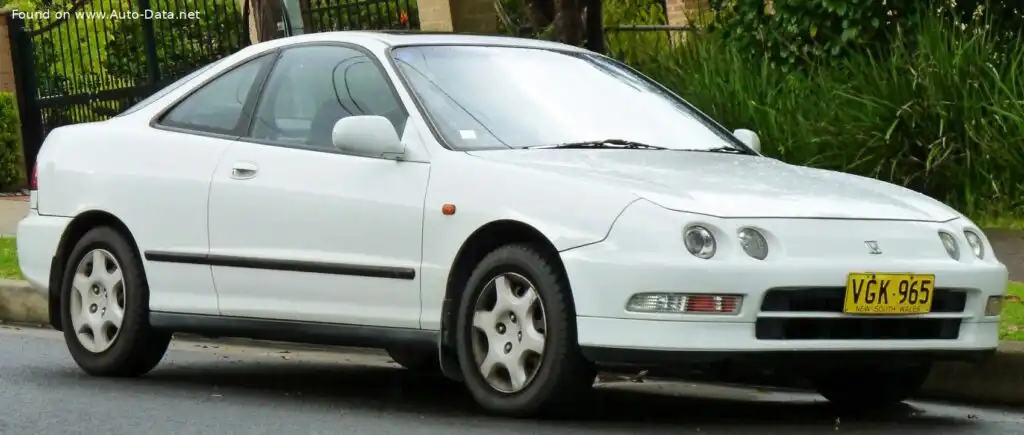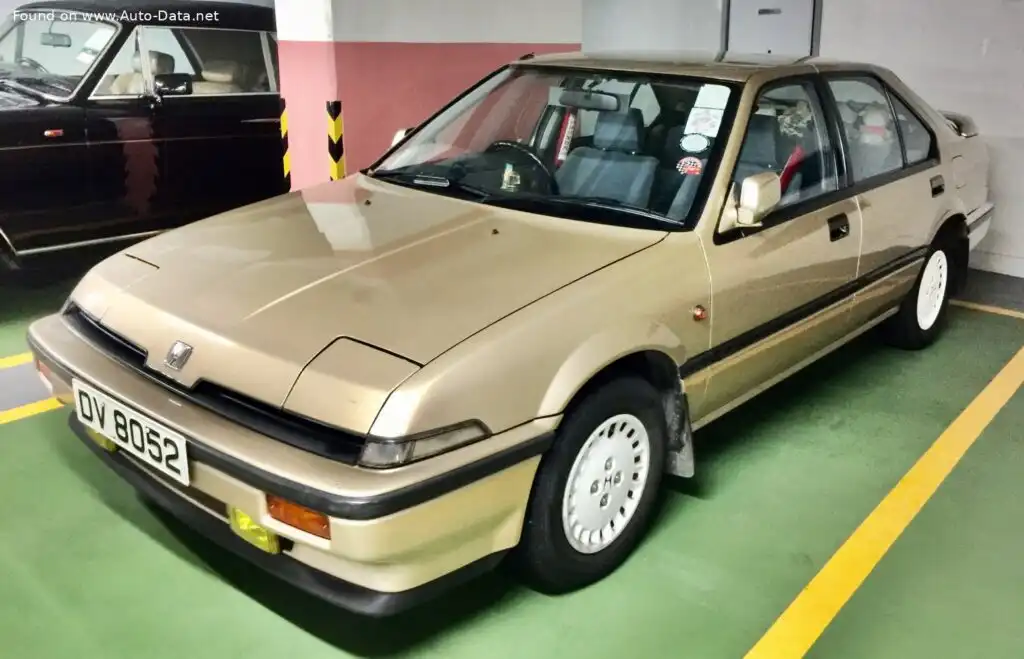
The Honda Integra I (DA) 5-door 1.5, equipped with the Hondamatic transmission, represents a unique offering within the first generation Integra lineup produced between 1985 and 1989. Positioned as an entry-level variant, it provided a more accessible price point compared to the sportier Si and LS models. This liftback, part of the broader DA platform, aimed to balance practicality, fuel efficiency, and Honda’s reputation for reliability in the burgeoning compact car market. The 1.5L Hondamatic model was primarily sold in Japan and Europe, offering a comfortable and convenient driving experience for those not prioritizing outright performance.
Technical Specifications
| Brand | Honda |
| Model | Integra |
| Generation | Integra I (DA) 5-door |
| Type (Engine) | 1.5 (85 Hp) Hondamatic |
| Start of production | 1985 |
| End of production | 1989 |
| Powertrain Architecture | Internal Combustion engine |
| Body type | Liftback |
| Seats | 5 |
| Doors | 5 |
| Fuel consumption (urban) | 8.4 l/100 km (28 US mpg, 33.6 UK mpg, 11.9 km/l) |
| Fuel consumption (extra urban) | 5.8 l/100 km (40.6 US mpg, 48.7 UK mpg, 17.2 km/l) |
| Fuel Type | Petrol (Gasoline) |
| Maximum speed | 160 km/h (99.42 mph) |
| Weight-to-power ratio | 11.4 kg/Hp, 88.1 Hp/tonne |
| Weight-to-torque ratio | 7.7 kg/Nm, 130.6 Nm/tonne |
| Power | 85 Hp @ 6000 rpm |
| Power per litre | 57.1 Hp/l |
| Torque | 126 Nm @ 3750 rpm (92.93 lb.-ft. @ 3750 rpm) |
| Engine layout | Front, Transverse |
| Engine Model/Code | D15A1 |
| Engine displacement | 1488 cm3 (90.8 cu. in.) |
| Number of cylinders | 4 |
| Engine configuration | Inline |
| Cylinder Bore | 74 mm (2.91 in.) |
| Piston Stroke | 86.5 mm (3.41 in.) |
| Compression ratio | 8.7:1 |
| Number of valves per cylinder | 3 |
| Fuel injection system | Carburettor |
| Engine aspiration | Naturally aspirated engine |
| Valvetrain | SOHC |
| Engine oil capacity | 3.4 l (3.59 US qt | 2.99 UK qt) |
| Coolant | 5.6 l (5.92 US qt | 4.93 UK qt) |
| Kerb Weight | 965 kg (2127.46 lbs.) |
| Max. weight | 1460 kg (3218.75 lbs.) |
| Max load | 495 kg (1091.29 lbs.) |
| Trunk (boot) space – minimum | 292 l (10.31 cu. ft.) |
| Trunk (boot) space – maximum | 538 l (19 cu. ft.) |
| Fuel tank capacity | 50 l (13.21 US gal | 11 UK gal) |
| Max. roof load | 50 kg (110.23 lbs.) |
| Permitted trailer load with brakes (12%) | 900 kg (1984.16 lbs.) |
| Permitted trailer load without brakes | 460 kg (1014.13 lbs.) |
| Permitted towbar download | 50 kg (110.23 lbs.) |
| Length | 4350 mm (171.26 in.) |
| Width | 1665 mm (65.55 in.) |
| Height | 1345 mm (52.95 in.) |
| Wheelbase | 2520 mm (99.21 in.) |
| Front track | 1420 mm (55.91 in.) |
| Rear (Back) track | 1415 mm (55.71 in.) |
| Front overhang | 885 mm (34.84 in.) |
| Rear overhang | 945 mm (37.2 in.) |
| Ride height (ground clearance) | 165 mm (6.5 in.) |
| Minimum turning circle (turning diameter) | 10.8 m (35.43 ft.) |
| Drivetrain Architecture | The Internal combustion engine (ICE) drives the front wheels of the vehicle. |
| Drive wheel | Front wheel drive |
| Number of gears and type of gearbox | 4 gears, automatic transmission Hondamatic |
| Front suspension | Transverse stabilizer, Torsion |
| Rear suspension | Semi-dependent beam with stabilizer lateral stability, Trailing arm |
| Front brakes | Ventilated discs |
| Rear brakes | Drum |
| Steering type | Steering rack and pinion |
| Tires size | 185/70 R13 |
| Wheel rims size | 5J x 13 |
Powertrain & Engine Architecture
The heart of the Integra 1.5 Hondamatic is the D15A1 engine, a 1.5-liter inline-four cylinder powerplant. This engine utilizes a single overhead camshaft (SOHC) valvetrain with three valves per cylinder (two intake, one exhaust). Fuel delivery is managed by a carburetor, a relatively simple system compared to the fuel injection found in higher-spec Integra models. The D15A1 produces 85 horsepower at 6000 rpm and 126 Nm (93 lb-ft) of torque at 3750 rpm. The “Hondamatic” transmission is a continuously variable transmission (CVT) – a relatively early implementation of this technology. It differs from traditional automatic transmissions by using a belt and pulley system to provide a seamless range of gear ratios. This design aimed to improve fuel efficiency and provide smoother acceleration.
Driving Characteristics
The 1.5L Hondamatic Integra offered a comfortable, if not particularly sporty, driving experience. The CVT transmission, while smooth, lacked the crisp shifts of a traditional automatic or manual gearbox. Acceleration was adequate for everyday driving, but noticeably slower than the more powerful Integra Si or LS models. The CVT’s programming prioritized fuel economy, resulting in a somewhat lethargic response to throttle inputs. The gear ratios were optimized for cruising, making it a pleasant vehicle for highway driving. However, attempting quick overtaking maneuvers required careful planning. The relatively low weight of the vehicle (965 kg / 2127 lbs) helped to mitigate the engine’s modest power output.
Equipment & Trim Levels
The 1.5 Hondamatic trim typically included basic amenities such as cloth upholstery, a simple dashboard layout, and manual windows and door locks. Air conditioning was often an optional extra. The interior was functional and durable, prioritizing practicality over luxury. Standard features generally included a basic AM/FM radio and a steering wheel. Higher trim levels, such as the LS, offered upgrades like power windows, upgraded sound systems, and more refined interior materials. The 5-door liftback body style provided increased cargo versatility compared to the 3-door coupe.
Chassis & Braking
The Integra 1.5 Hondamatic utilized a front-wheel-drive layout with a torsion beam rear suspension. The front suspension featured independent struts with a transverse stabilizer bar. Braking duties were handled by ventilated discs at the front and drum brakes at the rear. The suspension setup was tuned for comfort, providing a relatively soft ride quality. The steering system employed a rack-and-pinion setup, offering reasonable precision. The tires were typically 185/70 R13, prioritizing fuel efficiency and ride comfort over ultimate grip.
Market Reception & Comparison
The Integra 1.5 Hondamatic was generally well-received as an affordable and reliable compact car. Critics praised its fuel efficiency and comfortable ride, but noted its lack of performance compared to other Integra variants. Compared to the Integra Si, which featured a more powerful engine and a five-speed manual transmission, the 1.5 Hondamatic offered a significantly different driving experience. The 1.9 TDI versions (available in Europe) provided superior fuel economy and torque, but at a higher price point. The Hondamatic appealed to buyers who prioritized convenience and fuel efficiency over sporty handling and quick acceleration.
Legacy
The D15A1 engine and Hondamatic transmission, while not known for their high performance, proved to be remarkably durable. Many examples of the Integra 1.5 Hondamatic remain on the road today, a testament to Honda’s engineering quality. The early Hondamatic CVTs, however, can be prone to issues if not properly maintained. Finding replacement parts for the transmission can sometimes be challenging. In the used car market, the Integra 1.5 Hondamatic typically commands a lower price than the more desirable Si or LS models. However, its affordability and reputation for reliability make it an attractive option for budget-conscious buyers seeking a classic Honda.