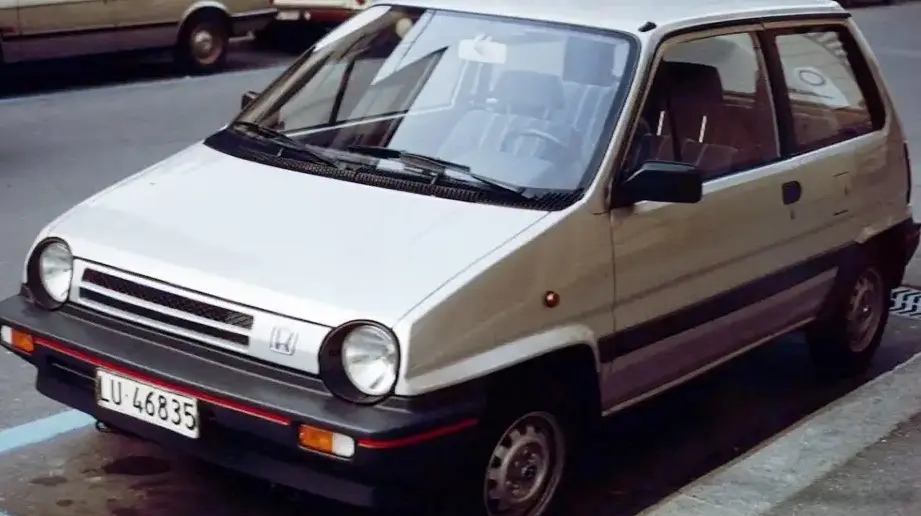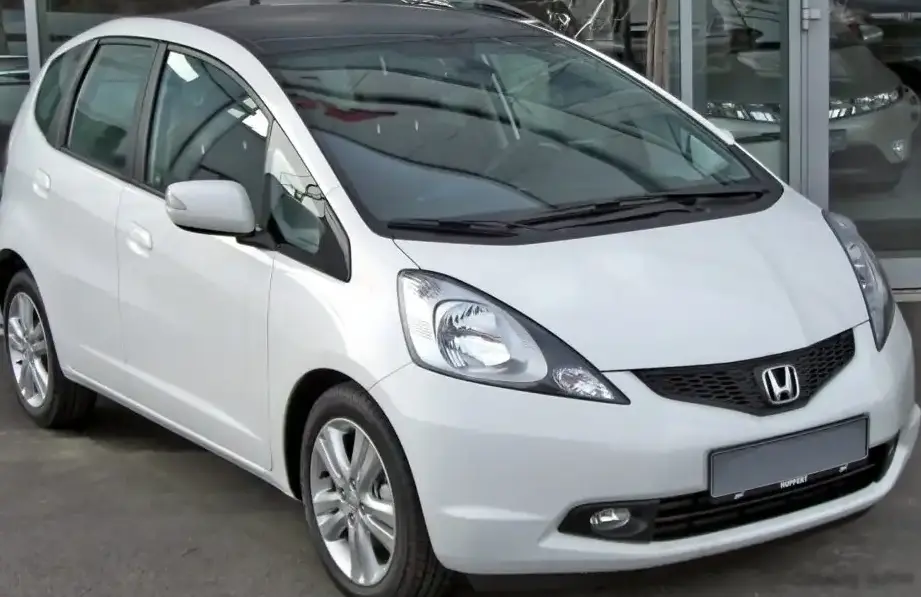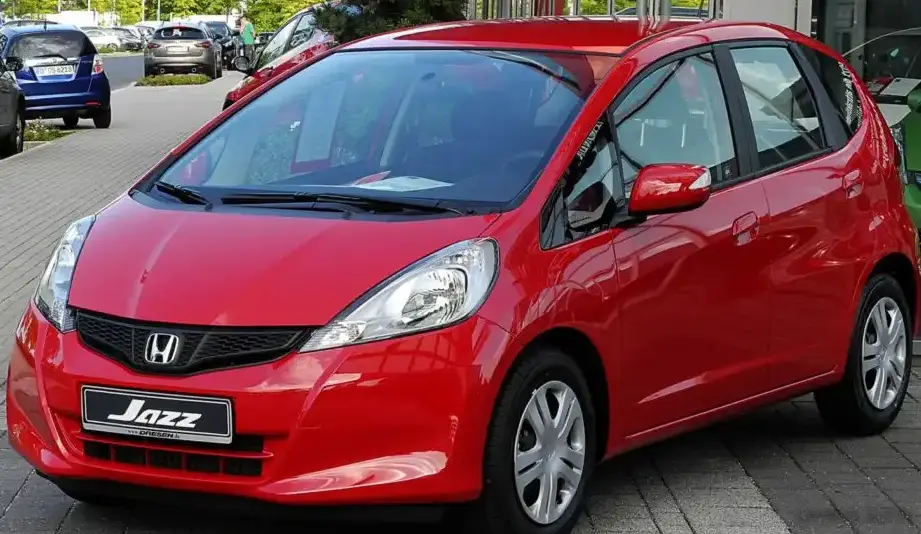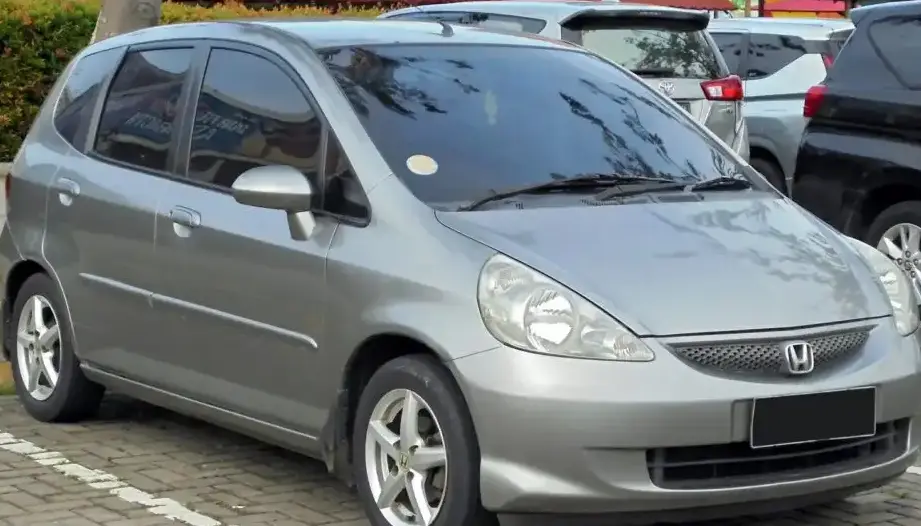
The Honda Jazz, known as the Honda Fit in North America, first arrived in 2002 as a subcompact hatchback designed to maximize interior space and practicality. The first generation, internally designated as the GD chassis code, ran from 2002 to 2008. Within this generation, the 1.4-liter engine producing 83 horsepower represented an entry-level offering, primarily targeted at buyers prioritizing fuel efficiency and affordability. This variant was particularly popular in European and Asian markets where smaller displacement engines were favored due to tax regulations and driving conditions. The 1.4L Jazz aimed to provide reliable transportation with a focus on usability, rather than outright performance.
Technical Specifications
| Brand | Honda |
| Model | Jazz |
| Generation | Jazz I |
| Type (Engine) | 1.4 (83 Hp) |
| Start of production | 2002 |
| End of production | 2008 |
| Powertrain Architecture | Internal Combustion engine |
| Body type | Hatchback |
| Seats | 5 |
| Doors | 5 |
| Fuel consumption (urban) | 6.8 l/100 km (34.6 US mpg) |
| Fuel consumption (extra urban) | 4.7 l/100 km (50 US mpg) |
| Fuel consumption (combined) | 5.5 l/100 km (42.8 US mpg) |
| Fuel Type | Petrol (Gasoline) |
| Acceleration 0 – 100 km/h | 12 sec |
| Acceleration 0 – 62 mph | 12 sec |
| Acceleration 0 – 60 mph | 11.4 sec |
| Maximum speed | 170 km/h (105.63 mph) |
| Weight-to-power ratio | 11.8 kg/Hp |
| Weight-to-torque ratio | 8.2 kg/Nm |
| Power | 83 Hp @ 5700 rpm |
| Power per litre | 62 Hp/l |
| Torque | 119 Nm @ 2800 rpm (87.77 lb.-ft. @ 2800 rpm) |
| Engine layout | Front, Transverse |
| Engine Model/Code | L13A5 |
| Engine displacement | 1339 cm3 (81.71 cu. in.) |
| Number of cylinders | 4 |
| Engine configuration | Inline |
| Cylinder Bore | 73 mm (2.87 in.) |
| Piston Stroke | 80 mm (3.15 in.) |
| Compression ratio | 10.8:1 |
| Number of valves per cylinder | 2 |
| Fuel injection system | Multi-port manifold injection |
| Engine aspiration | Naturally aspirated engine |
| Valvetrain | OHC |
| Engine oil capacity | 3.6 l (3.8 US qt | 3.17 UK qt) |
| Coolant capacity | 3.9 l (4.12 US qt | 3.43 UK qt) |
| Kerb Weight | 980 kg (2160.53 lbs.) |
| Max. weight | 1470 kg (3240.8 lbs.) |
| Max load | 490 kg (1080.27 lbs.) |
| Trunk (boot) space – minimum | 380 l (13.42 cu. ft.) |
| Trunk (boot) space – maximum | 1323 l (46.72 cu. ft.) |
| Fuel tank capacity | 42 l (11.1 US gal | 9.24 UK gal) |
| Length | 3830 mm (150.79 in.) |
| Width | 1675 mm (65.94 in.) |
| Height | 1525 mm (60.04 in.) |
| Wheelbase | 2450 mm (96.46 in.) |
| Front track | 1460 mm (57.48 in.) |
| Rear track | 1445 mm (56.89 in.) |
| Drivetrain Architecture | Front wheel drive |
| Number of gears | 5 |
| Gearbox type | Manual transmission |
| Front suspension | Spring Strut |
| Rear suspension | Coil spring |
| Front brakes | Ventilated discs |
| Rear brakes | Drum |
| Assisting systems | ABS (Anti-lock braking system) |
| Steering type | Steering rack and pinion |
| Power steering | Hydraulic Steering |
| Tires size | 185/55 R15 |
| Wheel rims size | 15 |
INTRODUCTION
The Honda Jazz I, launched in 2002, represented a significant departure from traditional subcompact car designs. Its key innovation was the “Ultra Seat” system, allowing for a multitude of seating and cargo configurations. The 1.4-liter engine variant, producing 83 horsepower, was positioned as the entry point to the Jazz lineup. It was designed for buyers who prioritized fuel economy and practicality over sporty performance. This model was widely available in Europe and Japan, where smaller engines were more common and often preferred due to favorable tax incentives and the nature of urban driving. The Jazz I, built on the 1HX0/A3 platform, quickly gained a reputation for reliability and clever packaging.
Powertrain & Engine Architecture
The heart of the 1.4-liter Jazz is the L13A5 engine, a 1.339-liter inline-four cylinder gasoline engine. This engine utilizes a single overhead camshaft (SOHC) valvetrain with two valves per cylinder. Fuel delivery is managed by a multi-point fuel injection system, providing adequate, though not exceptional, combustion control. The L13A5 is a naturally aspirated engine, meaning it doesn’t employ a turbocharger or supercharger. The engine’s modest output is a result of its relatively small displacement and conservative tuning. The standard transmission for this variant was a five-speed manual, but a four-speed automatic transmission was also offered, though it impacted fuel economy and acceleration. The automatic transmission was a conventional hydraulic unit, known for its reliability but lacking the efficiency of modern continuously variable transmissions (CVTs).
Driving Characteristics
The 1.4-liter Jazz with the five-speed manual transmission offered adequate performance for city driving and highway cruising, though it wasn’t particularly quick. Acceleration from 0-60 mph took around 11.4 seconds, and top speed was limited to 105.63 mph. The automatic transmission noticeably dulled acceleration, adding approximately a second to the 0-60 mph time. The gear ratios in the manual transmission were well-spaced, providing reasonable flexibility for both urban and highway driving. The engine felt somewhat strained when pushed hard, particularly when fully loaded. The Jazz’s light weight (approximately 2160 lbs) helped to mitigate the effects of the modest engine output. Handling was predictable and safe, but not particularly engaging. The focus was on comfort and ease of driving rather than sporty dynamics.
Equipment & Trim Levels
The 1.4-liter Jazz typically came with a fairly basic level of equipment. Standard features generally included power steering, central locking, electric front windows, and an AM/FM radio. Air conditioning was often an optional extra. Interior upholstery was typically cloth, and the dashboard featured a simple, functional design. Higher trim levels, available with the larger 1.5-liter engine, offered features like alloy wheels, a CD player, and upgraded interior trim. The 1.4L trim was often seen as a blank canvas for buyers who wanted to add options based on their needs and budget.
Chassis & Braking
The Jazz I utilized a front-wheel-drive layout with a MacPherson strut suspension in the front and a torsion beam suspension in the rear. The front brakes were ventilated discs, providing adequate stopping power, while the rear brakes were drums, a cost-saving measure common in this class of vehicle. Anti-lock Braking System (ABS) was standard, enhancing safety. The suspension was tuned for comfort, providing a relatively smooth ride over uneven surfaces. Stabilizer bars were fitted to both the front and rear axles to reduce body roll during cornering, though the Jazz wasn’t designed for aggressive driving.
Market Reception & Comparison
The 1.4-liter Jazz received generally positive reviews, particularly for its spacious interior, clever seating configurations, and fuel efficiency. Critics noted that the engine was somewhat underpowered, especially when paired with the automatic transmission. Compared to the 1.5-liter Jazz, the 1.4-liter model offered lower running costs but sacrificed performance. The 1.5-liter engine provided a noticeable boost in power and torque, making it a more enjoyable driving experience. However, the 1.4-liter model remained a popular choice for buyers who prioritized economy and practicality. Its fuel economy of around 42.8 US mpg combined was a significant selling point.
Legacy
The Honda Jazz I 1.4-liter remains a relatively common sight on used car markets today. The L13A5 engine is known for its reliability and durability, provided it has been properly maintained. Common issues include oil leaks and occasional sensor failures, but these are generally inexpensive to repair. The Jazz’s clever interior design and fuel efficiency continue to appeal to buyers looking for a practical and affordable subcompact car. While not a performance icon, the 1.4-liter Jazz established the model as a benchmark for space utilization and everyday usability in the subcompact segment, paving the way for subsequent generations of the Honda Fit/Jazz.