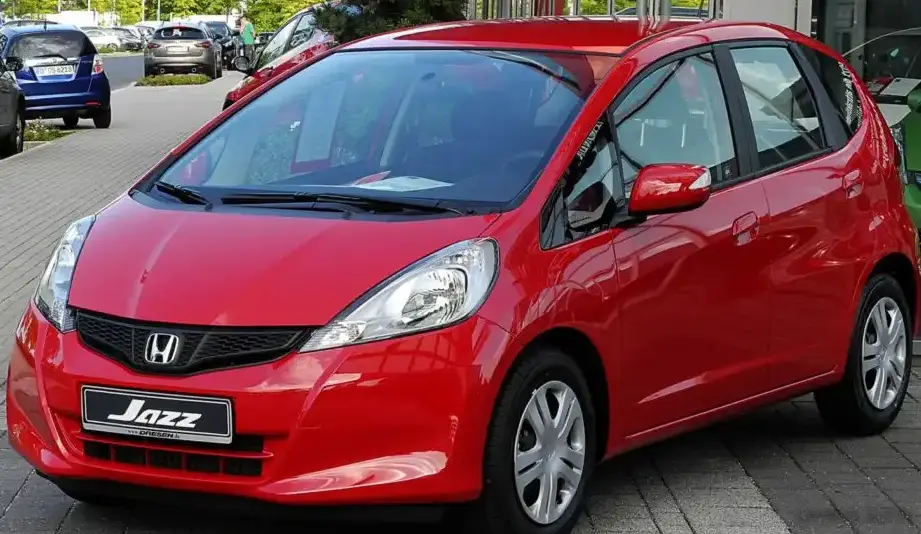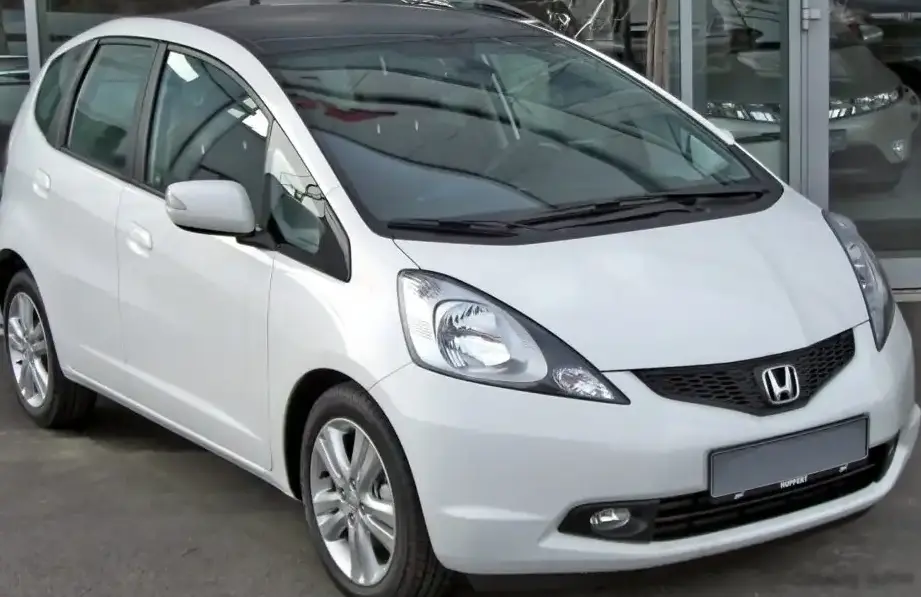
The Honda Jazz II 1.2, producing 90 horsepower, was a key variant in the second generation of Honda’s popular subcompact hatchback, sold in Europe and other markets between 2008 and 2011. This model represented an entry point into the Jazz II range, offering a balance of affordability, fuel efficiency, and Honda’s renowned practicality. It was positioned below the 1.4-liter variants in terms of performance, targeting buyers prioritizing economy and ease of driving over outright speed. The Jazz II (known as the Fit in North America) built upon the innovative “Ultra Seat” system of the first generation, further enhancing its versatility and cargo-carrying capabilities.
Technical Specifications
| Brand | Honda |
| Model | Jazz |
| Generation | Jazz II |
| Type (Engine) | 1.2 (90 Hp) |
| Start of production | 2008 |
| End of production | 2011 |
| Powertrain Architecture | Internal Combustion engine |
| Body type | Hatchback |
| Seats | 5 |
| Doors | 5 |
| Fuel Type | Petrol (Gasoline) |
| Acceleration 0 – 100 km/h | 12.6 sec |
| Acceleration 0 – 62 mph | 12.6 sec |
| Acceleration 0 – 60 mph | 12 sec |
| Maximum speed | 177 km/h (109.98 mph) |
| Emission standard | Euro 4 |
| Weight-to-power ratio | 11.6 kg/Hp, 86 Hp/tonne |
| Weight-to-torque ratio | 9.2 kg/Nm, 108.9 Nm/tonne |
| Power | 90 Hp @ 6000 rpm |
| Power per litre | 75.1 Hp/l |
| Torque | 114 Nm @ 4900 rpm (84.08 lb.-ft. @ 4900 rpm) |
| Engine layout | Front, Transverse |
| Engine Model/Code | L12B1, L12B2 |
| Engine displacement | 1198 cm3 (73.11 cu. in.) |
| Number of cylinders | 4 |
| Engine configuration | Inline |
| Engine oil capacity | 3.6 l (3.8 US qt | 3.17 UK qt) |
| Coolant | 4.42 l (4.67 US qt | 3.89 UK qt) |
| Kerb Weight | 1047 kg (2308.24 lbs) |
| Max. weight | 1420 kg (3130.56 lbs) |
| Max load | 373 kg (822.32 lbs) |
| Trunk (boot) space – minimum | 428 l (15.11 cu. ft.) |
| Trunk (boot) space – maximum | 1396 l (49.3 cu. ft.) |
| Fuel tank capacity | 42 l (11.1 US gal | 9.24 UK gal) |
| Length | 3900 mm (153.54 in) |
| Width | 1695 mm (66.73 in) |
| Height | 1525 mm (60.04 in) |
| Wheelbase | 2495 mm (98.23 in) |
| Front track | 1495 mm (58.86 in) |
| Rear (Back) track | 1475 mm (58.07 in) |
| Minimum turning circle | 10.1 m (33.14 ft) |
| Drivetrain Architecture | The Internal combustion engine (ICE) drives the front wheels of the vehicle. |
| Drive wheel | Front wheel drive |
| Number of gears and type of gearbox | 5 gears, manual transmission |
| Front suspension | Independent type McPherson |
| Front brakes | Ventilated discs |
| Rear brakes | Disc |
| Assisting systems | ABS (Anti-lock braking system) |
| Tires size | 175/65 R15 |
| Wheel rims size | 15 |
Powertrain & Engine Architecture
The heart of the Jazz II 1.2 was the Honda L12B1 or L12B2 engine, a 1.2-liter inline-four cylinder petrol engine. This engine was part of Honda’s ‘i-DSI’ (Intelligent Dual Sequential Ignition) family, known for its fuel efficiency and relatively smooth operation. The i-DSI system utilized two spark plugs per cylinder, promoting more complete combustion and reducing emissions. Fuel delivery was managed by a multi-point fuel injection system. The engine featured a single overhead camshaft (SOHC) valvetrain, keeping the design relatively simple and cost-effective. The 5-speed manual transmission was the standard offering, providing a reasonably direct connection between the engine and the front wheels. The transmission was chosen for its durability and efficiency, complementing the engine’s characteristics.
Driving Characteristics
The 90 hp output of the 1.2-liter engine translated to modest, but adequate, performance. Acceleration from 0-60 mph took around 12 seconds, and top speed was approximately 109 mph. While not particularly quick, the engine provided sufficient power for everyday driving situations, especially in urban and suburban environments. The gear ratios in the 5-speed manual transmission were tuned for fuel economy, meaning the engine needed to be revved to access its peak power. Compared to the 1.4-liter Jazz II, the 1.2 felt noticeably less responsive, particularly when fully loaded or tackling inclines. However, the lighter engine weight contributed to a slightly more nimble feel in corners. The steering was light and precise, making it easy to maneuver in tight spaces.
Equipment & Trim Levels
The 1.2-liter Jazz II typically came with a fairly basic level of equipment, reflecting its position as the entry-level model. Standard features generally included power steering, central locking, electric front windows, and an MP3-compatible audio system. Air conditioning was often an optional extra. Interior upholstery was typically cloth, with a functional, if somewhat plain, dashboard design. Higher trim levels, such as the ‘SE’ or ‘ES’ variants, added features like alloy wheels, climate control, and upgraded audio systems. Safety features included ABS brakes and front airbags as standard.
Chassis & Braking
The Jazz II utilized a front-wheel-drive chassis with an independent McPherson strut suspension at the front and a torsion beam suspension at the rear. This setup provided a comfortable ride quality, absorbing bumps and imperfections in the road surface effectively. The front brakes were ventilated discs, offering good stopping power, while the rear brakes were solid discs. The relatively lightweight nature of the 1.2-liter model helped to minimize braking distances. The steering system was a power-assisted rack and pinion setup, providing light and precise control.
Market Reception & Comparison
The Honda Jazz II 1.2 was generally well-received by critics as a practical and economical city car. Its spacious interior, versatile “Ultra Seat” system, and fuel-efficient engine were all praised. However, some reviewers noted that the engine lacked outright power, particularly when compared to competitors or higher-spec Jazz models. Fuel economy was a strong point, with the 1.2-liter engine achieving around 45-50 mpg in mixed driving conditions. Compared to the 1.4-liter Jazz II, the 1.2 offered lower running costs but sacrificed performance. The 1.4-liter was favored by drivers who frequently undertook longer journeys or carried heavier loads.
Legacy
The Honda Jazz II 1.2 has proven to be a reliable and durable vehicle, with many examples still on the road today. The L12B engine is known for its longevity, provided it is regularly serviced. Common issues are relatively minor, often relating to wear and tear on components such as the exhaust system and suspension bushings. In the used car market, the 1.2-liter Jazz II represents a good value proposition for buyers seeking an affordable, practical, and fuel-efficient hatchback. Its reputation for reliability and low running costs continues to make it a popular choice, particularly among first-time car buyers and those seeking a dependable city car.