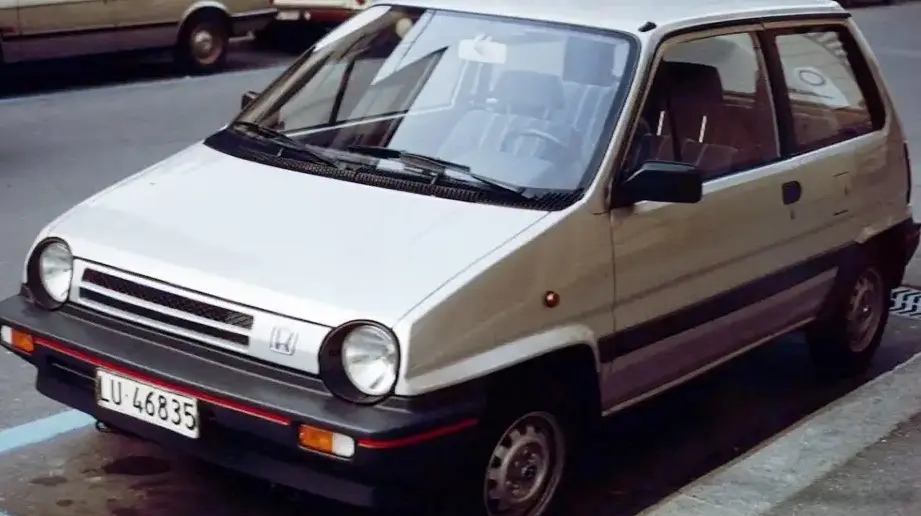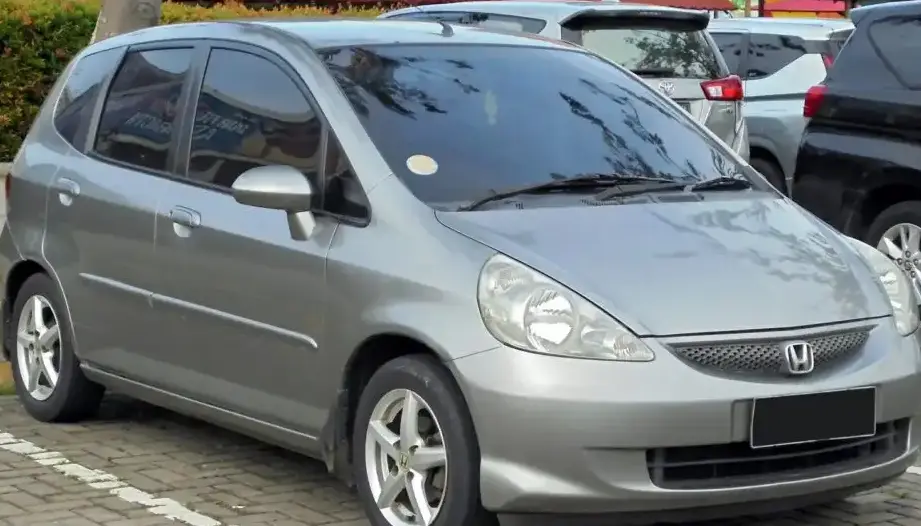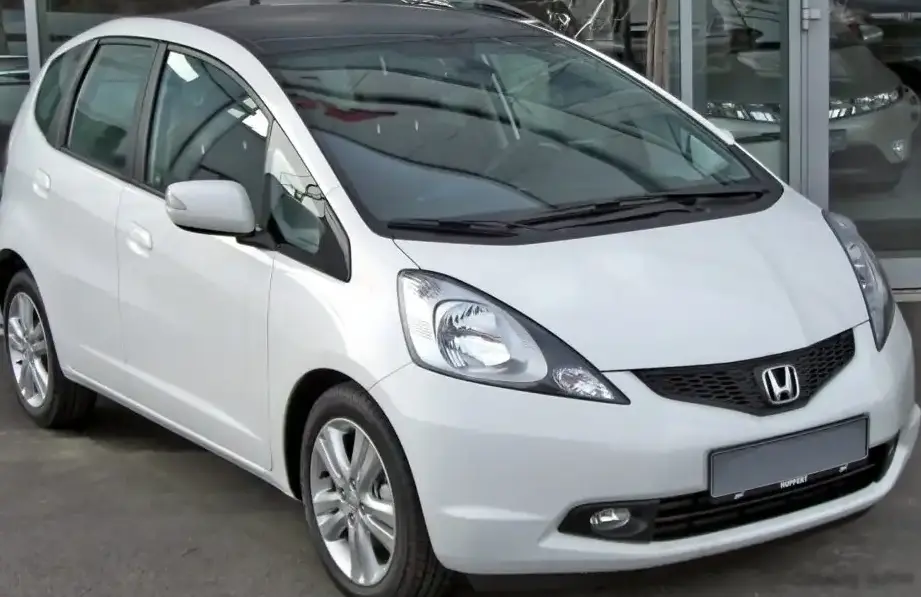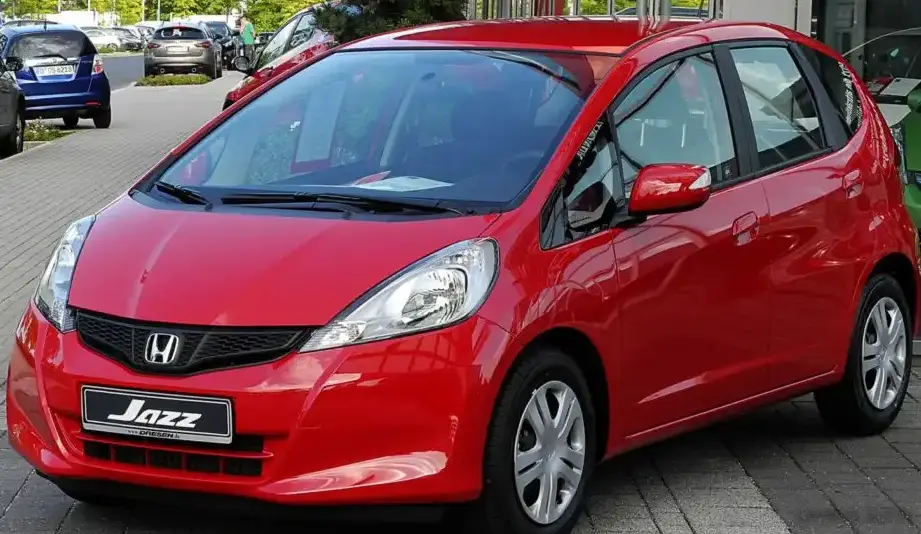
The Honda Jazz II (facelift, introduced in 2011) 1.4 i-VTEC, producing 99 horsepower, represented an important entry point into the second generation of Honda’s popular subcompact hatchback. Produced from 2011 through 2015, this variant played a significant role in the Jazz’s success, particularly in European and Asian markets where fuel efficiency and practicality were highly valued. It was positioned as the base engine option, offering a balance between affordability and Honda’s renowned reliability. This model utilized the global Honda B-platform (internally known as the 1HX0/A3 platform), shared with other Honda vehicles like the City and Fit.
Technical Specifications
| Brand | Honda |
| Model | Jazz |
| Generation | Jazz II (facelift 2011) |
| Type (Engine) | 1.4 i-VTEC (99 Hp) |
| Start of production | 2011 |
| End of production | 2015 |
| Powertrain Architecture | Internal Combustion engine |
| Body type | Hatchback |
| Seats | 5 |
| Doors | 5 |
| Fuel consumption (urban) | 6.6 l/100 km (35.6 US mpg, 42.8 UK mpg, 15.2 km/l) |
| Fuel consumption (extra urban) | 4.8 l/100 km (49 US mpg, 58.9 UK mpg, 20.8 km/l) |
| Fuel consumption (combined) | 5.5 l/100 km (42.8 US mpg, 51.4 UK mpg, 18.2 km/l) |
| CO2 emissions | 126 g/km |
| Fuel Type | Petrol (Gasoline) |
| Acceleration 0 – 100 km/h | 11.6 sec |
| Acceleration 0 – 62 mph | 11.6 sec |
| Acceleration 0 – 60 mph | 11 sec |
| Maximum speed | 182 km/h (113.09 mph) |
| Weight-to-power ratio | 10.6 kg/Hp, 94.2 Hp/tonne |
| Weight-to-torque ratio | 8.3 kg/Nm, 120.8 Nm/tonne |
| Power | 99 Hp @ 6000 rpm |
| Power per litre | 73.9 Hp/l |
| Torque | 127 Nm @ 4800 rpm (93.67 lb.-ft. @ 4800 rpm) |
| Engine layout | Front, Transverse |
| Engine Model/Code | L13Z1, L13Z2 |
| Engine displacement | 1339 cm3 (81.71 cu. in.) |
| Number of cylinders | 4 |
| Engine configuration | Inline |
| Compression ratio | 10.5:1 |
| Number of valves per cylinder | 4 |
| Fuel injection system | Multi-port manifold injection |
| Engine aspiration | Naturally aspirated |
| Engine oil capacity | 3.6 l (3.8 US qt | 3.17 UK qt) |
| Coolant capacity | 4.42 l (4.67 US qt | 3.89 UK qt) |
| Kerb Weight | 1051 kg (2317.06 lbs.) |
| Trunk (boot) space – minimum | 400 l (14.13 cu. ft.) |
| Trunk (boot) space – maximum | 883 l (31.18 cu. ft.) |
| Fuel tank capacity | 42 l (11.1 US gal | 9.24 UK gal) |
| Length | 3900 mm (153.54 in.) |
| Width | 1695 mm (66.73 in.) |
| Height | 1525 mm (60.04 in.) |
| Wheelbase | 2500 mm (98.43 in.) |
| Minimum turning circle | 10.08 m (33.07 ft.) |
| Drivetrain Architecture | Front wheel drive |
| Number of gears | 5 gears, manual transmission |
| Front suspension | Independent, McPherson with coil spring and anti-roll bar |
| Rear suspension | Semi-independent, coil spring |
| Front brakes | Ventilated discs |
| Rear brakes | Disc |
| Assisting systems | ABS (Anti-lock braking system) |
| Steering type | Steering rack and pinion |
| Tires size | 175/65 R15 |
| Wheel rims size | 15 |
INTRODUCTION
The 2011 facelift of the second-generation Honda Jazz, sold as the Honda Fit in North America, brought subtle styling revisions and continued the model’s reputation for maximizing interior space within a small footprint. The 1.4 i-VTEC 99 hp variant was a key component of the Jazz lineup, particularly in Europe and Asia, where smaller displacement engines are favored due to tax regulations and fuel costs. This engine offered a practical and economical choice for urban commuters and small families. It sat at the bottom of the engine range, below the 1.5-liter options available in some markets.
Powertrain & Engine Architecture
The heart of this Jazz variant is the Honda L13Z1 or L13Z2 1.4-liter inline-four cylinder engine. This engine is a member of Honda’s K-series family, though smaller in displacement. It features Honda’s i-VTEC (intelligent Variable Valve Timing and Lift Electronic Control) system, which optimizes valve timing for improved fuel efficiency and power delivery across the rev range. The engine utilizes a multi-point fuel injection system and a compression ratio of 10.5:1. The 99 horsepower output is achieved at 6000 rpm, with peak torque of 127 Nm (93.67 lb-ft) arriving at 4800 rpm. The engine is transversely mounted in the front of the vehicle. The standard transmission for this variant was a 5-speed manual, though a Continuously Variable Transmission (CVT) was also offered in some markets. The CVT aimed to further enhance fuel economy, but at the expense of some driver engagement.
Driving Characteristics
The 1.4 i-VTEC Jazz offered a comfortable and predictable driving experience. While not particularly sporty, it provided adequate power for everyday driving situations. Acceleration from 0-60 mph took around 11 seconds, and the top speed was approximately 113 mph. The 5-speed manual transmission offered precise shifts, while the CVT provided smooth, stepless acceleration. The gear ratios were tuned for fuel efficiency rather than outright performance. Compared to the higher-output 1.5-liter versions, the 1.4 felt noticeably less responsive, especially when fully loaded or tackling steep inclines. However, the lighter engine weight contributed to nimble handling and good maneuverability in urban environments.
Equipment & Trim Levels
The 1.4 i-VTEC Jazz typically came with a reasonable level of standard equipment. Base models included power steering, central locking, electric front windows, and an audio system with CD player. Higher trim levels, such as the ‘SE’ or ‘ES’ variants, added features like alloy wheels, air conditioning, remote central locking, and a multi-function steering wheel. Optional extras included a navigation system, parking sensors, and upgraded audio systems. Interior upholstery was typically cloth, with a simple and functional dashboard layout. The Jazz was particularly praised for its ‘Magic Seats’ – a versatile rear seating system that could be folded flat or flipped up to create a tall cargo area.
Chassis & Braking
The Jazz II utilized a McPherson strut front suspension and a semi-independent torsion beam rear suspension. This setup provided a comfortable ride quality, although it wasn’t as sophisticated as fully independent suspension systems. The front brakes were ventilated discs, while the rear brakes were discs on most European models, though some base models retained drum brakes. Anti-lock Braking System (ABS) was standard. The steering was a rack and pinion system, providing light and precise steering feel. The 15-inch wheels were typically fitted with 175/65 R15 tires.
Market Reception & Comparison
The 1.4 i-VTEC Jazz was generally well-received by automotive critics. It was praised for its fuel efficiency, spacious interior, and Honda’s reputation for reliability. However, some reviewers found the engine to be underpowered, particularly when compared to competitors offering larger displacement engines. Compared to the 1.5-liter Jazz variants, the 1.4 offered lower running costs but sacrificed performance. The 1.4 was often seen as a sensible and practical choice for buyers prioritizing economy and reliability over driving excitement. Fuel economy figures of around 42.8 US mpg combined were highly competitive in its class.
Legacy
The Honda Jazz II 1.4 i-VTEC has proven to be a reliable and durable vehicle. The L13Z engine is known for its longevity and relatively low maintenance costs. In the used car market, these models remain popular due to their practicality, fuel efficiency, and Honda’s strong brand reputation. While not a performance icon, the 1.4 i-VTEC Jazz represents a well-engineered and thoughtfully designed subcompact hatchback that continues to provide dependable transportation for many owners today. Common issues are relatively minor, often relating to wear and tear on suspension components or routine maintenance items.