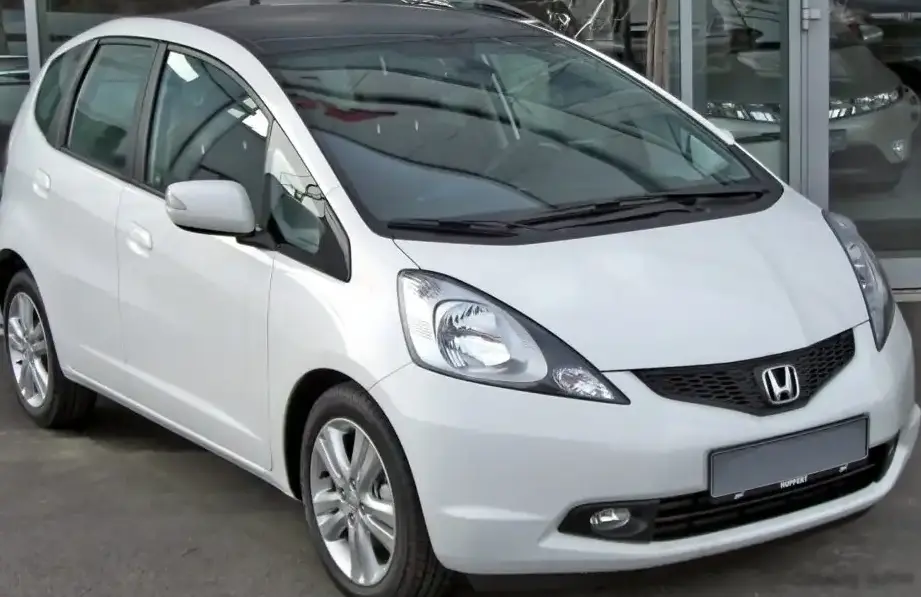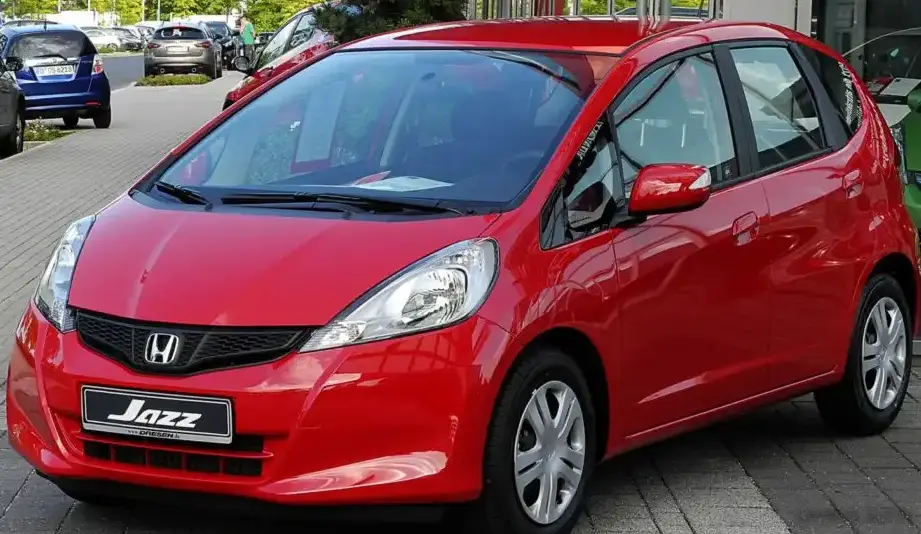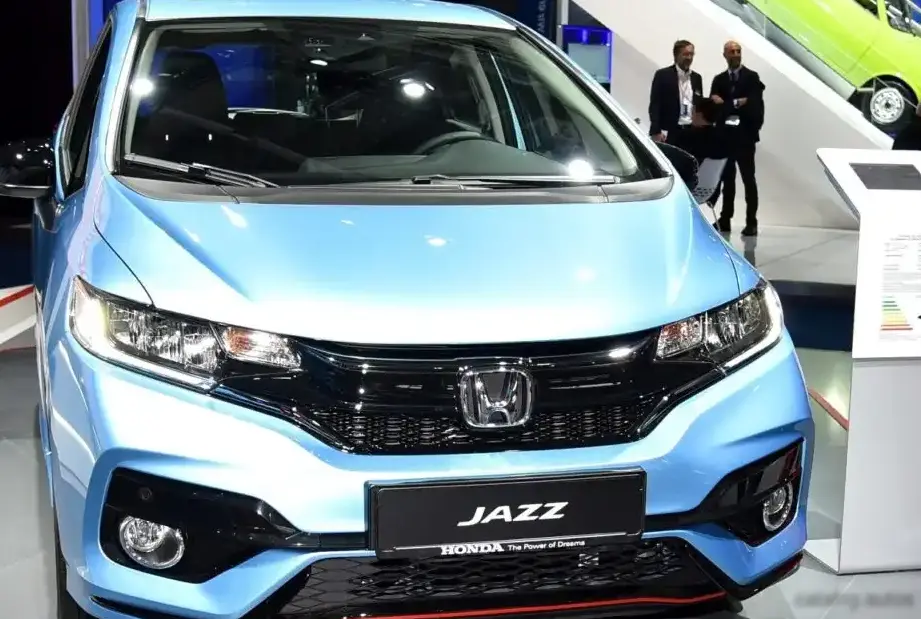
The Honda Jazz III (facelift, introduced in 2017) 1.3 i-VTEC, producing 102 horsepower, represented a key entry point into the third-generation Jazz (Fit in North America) lineup. Produced from 2017 to 2020, this variant was primarily aimed at buyers seeking a fuel-efficient, practical, and reliable hatchback. It occupied the lower-mid range of the Jazz offerings, positioned below the more powerful 1.5-liter engine options. The facelift brought subtle styling updates and improvements to interior trim and technology, building upon the already successful foundation of the GE/GK platform (Jazz III). This model was particularly popular in the European and Asian markets, where compact hatchbacks are highly sought after.
Technical Specifications
| Brand | Honda |
| Model | Jazz |
| Generation | Jazz III (facelift 2017) |
| Type (Engine) | 1.3 i-VTEC (102 Hp) |
| Start of production | 2017 |
| End of production | 2020 |
| Powertrain Architecture | Internal Combustion engine |
| Body type | Hatchback |
| Seats | 5 |
| Doors | 5 |
| Fuel consumption at Low speed (WLTP) | 6.9-7 l/100 km (34.1 – 33.6 US mpg, 40.9 – 40.4 UK mpg, 14.5 – 14.3 km/l) |
| Fuel consumption at Medium speed (WLTP) | 5.3-5.5 l/100 km (44.4 – 42.8 US mpg, 53.3 – 51.4 UK mpg, 18.9 – 18.2 km/l) |
| Fuel consumption at high speed (WLTP) | 5-5.2 l/100 km (47 – 45.2 US mpg, 56.5 – 54.3 UK mpg, 20 – 19.2 km/l) |
| Fuel consumption at very high speed (WLTP) | 6.3-6.5 l/100 km (37.3 – 36.2 US mpg, 44.8 – 43.5 UK mpg, 15.9 – 15.4 km/l) |
| Combined fuel consumption (WLTP) | 5.8-6.0 l/100 km (40.6 – 39.2 US mpg, 48.7 – 47.1 UK mpg, 17.2 – 16.7 km/l) |
| CO2 emissions (WLTP) | 117-119 g/km |
| Fuel consumption (economy) – urban | 6.2-6.3 l/100 km (37.9 – 37.3 US mpg, 45.6 – 44.8 UK mpg, 16.1 – 15.9 km/l) |
| Fuel consumption (economy) – extra urban | 4.4-4.6 l/100 km (53.5 – 51.1 US mpg, 64.2 – 61.4 UK mpg, 22.7 – 21.7 km/l) |
| Fuel consumption (economy) – combined | 5.1-5.2 l/100 km (46.1 – 45.2 US mpg, 55.4 – 54.3 UK mpg, 19.6 – 19.2 km/l) |
| CO2 emissions | 116-120 g/km |
| Fuel Type | Petrol (Gasoline) |
| Acceleration 0 – 100 km/h | 11.2-11.4 sec |
| Acceleration 0 – 62 mph | 11.2-11.4 sec |
| Acceleration 0 – 60 mph | 10.6 sec |
| Maximum speed | 190 km/h (118.06 mph) |
| Emission standard | Euro 6 |
| Weight-to-power ratio | 9.8 kg/Hp, 102.2 Hp/tonne |
| Weight-to-torque ratio | 8.1 kg/Nm, 123.2 Nm/tonne |
| Power | 102 Hp @ 6000 rpm |
| Power per litre | 77.4 Hp/l |
| Torque | 123 Nm @ 5000 rpm (90.72 lb.-ft. @ 5000 rpm) |
| Engine layout | Front, Transverse |
| Engine Model/Code | L13B, L13B2 |
| Engine displacement | 1318 cm3 (80.43 cu. in.) |
| Number of cylinders | 4 |
| Engine configuration | Inline |
| Cylinder Bore | 73 mm (2.87 in.) |
| Piston Stroke | 78.7 mm (3.1 in.) |
| Compression ratio | 13.5:1 |
| Number of valves per cylinder | 4 |
| Fuel injection system | Direct injection |
| Engine aspiration | Naturally aspirated engine |
| Valvetrain | DOHC |
| Engine oil capacity | 3.6 l (3.8 US qt | 3.17 UK qt) |
| Coolant | 3.35 l (3.54 US qt | 2.95 UK qt) |
| Kerb Weight | 998-1035 kg (2200.21 – 2281.78 lbs.) |
| Max. weight | 1605 kg (3538.42 lbs.) |
| Max load | 570-607 kg (1256.63 – 1338.21 lbs.) |
| Trunk (boot) space – minimum | 354 l (12.5 cu. ft.) |
| Trunk (boot) space – maximum | 1314 l (46.4 cu. ft.) |
| Fuel tank capacity | 40 l (10.57 US gal | 8.8 UK gal) |
| Max. roof load | 35 kg (77.16 lbs.) |
| Permitted trailer load with brakes (12%) | 1000 kg (2204.62 lbs.) |
| Permitted trailer load without brakes | 450 kg (992.08 lbs.) |
| Permitted towbar download | 95 kg (209.44 lbs.) |
| Length | 4028 mm (158.58 in.) |
| Width | 1694 mm (66.69 in.) |
| Width including mirrors | 1980 mm (77.95 in.) |
| Height | 1525 mm (60.04 in.) |
| Wheelbase | 2530 mm (99.61 in.) |
| Front track | 1483-1477 mm (58.39 – 58.15 in.) |
| Rear (Back) track | 1472-1466 mm (57.95 – 57.72 in.) |
| Ride height (ground clearance) | 110 mm (4.33 in.) |
| Minimum turning circle (turning diameter) | 10.6-11.2 m (34.78 – 36.75 ft.) |
| Drivetrain Architecture | The Internal combustion engine (ICE) drives the front wheels of the vehicle. |
| Drive wheel | Front wheel drive |
| Number of gears and type of gearbox | 6 gears, manual transmission |
| Front suspension | Independent type McPherson |
| Rear suspension | Semi-independent, coil spring |
| Front brakes | Ventilated discs |
| Rear brakes | Disc |
| Assisting systems | ABS (Anti-lock braking system) |
| Steering type | Steering rack and pinion |
| Power steering | Electric Steering |
| Tires size | 185/60 R15 84H; 185/55 R16 83H |
| Wheel rims size | 6J x 15; 6J x 16 |
INTRODUCTION
The Honda Jazz III, launched in 2014 and receiving a facelift in 2017, continued Honda’s tradition of offering a remarkably practical and versatile subcompact hatchback. The 1.3 i-VTEC variant, producing 102 horsepower, was a mainstay of the range, particularly in markets where smaller engines were favored due to tax regulations or fuel economy concerns. This engine was offered with either a six-speed manual transmission or a Continuously Variable Transmission (CVT), with the CVT being a popular choice for its ease of use in urban environments. The 2017 facelift brought minor cosmetic changes, improved safety features, and refinements to the interior, enhancing the Jazz’s appeal as a well-rounded daily driver.
Powertrain & Engine Architecture
The heart of this Jazz variant is the L13B2 engine, a 1.3-liter inline-four cylinder gasoline engine. This engine is part of Honda’s i-VTEC family, utilizing variable valve timing and lift on both the intake and exhaust valves to optimize performance and fuel efficiency across the rev range. The L13B2 features multi-point fuel injection and a compression ratio of 13.5:1. The engine’s design prioritizes fuel economy and smooth operation over outright power. The automatic transmission offered with this engine is a CVT, known for its seamless gear changes and ability to keep the engine operating in its most efficient range. Unlike traditional automatic transmissions with fixed gear ratios, the CVT utilizes a belt and pulley system to provide a virtually infinite number of gear ratios.
Driving Characteristics
The 1.3 i-VTEC with the CVT delivers a comfortable and predictable driving experience. Acceleration is adequate for everyday driving, with a 0-60 mph time of around 10.6 seconds. However, it’s not a particularly sporty engine; power delivery is linear but lacks the punch of the 1.5-liter variants. The CVT contributes to smooth acceleration, but can sometimes feel slightly disconnected from the engine, especially during hard acceleration where the engine may ‘drone’ at a constant RPM. The gear ratios are optimized for fuel efficiency, meaning the engine rarely operates at high RPMs during normal driving. Compared to the manual transmission version, the CVT offers greater convenience in stop-and-go traffic, but sacrifices some driver engagement.
Equipment & Trim Levels
The 1.3 i-VTEC typically came equipped with a reasonable level of standard features. Base models included air conditioning, power windows, power mirrors, and a basic audio system. Higher trim levels, such as the ‘SE’ or ‘EX’ trims, added features like alloy wheels, a touchscreen infotainment system with Bluetooth connectivity, a reversing camera, and climate control. Optional extras included Honda’s ‘Magic Seats’ – a unique feature allowing the rear seats to fold flat or flip up to create a tall cargo area – and parking sensors. Interior upholstery was typically cloth, with higher trims offering upgraded fabric or partial leather options.
Chassis & Braking
The Jazz III utilizes a front-wheel-drive layout with a MacPherson strut suspension in the front and a semi-independent torsion beam suspension in the rear. This setup provides a comfortable ride quality, although it’s not particularly sporty. Braking duties are handled by ventilated discs on the front wheels and solid discs on the rear. ABS (Anti-lock Braking System) is standard. The relatively light weight of the 1.3 i-VTEC variant contributes to its manageable handling characteristics. Stabilizer bars are fitted to both the front and rear axles to reduce body roll during cornering.
Market Reception & Comparison
The 1.3 i-VTEC Jazz was generally well-received by critics for its practicality, fuel efficiency, and reliability. However, some reviewers noted its lack of outright performance compared to rivals. Compared to the 1.5-liter Jazz variants, the 1.3 offered significantly lower running costs but at the expense of acceleration and overall driving enjoyment. The CVT transmission was praised for its smoothness and efficiency, but some drivers preferred the more engaging experience of the manual gearbox. Fuel economy figures consistently ranked among the best in its class, making it an attractive option for budget-conscious buyers.
Legacy
The Honda Jazz III 1.3 i-VTEC has proven to be a reliable and durable vehicle. The L13B2 engine is known for its longevity, and the CVT transmission, while requiring regular fluid changes, is generally dependable. In the used car market, these models hold their value reasonably well, particularly those with low mileage and a full service history. The Jazz’s reputation for practicality and reliability continues to make it a popular choice for urban commuters and small families. Its efficient engine and spacious interior ensure it remains a relevant and appealing option in the subcompact hatchback segment.