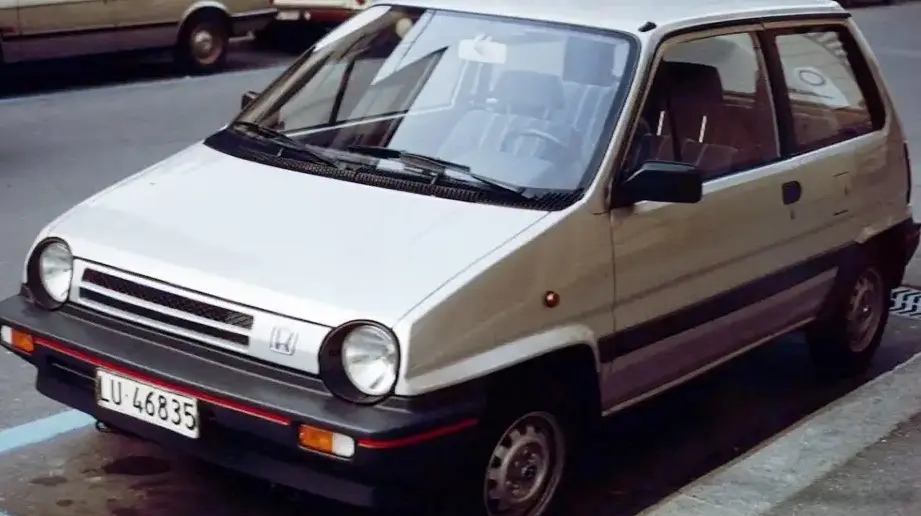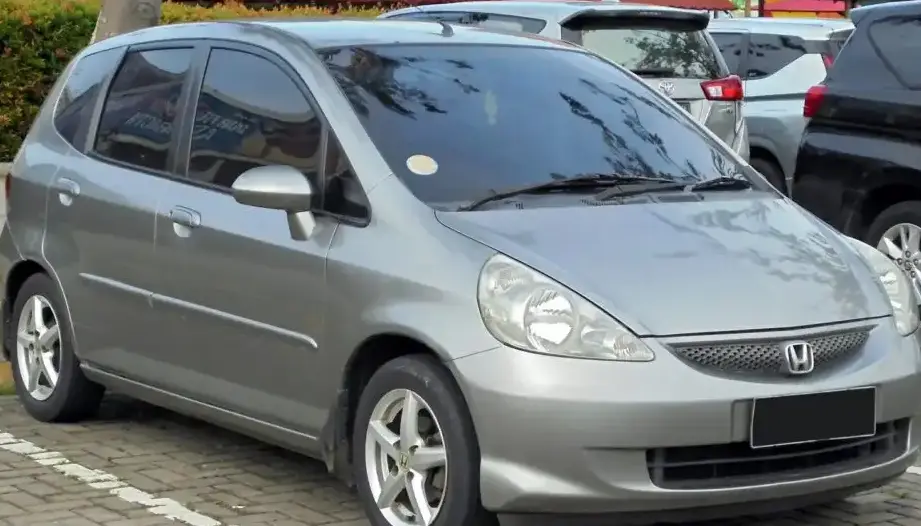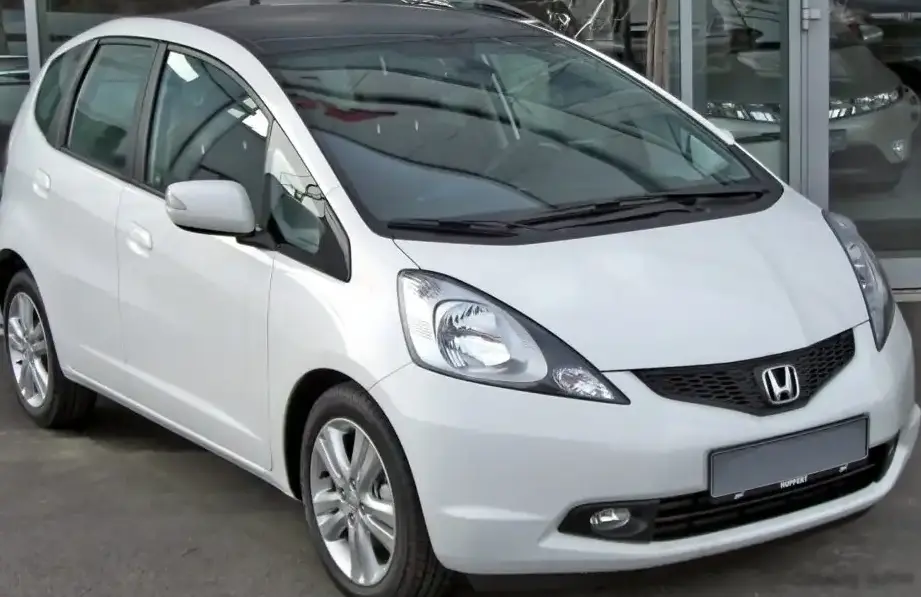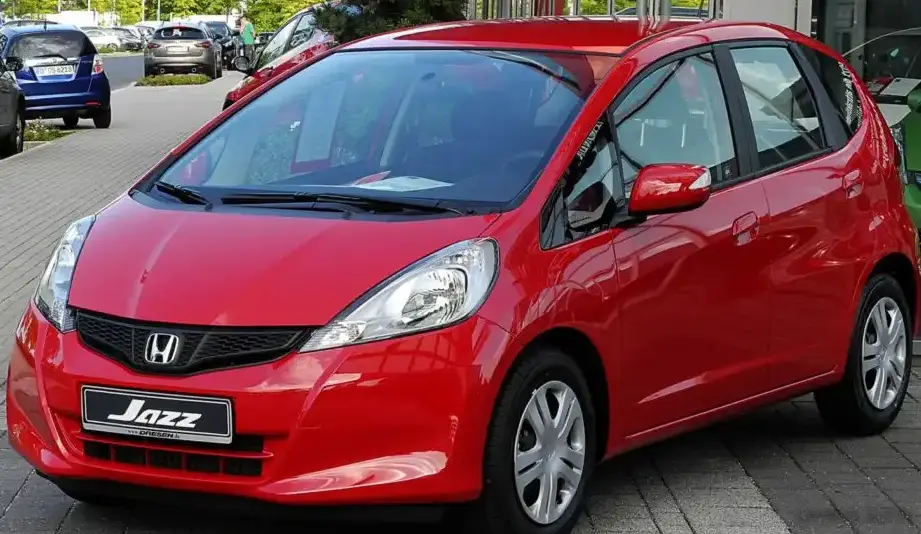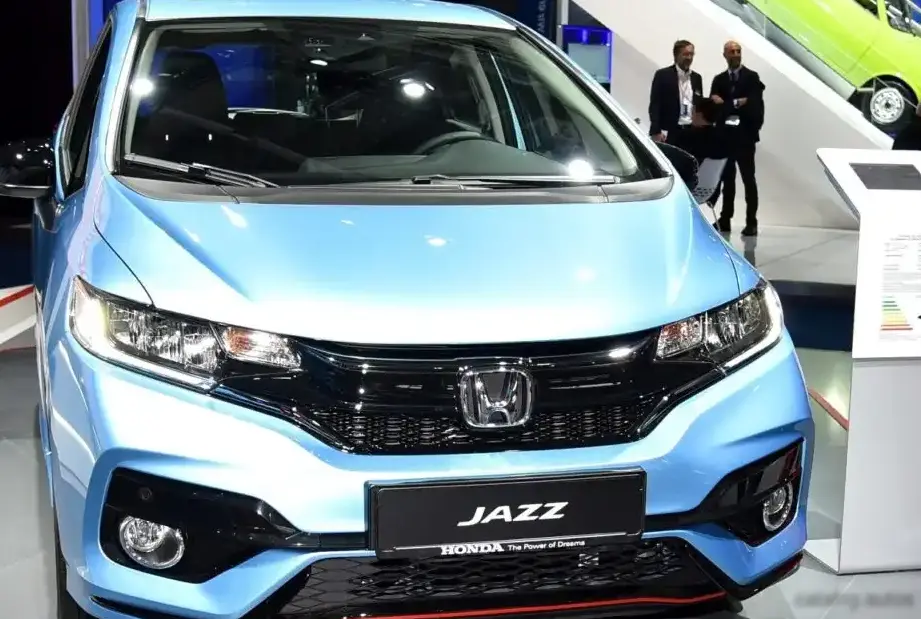
The Honda Jazz III (facelift, introduced in 2017) 1.3 i-VTEC with a Continuously Variable Transmission (CVT) represents a key variant within the third generation of Honda’s globally successful subcompact hatchback. Produced from 2017 to 2020, this model aimed to provide an accessible and fuel-efficient entry point into the Jazz lineup, particularly in European and Asian markets. It’s built on the versatile 1HX0/A3 platform, shared with other Honda models like the Honda City and the Honda Vezel/HR-V. This specific configuration was designed to appeal to buyers prioritizing economy and ease of use over outright performance.
Technical Specifications
| Brand | Honda |
| Model | Jazz |
| Generation | Jazz III (facelift 2017) |
| Type (Engine) | 1.3 i-VTEC (102 Hp) CVT |
| Start of production | 2017 |
| End of production | 2020 |
| Powertrain Architecture | Internal Combustion engine |
| Body type | Hatchback |
| Seats | 5 |
| Doors | 5 |
| Fuel consumption at Low speed (WLTP) | 7.4-7.8 l/100 km (31.8 – 30.2 US mpg, 38.2 – 36.2 UK mpg, 13.5 – 12.8 km/l) |
| Fuel consumption at Medium speed (WLTP) | 5.1-5.5 l/100 km (46.1 – 42.8 US mpg, 55.4 – 51.4 UK mpg, 19.6 – 18.2 km/l) |
| Fuel consumption at high speed (WLTP) | 4.9-5.2 l/100 km (48 – 45.2 US mpg, 57.6 – 54.3 UK mpg, 20.4 – 19.2 km/l) |
| Fuel consumption at very high speed (WLTP) | 6.4-6.7 l/100 km (36.8 – 35.1 US mpg, 44.1 – 42.2 UK mpg, 15.6 – 14.9 km/l) |
| Combined fuel consumption (WLTP) | 5.8-6.1 l/100 km (40.6 – 38.6 US mpg, 48.7 – 46.3 UK mpg, 17.2 – 16.4 km/l) |
| CO2 emissions (WLTP) | 106-111 g/km |
| Fuel consumption (economy) – urban | 5.4-5.6 l/100 km (43.6 – 42 US mpg, 52.3 – 50.4 UK mpg, 18.5 – 17.9 km/l) |
| Fuel consumption (economy) – extra urban | 4.2-4.6 l/100 km (56 – 51.1 US mpg, 67.3 – 61.4 UK mpg, 23.8 – 21.7 km/l) |
| Fuel consumption (economy) – combined | 4.7-5.0 l/100 km (50 – 47 US mpg, 60.1 – 56.5 UK mpg, 21.3 – 20 km/l) |
| CO2 emissions | 106-114 g/km |
| Fuel Type | Petrol (Gasoline) |
| Acceleration 0 – 100 km/h | 12.0-12.3 sec |
| Acceleration 0 – 62 mph | 12.0-12.3 sec |
| Acceleration 0 – 60 mph | 11.4 sec |
| Maximum speed | 182 km/h (113.09 mph) |
| Emission standard | Euro 6 |
| Weight-to-power ratio | 10 kg/Hp, 100.2 Hp/tonne |
| Weight-to-torque ratio | 8.3 kg/Nm, 120.8 Nm/tonne |
| Power | 102 Hp @ 6000 rpm |
| Power per litre | 77.4 Hp/l |
| Torque | 123 Nm @ 5000 rpm (90.72 lb.-ft. @ 5000 rpm) |
| Engine layout | Front, Transverse |
| Engine Model/Code | L13B, L13B2 |
| Engine displacement | 1318 cm3 (80.43 cu. in.) |
| Number of cylinders | 4 |
| Engine configuration | Inline |
| Cylinder Bore | 73 mm (2.87 in.) |
| Piston Stroke | 78.7 mm (3.1 in.) |
| Compression ratio | 13.5:1 |
| Number of valves per cylinder | 4 |
| Fuel injection system | Direct injection |
| Engine aspiration | Naturally aspirated engine |
| Valvetrain | DOHC |
| Engine oil capacity | 3.6 l (3.8 US qt | 3.17 UK qt) |
| Coolant | 3.48 l (3.68 US qt | 3.06 UK qt) |
| Kerb Weight | 1018-1055 kg (2244.31 – 2325.88 lbs.) |
| Max. weight | 1605 kg (3538.42 lbs.) |
| Max load | 550-587 kg (1212.54 – 1294.11 lbs.) |
| Trunk (boot) space – minimum | 354 l (12.5 cu. ft.) |
| Trunk (boot) space – maximum | 1314 l (46.4 cu. ft.) |
| Fuel tank capacity | 40 l (10.57 US gal | 8.8 UK gal) |
| Max. roof load | 35 kg (77.16 lbs.) |
| Permitted trailer load with brakes (12%) | 1000 kg (2204.62 lbs.) |
| Permitted trailer load without brakes | 450 kg (992.08 lbs.) |
| Permitted towbar download | 95 kg (209.44 lbs.) |
| Length | 4028 mm (158.58 in.) |
| Width | 1694 mm (66.69 in.) |
| Width including mirrors | 1980 mm (77.95 in.) |
| Height | 1525 mm (60.04 in.) |
| Wheelbase | 2530 mm (99.61 in.) |
| Front track | 1483-1477 mm (58.39 – 58.15 in.) |
| Rear (Back) track | 1472-1466 mm (57.95 – 57.72 in.) |
| Ride height (ground clearance) | 110 mm (4.33 in.) |
| Minimum turning circle (turning diameter) | 10.6-11.2 m (34.78 – 36.75 ft.) |
| Drivetrain Architecture | The Internal combustion engine (ICE) drives the front wheels of the vehicle. |
| Drive wheel | Front wheel drive |
| Number of gears and type of gearbox | automatic transmission CVT |
| Front suspension | Independent type McPherson |
| Rear suspension | Semi-independent, coil spring |
| Front brakes | Ventilated discs |
| Rear brakes | Disc |
| Assisting systems | ABS (Anti-lock braking system) |
| Steering type | Steering rack and pinion |
| Power steering | Electric Steering |
| Tires size | 185/60 R15 84H; 185/55 R16 83H |
| Wheel rims size | 6J x 15; 6J x 16 |
INTRODUCTION
The 2017-2020 Honda Jazz 1.3 i-VTEC CVT is a front-wheel-drive, five-door hatchback that served as a cornerstone of Honda’s European and Asian small car offerings. As part of the third-generation Jazz (GE/GK series), the facelifted model introduced subtle styling revisions and continued the model’s reputation for practicality, fuel efficiency, and innovative space management – particularly its “Magic Seats” system. This variant, equipped with the 1.3-liter engine and CVT, was positioned as the entry-level or mid-range option, appealing to buyers seeking a reliable and economical city car. It was a significant model for Honda, contributing to the Jazz’s consistent sales success in competitive segments.
Powertrain & Engine Architecture
At the heart of this Jazz variant lies the Honda L13B2 engine, a 1318cc inline-four cylinder gasoline engine. This engine is part of Honda’s i-VTEC family, utilizing variable valve timing and lift on both the intake and exhaust valves to optimize performance and fuel efficiency across the rev range. The L13B2 features direct fuel injection, contributing to cleaner combustion and improved throttle response. The engine produces 102 horsepower at 6000 rpm and 123 Nm (90.72 lb-ft) of torque at 5000 rpm. Paired with this engine is Honda’s CVT (Continuously Variable Transmission), designed to provide smooth, stepless gear changes and maximize fuel economy. Unlike traditional automatic transmissions with fixed gear ratios, the CVT uses a belt and pulley system to offer an infinite number of ratios within its operating range. This specific CVT unit is tuned for efficiency and comfort rather than sporty acceleration.
Driving Characteristics
The 1.3 i-VTEC CVT Jazz delivers a comfortable and predictable driving experience. Acceleration is adequate for urban and suburban driving, with a 0-60 mph time of around 11.4 seconds. However, it’s not a particularly quick car; the CVT prioritizes fuel economy over rapid acceleration. The CVT tends to hold the engine at a relatively constant rpm during acceleration, which can result in a somewhat droning engine note. Compared to the manual transmission versions of the 1.3 Jazz, the CVT sacrifices some responsiveness for ease of use. Higher-spec Jazz models equipped with the 1.5-liter engine offer significantly more power and a more engaging driving experience, but at the cost of increased fuel consumption. The gear ratios in the CVT are optimized for low-speed efficiency and smooth cruising, making it well-suited for city traffic.
Equipment & Trim Levels
The 1.3 i-VTEC CVT Jazz typically came equipped with a reasonable level of standard features. These generally included air conditioning, power windows, power door locks, a basic audio system with USB connectivity, and ABS brakes. Higher trim levels, often denoted by “SE” or “EX” designations, added features such as alloy wheels, a touchscreen infotainment system with Apple CarPlay and Android Auto compatibility, a rearview camera, and climate control. Interior upholstery was typically cloth, with a functional and durable design. Optional extras included parking sensors, navigation systems, and premium audio upgrades.
Chassis & Braking
The Jazz III utilizes a McPherson strut front suspension and a semi-independent torsion beam rear suspension. This setup provides a good balance between ride comfort and handling. The front brakes are ventilated discs, while the rear brakes are discs on most trims, providing adequate stopping power for the vehicle’s weight and performance. The steering is electrically assisted, offering light and precise control. The chassis is designed to maximize interior space and minimize weight, contributing to the car’s fuel efficiency. Stabilizer bars are fitted to both the front and rear axles to reduce body roll during cornering.
Market Reception & Comparison
The Honda Jazz 1.3 i-VTEC CVT was generally well-received by automotive critics for its practicality, fuel efficiency, and reliability. However, some reviewers criticized its lack of outright performance and the somewhat uninspiring driving experience offered by the CVT. Compared to other small hatchbacks in its class, such as the Volkswagen Polo or the Ford Fiesta, the Jazz stood out for its spacious interior and innovative “Magic Seats” system. The 1.5-liter Jazz models offered a more compelling driving experience but came at a higher price point. In terms of fuel economy, the 1.3 i-VTEC CVT consistently outperformed many of its rivals, making it an attractive option for budget-conscious buyers.
Legacy
The Honda Jazz III 1.3 i-VTEC CVT has proven to be a reliable and durable vehicle, with many examples still on the road today. The L13B2 engine is known for its longevity and relatively low maintenance costs. The CVT transmission, while not as robust as a traditional automatic, has also proven to be generally reliable with regular fluid changes. In the used car market, this variant represents a good value proposition for buyers seeking a practical, economical, and dependable small car. Its reputation for reliability and fuel efficiency continues to make it a popular choice among those looking for a hassle-free ownership experience.