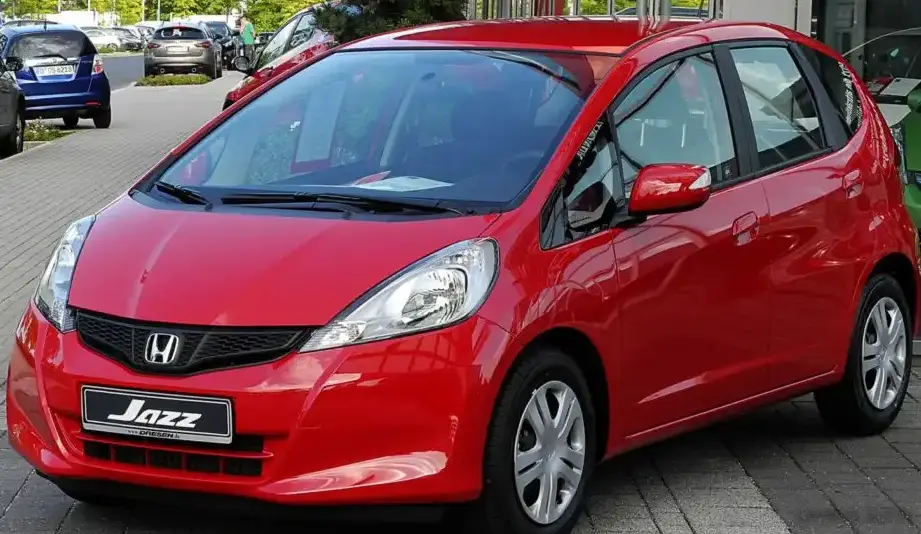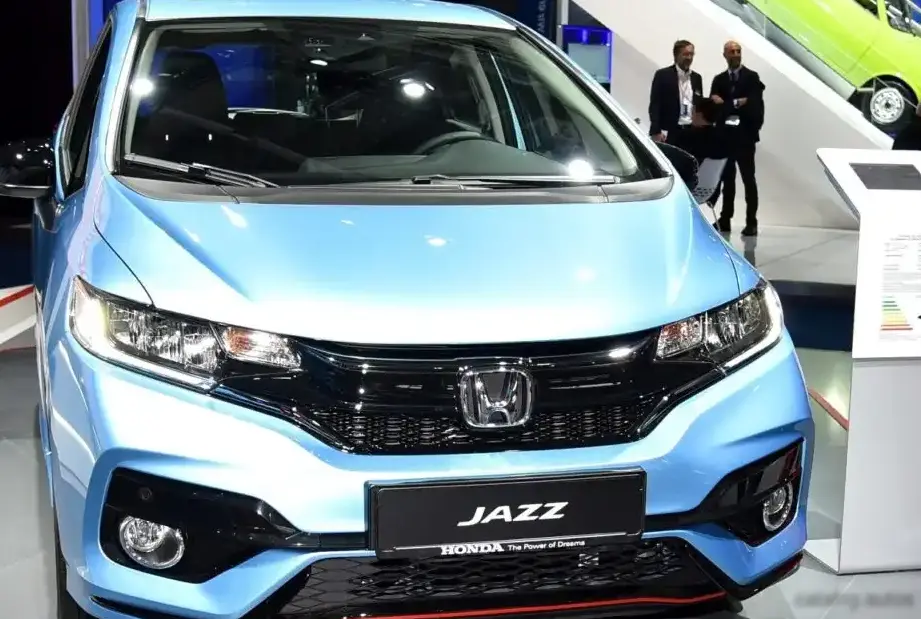
The Honda Jazz III (facelift, introduced in 2017) 1.5 i-VTEC, producing 130 horsepower, represents a significant iteration within the third generation of Honda’s globally successful subcompact hatchback. Production of this specific variant ran from 2018 to 2020. Positioned as a mid-range offering within the Jazz III lineup, it aimed to balance fuel efficiency, practicality, and a more engaging driving experience compared to the base models. The Jazz, known as the Honda Fit in North America, has consistently been a popular choice for buyers seeking a versatile and reliable vehicle, particularly in Europe and Asia, where the subcompact segment is highly competitive.
Technical Specifications
| Brand | Honda |
| Model | Jazz |
| Generation | Jazz III (facelift 2017) |
| Type (Engine) | 1.5 i-VTEC (130 Hp) |
| Start of production | 2018 |
| End of production | 2020 |
| Powertrain Architecture | Internal Combustion engine |
| Body type | Hatchback |
| Seats | 5 |
| Doors | 5 |
| Fuel consumption at Low speed (WLTP) | 8.5 l/100 km (27.7 US mpg, 33.2 UK mpg, 11.8 km/l) |
| Fuel consumption at Medium speed (WLTP) | 6 l/100 km (39.2 US mpg, 47.1 UK mpg, 16.7 km/l) |
| Fuel consumption at high speed (WLTP) | 5.5 l/100 km (42.8 US mpg, 51.4 UK mpg, 18.2 km/l) |
| Fuel consumption at very high speed (WLTP) | 7.1 l/100 km (33.1 US mpg, 39.8 UK mpg, 14.1 km/l) |
| Combined fuel consumption (WLTP) | 6.6 l/100 km (35.6 US mpg, 42.8 UK mpg, 15.2 km/l) |
| CO2 emissions (WLTP) | 125 g/km |
| Fuel consumption (economy) – urban | 7.2 l/100 km (32.7 US mpg, 39.2 UK mpg, 13.9 km/l) |
| Fuel consumption (economy) – extra urban | 5.1 l/100 km (46.1 US mpg, 55.4 UK mpg, 19.6 km/l) |
| Fuel consumption (economy) – combined | 5.9 l/100 km (39.9 US mpg, 47.9 UK mpg, 16.9 km/l) |
| CO2 emissions | 133 g/km |
| Fuel Type | Petrol (Gasoline) |
| Acceleration 0 – 100 km/h | 8.7 sec |
| Acceleration 0 – 62 mph | 8.7 sec |
| Acceleration 0 – 60 mph | 8.3 sec |
| Maximum speed | 190 km/h (118.06 mph) |
| Emission standard | Euro 6 |
| Weight-to-power ratio | 7.9 kg/Hp, 126.3 Hp/tonne |
| Weight-to-torque ratio | 6.6 kg/Nm, 150.6 Nm/tonne |
| Power | 130 Hp @ 6600 rpm |
| Power per litre | 86.8 Hp/l |
| Torque | 155 Nm @ 4600 rpm (114.32 lb.-ft. @ 4600 rpm) |
| Engine layout | Front, Transverse |
| Engine Model/Code | L15B3 |
| Engine displacement | 1498 cm3 (91.41 cu. in.) |
| Number of cylinders | 4 |
| Engine configuration | Inline |
| Cylinder Bore | 73 mm (2.87 in.) |
| Piston Stroke | 89.5 mm (3.52 in.) |
| Compression ratio | 11.5:1 |
| Number of valves per cylinder | 4 |
| Fuel injection system | Direct injection |
| Engine aspiration | Naturally aspirated engine |
| Valvetrain | DOHC |
| Engine oil capacity | 3.6 l (3.8 US qt, 3.17 UK qt) |
| Coolant | 3.35 l (3.54 US qt, 2.95 UK qt) |
| Kerb Weight | 1029-1041 kg (2268.56 – 2295.01 lbs.) |
| Max. weight | 1605 kg (3538.42 lbs.) |
| Max load | 564-576 kg (1243.41 – 1269.86 lbs.) |
| Trunk (boot) space – minimum | 354 l (12.5 cu. ft.) |
| Trunk (boot) space – maximum | 1314 l (46.4 cu. ft.) |
| Fuel tank capacity | 40 l (10.57 US gal, 8.8 UK gal) |
| Max. roof load | 35 kg (77.16 lbs.) |
| Permitted trailer load with brakes (12%) | 1000 kg (2204.62 lbs.) |
| Permitted trailer load without brakes | 450 kg (992.08 lbs.) |
| Permitted towbar download | 95 kg (209.44 lbs.) |
| Length | 4051 mm (159.49 in.) |
| Width | 1694 mm (66.69 in.) |
| Width including mirrors | 1980 mm (77.95 in.) |
| Height | 1525 mm (60.04 in.) |
| Wheelbase | 2530 mm (99.61 in.) |
| Front track | 1477 mm (58.15 in.) |
| Rear (Back) track | 1466 mm (57.72 in.) |
| Ride height (ground clearance) | 110 mm (4.33 in.) |
| Minimum turning circle (turning diameter) | 11.1 m (36.42 ft.) |
| Drivetrain Architecture | The Internal combustion engine (ICE) drives the front wheels of the vehicle. |
| Drive wheel | Front wheel drive |
| Number of gears and type of gearbox | 6 gears, manual transmission |
| Front suspension | Independent type McPherson |
| Rear suspension | Semi-independent, coil spring |
| Front brakes | Ventilated discs |
| Rear brakes | Disc |
| Assisting systems | ABS (Anti-lock braking system) |
| Steering type | Steering rack and pinion |
| Power steering | Electric Steering |
| Tires size | 185/55 R16 83H |
| Wheel rims size | 6J x 16 |
Powertrain & Engine Architecture
The heart of this Jazz variant is Honda’s L15B3 1.5-liter inline-four cylinder engine. This engine is part of Honda’s Earth Dreams Technology series, focusing on efficiency and reduced emissions. The L15B3 utilizes direct injection, a key component in achieving its power output and fuel economy. The engine features a double overhead camshaft (DOHC) valvetrain with four valves per cylinder, optimizing airflow for improved performance. The engine’s 11.5:1 compression ratio contributes to its thermal efficiency. The engine is transversely mounted, driving the front wheels. The 130 horsepower is delivered at 6600 rpm, with peak torque of 155 Nm (114.32 lb-ft) arriving at 4600 rpm. The engine is paired with a six-speed manual transmission, offering precise gear changes and a more engaging driving experience than the continuously variable transmission (CVT) option available on other Jazz trims.
Driving Characteristics
The 1.5 i-VTEC with the six-speed manual transmission provides a noticeably more spirited driving experience compared to lower-powered Jazz models. While not a performance car, the 130 hp engine offers sufficient power for everyday driving and highway overtaking. The six-speed gearbox allows the engine to remain within its optimal power band, providing responsive acceleration. The gear ratios are well-matched, contributing to a comfortable and efficient cruising experience. Compared to the CVT-equipped versions, the manual transmission offers a more direct connection between the driver and the engine, enhancing driver involvement. Acceleration from 0-60 mph is achieved in approximately 8.3 seconds, making it competitive within its class.
Equipment & Trim Levels
The 1.5 i-VTEC trim typically included standard features such as air conditioning, power windows, power mirrors, a basic audio system with USB connectivity, and Honda’s suite of safety features, including ABS, Vehicle Stability Assist (VSA), and multiple airbags. Higher trim levels offered options like a touchscreen infotainment system with Apple CarPlay and Android Auto integration, a rearview camera, automatic climate control, and alloy wheels. Interior upholstery was typically cloth, with a functional and durable design. The dashboard layout was clean and straightforward, prioritizing usability.
Chassis & Braking
The Jazz III utilizes a McPherson strut front suspension and a semi-independent torsion beam rear suspension. This setup provides a good balance between ride comfort and handling. The front brakes are ventilated discs, offering good stopping power, while the rear brakes are discs. The electric power steering provides light and precise steering feel. The Jazz’s relatively lightweight construction contributes to its agility and fuel efficiency. The 16-inch alloy wheels, often standard on this trim, provide a good compromise between aesthetics and ride comfort.
Market Reception & Comparison
The 1.5 i-VTEC manual Jazz was generally well-received by automotive critics. It was praised for its fuel efficiency, practicality, and surprisingly engaging driving experience. Compared to the base 1.3-liter models, the 1.5 offered a significant performance upgrade without sacrificing fuel economy. It was often seen as a sweet spot in the Jazz lineup, offering a good balance of features and performance at a reasonable price. Compared to competitors like the Volkswagen Polo or Ford Fiesta, the Jazz stood out for its spacious interior and innovative “Magic Seats” which allowed for versatile cargo configurations.
Legacy
The L15B3 engine has proven to be a reliable and durable powerplant. The Jazz III, in general, has a good reputation for reliability, and this 1.5 i-VTEC variant is no exception. On the used car market, these models are often sought after for their practicality, fuel efficiency, and relatively low maintenance costs. The six-speed manual transmission is particularly favored by enthusiasts who appreciate its engaging driving experience. While not a collector’s item, the Jazz III 1.5 i-VTEC remains a sensible and dependable choice for buyers seeking a well-rounded subcompact hatchback.