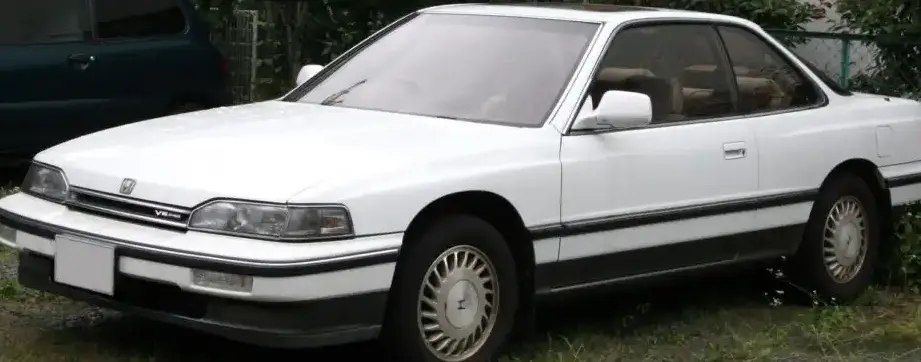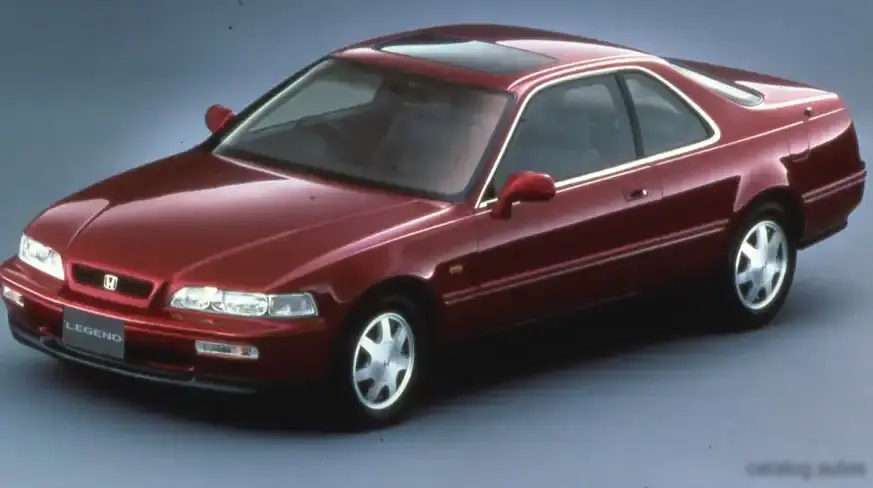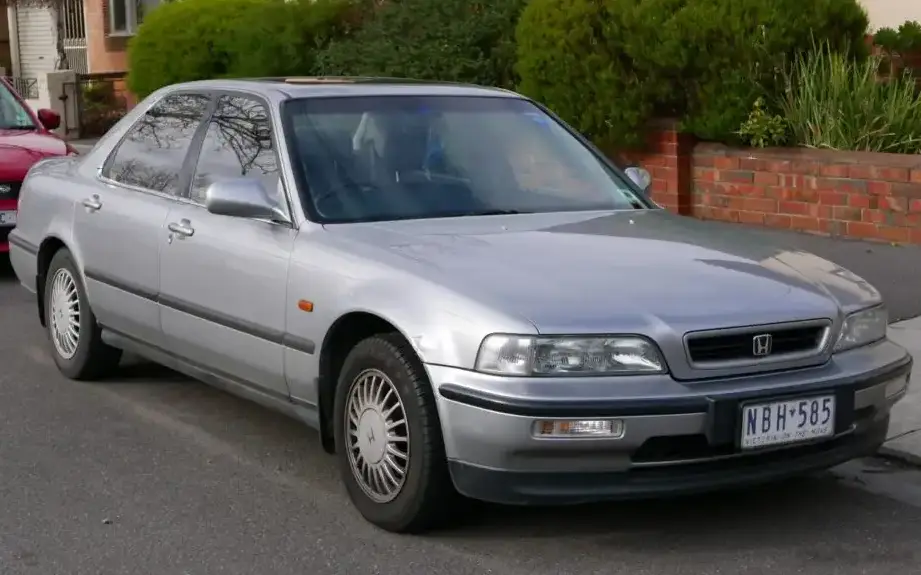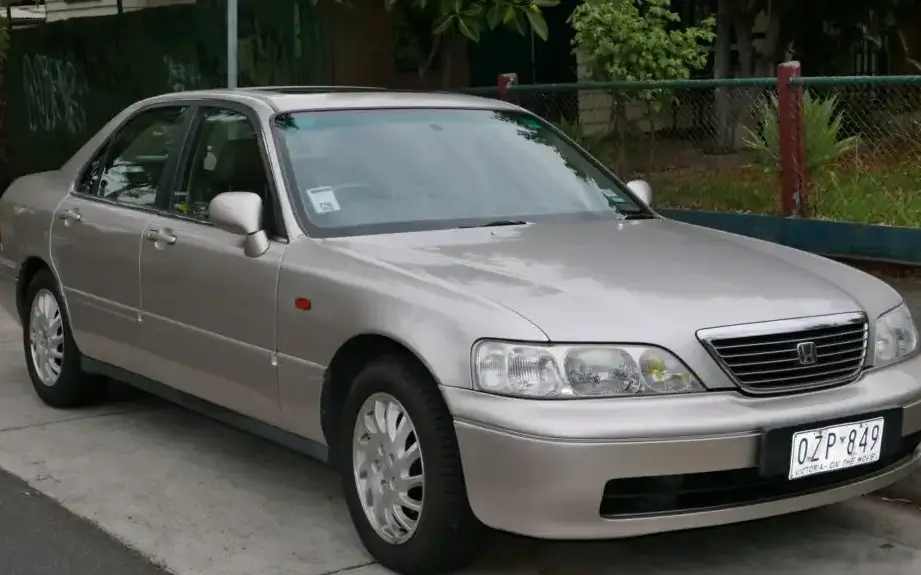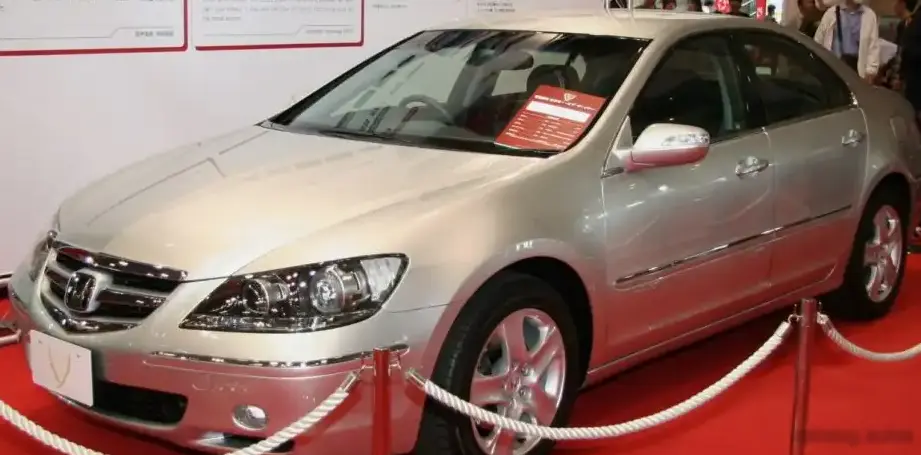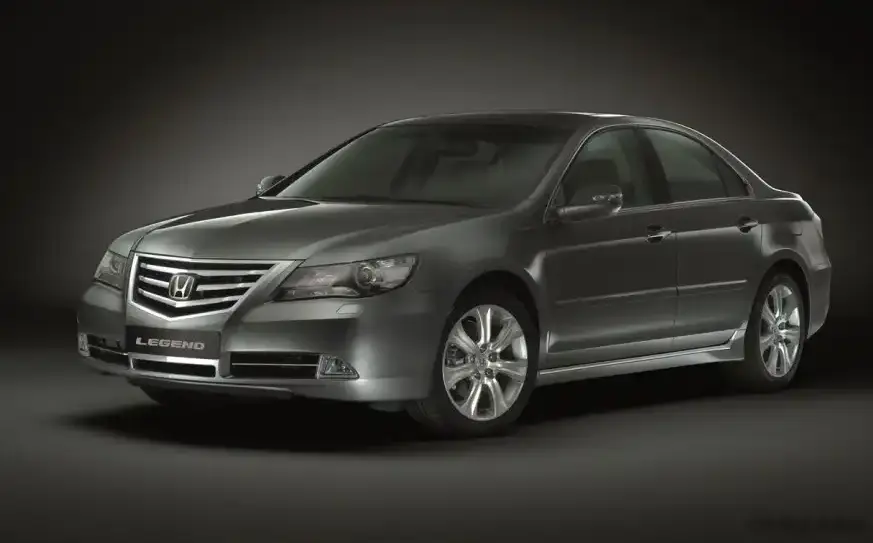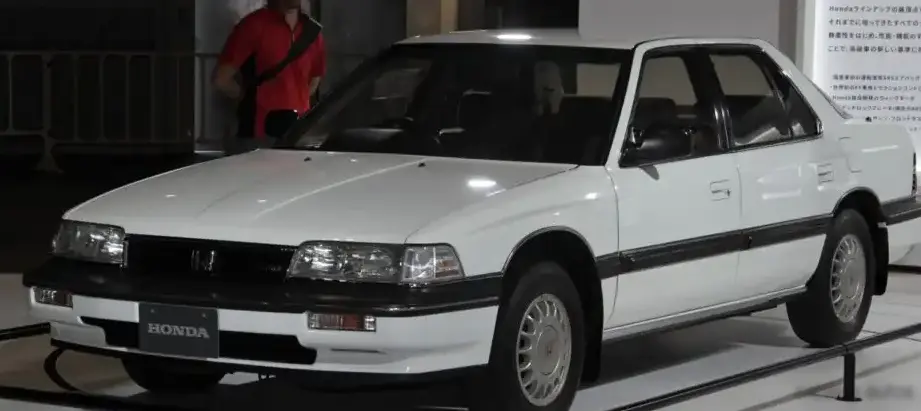
The Honda Legend, launched in 1986, represented Honda’s ambitious entry into the luxury sedan segment, aiming to compete with established European and American marques. The first generation, designated HS and KA, was a significant departure from Honda’s more economy-focused offerings. The 2.5i (HS) variant, producing 150 horsepower, was a key model within the initial Legend lineup, positioned as a well-equipped and comfortable offering for buyers seeking a premium driving experience. Production of this specific configuration spanned from 1986 to 1987, establishing the Legend as a noteworthy contender in the burgeoning luxury car market.
Technical Specifications
| Brand | Honda |
| Model | Legend |
| Generation | Legend I (HS,KA) |
| Type (Engine) | 2.5 i (HS) (150 Hp) |
| Start of production | 1986 |
| End of production | 1987 |
| Powertrain Architecture | Internal Combustion engine |
| Body type | Sedan |
| Seats | 5 |
| Doors | 4 |
| Fuel Type | Petrol (Gasoline) |
| Power | 150 Hp |
| Engine aspiration | Naturally aspirated engine |
| Drivetrain | Front wheel drive |
Introduction
The Honda Legend I (HS/KA) debuted as a response to the growing demand for Japanese luxury vehicles, particularly in the North American market. Honda sought to create a vehicle that offered the refinement and features of European sedans, but with Honda’s renowned reliability and build quality. The 2.5i (HS) model was a cornerstone of this effort, offering a balance of performance and comfort. It was built on Honda’s dedicated luxury platform, signifying a commitment to a higher standard of engineering and materials. The HS/KA generation Legend was sold primarily in Japan, North America, and select European markets.
Powertrain & Engine Architecture
The heart of the 2.5i (HS) Legend was the C25A engine, a 2.5-liter (2498cc) naturally aspirated inline-six cylinder engine. This engine was notable for its smooth operation and relatively high output for its time. The C25A featured a single overhead camshaft (SOHC) valvetrain with two valves per cylinder. Fuel delivery was managed by a multi-point fuel injection system, contributing to improved efficiency and responsiveness. The engine produced 150 horsepower at 5,800 rpm and 157 lb-ft of torque at 3,800 rpm. The engine was paired with a four-speed automatic transmission, designed for smooth and effortless shifting. This transmission was electronically controlled, a relatively advanced feature for the mid-1980s, and contributed to the Legend’s refined driving experience. The engine block was constructed from cast iron, while the cylinder head was made of aluminum, balancing durability with weight reduction.
Driving Characteristics
The 2.5i (HS) Legend offered a comfortable and composed driving experience. The inline-six engine provided ample power for everyday driving and highway cruising, although it wasn’t designed for outright sporty performance. The four-speed automatic transmission was tuned for smoothness rather than aggressive shifting, prioritizing comfort over rapid acceleration. The front-wheel-drive configuration provided predictable handling, and the suspension was tuned to absorb bumps and provide a stable ride. Compared to potential future performance variants, the 2.5i (HS) prioritized a relaxed and refined driving experience. While later Legends would offer more powerful engines and sport-tuned suspensions, the 2.5i (HS) focused on providing a comfortable and luxurious ride. The gear ratios in the automatic transmission were optimized for fuel efficiency and smooth acceleration, rather than maximizing performance.
Equipment & Trim Levels
The 2.5i (HS) Legend came standard with a generous array of features for its time. Standard equipment typically included power windows, power locks, power steering, air conditioning, and a high-quality audio system. The interior was trimmed with comfortable cloth upholstery, and the dashboard featured woodgrain accents. Optional extras included a sunroof, leather upholstery, and upgraded audio systems. The Legend’s interior was designed to create a sense of spaciousness and luxury, with attention paid to detail and material quality. The instrument panel was well-organized and easy to read, and the controls were logically placed. The HS trim generally represented a well-equipped base model, offering a significant step up in features and refinement compared to Honda’s more mainstream offerings.
Chassis & Braking
The Legend I (HS/KA) utilized an independent suspension system at all four wheels, featuring MacPherson struts in the front and a multi-link setup in the rear. This suspension design contributed to the car’s comfortable ride and stable handling. The braking system consisted of ventilated disc brakes in the front and drum brakes in the rear. While the front discs provided ample stopping power, the rear drums were a cost-saving measure. Anti-lock brakes (ABS) were available as an option, enhancing safety and control during hard braking. The chassis was designed to be rigid and durable, providing a solid foundation for the suspension and contributing to the car’s overall refinement. A stabilizer bar was fitted to both the front and rear suspension to reduce body roll during cornering.
Market Reception & Comparison
The Honda Legend I (HS/KA) was generally well-received by automotive critics. It was praised for its smooth engine, comfortable ride, and well-appointed interior. Critics noted that the Legend offered a compelling alternative to established European luxury sedans, providing similar levels of refinement and features at a more competitive price point. Compared to other trims in the Legend lineup, the 2.5i (HS) offered a balance of value and features. It was more affordable than the higher-end models, but still provided a luxurious and comfortable driving experience. Fuel economy was respectable for a vehicle of its size and class, averaging around 18-22 mpg in combined driving. Reliability was also a strong point, consistent with Honda’s reputation for building durable and dependable vehicles.
Legacy
The Honda Legend I (HS/KA) established Honda as a serious player in the luxury car market. The C25A engine proved to be a reliable and durable powerplant, and many examples are still on the road today. The 2.5i (HS) variant, while not the most powerful or sporty version of the Legend, remains a popular choice among enthusiasts seeking a comfortable and well-maintained classic car. In the used car market, these Legends are appreciated for their simplicity, reliability, and relatively low maintenance costs. Parts availability is generally good, and the car’s straightforward design makes it relatively easy to repair. The Legend’s success paved the way for subsequent generations of the model, which continued to build on its reputation for luxury, refinement, and reliability.