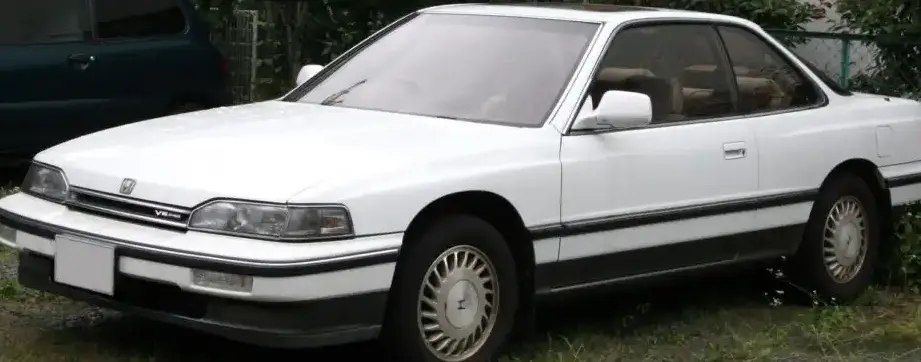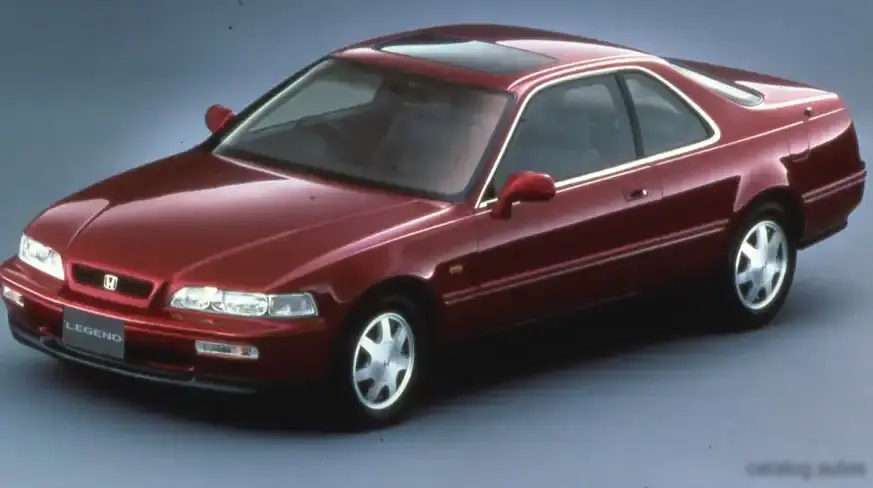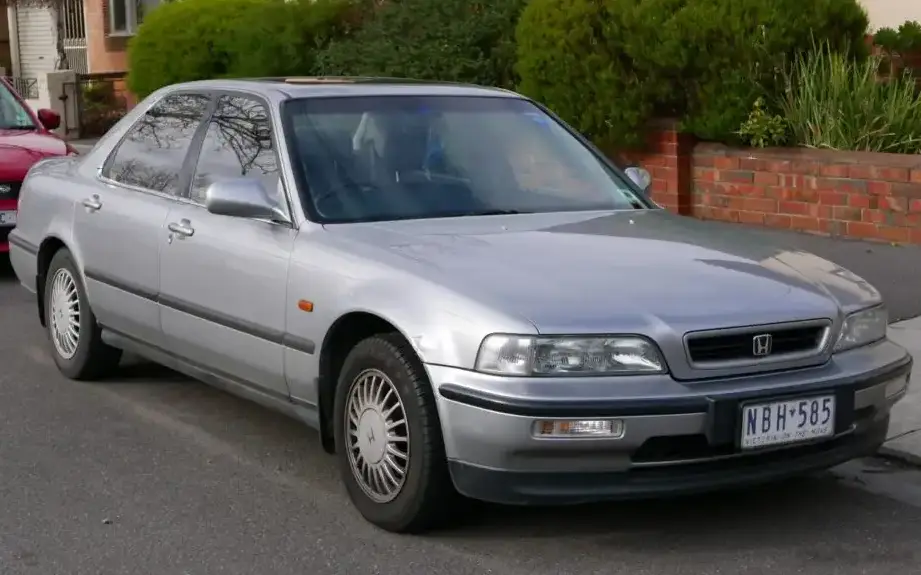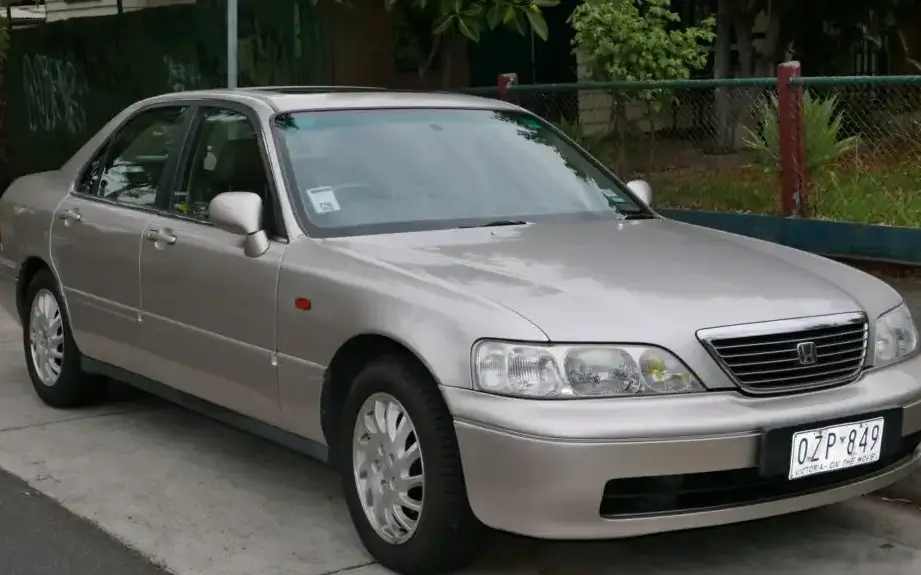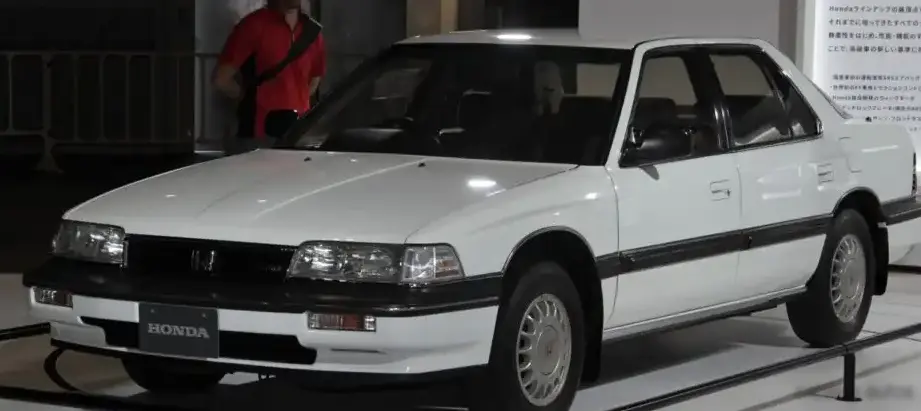
The Honda Legend I, specifically the 2.5i (HS) variant produced between 1987 and 1988, represented Honda’s initial foray into the luxury sedan segment. Positioned as a flagship model, the Legend aimed to compete with established European and American luxury cars. This first generation, internally designated HS and KA, was built on Honda’s new platform and showcased advanced engineering for its time. The 2.5i (HS) trim, with its 173 horsepower engine, served as a mid-range offering within the Legend lineup, balancing performance with a more accessible price point compared to potential higher-spec versions. It was primarily marketed towards buyers seeking a refined driving experience and a reputation for Honda reliability.
Technical Specifications
| Brand | Honda |
| Model | Legend |
| Generation | Legend I (HS,KA) |
| Type (Engine) | 2.5 i (HS) (173 Hp) |
| Start of production | 1987 |
| End of production | 1988 |
| Powertrain Architecture | Internal Combustion engine |
| Body type | Sedan |
| Seats | 5 |
| Doors | 4 |
| Fuel consumption (urban) | 12.6 l/100 km (18.7 US mpg) |
| Fuel consumption (extra urban) | 7.1 l/100 km (33.1 US mpg) |
| Fuel Type | Petrol (Gasoline) |
| Acceleration 0 – 100 km/h | 8 sec |
| Acceleration 0 – 62 mph | 8 sec |
| Acceleration 0 – 60 mph | 7.6 sec |
| Maximum speed | 210 km/h (130.49 mph) |
| Weight-to-power ratio | 7.8 kg/Hp |
| Weight-to-torque ratio | 6.2 kg/Nm |
| Power | 173 Hp @ 6000 rpm |
| Torque | 217 Nm @ 5000 rpm (160.05 lb.-ft. @ 5000 rpm) |
| Engine layout | Front, Longitudinal |
| Engine displacement | 2493 cm3 (152.13 cu. in.) |
| Number of cylinders | 6 |
| Engine configuration | V-engine |
| Cylinder Bore | 84 mm (3.31 in.) |
| Piston Stroke | 75 mm (2.95 in.) |
| Compression ratio | 9.6:1 |
| Number of valves per cylinder | 4 |
| Fuel injection system | Multi-port manifold injection |
| Engine aspiration | Naturally aspirated engine |
| Valvetrain | DOHC |
| Kerb Weight | 1350 kg (2976.24 lbs.) |
| Max. weight | 1850 kg (4078.55 lbs.) |
| Max load | 500 kg (1102.31 lbs.) |
| Fuel tank capacity | 68 l (17.96 US gal) |
| Length | 4810 mm (189.37 in.) |
| Width | 1735 mm (68.31 in.) |
| Height | 1390 mm (54.72 in.) |
| Wheelbase | 2760 mm (108.66 in.) |
| Front track | 1490 mm (58.66 in.) |
| Rear track | 1450 mm (57.09 in.) |
| Minimum turning circle | 11 m (36.09 ft.) |
| Drivetrain Architecture | Front wheel drive |
| Number of gears | 5 gears, manual transmission |
| Front suspension | Double wishbone |
| Rear suspension | Coil spring |
| Front brakes | Ventilated discs |
| Rear brakes | Disc |
| Steering type | Steering rack and pinion |
| Tires size | 205/60 R15 |
| Wheel rims size | 6J x 15 |
Powertrain & Engine Architecture
The heart of the 2.5i (HS) Legend is its 2.5-liter (2493 cc) V6 engine. This engine, belonging to Honda’s C25A series, featured a 90-degree V-angle, contributing to a smoother power delivery and reduced vibrations. It employed a multi-port fuel injection system, delivering fuel directly to each intake port for improved efficiency and responsiveness. The engine utilized a double overhead camshaft (DOHC) valvetrain, operating four valves per cylinder, which maximized airflow and contributed to the engine’s 173 horsepower output at 6000 rpm and 217 Nm (160 lb-ft) of torque at 5000 rpm. The engine’s longitudinal mounting allowed for a front-wheel-drive configuration, a relatively uncommon setup for V6 engines at the time. The 5-speed manual transmission was standard, offering precise gear changes and a direct connection to the engine’s power.
Driving Characteristics
The 173 hp and 217 Nm of torque provided by the 2.5i (HS) Legend offered a respectable level of performance for its era. Acceleration from 0 to 60 mph was achieved in approximately 7.6 seconds, and it could reach a top speed of 210 km/h (130 mph). The manual transmission allowed drivers to fully exploit the engine’s powerband, providing good control and responsiveness. Compared to a hypothetical higher-output version, the 2.5i (HS) prioritized smooth, refined power delivery over outright acceleration. The gear ratios were tuned for comfortable cruising and everyday usability, rather than aggressive performance. The front-wheel-drive layout, while providing good traction in most conditions, could exhibit some torque steer under hard acceleration.
Equipment & Trim Levels
The 2.5i (HS) Legend came reasonably well-equipped for a luxury car of the late 1980s. Standard features typically included power windows, power locks, air conditioning, and a high-quality audio system. The interior featured comfortable cloth upholstery and a woodgrain trim on the dashboard and door panels, contributing to a sense of luxury. Optional extras could include a sunroof, leather upholstery, and upgraded audio systems. The overall interior design focused on ergonomics and creating a comfortable and refined cabin environment.
Chassis & Braking
The Legend I featured an independent suspension system, with double wishbones at the front and a coil spring setup at the rear. This configuration provided a comfortable ride and good handling characteristics. The car was equipped with ventilated disc brakes at the front and solid disc brakes at the rear, providing adequate stopping power for its weight and performance. The steering system utilized a rack-and-pinion setup, offering precise and responsive steering feel. The 205/60 R15 tires provided a good balance of grip and ride comfort.
Market Reception & Comparison
The Honda Legend I was generally well-received by automotive critics. It was praised for its smooth engine, comfortable ride, and overall refinement. The 2.5i (HS) variant, with its manual transmission, was seen as a good balance between performance and affordability. Compared to other luxury sedans of the time, such as the BMW 5 Series and the Mercedes-Benz E-Class, the Legend offered a more accessible price point and a reputation for Honda’s renowned reliability. Fuel economy was respectable for a V6 engine of that era, averaging around 18.7 mpg in the city and 33.1 mpg on the highway.
Legacy
The Honda Legend I established Honda as a serious contender in the luxury car market. The C25A engine proved to be a durable and reliable powerplant, and many examples are still on the road today. The 2.5i (HS) variant, with its manual transmission, is particularly sought after by enthusiasts. While not as common as some other classic Japanese cars, the Legend I has gained a following among collectors and enthusiasts who appreciate its blend of luxury, performance, and reliability. The Legend’s success paved the way for subsequent generations of the model, further solidifying Honda’s position in the premium segment.