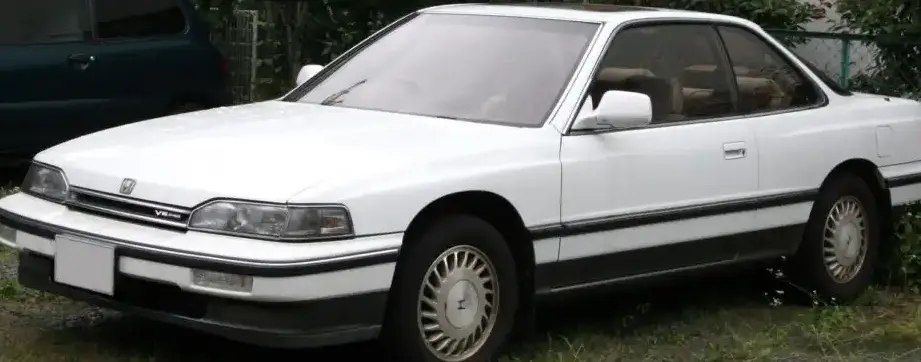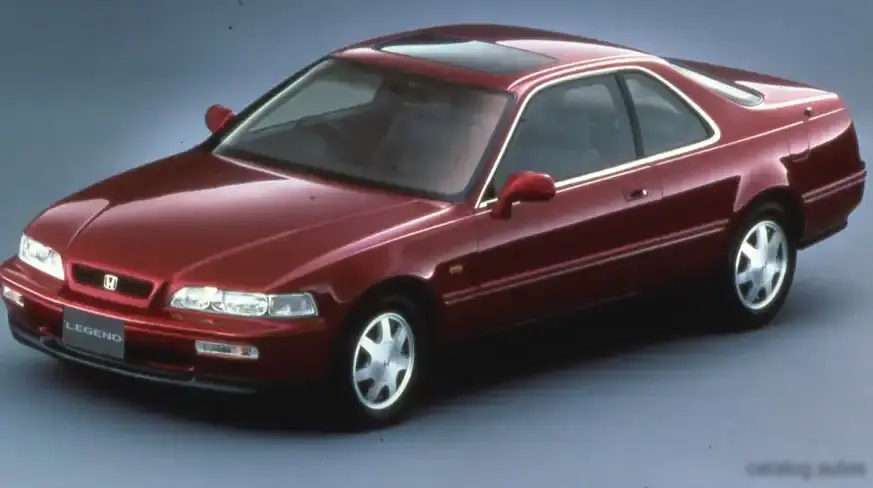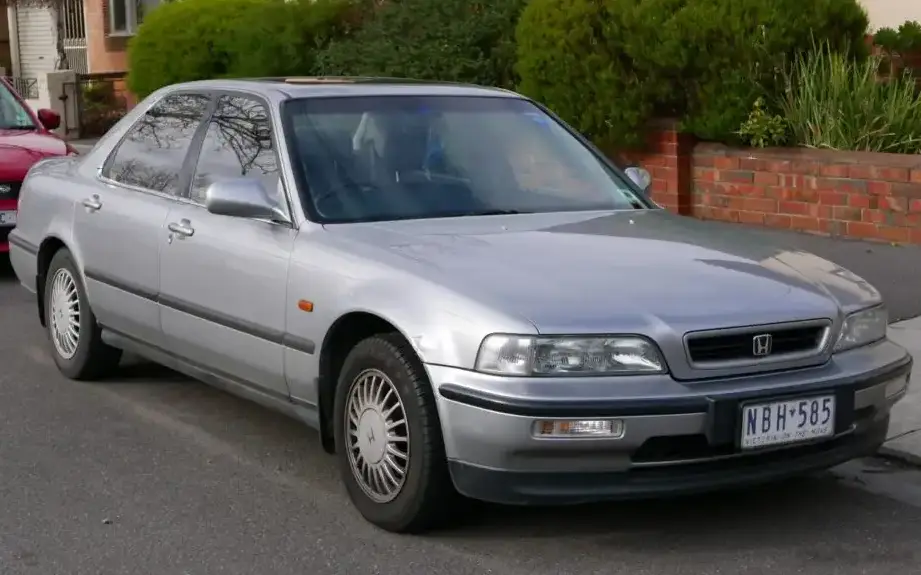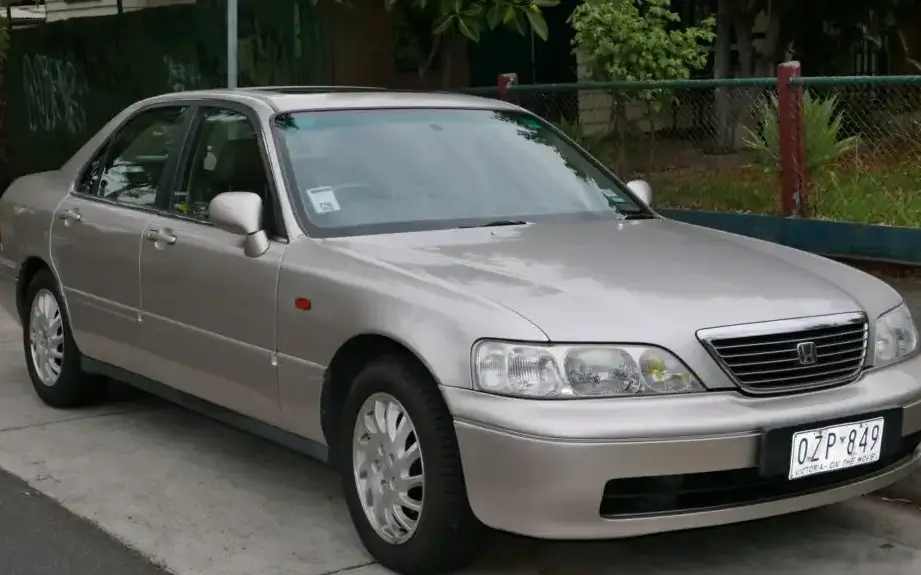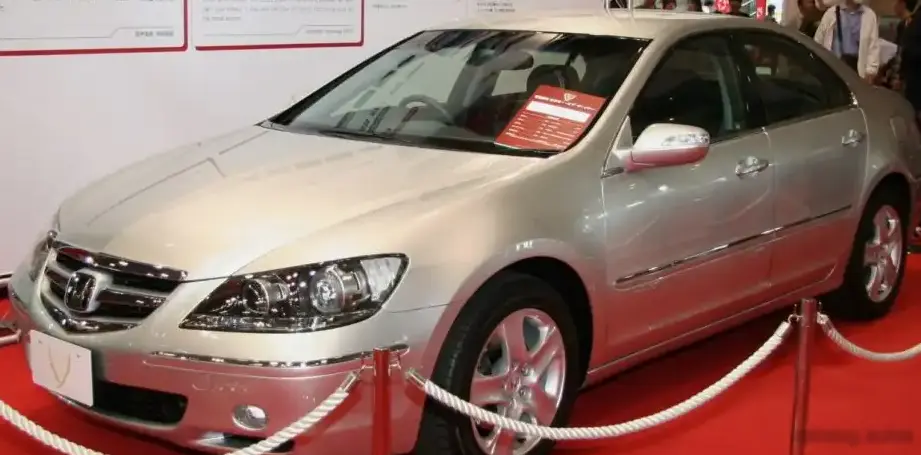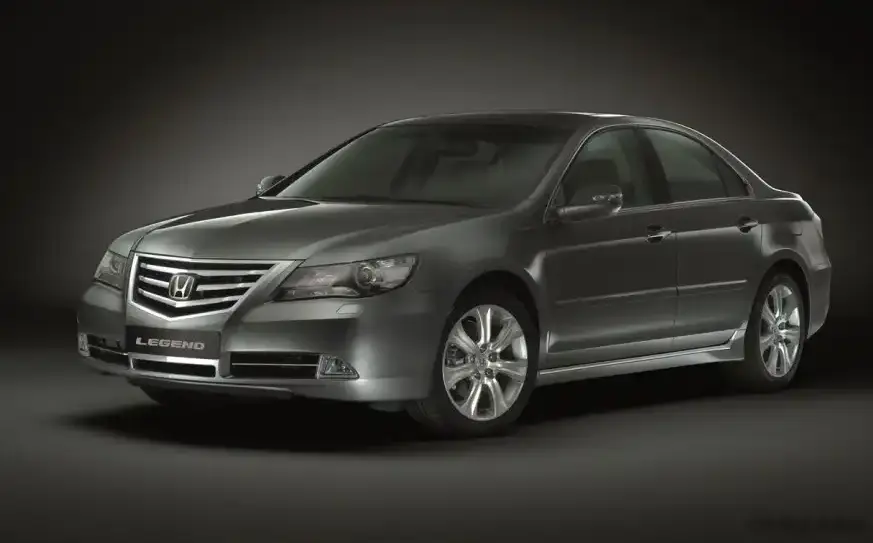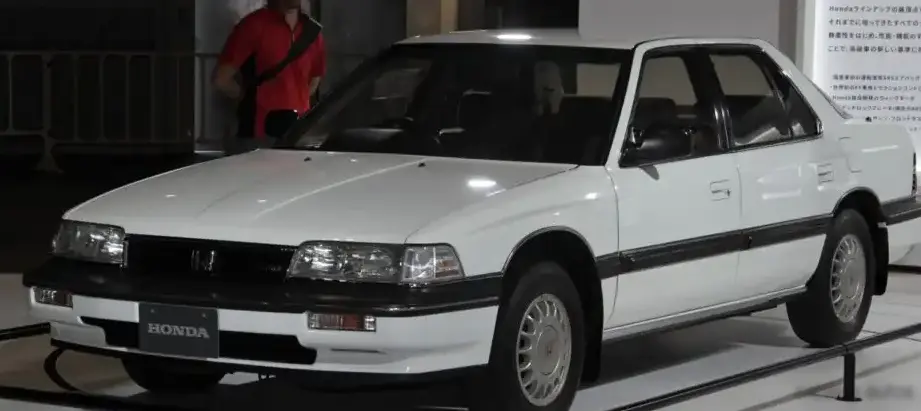
The Honda Legend, launched in 1987, represented Honda’s entry into the full-size luxury sedan segment. The first generation, internally designated HS and KA, aimed to compete with established European and American luxury cars. The 2.5 i (HS) variant, equipped with a 2.5-liter V6 engine and a four-speed automatic transmission, was a key model in the initial lineup, offering a balance of performance and refinement. Production of this specific configuration ran from 1987 to 1988, primarily targeting the Japanese domestic market (JDM) and select export markets.
Technical Specifications
| Brand | Honda |
| Model | Legend |
| Generation | Legend I (HS,KA) |
| Type (Engine) | 2.5 i (HS) (173 Hp) Automatic |
| Start of production | 1987 |
| End of production | 1988 |
| Powertrain Architecture | Internal Combustion engine |
| Body type | Sedan |
| Seats | 5 |
| Doors | 4 |
| Fuel consumption (urban) | 13.3 l/100 km (17.7 US mpg, 21.2 UK mpg) |
| Fuel consumption (extra urban) | 7.4 l/100 km (31.8 US mpg, 38.2 UK mpg) |
| Fuel Type | Petrol (Gasoline) |
| Acceleration 0 – 100 km/h | 8 sec |
| Acceleration 0 – 62 mph | 8 sec |
| Acceleration 0 – 60 mph | 7.6 sec |
| Maximum speed | 207 km/h (128.62 mph) |
| Weight-to-power ratio | 7.9 kg/Hp |
| Weight-to-torque ratio | 6.3 kg/Nm |
| Power | 173 Hp @ 6000 rpm |
| Power per litre | 69.4 Hp/l |
| Torque | 217 Nm @ 5000 rpm (160.05 lb.-ft. @ 5000 rpm) |
| Engine layout | Front, Longitudinal |
| Engine displacement | 2493 cm3 (152.13 cu. in.) |
| Number of cylinders | 6 |
| Engine configuration | V-engine |
| Cylinder Bore | 84 mm (3.31 in.) |
| Piston Stroke | 75 mm (2.95 in.) |
| Compression ratio | 9.6:1 |
| Number of valves per cylinder | 4 |
| Fuel injection system | Multi-port manifold injection |
| Engine aspiration | Naturally aspirated engine |
| Valvetrain | DOHC |
| Kerb Weight | 1370 kg (3020.33 lbs.) |
| Max. weight | 1850 kg (4078.55 lbs.) |
| Max load | 480 kg (1058.22 lbs.) |
| Fuel tank capacity | 68 l (17.96 US gal | 14.96 UK gal) |
| Max. roof load | 70 kg (154.32 lbs.) |
| Permitted trailer load with brakes (12%) | 1500 kg (3306.93 lbs.) |
| Permitted trailer load without brakes | 500 kg (1102.31 lbs.) |
| Permitted towbar download | 70 kg (154.32 lbs.) |
| Length | 4810 mm (189.37 in.) |
| Width | 1735 mm (68.31 in.) |
| Height | 1390 mm (54.72 in.) |
| Wheelbase | 2760 mm (108.66 in.) |
| Front track | 1490 mm (58.66 in.) |
| Rear (Back) track | 1450 mm (57.09 in.) |
| Minimum turning circle | 10 m (32.81 ft.) |
| Drivetrain Architecture | Front wheel drive |
| Number of gears and type of gearbox | 4 gears, automatic transmission |
| Front suspension | Double wishbone |
| Rear suspension | Coil spring |
| Front brakes | Ventilated discs |
| Rear brakes | Disc |
| Steering type | Steering rack and pinion |
| Tires size | 205/60 R15 |
| Wheel rims size | 6J x 15 |
INTRODUCTION
The Honda Legend HS/KA represented a significant step forward for Honda, moving beyond its reputation for practical and reliable vehicles into the realm of luxury. Introduced in 1987, it was the first vehicle to bear the Legend nameplate, intended to showcase Honda’s engineering prowess and compete with established luxury brands. The 2.5 i (HS) model, with its 173 horsepower V6 engine and automatic transmission, was positioned as the mainstream offering within the range, providing a comfortable and refined driving experience. It was a key model for establishing the Legend’s reputation in both the Japanese market and key export regions.
Powertrain & Engine Architecture
The heart of the 2.5 i (HS) Legend is the C25A engine, a 2.5-liter (2493 cc) 60-degree V6. This engine utilized a cast iron block with an aluminum cylinder head, a common configuration for the era balancing durability and weight. The engine featured multi-port fuel injection, delivering fuel directly to each intake port for improved efficiency and performance. The valvetrain employed a Double Overhead Camshaft (DOHC) design with four valves per cylinder, enhancing breathing and contributing to the engine’s respectable power output. The engine code, C25A, is crucial for identifying specific parts and service information.
The transmission paired with the C25A was a four-speed automatic, designed for smooth and effortless shifting. While not offering the driver engagement of a manual transmission, it aligned with the luxury-oriented character of the Legend. The automatic transmission was electronically controlled, optimizing shift points based on throttle position and vehicle speed. This transmission was known for its reliability, though preventative maintenance, including fluid changes, was crucial for long-term durability.
Driving Characteristics
The 2.5 i (HS) Legend offered a comfortable and refined driving experience, prioritizing smoothness and quietness over outright performance. The 173 horsepower V6 provided adequate power for everyday driving and highway cruising, with a 0-60 mph time of around 7.6 seconds. However, compared to the later, more powerful versions of the Legend (like those with the 3.2-liter engine), the 2.5 i felt less responsive. The automatic transmission, while smooth, could sometimes feel hesitant during quick acceleration. The gear ratios were tuned for fuel efficiency and comfort, rather than aggressive performance. The longitudinal engine layout and front-wheel drive configuration contributed to balanced handling, though it lacked the sporty feel of rear-wheel-drive competitors.
Equipment & Trim Levels
The 2.5 i (HS) Legend came reasonably well-equipped for its time, reflecting its luxury positioning. Standard features typically included power windows, power locks, air conditioning, and a high-quality audio system. Interior upholstery was typically cloth, though leather options were available. The dashboard layout was clean and functional, with easy-to-read gauges and logically placed controls. Optional extras included a sunroof, upgraded audio systems, and power-adjustable seats. The trim level was generally considered mid-range within the Legend lineup, offering a good balance of features and affordability.
Chassis & Braking
The Legend HS/KA utilized a front independent suspension with double wishbones and a rear coil spring suspension. This setup provided a comfortable ride, absorbing bumps and irregularities in the road surface effectively. The braking system consisted of ventilated discs on the front wheels and solid discs on the rear, providing adequate stopping power for the vehicle’s weight and performance. The steering was rack and pinion, offering precise and responsive control. Stabilizer bars were fitted to both the front and rear axles to reduce body roll during cornering.
Market Reception & Comparison
The Honda Legend was generally well-received by critics, who praised its smooth ride, refined engine, and overall build quality. The 2.5 i (HS) variant was seen as a sensible choice for buyers seeking a comfortable and reliable luxury sedan. However, some critics noted that it lacked the sporting character of some European competitors. Compared to other trims in the Legend lineup, the 2.5 i offered a more affordable entry point into the model range, making it accessible to a wider range of buyers. Fuel economy was respectable for a V6 engine of that era, and reliability was generally excellent, consistent with Honda’s reputation.
Legacy
The Honda Legend HS/KA, and specifically the 2.5 i (HS) variant, laid the foundation for Honda’s success in the luxury sedan market. The C25A engine proved to be a durable and reliable powerplant, and many examples are still on the road today. While not as sought-after as some of the later, more powerful Legends, the 2.5 i remains a viable option for enthusiasts seeking a classic Japanese luxury car. In the used car market, these Legends are typically valued for their condition, originality, and low mileage. Maintenance costs are generally reasonable, though sourcing specific parts can sometimes be challenging due to the vehicle’s age.