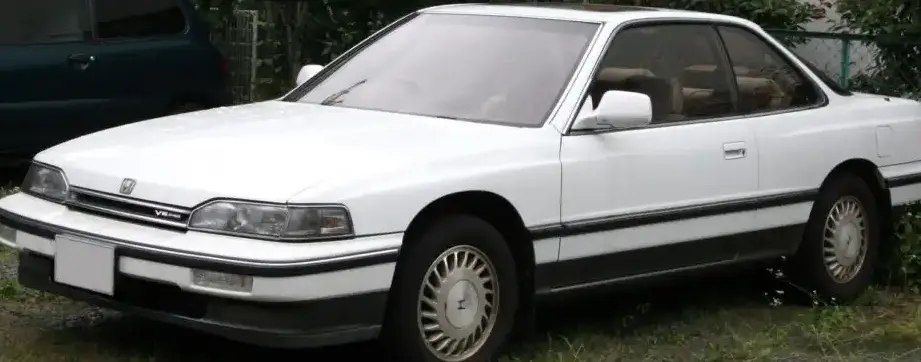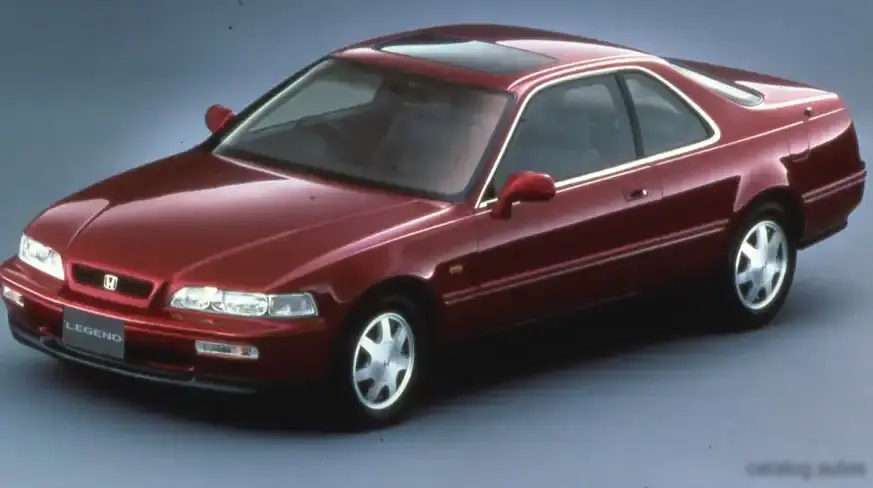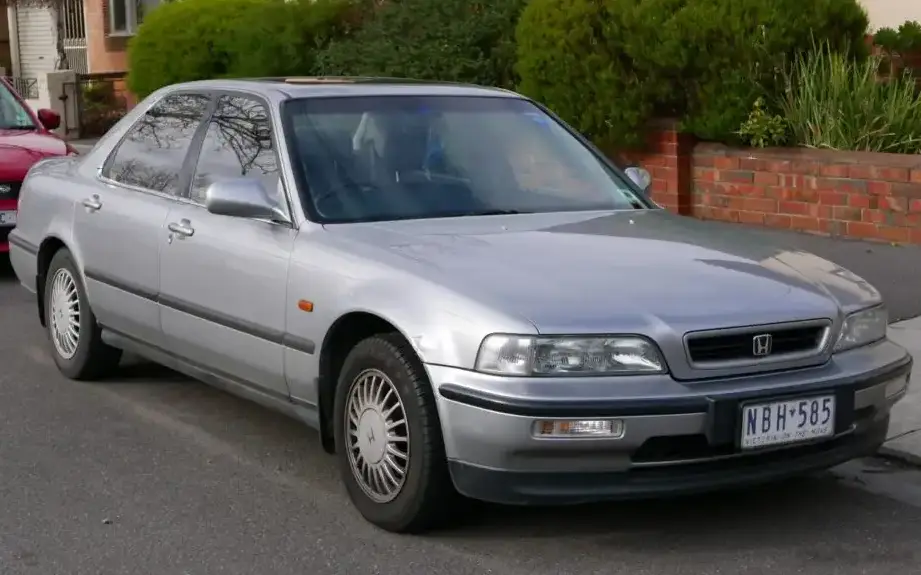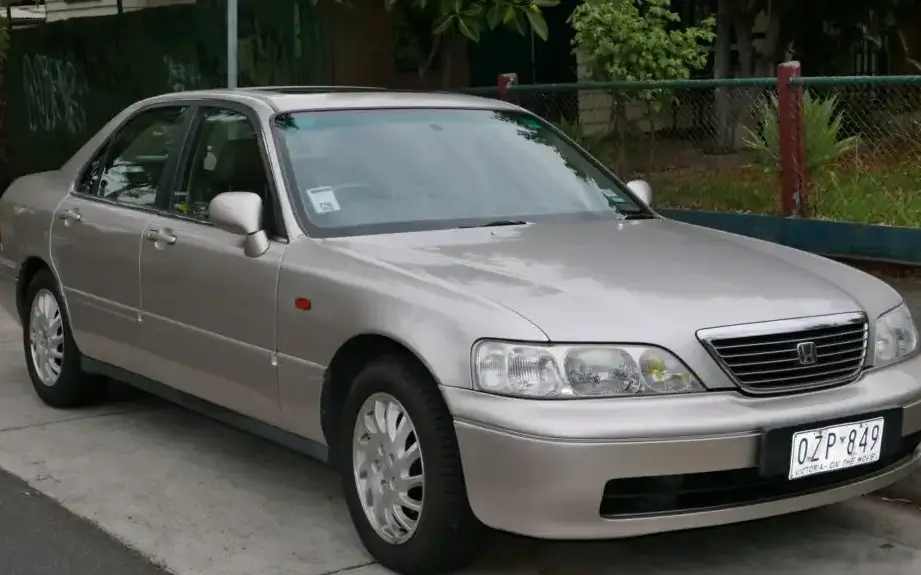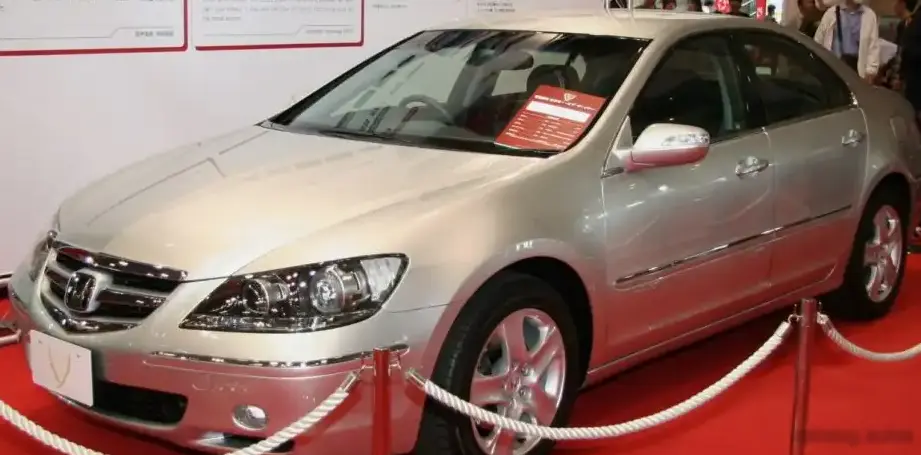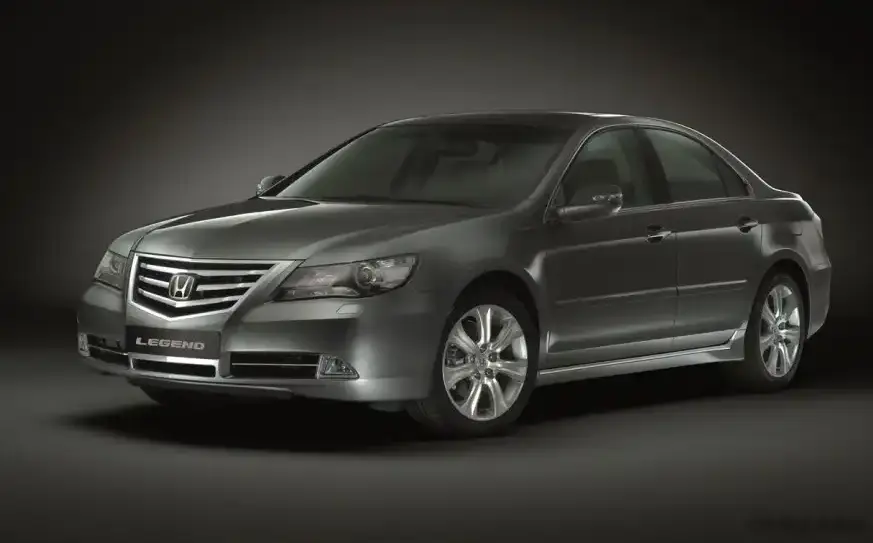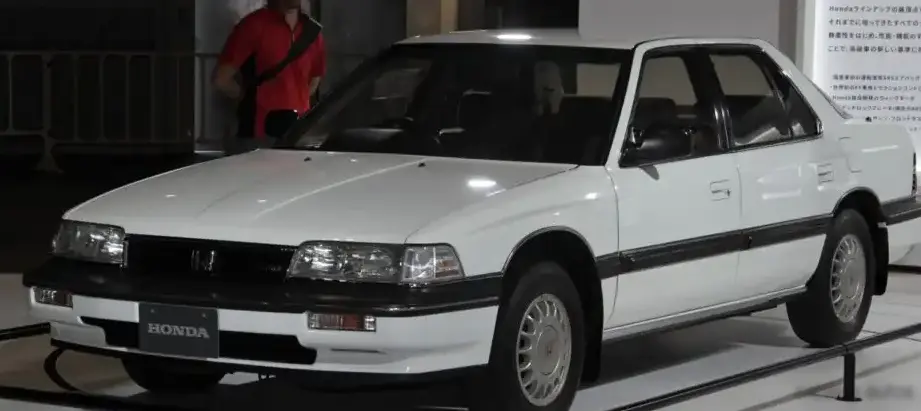
The Honda Legend, introduced in 1985, represented Honda’s foray into the luxury sedan segment, aiming to compete with established European and American brands. The first generation, designated HS and KA, spanned from 1985 to 1990, with the 2.7i 24V (KA4) variant produced from 1988 to 1990. This model, equipped with a 2.7-liter V6 engine and a four-speed automatic transmission, was positioned as a premium offering within the Legend lineup, emphasizing comfort and refinement over outright sportiness. It was primarily marketed in Japan, North America, and select European countries, serving as a flagship vehicle for Honda’s technological prowess.
Technical Specifications
| Brand | Honda |
| Model | Legend |
| Generation | Legend I (HS,KA) |
| Type (Engine) | 2.7 i 24V (KA4) (169 Hp) Automatic |
| Start of production | 1988 year |
| End of production | 1990 year |
| Powertrain Architecture | Internal Combustion engine |
| Body type | Sedan |
| Seats | 5 |
| Doors | 4 |
| Fuel consumption (urban) | 14 l/100 km (16.8 US mpg, 20.2 UK mpg, 7.1 km/l) |
| Fuel consumption (extra urban) | 9.1 l/100 km (25.8 US mpg, 31 UK mpg, 11 km/l) |
| Fuel Type | Petrol (Gasoline) |
| Acceleration 0 – 100 km/h | 9.4 sec |
| Acceleration 0 – 62 mph | 9.4 sec |
| Acceleration 0 – 60 mph | 8.9 sec |
| Maximum speed | 207 km/h (128.62 mph) |
| Weight-to-power ratio | 8.3 kg/Hp, 120.3 Hp/tonne |
| Weight-to-torque ratio | 6.2 kg/Nm, 160.1 Nm/tonne |
| Power | 169 Hp @ 5900 rpm |
| Power per litre | 63.2 Hp/l |
| Torque | 225 Nm @ 4500 rpm (165.95 lb.-ft. @ 4500 rpm) |
| Engine layout | Front, Longitudinal |
| Engine displacement | 2675 cm3 (163.24 cu. in.) |
| Number of cylinders | 6 |
| Engine configuration | V-engine |
| Cylinder Bore | 87 mm (3.43 in.) |
| Piston Stroke | 75 mm (2.95 in.) |
| Compression ratio | 9:1 |
| Number of valves per cylinder | 4 |
| Fuel injection system | Multi-port manifold injection |
| Engine aspiration | Naturally aspirated engine |
| Valvetrain | DOHC |
| Kerb Weight | 1405 kg (3097.49 lbs.) |
| Max. weight | 1850 kg (4078.55 lbs.) |
| Max load | 445 kg (981.06 lbs.) |
| Fuel tank capacity | 68 l (17.96 US gal | 14.96 UK gal) |
| Max. roof load | 70 kg (154.32 lbs.) |
| Permitted trailer load with brakes (12%) | 1500 kg (3306.93 lbs.) |
| Permitted trailer load without brakes | 500 kg (1102.31 lbs.) |
| Permitted towbar download | 70 kg (154.32 lbs.) |
| Length | 4810 mm (189.37 in.) |
| Width | 1735 mm (68.31 in.) |
| Height | 1390 mm (54.72 in.) |
| Wheelbase | 2760 mm (108.66 in.) |
| Front track | 1490 mm (58.66 in.) |
| Rear (Back) track | 1450 mm (57.09 in.) |
| Drivetrain Architecture | The Internal combustion engine (ICE) drives the front wheels of the vehicle. |
| Drive wheel | Front wheel drive |
| Number of gears and type of gearbox | 4 gears, automatic transmission |
| Front suspension | Double wishbone |
| Rear suspension | Coil spring |
| Front brakes | Ventilated discs |
| Rear brakes | Disc |
| Assisting systems | ABS (Anti-lock braking system) |
| Steering type | Steering rack and pinion |
| Tires size | Front wheel tires: 205/65 R15Rear wheel tires: 205/65 R15 |
| Wheel rims size | Front wheel rims: 6J x 15Rear wheel rims: 6J x 15 |
INTRODUCTION
The 1988-1990 Honda Legend 2.7i 24V (KA4) represented a significant step forward for Honda in the luxury car market. Built on the HS/KA platform, it offered a blend of Japanese reliability, sophisticated engineering, and a comfortable driving experience. This variant, with its 2.7-liter V6 engine and four-speed automatic transmission, was designed to appeal to buyers seeking a refined and dependable luxury sedan. It sat in the middle of the Legend range, offering a balance between the base model’s affordability and the potential for more powerful, albeit less common, engine options.
Powertrain & Engine Architecture
The heart of the KA4 Legend is the C27A engine, a 2.7-liter (2675 cc) 60-degree V6. This engine featured a cast iron block and an aluminum cylinder head, incorporating a double overhead camshaft (DOHC) valvetrain with four valves per cylinder. Fuel delivery was managed by a multi-port fuel injection system, contributing to smooth power delivery and reasonable fuel efficiency for its time. The engine produced 169 horsepower at 5900 rpm and 225 Nm (165.95 lb-ft) of torque at 4500 rpm. The four-speed automatic transmission, while not known for its sportiness, was designed for smooth and comfortable shifts, prioritizing ease of use over performance. It was a conventional hydraulic automatic, lacking the electronic controls found in some contemporary transmissions.
Driving Characteristics
The 2.7-liter engine and automatic transmission combination in the KA4 Legend delivered a comfortable, yet not particularly exhilarating, driving experience. Acceleration from 0 to 60 mph took approximately 8.9 seconds, and the top speed was around 128.62 mph. The automatic transmission’s gear ratios were geared towards fuel economy and smooth cruising, rather than aggressive acceleration. Compared to a hypothetical manual transmission version, the automatic would have felt noticeably slower, particularly during overtaking maneuvers. The suspension, tuned for comfort, absorbed bumps well, providing a smooth ride. However, this came at the expense of sharp handling; the KA4 Legend wasn’t designed for spirited cornering.
Equipment & Trim Levels
The KA4 Legend 2.7i 24V Automatic came reasonably well-equipped for its era. Standard features typically included power windows, power locks, air conditioning, a premium sound system, and cloth upholstery. Leather upholstery, a sunroof, and upgraded audio systems were often available as optional extras. The interior design was focused on providing a comfortable and spacious environment for both driver and passengers. The dashboard layout was relatively straightforward, with easy-to-read gauges and logically placed controls. The trim level generally fell into a mid-range category, offering a step up from basic transportation but not reaching the full luxury appointments of some European competitors.
Chassis & Braking
The Legend KA4 utilized a front-engine, front-wheel-drive layout. The suspension consisted of a double wishbone setup at the front and a coil spring arrangement at the rear. This configuration prioritized ride comfort and stability. Braking duties were handled by ventilated discs at the front and solid discs at the rear. An Anti-lock Braking System (ABS) was included as standard equipment, enhancing safety by preventing wheel lockup during hard braking. The tires were typically 205/65 R15, providing a good balance of grip and ride comfort. The steering system employed a rack and pinion setup, offering reasonably precise steering feel.
Market Reception & Comparison
The Honda Legend KA4 was generally well-received by automotive critics. It was praised for its smooth engine, comfortable ride, and overall reliability. However, some reviewers noted that the automatic transmission could feel sluggish, and the handling wasn’t as sharp as some of its European rivals. Compared to other trims in the Legend lineup, the 2.7i Automatic offered a good balance of performance and fuel economy. It was more affordable than the potential for higher-output engine options, making it a popular choice for buyers seeking a comfortable and reliable luxury sedan. Fuel economy was respectable for the time, averaging around 14 l/100 km in urban driving and 9.1 l/100 km on the highway.
Legacy
The Honda Legend KA4, while not a performance icon, has proven to be a remarkably durable and reliable vehicle. The C27A engine is known for its longevity, and the automatic transmission, while not particularly advanced, has generally held up well over time. Today, well-maintained examples are sought after by enthusiasts who appreciate their classic styling, comfortable ride, and Honda’s reputation for reliability. Parts availability can be a challenge, but the Legend’s robust construction and relatively simple design make it a rewarding vehicle to own and maintain. It remains a testament to Honda’s engineering prowess and its commitment to building high-quality automobiles.