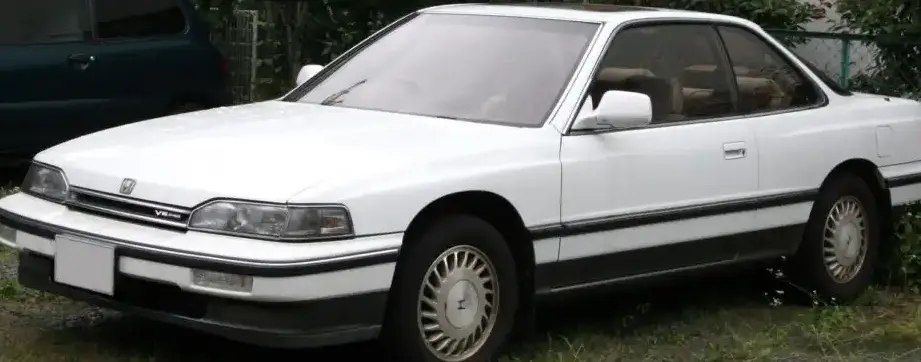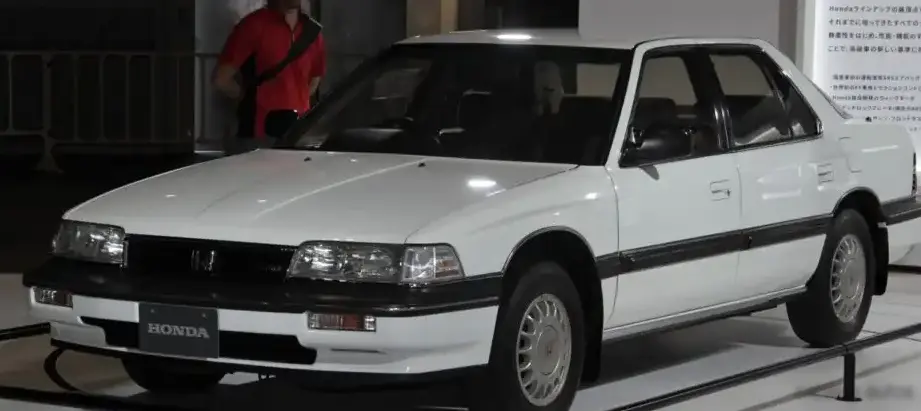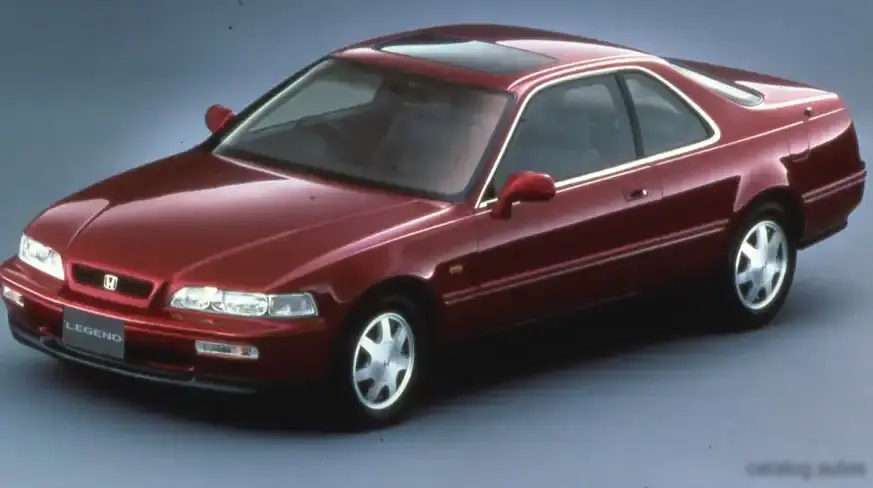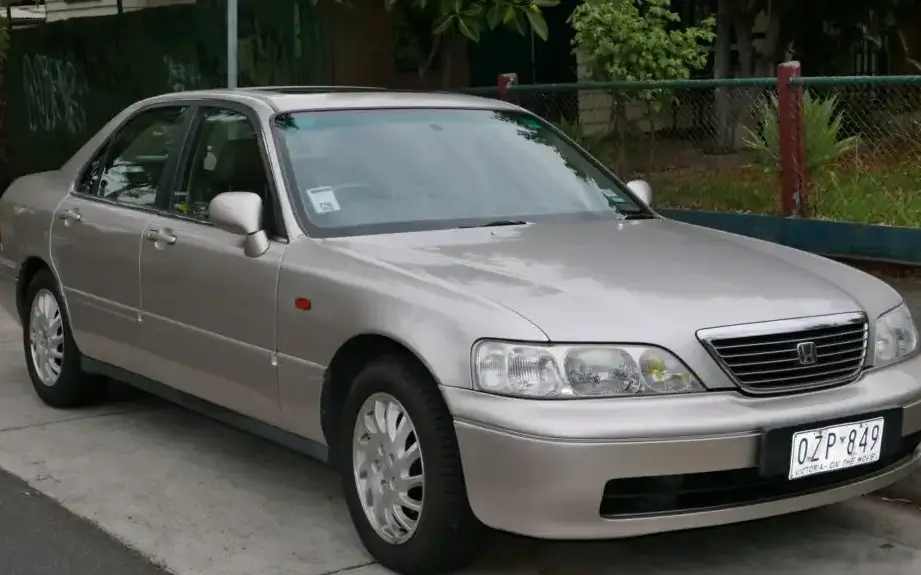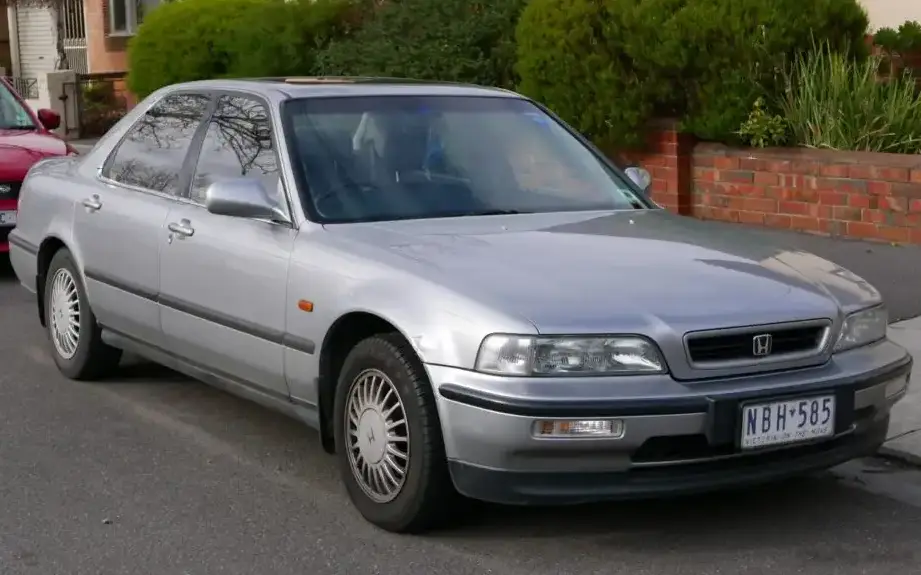
The Honda Legend II (KA7) 3.2i 24V, produced between 1991 and 1996, represented a significant evolution of Honda’s flagship luxury sedan. Positioned as a competitor to established European and American luxury cars, the KA7 Legend aimed to offer a blend of refinement, performance, and Honda’s renowned reliability. This variant, equipped with the 3.2-liter V6 engine and a five-speed manual transmission, was a key offering in the second-generation Legend lineup, appealing to drivers seeking a more engaging driving experience than the available automatic options. It sat towards the top of the range, offering a substantial performance upgrade over the 2.5-liter models.
Technical Specifications
| Brand | Honda |
| Model | Legend |
| Generation | Legend II (KA7) |
| Type (Engine) | 3.2i 24V (205 Hp) |
| Start of production | 1991 |
| End of production | 1996 |
| Powertrain Architecture | Internal Combustion engine |
| Body type | Sedan |
| Seats | 5 |
| Doors | 4 |
| Fuel consumption (combined) | 10.8 l/100 km |
| Fuel consumption (US mpg) | 21.8 US mpg |
| Fuel consumption (UK mpg) | 26.2 UK mpg |
| Fuel consumption (km/l) | 9.3 km/l |
| Fuel Type | Petrol (Gasoline) |
| Acceleration 0 – 100 km/h | 8.1 sec |
| Acceleration 0 – 62 mph | 8.1 sec |
| Acceleration 0 – 60 mph | 7.7 sec |
| Maximum speed | 223 km/h (138.57 mph) |
| Weight-to-power ratio | 7.6 kg/Hp |
| Weight-to-torque ratio | 5.3 kg/Nm |
| Power | 205 Hp @ 5500 rpm |
| Power per litre | 63.9 Hp/l |
| Torque | 293 Nm @ 4400 rpm (216.11 lb.-ft. @ 4400 rpm) |
| Engine layout | Front, Longitudinal |
| Engine displacement | 3206 cm3 (195.64 cu. in.) |
| Number of cylinders | 6 |
| Engine configuration | V-engine |
| Cylinder Bore | 90 mm (3.54 in.) |
| Piston Stroke | 84 mm (3.31 in.) |
| Compression ratio | 9.6:1 |
| Number of valves per cylinder | 4 |
| Fuel injection system | Multi-port manifold injection |
| Engine aspiration | Naturally aspirated engine |
| Valvetrain | OHC |
| Kerb Weight | 1550 kg (3417.17 lbs.) |
| Max. weight | 2150 kg (4739.94 lbs.) |
| Max load | 600 kg (1322.77 lbs.) |
| Trunk (boot) space – minimum | 427 l (15.08 cu. ft.) |
| Fuel tank capacity | 68 l (17.96 US gal | 14.96 UK gal) |
| Length | 4950 mm (194.88 in.) |
| Width | 1810 mm (71.26 in.) |
| Height | 1410 mm (55.51 in.) |
| Wheelbase | 2910 mm (114.57 in.) |
| Front track | 1550 mm (61.02 in.) |
| Rear (Back) track | 1540 mm (60.63 in.) |
| Drivetrain Architecture | The Internal combustion engine (ICE) drives the front wheels of the vehicle. |
| Drive wheel | Front wheel drive |
| Number of gears and type of gearbox | 5 gears, manual transmission |
| Front suspension | Double wishbone |
| Rear suspension | Double wishbone |
| Front brakes | Ventilated discs |
| Rear brakes | Disc |
| Assisting systems | ABS (Anti-lock braking system) |
| Steering type | Steering rack and pinion |
| Power steering | Hydraulic Steering |
| Tires size | 215/55 R16 |
INTRODUCTION
The KA7 Legend represented Honda’s continued push into the premium sedan segment. Building upon the success of the first-generation Legend, the KA7 offered increased refinement, a more powerful engine option with the 3.2-liter V6, and updated styling. The 3.2i 24V variant, specifically with the five-speed manual transmission, was aimed at enthusiasts who appreciated a more connected driving experience. It was sold primarily in Japan, North America, and select European markets, where Honda sought to establish a stronger presence in the luxury car arena. The KA7 was built on the extended Honda Accord platform, known internally as the 1HX0/A3 platform.
Powertrain & Engine Architecture
The heart of the 3.2i 24V Legend is the G25A engine, a 3.2-liter (3206 cc) naturally aspirated V6. This engine utilizes a single overhead camshaft (OHC) design with four valves per cylinder, contributing to its strong power output. The engine code signifies a 24-valve configuration. Fuel delivery is managed by a multi-port fuel injection system, ensuring precise fuel metering for optimal performance and efficiency. The G25A engine was known for its smooth power delivery and relatively quiet operation. The five-speed manual transmission, a key differentiator for this variant, provided drivers with greater control over the engine’s power band. The transmission featured a conventional layout with synchromesh gears, offering a direct and engaging driving experience. Compared to the four-speed automatic transmission offered in other Legend trims, the manual gearbox allowed for quicker acceleration and more spirited driving.
Driving Characteristics
The 3.2i 24V with the manual transmission delivered a noticeably more engaging driving experience than its automatic counterparts. The 205 horsepower and 293 Nm (216 lb-ft) of torque provided ample power for both city driving and highway cruising. The manual gearbox allowed drivers to fully exploit the engine’s power band, resulting in quicker acceleration and more precise control. The 0-60 mph time of around 7.7 seconds was competitive for a luxury sedan of its era. Gear ratios were well-chosen to provide a balance between acceleration and fuel economy. While not a sports car, the KA7 Legend 3.2i offered a level of driver involvement that was uncommon in the luxury segment at the time. Compared to the 2.5-liter Legends, the 3.2-liter engine provided a significant boost in performance, making it more capable of handling long highway journeys and spirited driving.
Equipment & Trim Levels
The 3.2i 24V Legend typically came well-equipped, reflecting its position as a premium offering. Standard features included power windows, power locks, power mirrors, a premium sound system, air conditioning, and leather upholstery. Many examples also featured a sunroof and upgraded interior trim. Optional extras included a navigation system (a relatively new feature at the time), upgraded audio systems, and alloy wheels. The interior design emphasized comfort and luxury, with supportive seats and a well-appointed dashboard. The overall aesthetic was understated and elegant, reflecting Honda’s design philosophy of the early 1990s.
Chassis & Braking
The KA7 Legend utilized a double wishbone suspension system at both the front and rear, providing a comfortable ride and good handling characteristics. The suspension was tuned to prioritize comfort, but still offered a reasonable level of control in corners. Braking duties were handled by ventilated discs at the front and solid discs at the rear, providing adequate stopping power. An anti-lock braking system (ABS) was standard, enhancing safety and stability during hard braking. The chassis was designed to be rigid and strong, contributing to the car’s overall stability and handling. The steering was rack-and-pinion with hydraulic power assistance, providing precise and responsive steering feel.
Market Reception & Comparison
The Honda Legend II 3.2i 24V was generally well-received by automotive critics. It was praised for its smooth engine, comfortable ride, and refined interior. The manual transmission variant was particularly appreciated by enthusiasts who valued driver involvement. Compared to its competitors, such as the Lexus LS400 and BMW 5 Series, the Legend offered a compelling combination of luxury, performance, and reliability at a competitive price point. Fuel economy was reasonable for a V6 engine of its size, averaging around 21.8 US mpg in combined driving. Reliability was a strong point for the Legend, with Honda’s reputation for building durable and dependable vehicles.
Legacy
The Honda Legend II 3.2i 24V, particularly the manual transmission variant, has developed a following among Honda enthusiasts. The G25A engine is known for its durability and relatively simple maintenance requirements. While not as common as the automatic versions, the manual transmission models are highly sought after by collectors and drivers who appreciate a more engaging driving experience. Today, well-maintained examples of the KA7 Legend 3.2i 24V are becoming increasingly rare and valuable. The car represents a significant chapter in Honda’s history, demonstrating the company’s ability to compete with established luxury car brands. Its blend of refinement, performance, and reliability continues to appeal to enthusiasts today.