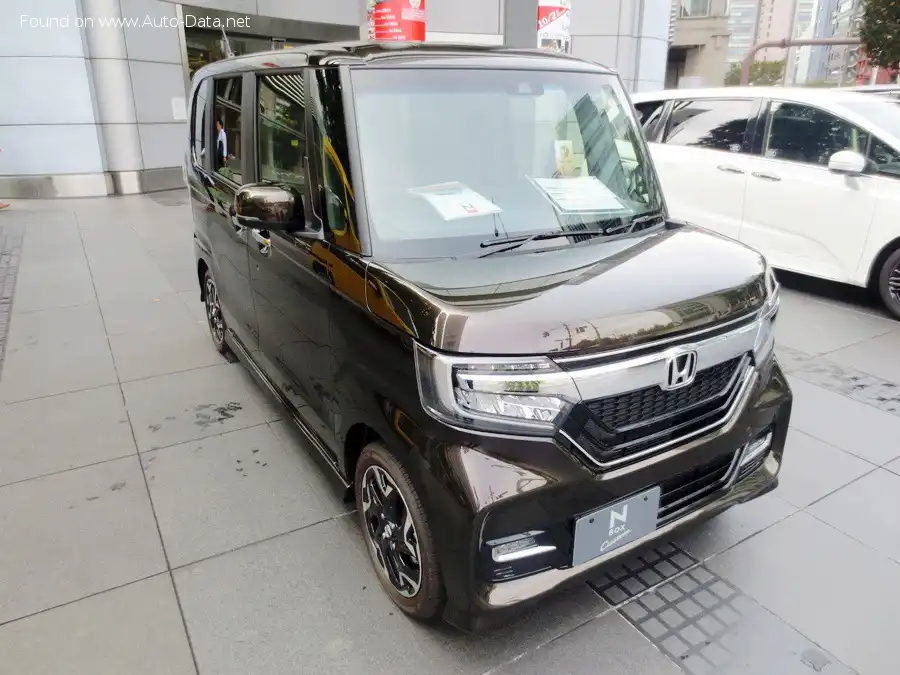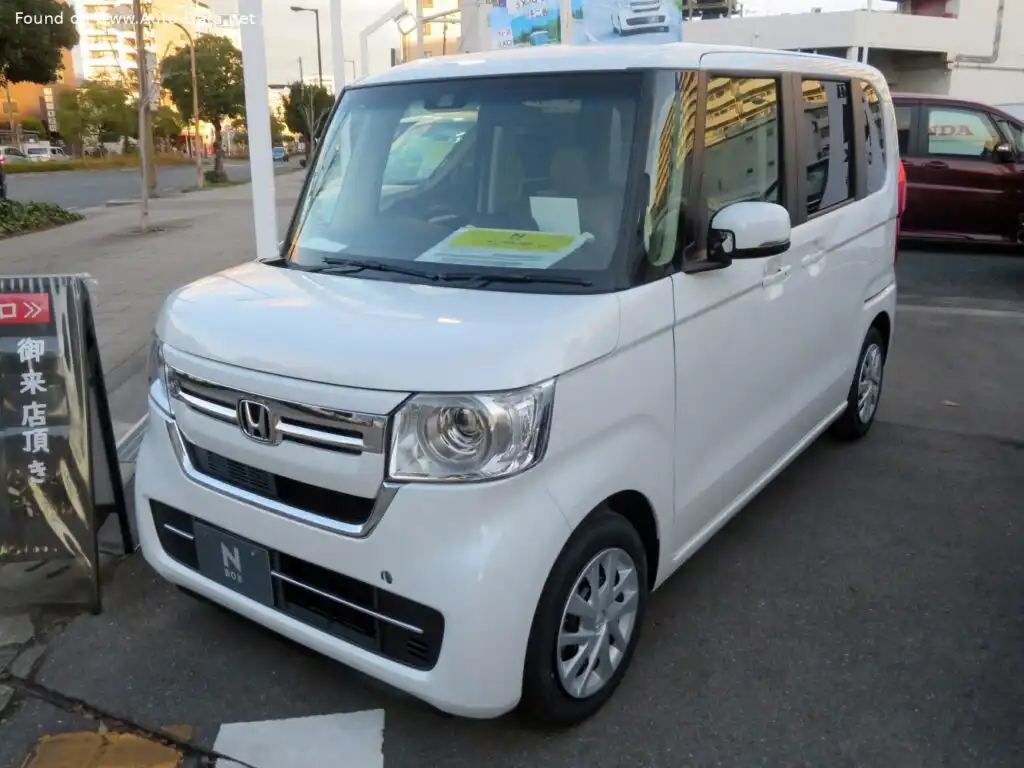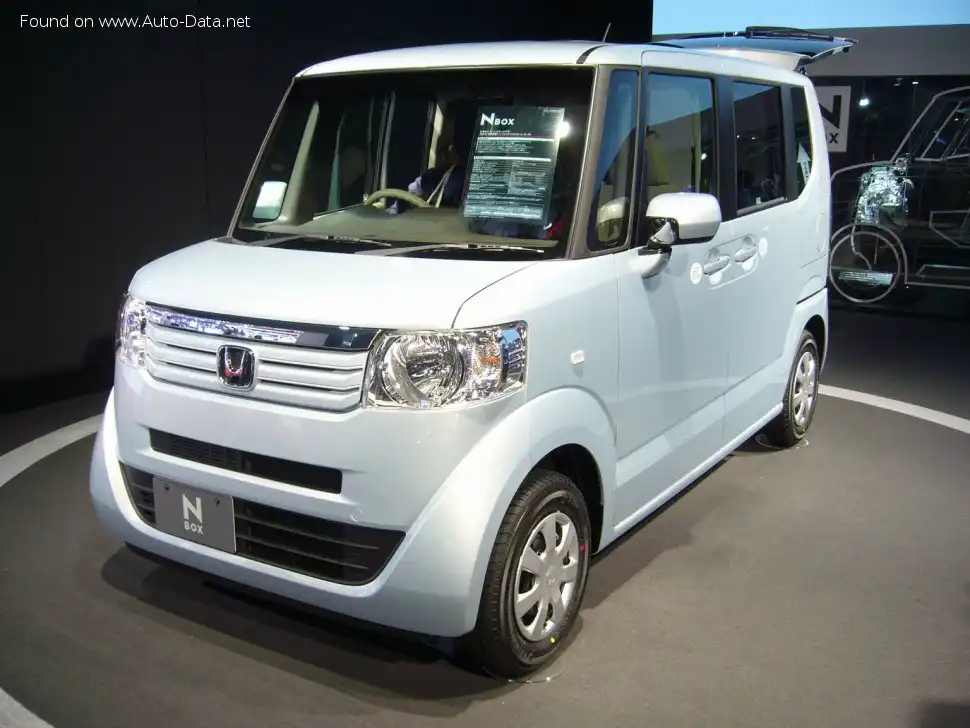
Technical Specifications
| Brand | Honda |
| Model | N-Box |
| Generation | N-Box I |
| Type (Engine) | 0.7i (58 Hp) CVT |
| Start of production | 2011 |
| End of production | 2017 |
| Powertrain Architecture | Internal Combustion engine |
| Body type | MPV |
| Seats | 4 |
| Doors | 5 |
| Fuel consumption (combined) | 4 l/100 km (58.8 US mpg, 70.6 UK mpg, 25 km/l) |
| Fuel Type | Petrol (Gasoline) |
| Weight-to-power ratio | 16.4 kg/Hp, 61.1 Hp/tonne |
| Weight-to-torque ratio | 14.6 kg/Nm, 68.4 Nm/tonne |
| Power | 58 Hp @ 7300 rpm |
| Power per litre | 88.1 Hp/l |
| Torque | 65 Nm @ 3500 rpm (47.94 lb.-ft. @ 3500 rpm) |
| Engine layout | Front, Transverse |
| Engine Model/Code | S07A |
| Engine displacement | 658 cm3 (40.15 cu. in.) |
| Number of cylinders | 3 |
| Engine configuration | Inline |
| Cylinder Bore | 64 mm (2.52 in.) |
| Piston Stroke | 68.2 mm (2.69 in.) |
| Compression ratio | 11.2:1 |
| Number of valves per cylinder | 4 |
| Fuel injection system | Multi-port manifold injection |
| Engine aspiration | Naturally aspirated engine |
| Valvetrain | DOHC |
| Engine oil capacity | 2.6 l (2.75 US qt | 2.29 UK qt) |
| Coolant | 2.89 l (3.05 US qt | 2.54 UK qt) |
| Kerb Weight | 950-960 kg (2094.39 – 2116.44 lbs.) |
| Fuel tank capacity | 35 l (9.25 US gal | 7.7 UK gal) |
| Length | 3395 mm (133.66 in.) |
| Width | 1475 mm (58.07 in.) |
| Height | 1780 mm (70.08 in.) |
| Wheelbase | 2520 mm (99.21 in.) |
| Front track | 1305-1315 mm (51.38 – 51.77 in.) |
| Rear (Back) track | 1305-1315 mm (51.38 – 51.77 in.) |
| Ride height (ground clearance) | 150 mm (5.91 in.) |
| Minimum turning circle (turning diameter) | 9.0 m (29.53 ft.) |
| Drivetrain Architecture | The Internal combustion engine (ICE) drives the front wheels of the vehicle. |
| Drive wheel | Front wheel drive |
| Number of gears and type of gearbox | automatic transmission CVT |
| Front brakes | Disc |
| Rear brakes | Drum |
| Assisting systems | ABS (Anti-lock braking system) |
| Tires size | 145/80 R13; 155/65 R14 |
| Wheel rims size | 13; 14 |
The Honda N-Box I 0.7i (58 hp) CVT, produced between 2011 and 2017, represents a key entry point into the first generation of Honda’s popular “ultra-compact” kei car series. Designed specifically for the Japanese domestic market (JDM), the N-Box aimed to maximize interior space and practicality within the strict dimensional and engine size limitations of the kei car class. This particular variant, with its small 658cc engine and continuously variable transmission (CVT), was positioned as the most fuel-efficient and affordable option in the N-Box lineup, appealing to budget-conscious buyers and those prioritizing ease of use in urban environments.
Powertrain & Engine Architecture
The N-Box 0.7i utilizes Honda’s S07A engine, a 658cc inline-three cylinder powerplant. This engine is characterized by its lightweight construction and focus on fuel efficiency. It employs a multi-point fuel injection system and a double overhead camshaft (DOHC) valvetrain with four valves per cylinder, contributing to its relatively high power output for its size. The engine’s 11.2:1 compression ratio further aids in maximizing efficiency. The engine is transversely mounted at the front of the vehicle. The CVT transmission is a key component of this variant, prioritizing smooth acceleration and optimal fuel economy over outright performance. Unlike traditional automatic transmissions with fixed gear ratios, a CVT continuously adjusts the gear ratio to keep the engine operating at its most efficient point.
Driving Characteristics
The 58 hp output and CVT pairing result in modest, but adequate, performance for city driving. Acceleration is linear and predictable, but not particularly brisk. The CVT eliminates the shift shock associated with traditional automatics, providing a smooth and comfortable driving experience. However, it can sometimes feel “rubber-bandy,” with engine revs rising before corresponding acceleration. Compared to the more powerful N-Box variants (such as those with the 660cc turbocharged engine), the 0.7i feels noticeably slower, especially when fully loaded or tackling inclines. The CVT is tuned for economy, meaning it doesn’t hold lower gears for long, prioritizing fuel savings over responsiveness.
Equipment & Trim Levels
The 0.7i CVT trim typically served as the base model for the N-Box. Standard features generally included air conditioning, power windows, and a basic audio system. Interior upholstery was typically cloth, and the dashboard featured a functional, if somewhat spartan, design. Optional extras, depending on the specific year and package, could include alloy wheels, a navigation system, and upgraded audio. Safety features, even on the base model, included ABS brakes and airbags. The N-Box’s defining feature, regardless of trim, was its spacious interior for a vehicle of its exterior dimensions, largely thanks to its tall, boxy shape and clever packaging.
Chassis & Braking
The N-Box I utilizes a front-wheel-drive layout with a MacPherson strut suspension in the front and a torsion beam suspension in the rear. The front brakes are discs, while the rear brakes are drums – a cost-saving measure common in kei cars. The suspension is tuned for comfort, prioritizing a smooth ride over sporty handling. Stabilizer bars were often omitted on the base 0.7i model to further reduce weight and cost. The relatively light weight of the vehicle (around 950-960 kg) helps to offset the modest braking performance provided by the drum brakes in the rear.
Market Reception & Comparison
The N-Box, and particularly the 0.7i CVT variant, was extremely well-received in Japan. Its combination of affordability, fuel efficiency, and spaciousness made it a popular choice for families and individuals living in urban areas. Critics praised its practicality and ease of use, but noted its lack of outright performance. Compared to other kei car rivals, such as the Daihatsu Move and Suzuki Alto, the N-Box stood out for its interior space and modern styling. The 0.7i CVT offered the best fuel economy in the N-Box range, but at the expense of performance compared to the turbocharged models. Reliability was generally considered to be excellent, typical of Honda products.
Legacy
The Honda N-Box has become one of the best-selling kei cars in Japan, and the first generation established its reputation for practicality and efficiency. The 0.7i CVT variant, while not the most powerful or feature-rich, remains a popular choice in the used car market due to its low running costs and proven reliability. The S07A engine is known for its durability, and with proper maintenance, can provide many years of service. The N-Box’s success demonstrated the demand for spacious and efficient urban transportation, and paved the way for subsequent generations of the model, which continue to build on its strengths.