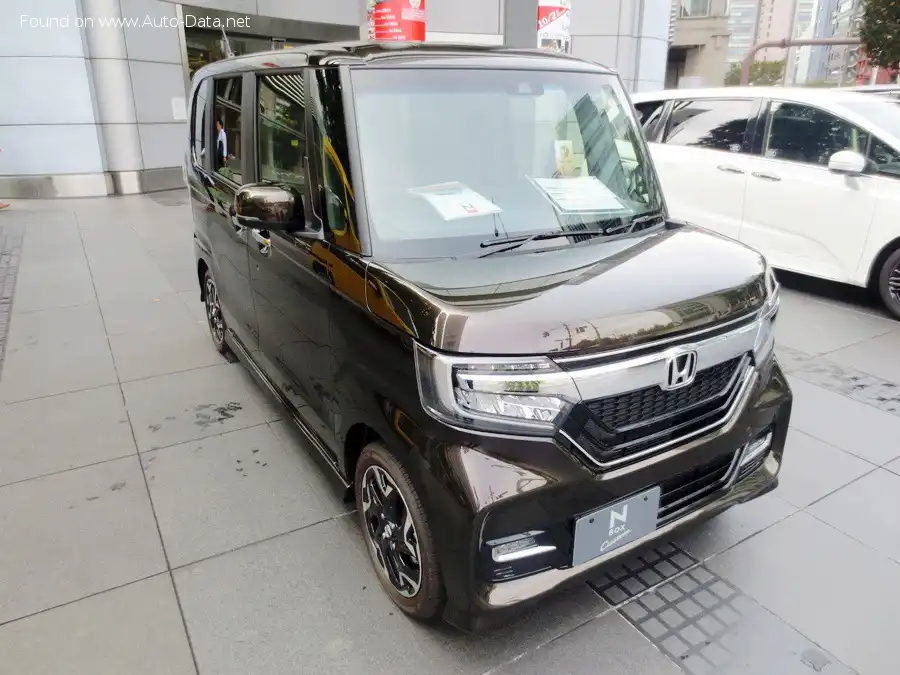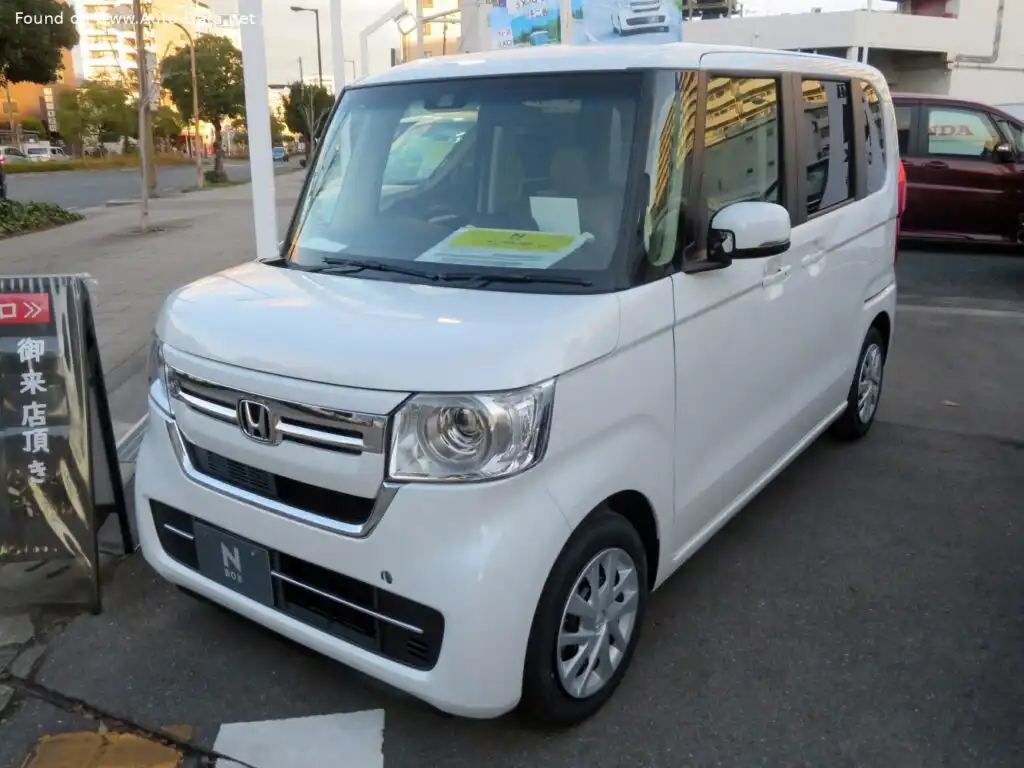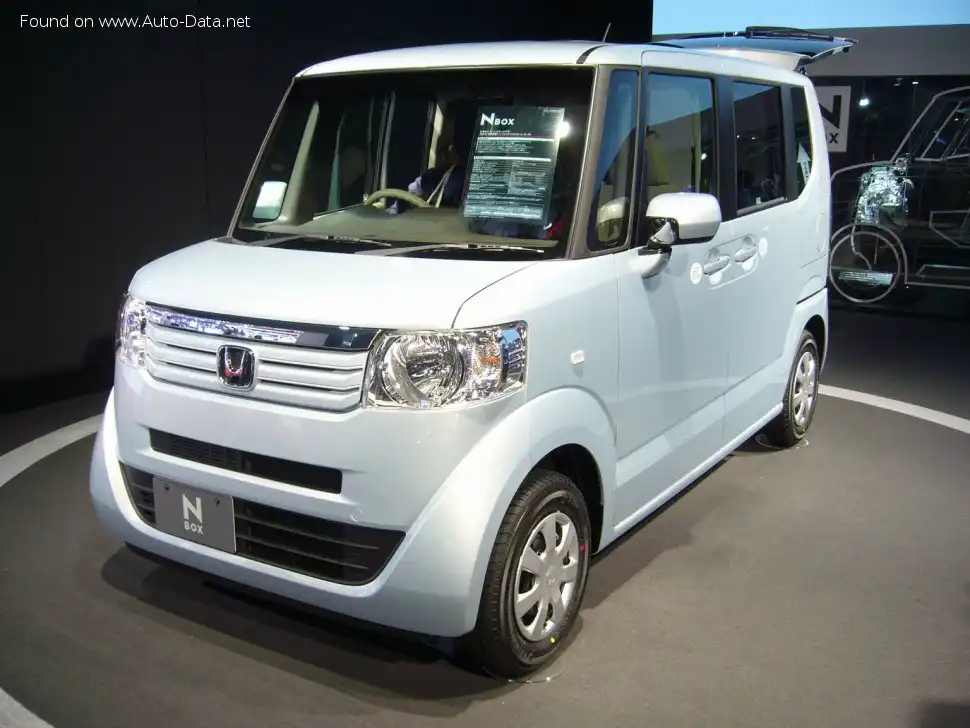
The Honda N-Box I 0.7i (64 hp) CVT, produced between 2011 and 2017, represents an entry-level variant within the first generation of Honda’s popular “N-Box” kei car series. Designed specifically for the Japanese domestic market (JDM), the N-Box aimed to maximize interior space and practicality within the strict dimensional and engine displacement regulations governing the kei car class. This particular 0.7i model, equipped with a continuously variable transmission (CVT), served as the most accessible point of entry into the N-Box lineup, prioritizing fuel efficiency and ease of use over outright performance. It was a key component in Honda’s strategy to capture a significant share of the kei car segment, known for its pragmatic and space-efficient vehicles.
Technical Specifications
| Brand | Honda |
| Model | N-Box |
| Generation | N-Box I |
| Type (Engine) | 0.7i (64 Hp) CVT |
| Start of production | 2011 |
| End of production | 2017 |
| Powertrain Architecture | Internal Combustion engine |
| Body type | MPV |
| Seats | 4 |
| Doors | 5 |
| Fuel consumption (combined) | 4.3 l/100 km (54.7 US mpg, 65.7 UK mpg, 23.3 km/l) |
| Fuel Type | Petrol (Gasoline) |
| Weight-to-power ratio | 15.3 kg/Hp, 65.3 Hp/tonne |
| Weight-to-torque ratio | 9.4 kg/Nm, 106.1 Nm/tonne |
| Power | 64 Hp @ 6000 rpm |
| Power per litre | 97.3 Hp/l |
| Torque | 104 Nm @ 2600 rpm (76.71 lb.-ft. @ 2600 rpm) |
| Engine layout | Front, Transverse |
| Engine Model/Code | S07A |
| Engine displacement | 658 cm3 (40.15 cu. in.) |
| Number of cylinders | 3 |
| Engine configuration | Inline |
| Cylinder Bore | 64 mm (2.52 in.) |
| Piston Stroke | 68.2 mm (2.69 in.) |
| Compression ratio | 9.2:1 |
| Number of valves per cylinder | 4 |
| Fuel injection system | Multi-port manifold injection |
| Engine aspiration | Naturally Aspirated |
| Engine oil capacity | 2.6 l (2.75 US qt | 2.29 UK qt) |
| Coolant capacity | 2.89 l (3.05 US qt | 2.54 UK qt) |
| Kerb Weight | 980 kg (2160.53 lbs.) |
| Fuel tank capacity | 35 l (9.25 US gal | 7.7 UK gal) |
| Length | 3395 mm (133.66 in.) |
| Width | 1475 mm (58.07 in.) |
| Height | 1780 mm (70.08 in.) |
| Wheelbase | 2520 mm (99.21 in.) |
| Front track | 1295 mm (50.98 in.) |
| Rear track | 1295 mm (50.98 in.) |
| Ride height (ground clearance) | 150 mm (5.91 in.) |
| Minimum turning circle | 9.4 m (30.84 ft.) |
| Drivetrain | Front wheel drive |
| Number of gears and type of gearbox | automatic transmission CVT |
| Front brakes | Ventilated discs |
| Rear brakes | Drum |
| Assisting systems | ABS (Anti-lock braking system) |
| Tires size | 165/55 R15 |
| Wheel rims size | 15 |
Powertrain & Engine Architecture
The N-Box 0.7i utilizes Honda’s S07A engine, a 658cc inline-three cylinder petrol engine. This engine is naturally aspirated and employs a multi-point fuel injection system. The S07A is known for its simplicity and reliability, characteristics crucial for the Japanese kei car market. The engine features a double overhead camshaft (DOHC) valvetrain with four valves per cylinder, contributing to its relatively high power output for its displacement. The engine’s compact size and lightweight construction are key to maximizing space within the N-Box’s small footprint. Paired with the S07A is a continuously variable transmission (CVT). Honda’s CVT design prioritizes smooth acceleration and fuel efficiency over sporty responsiveness. The CVT lacks fixed gear ratios, instead utilizing a belt-and-pulley system to provide a seamless range of ratios, keeping the engine operating within its most efficient range.
Driving Characteristics
The 0.7i CVT variant of the N-Box delivers modest performance, geared towards urban driving and ease of use. With 64 horsepower and 77 lb-ft of torque, acceleration is adequate for city traffic but limited on highways or when fully loaded. The CVT contributes to a smooth, linear power delivery, but it can sometimes feel “rubber-bandy” under hard acceleration, where engine RPMs rise without a corresponding increase in speed. Compared to the turbocharged N-Box variants, the 0.7i feels significantly less powerful. The CVT’s gear ratios are optimized for fuel economy, resulting in a relaxed driving experience at cruising speeds. The N-Box’s lightweight construction helps mitigate the lack of power, making it feel nimble and easy to maneuver in tight spaces.
Equipment & Trim Levels
The 0.7i trim level typically served as the base model for the N-Box. Standard features generally included air conditioning, power windows, power door locks, and a basic audio system. Interior upholstery was typically cloth, and the dashboard featured a functional, if somewhat spartan, design. Optional extras included features like keyless entry, a navigation system, and upgraded audio systems. Higher trim levels, such as the G and L, added features like alloy wheels, fog lights, and more luxurious interior appointments. The 0.7i was aimed at buyers prioritizing affordability and practicality, while those seeking more features and a more premium experience would opt for the higher trims.
Chassis & Braking
The N-Box I utilizes a front-wheel-drive layout with a MacPherson strut suspension in the front and a torsion beam suspension in the rear. This suspension setup is designed to provide a comfortable ride and predictable handling. The 0.7i variant, being the lightest in the lineup, benefits from a slightly more agile feel. Braking duties are handled by ventilated discs in the front and drum brakes in the rear. Anti-lock braking system (ABS) was standard, enhancing safety. The relatively light weight of the vehicle contributes to shorter stopping distances. The N-Box’s suspension is tuned for comfort rather than sporty handling, prioritizing a smooth ride over sharp cornering.
Market Reception & Comparison
The Honda N-Box, including the 0.7i CVT variant, was exceptionally well-received in Japan. Its spacious interior, fuel efficiency, and practical features resonated with Japanese consumers. Critics praised the N-Box for its clever use of space and its ease of driving. Compared to other kei cars, the N-Box stood out for its relatively refined interior and its comfortable ride. The 0.7i CVT model, while not the most powerful, offered a compelling value proposition for buyers seeking an affordable and economical kei car. Fuel economy was a significant selling point, with the N-Box consistently achieving impressive MPG figures. Reliability was also a key factor, with Honda’s reputation for build quality contributing to the N-Box’s popularity.
Legacy
The Honda N-Box I 0.7i CVT remains a popular choice in the used car market in Japan. The S07A engine is known for its durability and relatively low maintenance costs. While not a performance-oriented vehicle, the 0.7i CVT offers a reliable and economical transportation solution. The N-Box’s innovative design and practical features have cemented its place as a significant vehicle in the history of the kei car class. The first generation N-Box paved the way for subsequent iterations, which continue to be best-sellers in Japan, demonstrating the enduring appeal of this space-efficient and practical MPV.