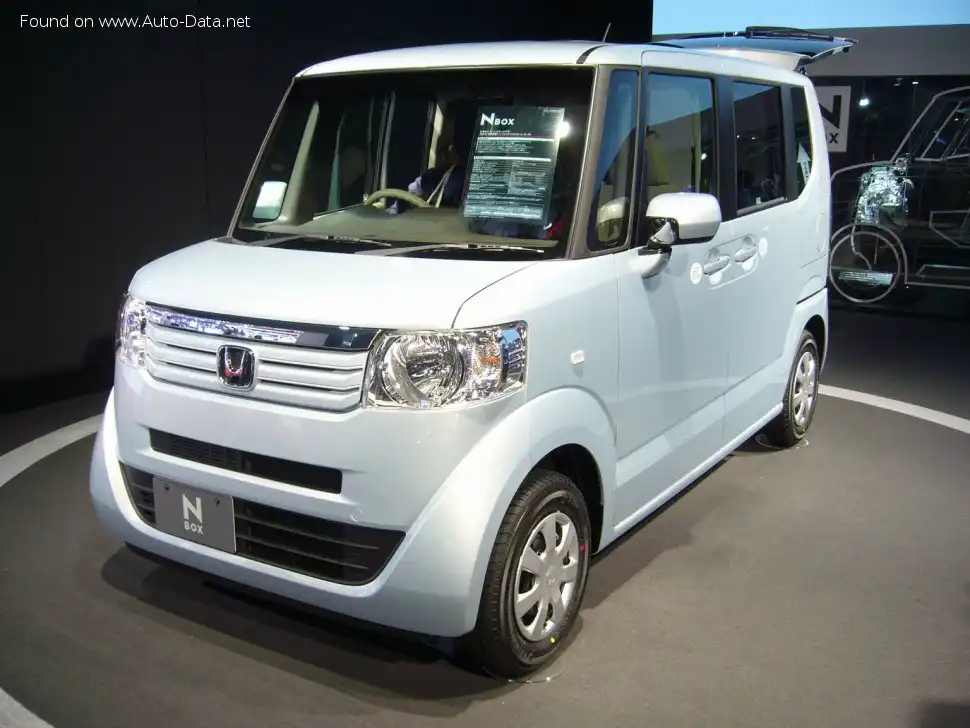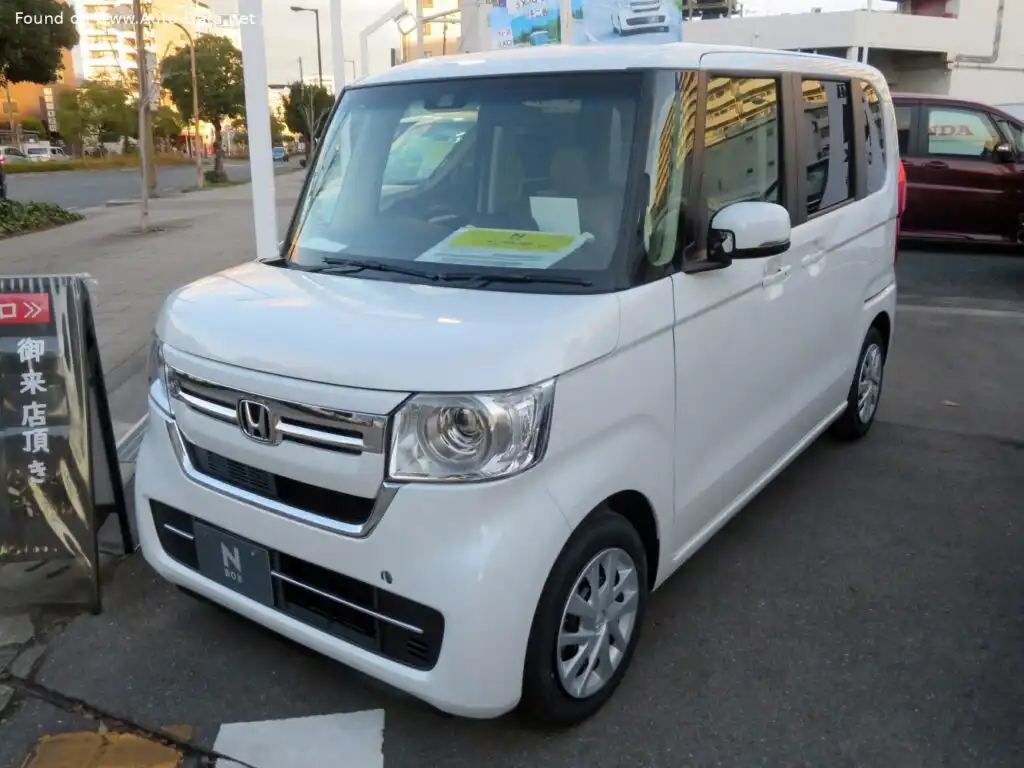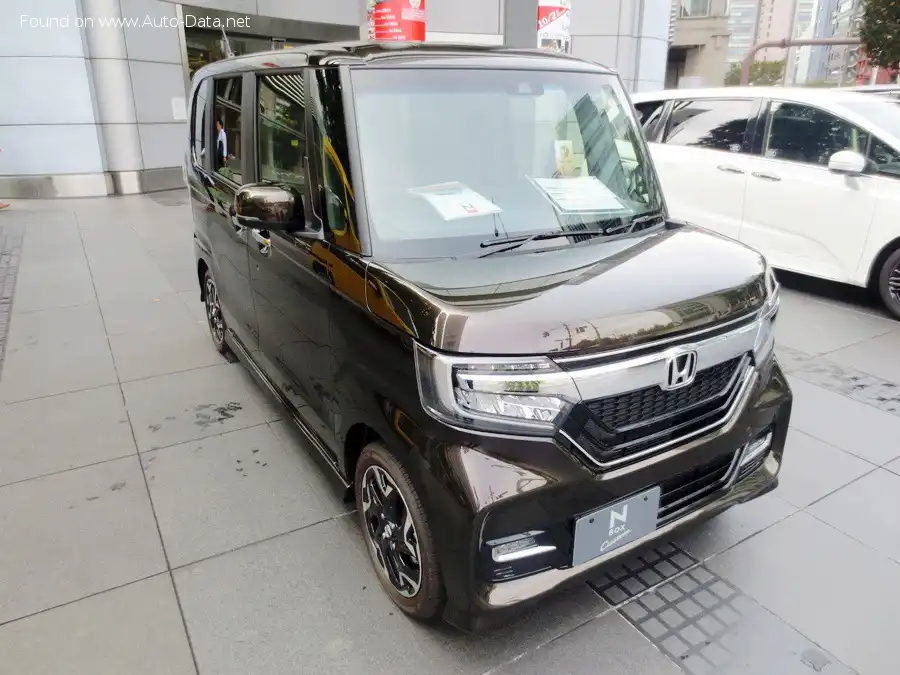
The Honda N-Box II 0.7i (64 hp) 4WD CVT is a micro-MPV produced by Honda between 2017 and 2020. It represents a key variant within the second generation (N-Box II) of the N-Box, a vehicle specifically designed for the Japanese domestic market (JDM) and characterized by its spacious interior and compact exterior dimensions. This particular configuration – the 0.7-liter engine paired with a continuously variable transmission (CVT) and all-wheel drive – was positioned as a practical and fuel-efficient option for buyers prioritizing all-weather capability and ease of use. The N-Box, in general, aimed to address the needs of small families and individuals in densely populated urban areas where parking space is at a premium.
Technical Specifications
| Brand | Honda |
| Model | N-Box |
| Generation | N-Box II |
| Type (Engine) | 0.7i (64 Hp) 4WD CVT |
| Start of production | 2017 |
| End of production | 2020 |
| Powertrain Architecture | Internal Combustion engine |
| Body type | MPV |
| Seats | 4 |
| Doors | 5 |
| Fuel consumption (combined) | 4.3-4.4 l/100 km (54.7 – 53.5 US mpg, 65.7 – 64.2 UK mpg, 23.3 – 22.7 km/l) |
| Fuel Type | Petrol (Gasoline) |
| Weight-to-power ratio | 15.3 kg/Hp, 65.3 Hp/tonne |
| Weight-to-torque ratio | 9.4 kg/Nm, 106.1 Nm/tonne |
| Power | 64 Hp @ 6000 rpm |
| Power per litre | 97.3 Hp/l |
| Torque | 104 Nm @ 2600 rpm (76.71 lb.-ft. @ 2600 rpm) |
| Engine layout | Front, Transverse |
| Engine Model/Code | S07B |
| Engine displacement | 658 cm3 (40.15 cu. in.) |
| Number of cylinders | 3 |
| Engine configuration | Inline |
| Cylinder Bore | 60 mm (2.36 in.) |
| Piston Stroke | 77.6 mm (3.06 in.) |
| Compression ratio | 9.8:1 |
| Number of valves per cylinder | 4 |
| Fuel injection system | Multi-port manifold injection |
| Engine aspiration | Turbocharger, Intercooler |
| Valvetrain | DOHC |
| Kerb Weight | 980-1030 kg (2160.53 – 2270.76 lbs.) |
| Fuel tank capacity | 25 l (6.6 US gal | 5.5 UK gal) |
| Length | 3395 mm (133.66 in.) |
| Width | 1475 mm (58.07 in.) |
| Height | 1815 mm (71.46 in.) |
| Wheelbase | 2520 mm (99.21 in.) |
| Front track | 1295-1305 mm (50.98 – 51.38 in.) |
| Rear (Back) track | 1295-1305 mm (50.98 – 51.38 in.) |
| Ride height (ground clearance) | 145 mm (5.71 in.) |
| Minimum turning circle | 9.4 m (30.84 ft.) |
| Drive wheel | All wheel drive (4×4) |
| Number of gears and type of gearbox | automatic transmission CVT |
| Front suspension | Independent type McPherson |
| Rear suspension | Torsion |
| Front brakes | Ventilated discs |
| Rear brakes | Disc |
| Assisting systems | ABS (Anti-lock braking system) |
| Steering type | Steering rack and pinion |
| Power steering | Electric Steering |
| Tires size | 155/65 R14; 165/55 R15 |
| Wheel rims size | 14; 15 |
Powertrain & Engine Architecture
The heart of the N-Box II 0.7i is the S07B engine, a 658cc inline-three cylinder petrol engine. Notably, this engine is turbocharged and intercooled, a relatively uncommon feature for a vehicle of this size and price point. The turbocharger helps to overcome the inherent limitations of a small displacement engine, providing a more usable power output. The engine utilizes multi-point fuel injection and a double overhead camshaft (DOHC) valvetrain, contributing to efficient combustion and improved performance. The compression ratio is set at 9.8:1. The engine is transversely mounted at the front of the vehicle.
The engine is mated to a continuously variable transmission (CVT). Honda’s CVT design prioritizes smooth acceleration and fuel efficiency over outright performance. The CVT lacks fixed gear ratios, instead utilizing a belt-and-pulley system to provide a seamless range of ratios. The all-wheel-drive system is a part-time system, engaging the rear wheels when traction is needed, enhancing stability in slippery conditions.
Driving Characteristics
The 64 hp output and CVT pairing result in modest, but adequate, performance. Acceleration is not brisk, but sufficient for navigating urban environments. The CVT helps to keep the engine within its optimal power band, providing a relatively smooth driving experience. Compared to the more powerful N-Box variants (such as those with larger engines), this 0.7i model prioritizes fuel economy and ease of driving over sporty performance. The all-wheel drive system provides enhanced grip and stability, particularly on wet or snowy roads, making it a practical choice for regions with inclement weather. The CVT’s programming is tuned for efficiency, meaning the engine tends to hold lower RPMs during cruising, contributing to quieter operation.
Equipment & Trim Levels
The N-Box II 0.7i 4WD CVT typically came equipped with standard features such as air conditioning, power windows, power door locks, and a basic audio system. Higher trim levels, available as options, could include features like a touchscreen infotainment system, navigation, keyless entry, and alloy wheels. Interior upholstery was typically cloth, with a focus on durability and practicality. The N-Box’s interior is renowned for its clever packaging and spaciousness, despite the vehicle’s small exterior dimensions. The rear seats can be folded flat or even removed entirely to create a larger cargo area.
Chassis & Braking
The N-Box II utilizes a McPherson strut suspension setup at the front and a torsion beam suspension at the rear. This configuration provides a good balance of ride comfort and handling. The front brakes are ventilated discs, while the rear brakes are discs. Anti-lock braking system (ABS) is standard. The relatively light weight of the vehicle (980-1030 kg) contributes to its nimble handling. Stabilizer bars are present, helping to reduce body roll during cornering.
Market Reception & Comparison
The N-Box, in general, has been a hugely successful vehicle in Japan, consistently ranking among the best-selling cars in the country. The 0.7i 4WD CVT variant appealed to buyers seeking a practical, fuel-efficient, and all-weather capable micro-MPV. Critics praised the N-Box’s spacious interior, clever packaging, and fuel economy. Compared to other N-Box variants, the 0.7i offered the best fuel economy but the lowest performance. It was often seen as an ideal choice for city driving and short commutes. The CVT transmission, while efficient, was sometimes criticized for lacking the responsiveness of a traditional automatic transmission.
Legacy
The Honda N-Box II 0.7i 4WD CVT remains a popular choice in the used car market in Japan. The S07B engine, while small, has proven to be relatively reliable, provided it has been properly maintained. The CVT transmission, however, can be a potential point of concern, as with any CVT, and requires regular fluid changes. The N-Box’s innovative design and spacious interior have cemented its place as a benchmark in the micro-MPV segment, and it continues to be a highly sought-after vehicle for those seeking a practical and efficient urban runabout.