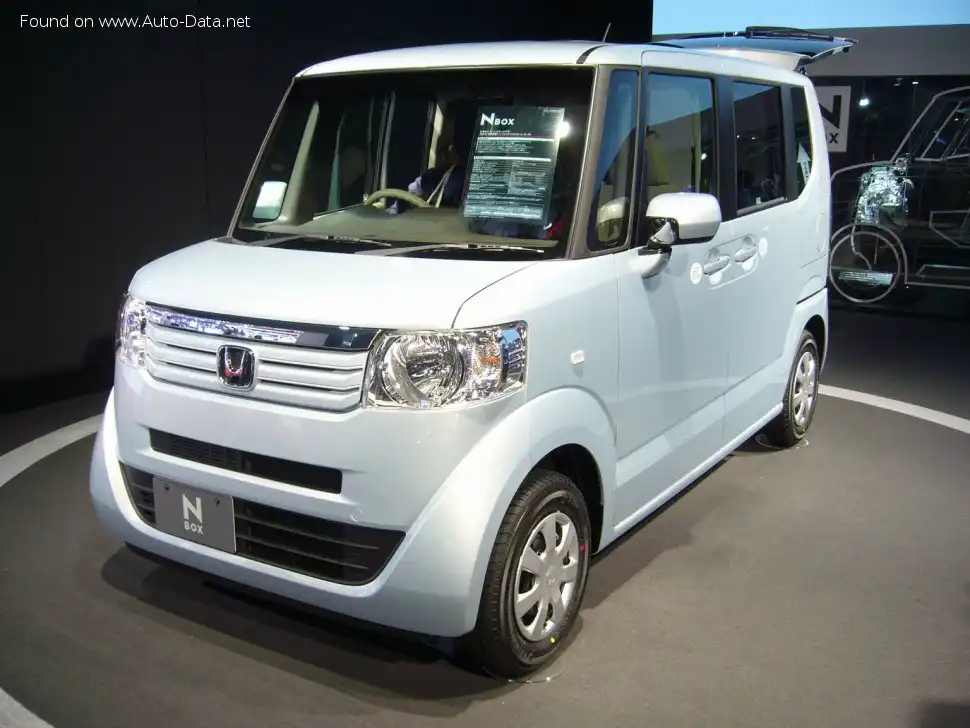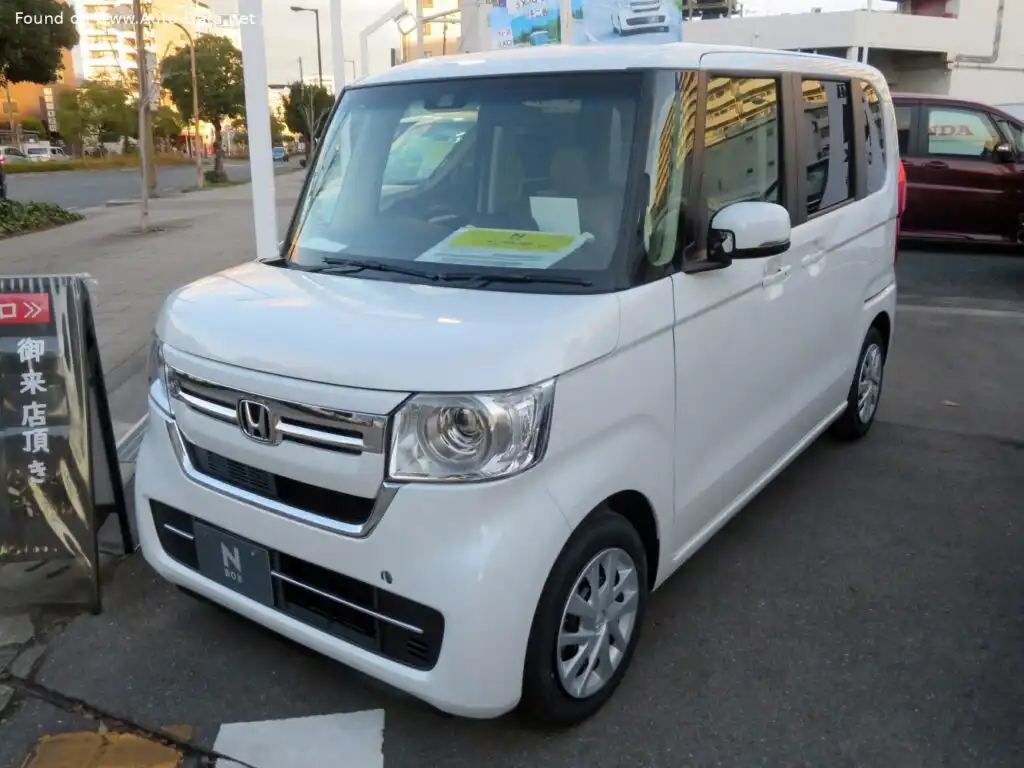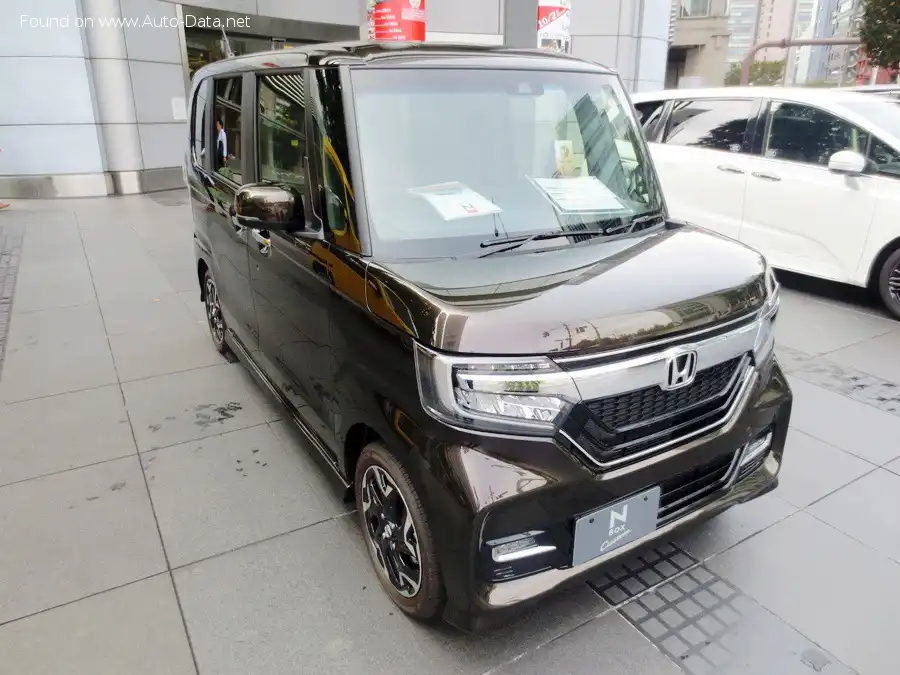
The Honda N-Box II 0.7i (64 hp) CVT, produced between 2017 and 2020, represents an entry-level variant within the second generation of Honda’s popular N-Box kei car series. Designed primarily for the Japanese domestic market (JDM), the N-Box series caters to buyers seeking a practical, spacious, and fuel-efficient microvan. The N-Box II, and specifically this 0.7i CVT trim, aimed to provide affordable transportation with a focus on maximizing interior space within the strict dimensional constraints of the kei car class. This model occupied the base trim level, offering a cost-effective entry point into the N-Box range.
Technical Specifications
| Brand | Honda |
| Model | N-Box |
| Generation | N-Box II |
| Type (Engine) | 0.7i (64 Hp) CVT |
| Start of production | 2017 |
| End of production | 2020 |
| Powertrain Architecture | Internal Combustion engine |
| Body type | MPV |
| Seats | 4 |
| Doors | 5 |
| Fuel consumption (combined) | 3.9-4.0 l/100 km (60.3 – 58.8 US mpg) |
| Fuel Type | Petrol (Gasoline) |
| Weight-to-power ratio | 14.2 kg/Hp |
| Weight-to-torque ratio | 8.8 kg/Nm |
| Power | 64 Hp @ 6000 rpm |
| Power per litre | 97.3 Hp/l |
| Torque | 104 Nm @ 2600 rpm (76.71 lb.-ft. @ 2600 rpm) |
| Engine layout | Front, Transverse |
| Engine Model/Code | S07B |
| Engine displacement | 658 cm3 (40.15 cu. in.) |
| Number of cylinders | 3 |
| Engine configuration | Inline |
| Cylinder Bore | 60 mm (2.36 in.) |
| Piston Stroke | 77.6 mm (3.06 in.) |
| Compression ratio | 9.8:1 |
| Number of valves per cylinder | 4 |
| Fuel injection system | Multi-port manifold injection |
| Engine aspiration | Turbocharger, Intercooler |
| Valvetrain | DOHC |
| Kerb Weight | 910-970 kg (2006.21 – 2138.48 lbs.) |
| Fuel tank capacity | 27 l (7.13 US gal | 5.94 UK gal) |
| Length | 3395 mm (133.66 in.) |
| Width | 1475 mm (58.07 in.) |
| Height | 1790 mm (70.47 in.) |
| Wheelbase | 2520 mm (99.21 in.) |
| Front track | 1295-1305 mm (50.98 – 51.38 in.) |
| Rear track | 1295-1305 mm (50.98 – 51.38 in.) |
| Ride height (ground clearance) | 145 mm (5.71 in.) |
| Minimum turning circle | 9.0 m (29.53 ft.) |
| Drivetrain Architecture | Front wheel drive |
| Number of gears and type of gearbox | automatic transmission CVT |
| Front suspension | Independent type McPherson |
| Rear suspension | Torsion |
| Front brakes | Ventilated discs |
| Rear brakes | Disc |
| Assisting systems | ABS (Anti-lock braking system) |
| Steering type | Steering rack and pinion |
| Power steering | Electric Steering |
| Tires size | 155/65 R14; 165/55 R15 |
| Wheel rims size | 14; 15 |
Powertrain & Engine Architecture
The N-Box II 0.7i utilizes Honda’s S07B engine, a 658cc inline-three cylinder petrol engine. This engine is turbocharged and intercooled, a relatively sophisticated feature for a kei car, allowing it to produce a respectable 64 horsepower at 6000 rpm and 104 Nm (76.71 lb-ft) of torque at 2600 rpm. The engine employs multi-point fuel injection and a double overhead camshaft (DOHC) valvetrain, contributing to its efficiency and power output. The engine is transversely mounted at the front of the vehicle. The Continuously Variable Transmission (CVT) was specifically tuned for smooth operation and fuel efficiency, prioritizing comfortable urban driving over outright performance. The CVT lacks discrete gear steps, providing a seamless power delivery.
Driving Characteristics
The 0.7i CVT variant of the N-Box II delivers a driving experience geared towards practicality and ease of use. Acceleration is modest, reflecting the engine’s small displacement and the CVT’s focus on efficiency. The CVT’s programming emphasizes smooth, linear acceleration, avoiding the “rubber band” feel sometimes associated with these transmissions. Compared to the turbocharged 660cc engine available in higher trims, the 0.7i feels noticeably less powerful, particularly when fully loaded or tackling inclines. However, for typical city driving and short commutes, the 64 hp output is generally sufficient. The steering is light and precise, making maneuvering in tight urban environments easy. The suspension is tuned for comfort, absorbing bumps and imperfections in the road surface effectively.
Equipment & Trim Levels
As the entry-level trim, the 0.7i CVT came standard with basic amenities. These typically included power windows, power door locks, air conditioning, and a basic audio system. Interior upholstery was typically cloth, and the dashboard featured a functional, if somewhat spartan, design. Optional extras included features like a navigation system, upgraded audio, and alloy wheels. Safety features such as ABS were standard. The N-Box II prioritized interior space, and even the base trim offered a surprisingly roomy cabin for its exterior dimensions. The rear seats could be folded flat or “dive” into the floor, creating a large, versatile cargo area.
Chassis & Braking
The N-Box II utilizes a front-wheel-drive layout. The front suspension consists of independent McPherson struts, while the rear suspension employs a torsion beam setup. This configuration balances ride comfort with handling stability. The braking system features ventilated discs on the front wheels and discs on the rear, providing adequate stopping power for the vehicle’s weight and performance. ABS (Anti-lock Braking System) was standard, enhancing safety during emergency braking situations. The relatively lightweight construction of the N-Box II contributes to its fuel efficiency and nimble handling.
Market Reception & Comparison
The Honda N-Box II, and the 0.7i CVT variant specifically, was well-received in the Japanese market. Critics praised its spacious interior, fuel efficiency, and ease of driving. The 0.7i trim was particularly attractive to budget-conscious buyers and those who prioritized fuel economy over performance. Compared to other kei car rivals, such as the Suzuki Spacia and Daihatsu Tanto, the N-Box II was often lauded for its superior interior design and overall refinement. The CVT transmission, while not offering the sporty feel of a manual gearbox, was appreciated for its smooth operation and contribution to fuel savings. Fuel economy figures consistently hovered around 3.9-4.0 liters per 100 kilometers, making it one of the most efficient vehicles in its class.
Legacy
The Honda N-Box II 0.7i CVT has proven to be a reliable and durable vehicle. The S07B engine, while small, is known for its longevity when properly maintained. The CVT transmission, while requiring regular fluid changes, is generally dependable. In the used car market, these N-Boxes are popular choices due to their affordability, fuel efficiency, and practicality. They represent a sensible and economical transportation option, particularly for urban dwellers. The N-Box series, as a whole, has consistently been a top-selling kei car in Japan, and the 0.7i CVT played a significant role in its success by providing an accessible entry point to the range.