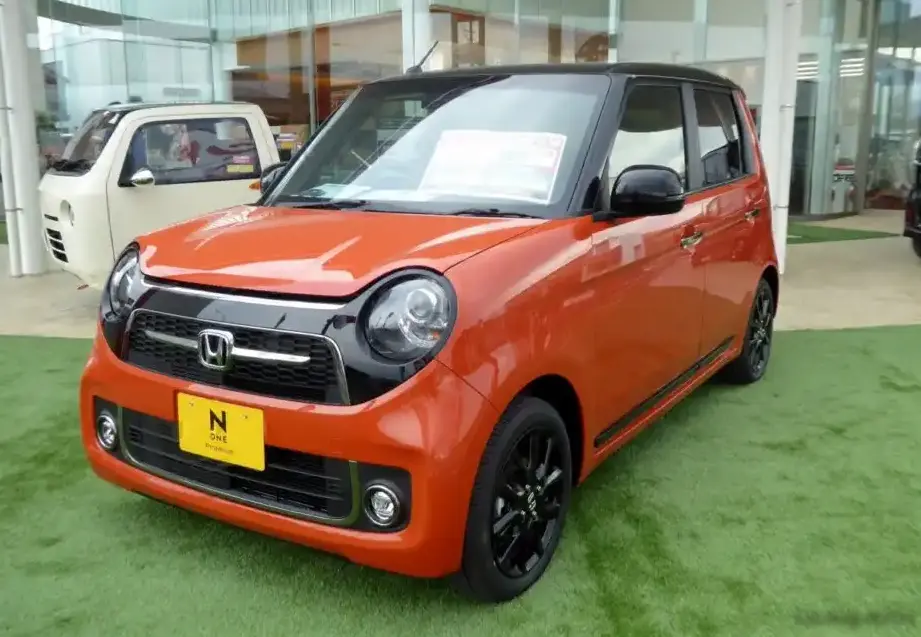
The Honda N-One I 0.7i (64 Hp) CVT, produced from November 2012 to March 2020, represents an entry-level variant within the first generation (N-One I) of Honda’s distinctive kei car. Positioned as an affordable and fuel-efficient city car, the N-One aimed to recapture the spirit of Honda’s classic N360 and N600 models from the 1960s and 70s, offering a retro aesthetic combined with modern technology. This particular 0.7-liter, CVT-equipped model served as the gateway to the N-One lineup, appealing to buyers prioritizing economy and ease of use over outright performance. It was primarily sold within the Japanese domestic market (JDM), capitalizing on the favorable tax and insurance benefits associated with kei cars.
| Brand | Honda |
| Model | N-One |
| Generation | N-One I |
| Type (Engine) | 0.7i (64 Hp) CVT |
| Start of production | November, 2012 |
| End of production | March, 2020 |
| Powertrain Architecture | Internal Combustion engine |
| Body type | Hatchback |
| Seats | 4 |
| Doors | 5 |
| Fuel consumption (combined) | 4.2 l/100 km (56 US mpg, 67.3 UK mpg, 23.8 km/l) |
| Fuel Type | Petrol (Gasoline) |
| Weight-to-power ratio | 13.3 kg/Hp, 75.3 Hp/tonne |
| Weight-to-torque ratio | 8.2 kg/Nm, 122.4 Nm/tonne |
| Power | 64 Hp @ 6000 rpm |
| Power per litre | 97.3 Hp/l |
| Torque | 104 Nm @ 2600 rpm (76.71 lb.-ft. @ 2600 rpm) |
| Engine layout | Front, Transverse |
| Engine displacement | 658 cm3 (40.15 cu. in.) |
| Number of cylinders | 3 |
| Engine configuration | Inline |
| Cylinder Bore | 64 mm (2.52 in.) |
| Piston Stroke | 68.2 mm (2.69 in.) |
| Compression ratio | 9.2:1 |
| Number of valves per cylinder | 4 |
| Fuel injection system | Multi-port manifold injection |
| Engine aspiration | Turbocharger, Intercooler |
| Valvetrain | DOHC |
| Engine oil capacity | 2.6 l (2.75 US qt | 2.29 UK qt) |
| Kerb Weight | 850-870 kg (1873.93 – 1918.02 lbs.) |
| Fuel tank capacity | 35 l (9.25 US gal | 7.7 UK gal) |
| Length | 3395 mm (133.66 in.) |
| Width | 1475 mm (58.07 in.) |
| Height | 1610 mm (63.39 in.) |
| Wheelbase | 2520 mm (99.21 in.) |
| Front track | 1295-1305 mm (50.98 – 51.38 in.) |
| Rear track | 1295-1305 mm (50.98 – 51.38 in.) |
| Ride height (ground clearance) | 150 mm (5.91 in.) |
| Minimum turning circle | 9.0 m (29.53 ft.) |
| Drivetrain Architecture | Front wheel drive, Internal Combustion engine |
| Number of gears and type of gearbox | automatic transmission CVT |
| Front suspension | Independent type McPherson |
| Rear suspension | Torsion |
| Front brakes | Ventilated discs |
| Rear brakes | Drum |
| Assisting systems | ABS (Anti-lock braking system) |
| Steering type | Steering rack and pinion |
| Power steering | Electric Steering |
| Tires size | 155/65 R14; 165/55 R15 |
| Wheel rims size | 14; 15 |
Powertrain & Engine Architecture
The N-One 0.7i utilizes Honda’s S07A engine, a 658cc inline-three cylinder petrol engine. Despite its small displacement, the engine is turbocharged and intercooled, allowing it to produce a respectable 64 horsepower at 6000 rpm and 104 Nm (76.71 lb-ft) of torque at 2600 rpm. The engine employs multi-point fuel injection and a double overhead camshaft (DOHC) valvetrain, contributing to its efficiency and relatively smooth operation. The engine’s compact size and lightweight construction are crucial for meeting kei car regulations. Paired with the engine is a Continuously Variable Transmission (CVT), chosen for its smooth acceleration and fuel efficiency. This CVT is tuned for comfort and ease of driving, prioritizing seamless gear changes over sporty responsiveness. The S07A engine is known for its relatively simple design, which contributes to its reliability.
Driving Characteristics
The 0.7i CVT variant of the N-One delivers a comfortable, if not particularly exhilarating, driving experience. The CVT effectively utilizes the engine’s torque, providing adequate acceleration for city driving and highway merging. However, compared to the available five-speed manual transmission, the CVT lacks the direct feel and responsiveness preferred by driving enthusiasts. The CVT’s programming emphasizes fuel economy, resulting in a somewhat ‘rubber band’ effect during hard acceleration. The N-One’s lightweight construction (850-870 kg) helps mitigate the engine’s modest power output, making it feel nimble and easy to maneuver in urban environments. The steering is light and precise, further enhancing its city-friendly character. Compared to higher-spec N-One models with more powerful engines, the 0.7i feels noticeably slower, particularly when fully loaded with passengers and cargo.
Equipment & Trim Levels
The base 0.7i trim of the N-One I typically included standard features such as air conditioning, power windows, power steering, and ABS brakes. Interior upholstery was generally a simple cloth material. Optional extras included a navigation system, a rearview camera, and alloy wheels. Higher trim levels, such as the Premium and Style editions, added features like leather-wrapped steering wheels, upgraded audio systems, and more sophisticated interior trim. The N-One’s interior design, while functional, prioritized space efficiency over luxury. The dashboard layout is straightforward and easy to use, with a focus on providing essential information to the driver.
Chassis & Braking
The N-One I utilizes a front-engine, front-wheel-drive layout. The front suspension consists of independent McPherson struts, while the rear suspension employs a torsion beam setup. This configuration provides a good balance of ride comfort and handling stability. Braking duties are handled by ventilated discs at the front and drum brakes at the rear. The use of drum brakes on the rear was a cost-saving measure common in kei cars. The N-One’s relatively light weight helps to compensate for the less powerful rear braking system. Electric power steering provides light and effortless steering control.
Market Reception & Comparison
The Honda N-One was generally well-received in Japan, praised for its retro styling, fuel efficiency, and practicality. Critics noted that the 0.7i CVT variant, while being the most affordable option, lacked the performance of the more powerful engine choices. Compared to other kei cars like the Suzuki Alto and Daihatsu Mira, the N-One offered a more distinctive design and a slightly more refined driving experience. Fuel economy figures of 4.2 l/100 km (56 US mpg) were competitive within the kei car segment. Reliability was generally considered to be good, typical of Honda products. However, some owners reported minor issues with the CVT transmission over the long term.
Legacy
The Honda N-One, and specifically the 0.7i CVT variant, remains a popular choice in the used car market in Japan. Its fuel efficiency, affordability, and compact size continue to appeal to urban drivers. The S07A engine, while not known for its high performance, has proven to be relatively reliable with proper maintenance. The N-One’s success demonstrated Honda’s ability to blend retro design cues with modern technology, creating a unique and appealing kei car that resonated with Japanese consumers. The N-One helped revitalize the kei car segment and inspired other manufacturers to offer similarly styled and equipped vehicles.