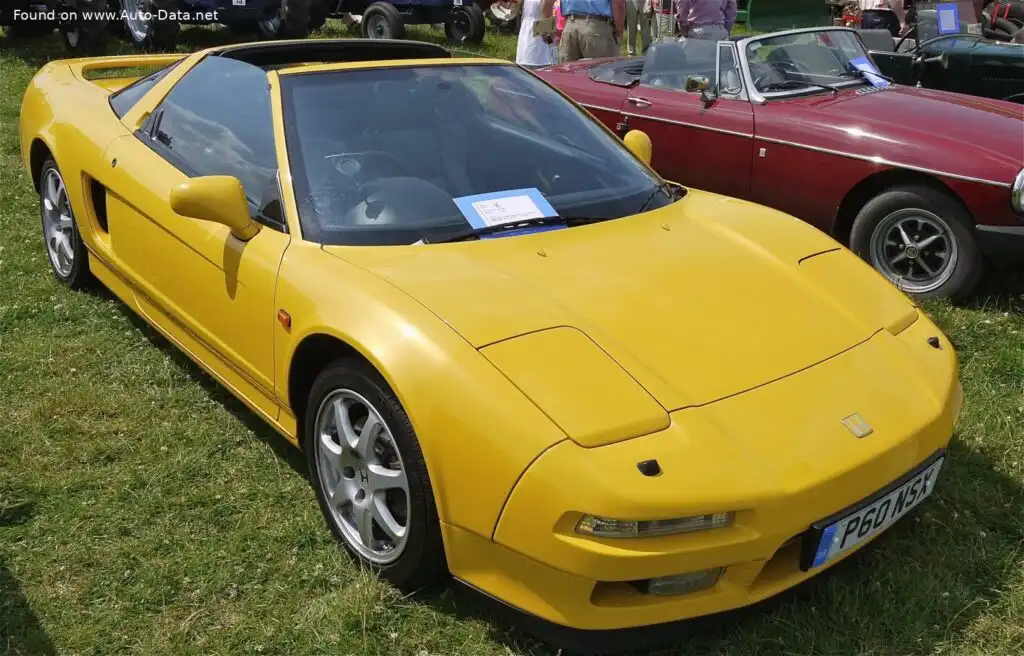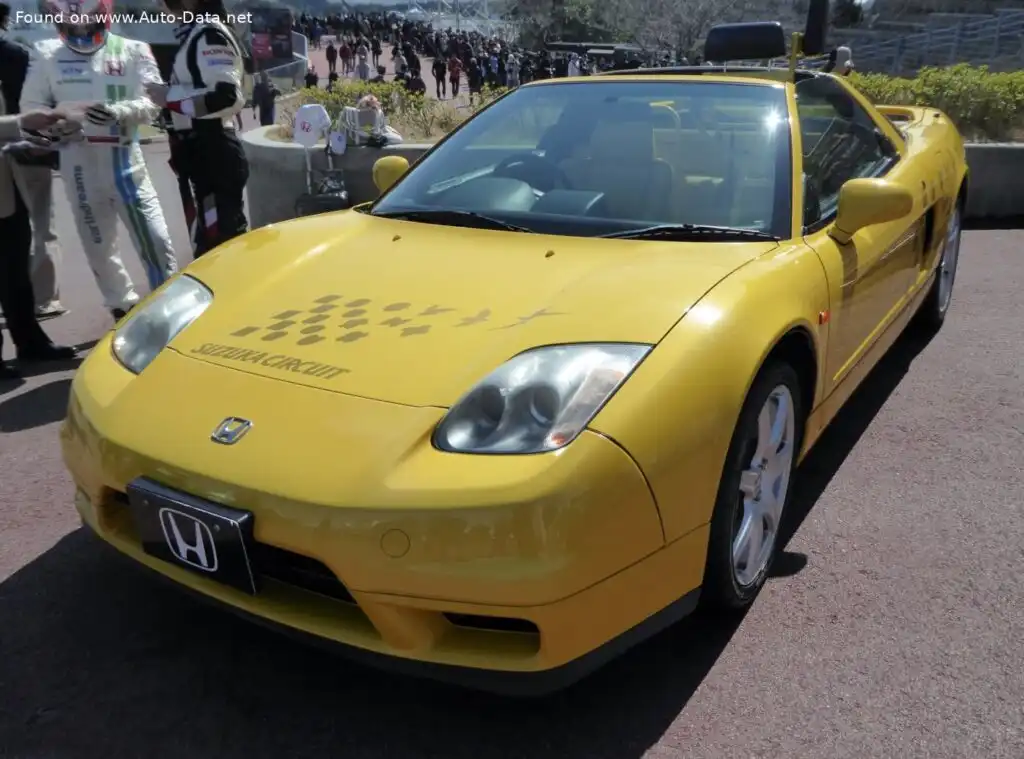
The Honda NSX-T I (facelift, 2002-2005) represents a significant evolution of Honda’s iconic mid-engine sports car. Introduced as part of the first-generation NSX (1990-2005), the “T” designation denotes the targa top configuration, offering an open-air driving experience. This particular variant, powered by a 3.0-liter V6 engine producing 256 horsepower and paired with Honda’s proprietary four-speed F-matic automatic transmission, occupied a unique position in the NSX lineup, aimed at buyers seeking a blend of performance and convenience. Production spanned from 2002 to 2005, representing the final iteration of the original NSX before its discontinuation.
Technical Specifications
| Brand | Honda |
| Model | NSX |
| Generation | NSX-T I (facelift 2002) |
| Type (Engine) | 3.0 V6 VTEC (256 Hp) F-matic |
| Start of production | 2002 |
| End of production | 2005 |
| Powertrain Architecture | Internal Combustion engine |
| Body type | Targa |
| Seats | 2 |
| Doors | 2 |
| Fuel consumption (economy) – urban (NEDC) | 18.3 l/100 km (12.9 US mpg, 15.4 UK mpg, 5.5 km/l) |
| Fuel consumption (economy) – extra urban (NEDC) | 8.8 l/100 km (26.7 US mpg, 32.1 UK mpg, 11.4 km/l) |
| Fuel consumption (economy) – combined (NEDC) | 12.3 l/100 km (19.1 US mpg, 23 UK mpg, 8.1 km/l) |
| CO2 emissions (NEDC) | 287 g/km |
| Fuel Type | Petrol (Gasoline) |
| Acceleration 0 – 100 km/h | 7.5 sec |
| Acceleration 0 – 62 mph | 7.5 sec |
| Acceleration 0 – 60 mph | 7.1 sec |
| Maximum speed | 261 km/h (162.18 mph) |
| Weight-to-power ratio | 6 kg/Hp, 167.3 Hp/tonne |
| Weight-to-torque ratio | 5.4 kg/Nm, 185.6 Nm/tonne |
| Power | 256 Hp @ 6800 rpm |
| Power per litre | 86 Hp/l |
| Torque | 284 Nm @ 5400 rpm (209.47 lb.-ft. @ 5400 rpm) |
| Maximum engine speed | 7500 rpm |
| Engine layout | Middle, Transverse |
| Engine Model/Code | C30A4 |
| Engine displacement | 2977 cm3 (181.67 cu. in.) |
| Number of cylinders | 6 |
| Engine configuration | V-engine |
| Cylinder Bore | 90 mm (3.54 in.) |
| Piston Stroke | 78 mm (3.07 in.) |
| Compression ratio | 9.6:1 |
| Number of valves per cylinder | 4 |
| Fuel injection system | Multi-port manifold injection |
| Engine aspiration | Naturally aspirated engine |
| Valvetrain | DOHC, VTEC |
| Engine oil capacity | 5 l (5.28 US qt | 4.4 UK qt) |
| Coolant | 16.5 l (17.44 US qt | 14.52 UK qt) |
| Kerb Weight | 1530 kg (3373.07 lbs.) |
| Trunk (boot) space – minimum | 154 l (5.44 cu. ft.) |
| Fuel tank capacity | 70 l (18.49 US gal | 15.4 UK gal) |
| Length | 4425 mm (174.21 in.) |
| Width | 1810 mm (71.26 in.) |
| Height | 1170 mm (46.06 in.) |
| Wheelbase | 2530 mm (99.61 in.) |
| Front track | 1510 mm (59.45 in.) |
| Rear (Back) track | 1540 mm (60.63 in.) |
| Ride height (ground clearance) | 135 mm (5.31 in.) |
| Minimum turning circle (turning diameter) | 11.6 m (38.06 ft.) |
| Drivetrain Architecture | Rear wheel drive |
| Drive wheel | Rear wheel drive |
| Number of gears and type of gearbox | 4 gears, automatic transmission F-matic |
| Front suspension | Coil spring, Double wishbone, Transverse stabilizer |
| Rear suspension | Double wishbone, Transverse stabilizer, Coil spring |
| Front brakes | Ventilated discs, 298 mm |
| Rear brakes | Ventilated discs, 303 mm |
| Assisting systems | ABS (Anti-lock braking system) |
| Steering type | Steering rack and pinion |
| Power steering | Electric Steering |
| Tires size | Front wheel tires: 215/40 R17 Rear wheel tires: 255/40 R17 |
| Wheel rims size | Front wheel rims: 7J x 17 Rear wheel rims: 9J x 17 |
Powertrain & Engine Architecture
At the heart of the 2002-2005 NSX-T I lies the C30A4 engine, a 2,977cc naturally aspirated V6. This engine is a descendant of the original NSX powerplant, but benefits from refinements made throughout the first generation’s production run. It features a 90-degree V-angle, contributing to a smooth power delivery and compact dimensions. The engine utilizes Honda’s Variable Valve Timing and Lift Electronic Control (VTEC) system, which optimizes valve timing for improved performance at both low and high engine speeds. Fuel delivery is managed by a multi-port fuel injection system. The F-matic transmission is a four-speed automatic, designed specifically for the NSX. It offers smoother shifts than a conventional automatic, but lacks the responsiveness of a manual gearbox. It features a torque converter and electronic controls for optimized shift points.
Driving Characteristics
The NSX-T I with the F-matic transmission delivers a distinctly different driving experience compared to the five-speed manual version. While the manual NSX is celebrated for its precise shifting and driver engagement, the automatic prioritizes ease of use. Acceleration from 0-60 mph takes approximately 7.1 seconds, slightly slower than the manual variant. The F-matic transmission’s shift programming is geared towards comfort and fuel efficiency, resulting in a less aggressive feel. However, the engine’s strong mid-range torque provides ample power for everyday driving and spirited excursions. The automatic transmission does diminish some of the raw, connected feel that defines the manual NSX, but it broadens the car’s appeal to a wider range of drivers.
Equipment & Trim Levels
The NSX-T I facelift generally came well-equipped, reflecting its position as a premium sports car. Standard features included leather upholstery, power windows and locks, air conditioning, and a premium sound system. The targa top, a defining feature of the “T” model, provided an open-air driving experience. Optional extras included upgraded audio systems, navigation, and various cosmetic enhancements. Interior trim options were relatively limited, typically featuring black or tan leather. The dashboard layout remained consistent with the first-generation NSX, prioritizing functionality and driver focus.
Chassis & Braking
The NSX-T I utilizes a lightweight aluminum monocoque chassis, a groundbreaking feature when the NSX was first introduced. This construction contributes to the car’s exceptional rigidity and low weight. Suspension consists of double wishbones at all four corners, with coil springs and transverse stabilizers. The braking system features ventilated discs on all wheels, providing ample stopping power. ABS (Anti-lock Braking System) is standard. The suspension setup is tuned for a balance between comfort and handling, offering a relatively compliant ride without sacrificing cornering ability.
Market Reception & Comparison
The 2002-2005 NSX-T I with the F-matic transmission received mixed reviews. While praised for its refinement and ease of use, it was often criticized for lacking the engagement of the manual version. Critics noted that the automatic transmission dulled the driving experience, diminishing the NSX’s inherent sporting character. Fuel economy was also a concern, with combined figures around 19.1 US mpg. Compared to the manual NSX, the automatic version offered slightly lower performance and a less visceral driving experience, but appealed to buyers who prioritized convenience and comfort. Compared to contemporary sports cars like the Porsche 911, the NSX offered a unique blend of Japanese reliability and mid-engine handling.
Legacy
The Honda NSX-T I (facelift, 2002-2005) remains a highly sought-after sports car among enthusiasts. The C30A4 engine and F-matic transmission, while not as revered as the manual counterpart, are generally considered reliable. Proper maintenance is crucial, as with any high-performance vehicle. Parts availability can be a challenge, but a dedicated aftermarket supports the NSX community. Today, these cars command strong prices in the used car market, reflecting their iconic status and enduring appeal. The NSX-T I represents a final, refined chapter in the story of Honda’s groundbreaking sports car, offering a unique blend of performance, comfort, and Japanese engineering excellence.