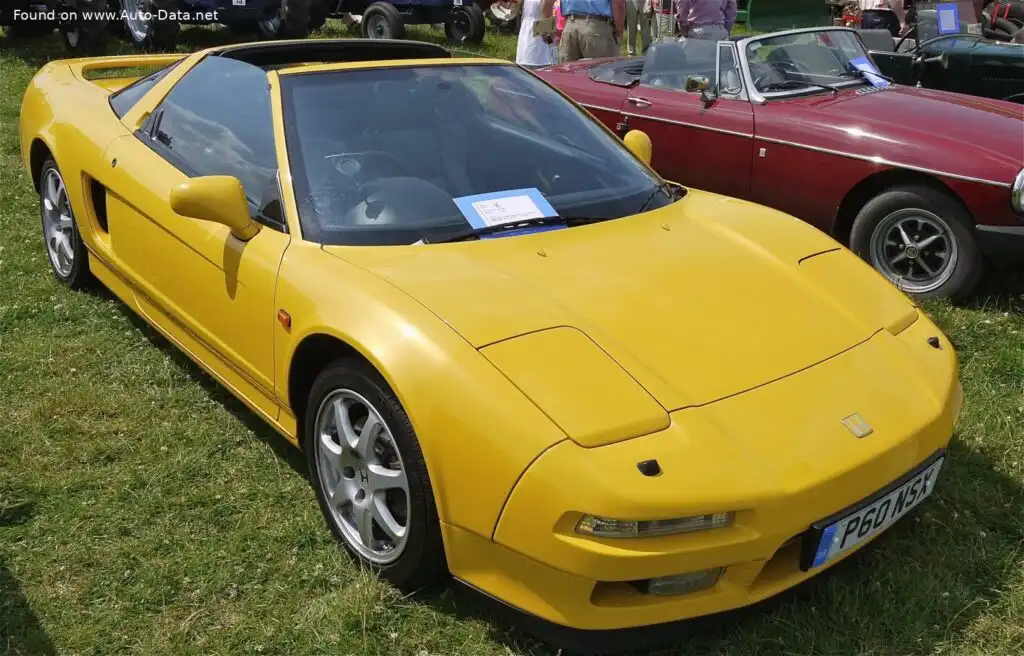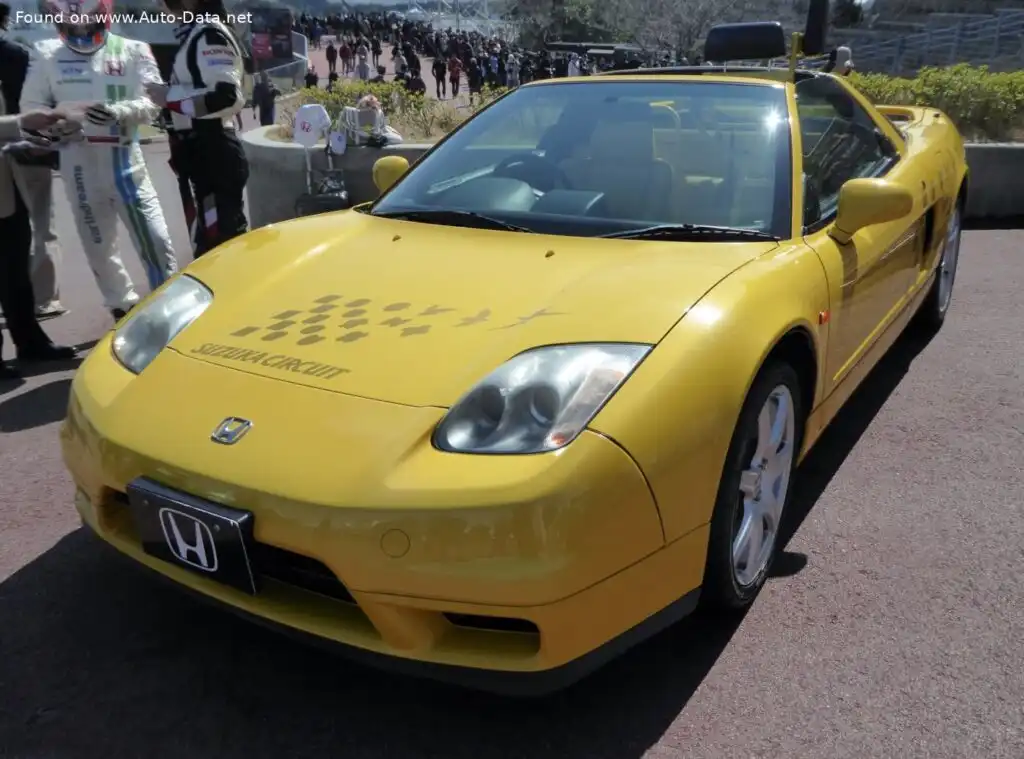
The Honda NSX-T I (facelift, 2002-2005) represents a significant evolution of Honda’s iconic mid-engine sports car. Introduced as part of the first-generation NSX (1990-2005), the ‘T’ designation denotes the targa top configuration, offering an open-air driving experience. This particular variant, powered by the 3.2-liter V6 VTEC engine producing 280 horsepower, was a key offering during the final years of NSX production, bridging the gap between the original 3.0-liter models and the end of the line. It aimed to deliver a refined, yet still engaging, sports car experience, appealing to enthusiasts seeking a blend of performance and everyday usability.
Technical Specifications
| Brand | Honda |
| Model | NSX |
| Generation | NSX-T I (facelift 2002) |
| Type (Engine) | 3.2 V6 VTEC (280 Hp) |
| Start of production | 2002 |
| End of production | 2005 |
| Powertrain Architecture | Internal Combustion engine |
| Body type | Targa |
| Seats | 2 |
| Doors | 2 |
| Fuel consumption (economy) – urban (NEDC) | 17.9 l/100 km (13.1 US mpg, 15.8 UK mpg, 5.6 km/l) |
| Fuel consumption (economy) – extra urban (NEDC) | 9.1 l/100 km (25.8 US mpg, 31 UK mpg, 11 km/l) |
| Fuel consumption (economy) – combined (NEDC) | 12.4 l/100 km (19 US mpg, 22.8 UK mpg, 8.1 km/l) |
| CO2 emissions (NEDC) | 291 g/km |
| Fuel Type | Petrol (Gasoline) |
| Acceleration 0 – 100 km/h | 5.7 sec |
| Acceleration 0 – 62 mph | 5.7 sec |
| Acceleration 0 – 60 mph | 5.4 sec |
| Maximum speed | 274 km/h (170.26 mph) |
| Weight-to-power ratio | 5.4 kg/Hp, 186.7 Hp/tonne |
| Weight-to-torque ratio | 5 kg/Nm, 198.7 Nm/tonne |
| Power | 280 Hp @ 7300 rpm |
| Power per litre | 88.1 Hp/l |
| Torque | 298 Nm @ 5300 rpm (219.79 lb.-ft. @ 5300 rpm) |
| Maximum engine speed | 8000 rpm |
| Engine layout | Middle, Transverse |
| Engine Model/Code | C32B2 |
| Engine displacement | 3179 cm3 (193.99 cu. in.) |
| Number of cylinders | 6 |
| Engine configuration | V-engine |
| Cylinder Bore | 93 mm (3.66 in.) |
| Piston Stroke | 78 mm (3.07 in.) |
| Compression ratio | 10.2:1 |
| Number of valves per cylinder | 4 |
| Fuel injection system | Multi-port manifold injection |
| Engine aspiration | Naturally aspirated engine |
| Valvetrain | DOHC, VTEC |
| Engine oil capacity | 5 l (5.28 US qt | 4.4 UK qt) |
| Coolant | 16 l (16.91 US qt | 14.08 UK qt) |
| Kerb Weight | 1500 kg (3306.93 lbs.) |
| Trunk (boot) space – minimum | 154 l (5.44 cu. ft.) |
| Fuel tank capacity | 70 l (18.49 US gal | 15.4 UK gal) |
| Length | 4425 mm (174.21 in.) |
| Width | 1810 mm (71.26 in.) |
| Height | 1170 mm (46.06 in.) |
| Wheelbase | 2530 mm (99.61 in.) |
| Front track | 1510 mm (59.45 in.) |
| Rear (Back) track | 1540 mm (60.63 in.) |
| Ride height (ground clearance) | 135 mm (5.31 in.) |
| Minimum turning circle (turning diameter) | 11.6 m (38.06 ft.) |
| Drivetrain Architecture | Rear wheel drive |
| Drive wheel | Rear wheel drive |
| Number of gears and type of gearbox | 6 gears, manual transmission |
| Front suspension | Coil spring, Double wishbone, Transverse stabilizer |
| Rear suspension | Double wishbone, Transverse stabilizer, Coil spring |
| Front brakes | Ventilated discs, 298 mm |
| Rear brakes | Ventilated discs, 303 mm |
| Assisting systems | ABS (Anti-lock braking system) |
| Steering type | Steering rack and pinion |
| Power steering | Electric Steering |
| Tires size | Front wheel tires: 215/40 R17 Rear wheel tires: 255/40 R17 |
| Wheel rims size | Front wheel rims: 7J x 17 Rear wheel rims: 9J x 17 |
Powertrain & Engine Architecture
The heart of the 2002 NSX-T I is the C32B2 engine, a 3.2-liter naturally aspirated V6. This engine represented a significant upgrade from the earlier 3.0-liter units, featuring a larger displacement and revised cylinder heads. The engine utilizes Honda’s Variable Valve Timing and Lift Electronic Control (VTEC) system, providing both fuel efficiency at low speeds and increased power at higher RPMs. The multi-port fuel injection system delivers precise fuel metering, contributing to both performance and emissions control. The engine’s transverse mid-engine layout contributes to excellent balance and handling characteristics. The six-speed manual transmission was the only transmission option for this variant, offering precise gear changes and a direct connection to the engine’s power.
Driving Characteristics
The 280 hp NSX-T I delivers a refined yet engaging driving experience. Acceleration from 0-60 mph takes approximately 5.4 seconds, and it reaches a top speed of 170 mph. The manual transmission allows for precise control, and the engine’s VTEC system provides a noticeable surge of power as it transitions to its high-cam profile. Compared to the earlier 3.0-liter NSX models, the 3.2-liter engine offers more torque throughout the rev range, making it more tractable in everyday driving situations. While not as raw or visceral as some contemporary sports cars, the NSX-T I prioritizes balance, precision, and driver confidence. The well-tuned suspension and responsive steering contribute to a feeling of connectedness to the road.
Equipment & Trim Levels
The NSX-T I came reasonably well-equipped, reflecting its position as a premium sports car. Standard features included leather upholstery, power windows and locks, air conditioning, and a premium sound system. The targa top, a defining feature of the ‘T’ variant, provided an open-air driving experience. Optional extras included upgraded audio systems, navigation, and various cosmetic enhancements. The interior design was focused on functionality and driver ergonomics, with a clear and concise instrument panel.
Chassis & Braking
The NSX-T I features a lightweight aluminum monocoque chassis, contributing to its excellent rigidity and low weight. The suspension utilizes a double wishbone design at both the front and rear, with coil springs and transverse stabilizers. This setup provides excellent handling and ride quality. The braking system consists of ventilated discs at all four corners, equipped with ABS (Anti-lock Braking System) for enhanced safety. The car’s balanced weight distribution and responsive brakes contribute to its confident handling characteristics.
Market Reception & Comparison
The 2002-2005 NSX-T I was generally well-received by automotive critics. It was praised for its refined driving experience, excellent handling, and build quality. However, some critics noted that it lacked the raw excitement of some other sports cars in its class. Compared to the earlier 3.0-liter NSX models, the 3.2-liter variant offered improved performance and usability. Fuel economy, while not a primary concern for sports car buyers, was reasonable for its class, averaging around 19 mpg combined. Reliability was generally excellent, consistent with Honda’s reputation.
Legacy
The Honda NSX-T I (2002-2005) represents the culmination of the first-generation NSX’s development. The C32B2 engine proved to be a durable and reliable powerplant, and the NSX-T I remains a sought-after sports car among enthusiasts. While maintenance can be relatively expensive due to the car’s age and specialized components, the NSX-T I offers a unique blend of performance, refinement, and reliability. Today, well-maintained examples command a premium in the used car market, reflecting the car’s enduring appeal and iconic status.