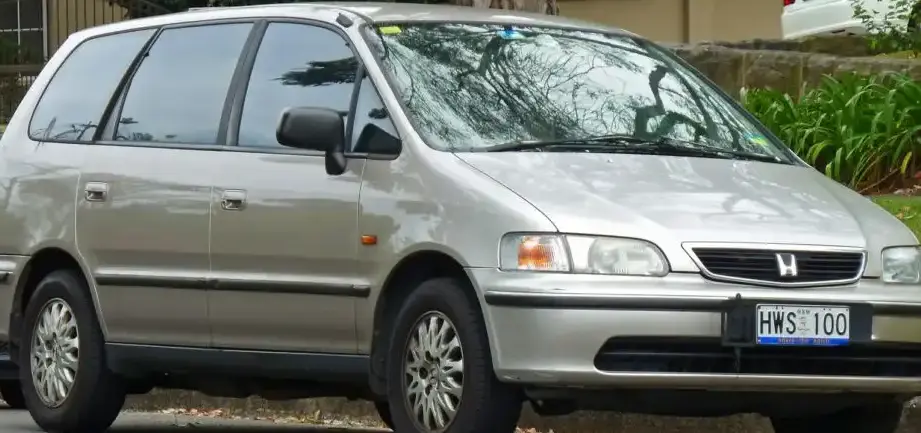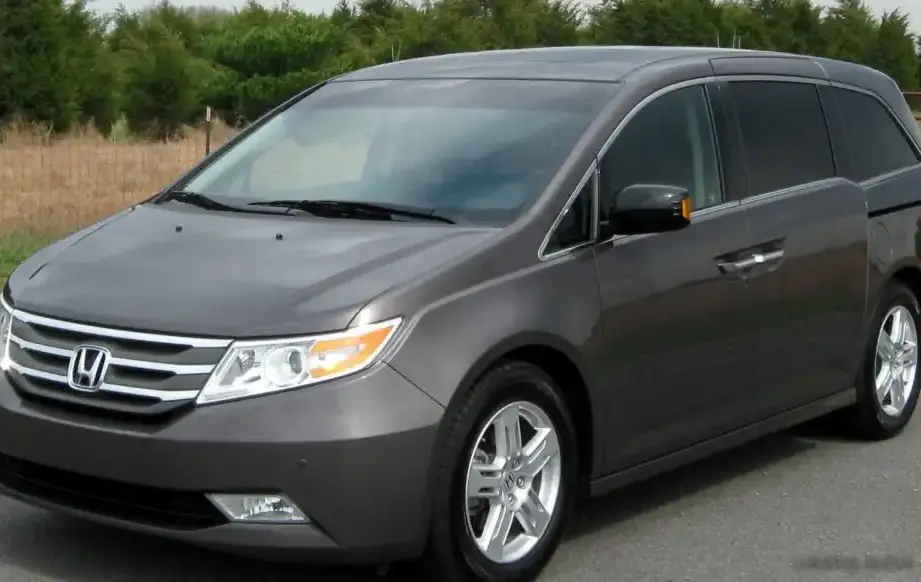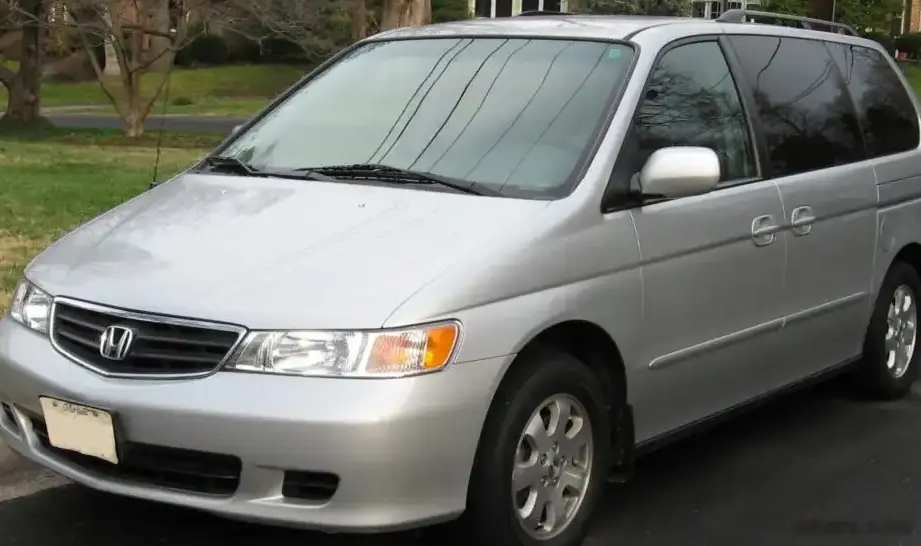
The Honda Odyssey II, produced between 1999 and 2004, represented a significant evolution in Honda’s minivan offerings. Building upon the success of the first-generation Odyssey, this second iteration continued to prioritize spaciousness, family-friendly features, and Honda’s reputation for reliability. The 3.0 V6 variant, equipped with a 210 horsepower engine and a four-speed automatic transmission, occupied a prominent position in the lineup, offering a balance of performance and practicality for families seeking a comfortable and capable vehicle. This model was primarily marketed in North America, where the minivan segment was highly competitive, and Honda aimed to capture a substantial share with its refined and feature-rich offering.
Technical Specifications
| Brand | Honda |
| Model | Odyssey |
| Generation | Odyssey II |
| Type (Engine) | 3.0 V6 (210 Hp) |
| Start of production | 1999 year |
| End of production | 2004 year |
| Powertrain Architecture | Internal Combustion engine |
| Body type | Minivan |
| Seats | 7 |
| Doors | 4 |
| Fuel Type | Petrol (Gasoline) |
| Weight-to-power ratio | 8.4 kg/Hp, 119.3 Hp/tonne |
| Weight-to-torque ratio | 6.5 kg/Nm, 153.4 Nm/tonne |
| Power | 210 Hp @ 5800 rpm |
| Power per litre | 70.1 Hp/l |
| Torque | 270 Nm @ 5000 rpm, 199.14 lb.-ft. @ 5000 rpm |
| Engine layout | Front, Transverse |
| Engine displacement | 2997 cm3, 182.89 cu. in. |
| Number of cylinders | 6 |
| Engine configuration | V-engine |
| Cylinder Bore | 86 mm, 3.39 in. |
| Piston Stroke | 86 mm, 3.39 in. |
| Compression ratio | 10:1 |
| Number of valves per cylinder | 4 |
| Fuel injection system | Multi-port manifold injection |
| Engine aspiration | Naturally aspirated engine |
| Valvetrain | OHC |
| Kerb Weight | 1760 kg, 3880.14 lbs |
| Max. weight | 2145 kg, 4728.92 lbs |
| Max load | 385 kg, 848.78 lbs |
| Fuel tank capacity | 65 l, 17.17 US gal | 14.3 UK gal |
| Length | 4835 mm, 190.35 in |
| Width | 1800 mm, 70.87 in |
| Height | 1655 mm, 65.16 in |
| Wheelbase | 2830 mm, 111.42 in |
| Front track | 1560 mm, 61.42 in |
| Rear (Back) track | 1555 mm, 61.22 in |
| Drive wheel | All wheel drive (4×4) |
| Number of gears and type of gearbox | 4 gears, automatic transmission |
| Front suspension | Double wishbone |
| Rear suspension | Double wishbone |
| Front brakes | Ventilated discs |
| Rear brakes | Disc |
| Assisting systems | ABS (Anti-lock braking system) |
| Steering type | Steering rack and pinion |
| Power steering | Hydraulic Steering |
| Tires size | 215/60 R16 V |
Powertrain & Engine Architecture
The heart of the Odyssey II 3.0 V6 was Honda’s J30A1 engine, a 2,997 cc (182.89 cubic inches) naturally aspirated V6. This engine featured a 60-degree V-angle, contributing to a smoother engine operation and a more compact overall design. The J30A1 utilized a single overhead camshaft (OHC) valvetrain with four valves per cylinder, and a multi-port fuel injection system. This configuration allowed for efficient combustion and a respectable power output for its time. The engine’s 10:1 compression ratio further enhanced its performance. Paired with this engine was a four-speed automatic transmission, designed to provide smooth and convenient shifting. This transmission was calibrated to prioritize comfort and drivability, rather than outright performance, aligning with the minivan’s intended purpose.
Driving Characteristics
The 210 horsepower and 270 Nm (199.14 lb-ft) of torque delivered by the 3.0 V6 and automatic transmission combination provided adequate, though not exhilarating, performance. Acceleration from 0 to 60 mph typically took around 8-9 seconds. While this wasn’t a sports car, it was sufficient for merging onto highways and overtaking slower traffic with a fully loaded vehicle. Compared to the base 2.3-liter four-cylinder engine option, the V6 offered a noticeable improvement in power and responsiveness. However, it didn’t match the quicker acceleration of the later, more powerful 3.5-liter V6 engines found in subsequent Odyssey generations. The automatic transmission, while smooth, could sometimes feel hesitant during downshifts, and lacked the responsiveness of a manual transmission. The gear ratios were optimized for fuel efficiency and cruising comfort, rather than aggressive acceleration.
Equipment & Trim Levels
The 3.0 V6 trim of the Odyssey II typically came standard with a respectable array of features. These included air conditioning, power windows and locks, a CD player, and cloth upholstery. Higher trim levels, such as the EX and LX, added features like alloy wheels, a sunroof, upgraded audio systems, and leather upholstery. Optional extras included a rear entertainment system, navigation system, and power-adjustable front seats. The interior design focused on practicality and comfort, with ample storage compartments and a flexible seating arrangement. The second-row seats could often be configured as captain’s chairs or a bench seat, providing versatility for different passenger needs.
Chassis & Braking
The Odyssey II utilized a fully independent suspension system, with double wishbone setups at both the front and rear. This suspension design contributed to a comfortable ride quality and good handling characteristics for a minivan. The steering was rack-and-pinion, providing precise and responsive control. Braking duties were handled by ventilated discs at the front and solid discs at the rear. An Anti-lock Braking System (ABS) was standard, enhancing safety and control during emergency braking situations. The Odyssey II’s chassis was designed to accommodate the vehicle’s weight and provide a stable platform for carrying passengers and cargo.
Market Reception & Comparison
The Honda Odyssey II 3.0 V6 was generally well-received by automotive critics and consumers alike. It was praised for its spacious interior, comfortable ride, and Honda’s reputation for reliability. However, some critics noted that the automatic transmission could be slow to respond at times, and that the engine lacked the punch of some of its competitors. Compared to other minivans in its class, such as the Dodge Caravan and Chrysler Town & Country, the Odyssey II offered a more refined driving experience and a higher level of perceived quality. Fuel economy was respectable, averaging around 18-22 mpg in combined driving conditions. Reliability proved to be a strong point, with the J30A1 engine generally considered to be durable and long-lasting.
Legacy
The Honda Odyssey II 3.0 V6 has proven to be a reliable and durable vehicle, and many examples are still on the road today. The J30A1 engine is known for its longevity, and with proper maintenance, can easily exceed 200,000 miles. While the four-speed automatic transmission is not as sophisticated as modern transmissions, it has also proven to be relatively trouble-free. In the used car market, the Odyssey II 3.0 V6 represents a good value for families seeking a spacious, comfortable, and reliable minivan. Its reputation for dependability and Honda’s strong brand image continue to make it a popular choice among used car buyers.