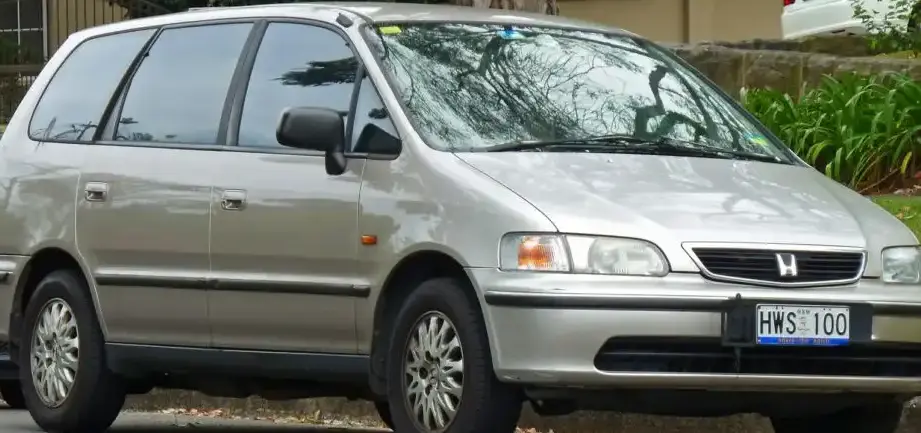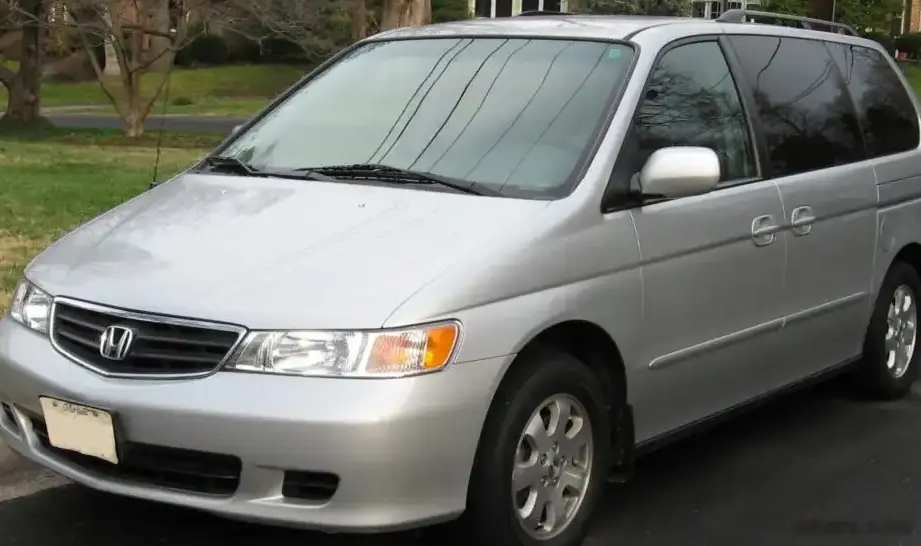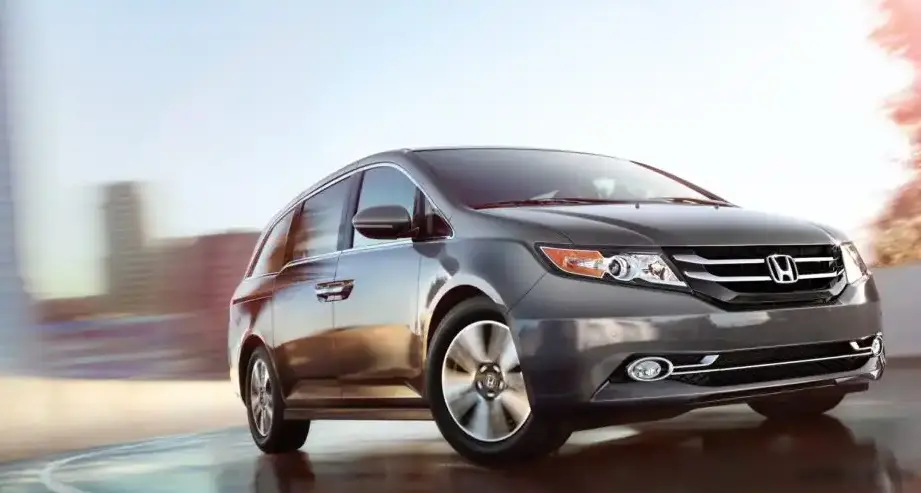
The Honda Odyssey IV (facelift, 2014-2017) represents a significant mid-cycle refresh of the fourth-generation Odyssey minivan, sold primarily in the North American market. Introduced in 2014, this facelift brought updated styling, enhanced features, and continued the Odyssey’s reputation for practicality and family-focused design. The 3.5 V6 engine paired with a six-speed automatic transmission was the sole powertrain offering throughout the facelifted generation, positioned as the mainstream, well-rounded option within the Odyssey lineup. This configuration aimed to balance performance, fuel efficiency, and affordability for a broad range of buyers.
Technical Specifications
| Brand | Honda |
| Model | Odyssey |
| Generation | Odyssey IV (facelift 2014) |
| Type (Engine) | 3.5 V6 (248 Hp) Automatic |
| Start of production | 2014 |
| End of production | 2017 |
| Powertrain Architecture | Internal Combustion engine |
| Body type | Minivan |
| Seats | 7-8 |
| Doors | 5 |
| Fuel consumption (urban) | 12.4 l/100 km (19 US mpg) |
| Fuel consumption (extra urban) | 8.4 l/100 km (28 US mpg) |
| Fuel consumption (combined) | 10.7 l/100 km (22 US mpg) |
| Fuel Type | Petrol (Gasoline) |
| Emission standard | ULEV-2 |
| Weight-to-power ratio | 8 kg/Hp |
| Weight-to-torque ratio | 5.9 kg/Nm |
| Power | 248 Hp @ 5700 rpm |
| Power per litre | 71.4 Hp/l |
| Torque | 339 Nm @ 4800 rpm (250.03 lb.-ft. @ 4800 rpm) |
| Maximum engine speed | 6300 rpm |
| Engine layout | Front, Transverse |
| Engine Model/Code | J35Z8 |
| Engine displacement | 3471 cm3 (211.81 cu. in.) |
| Number of cylinders | 6 |
| Engine configuration | V-engine |
| Cylinder Bore | 89 mm (3.5 in.) |
| Piston Stroke | 93 mm (3.66 in.) |
| Compression ratio | 10.5:1 |
| Number of valves per cylinder | 4 |
| Fuel injection system | Multi-port manifold injection |
| Engine aspiration | Naturally aspirated engine |
| Valvetrain | SOHC, i-VTEC |
| Engine oil capacity | 4.3 l (4.54 US qt | 3.78 UK qt) |
| Coolant capacity | 7.3 l (7.71 US qt | 6.42 UK qt) |
| Kerb Weight | 1994-2028 kg (4396.02 – 4470.97 lbs.) |
| Trunk (boot) space – minimum | 1087 l (38.39 cu. ft.) |
| Trunk (boot) space – maximum | 4205 l (148.5 cu. ft.) |
| Fuel tank capacity | 79.5 l (21 US gal | 17.49 UK gal) |
| Permitted trailer load with brakes (12%) | 1588 kg (3500.94 lbs.) |
| Length | 5154 mm (202.91 in.) |
| Width including mirrors | 2012 mm (79.21 in.) |
| Height | 1737 mm (68.39 in.) |
| Wheelbase | 3000 mm (118.11 in.) |
| Front track | 1730 mm (68.11 in.) |
| Rear (Back) track | 1732 mm (68.19 in.) |
| Minimum turning circle | 11.2 m (36.75 ft.) |
| Drivetrain Architecture | Front wheel drive |
| Number of gears and type of gearbox | 6 gears, automatic transmission |
| Front suspension | Independent type McPherson, Transverse stabilizer |
| Rear suspension | Double wishbone, Independent multi-link suspension |
| Front brakes | Ventilated discs, 320.04 mm |
| Rear brakes | Disc, 332.74 mm |
| Tires size | 235/65 R17 |
| Wheel rims size | 7J x 17 |
INTRODUCTION
The 2014-2017 Honda Odyssey facelift continued the tradition of the fourth-generation Odyssey (introduced in 2011), offering a spacious and versatile minivan designed for families. This refresh focused on refining the existing platform rather than a complete overhaul. The 3.5-liter V6 engine paired with a six-speed automatic transmission was the standard powertrain, providing a balance of power and efficiency. This particular configuration was positioned as the core offering, appealing to the majority of minivan buyers who prioritized practicality and reliability over outright performance. It sat below any potential higher-performance trims (which were not offered) and above no entry-level trims.
Powertrain & Engine Architecture
At the heart of the 2014-2017 Odyssey is the J35Z8 3.5-liter V6 engine. This engine is a naturally aspirated, 60-degree V-engine featuring a single overhead camshaft (SOHC) cylinder head and Honda’s i-VTEC (intelligent Variable valve Timing and lift Electronic Control) system. The i-VTEC system optimizes valve timing and lift based on engine speed and load, improving both fuel efficiency and performance. Fuel delivery is handled by a multi-point fuel injection system. The engine produces 248 horsepower at 5700 rpm and 250 lb-ft of torque at 4800 rpm. The six-speed automatic transmission, a crucial component of this variant, provides smooth and efficient gear changes. It’s designed to work in harmony with the engine’s powerband, offering adequate acceleration and comfortable cruising. The transmission features a torque converter for smooth launches and low-speed driving.
Driving Characteristics
The 3.5L V6 and six-speed automatic combination in the Odyssey delivers a comfortable and predictable driving experience. Acceleration is adequate for everyday driving and highway merging, though it doesn’t offer the briskness of some competitors with turbocharged engines. The automatic transmission is well-tuned, providing smooth shifts and responsive downshifts when needed. The gear ratios are optimized for fuel efficiency and relaxed cruising, rather than aggressive performance. Compared to a manual transmission equipped Odyssey (which wasn’t offered in this generation), the automatic provides greater convenience and ease of use, particularly in stop-and-go traffic. Compared to potential higher-output engines (which didn’t exist for this generation), this configuration prioritizes fuel economy and affordability over outright speed.
Equipment & Trim Levels
The 2014-2017 Odyssey with the 3.5L V6 and automatic transmission was available in several trim levels, including LX, EX, EX-L, and Touring. The base LX trim included standard features such as a rearview camera, Bluetooth connectivity, and a 5-inch display screen. Higher trims, like the EX and EX-L, added features like power sliding doors, a power liftgate, tri-zone automatic climate control, and leather upholstery. The top-of-the-line Touring trim included features like a rear entertainment system, navigation, and premium audio. All trims featured Honda’s Magic Slide 2nd-row seats, allowing for flexible seating configurations and easy access to the third row.
Chassis & Braking
The Odyssey utilizes a front-wheel-drive layout with an independent McPherson strut suspension in the front and an independent multi-link suspension in the rear. This suspension setup provides a comfortable ride and good handling characteristics for a minivan. The facelifted model retained the same suspension tuning as the pre-facelift version. Braking duties are handled by ventilated discs in the front and solid discs in the rear. Anti-lock brakes (ABS) are standard, along with electronic brake-force distribution (EBD) and brake assist. The steering system is an electric power-assisted rack-and-pinion system, providing light and precise steering feel.
Market Reception & Comparison
The 2014-2017 Honda Odyssey facelift was generally well-received by critics and consumers alike. It was praised for its spacious interior, comfortable ride, and versatile features. The 3.5L V6 and automatic transmission combination was considered a solid and reliable powertrain, although some reviewers noted that it lacked the punch of some competitors. Fuel economy was rated at 19 mpg city / 28 mpg highway / 22 mpg combined, which was competitive for its class. Compared to other minivans like the Toyota Sienna and Chrysler Pacifica, the Odyssey offered a compelling blend of practicality, reliability, and value.
Legacy
The J35Z8 engine and the six-speed automatic transmission pairing in the 2014-2017 Honda Odyssey have proven to be remarkably reliable. These vehicles are known for their longevity and relatively low maintenance costs. On the used car market, these Odysseys remain popular choices for families due to their reputation for dependability and spaciousness. While not the most exciting minivan to drive, the 3.5L V6 automatic configuration represents a sweet spot in the Odyssey lineup, offering a practical and reliable transportation solution for years to come. Common issues are relatively minor, often relating to routine maintenance items like oxygen sensors and spark plugs, rather than major mechanical failures.