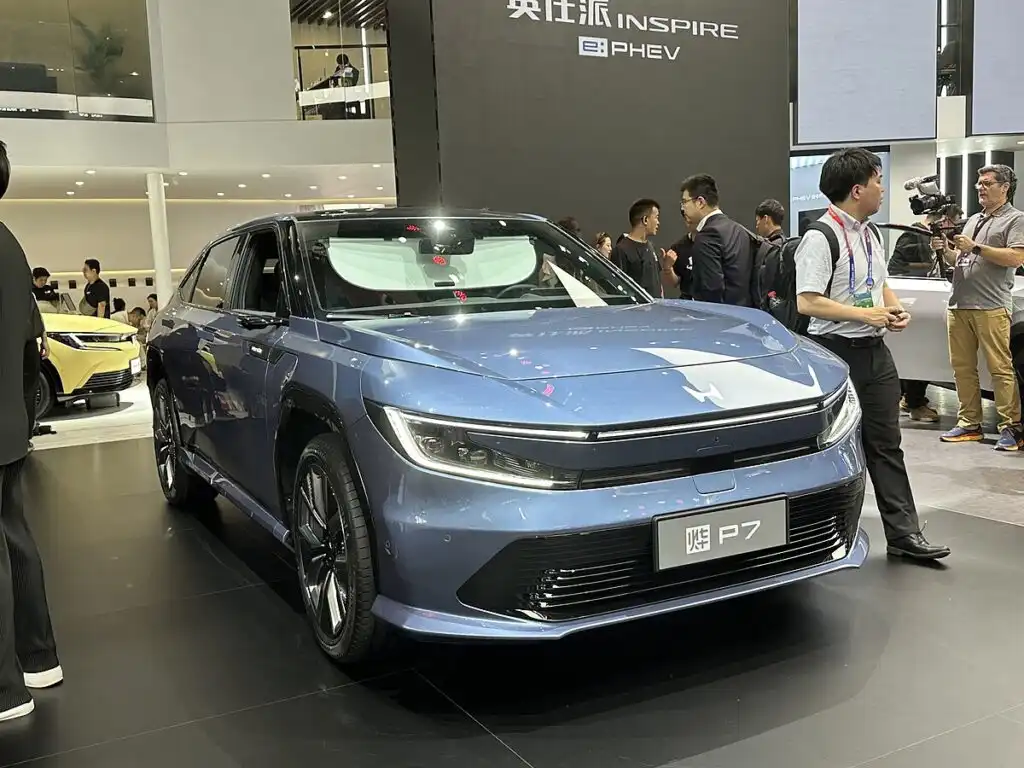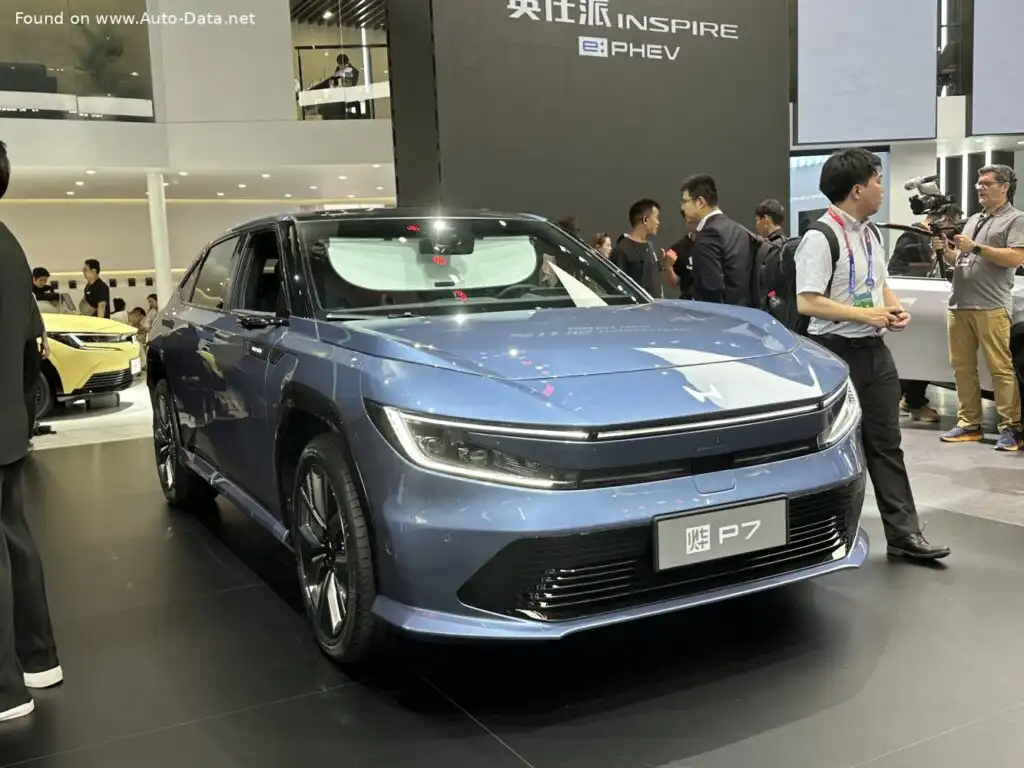
The Honda P7, launched in April 2025, represents Honda’s entry into the rapidly expanding all-electric SUV/Crossover market. Positioned as a mid-range offering within Honda’s future EV lineup, the P7 is built upon a dedicated electric vehicle platform and aims to deliver a balance of range, performance, and practicality. This specific variant features an 89.8 kWh battery pack paired with a single rear-mounted electric motor producing 272 horsepower. The P7 is primarily targeted at consumers seeking a spacious, technologically advanced, and environmentally conscious vehicle for daily commuting and longer journeys.
Technical Specifications
| Brand | Honda |
| Model | P7 |
| Generation | P7 |
| Type (Engine) | 89.8 kWh (272 Hp) |
| Start of production | April, 2025 |
| Powertrain Architecture | BEV (Electric Vehicle) |
| Body type | SUV, Crossover |
| Seats | 5 |
| Doors | 5 |
| Fuel Type | Electricity |
| Maximum speed | 180 km/h (111.85 mph) |
| Weight-to-power ratio | 8 kg/Hp, 125.1 Hp/tonne |
| Weight-to-torque ratio | 5.2 kg/Nm, 193.1 Nm/tonne |
| Gross battery capacity | 89.8 kWh |
| Battery technology | Lithium nickel manganese cobalt oxides (Li-NMC) |
| Battery location | Below the floor |
| All-electric range (CLTC) | 650 km (403.89 mi) |
| Average Energy consumption (CLTC) | 14.6 kWh/100 km (23.5 kWh/100 mi, 143 MPGe, 6.8 km/kWh, 4.3 mi/kWh) |
| Electric motor power | 272 Hp |
| Electric motor Torque | 420 Nm (309.78 lb.-ft.) |
| Electric motor model/code | TZ220XSAMCF81 |
| Electric motor location | Rear axle, Transverse |
| Electric motor type | Synchronous |
| System power | 272 Hp |
| System torque | 420 Nm (309.78 lb.-ft.) |
| Kerb Weight | 2175-2191 kg (4795.05 – 4830.33 lbs.) |
| Max. weight | 2775 kg (6117.83 lbs.) |
| Max load | 584-600 kg (1287.5 – 1322.77 lbs.) |
| Length | 4750 mm (187.01 in.) |
| Width | 1930 mm (75.98 in.) |
| Height | 1625 mm (63.98 in.) |
| Wheelbase | 2930 mm (115.35 in.) |
| Front track | 1641 mm (64.61 in.) |
| Rear (Back) track | 1654 mm (65.12 in.) |
| Minimum turning circle (turning diameter) | 11.1 m (36.42 ft.) |
| Approach angle | 17° |
| Departure angle | 24° |
| Drivetrain Architecture | One electric motor drives the rear wheels. |
| Drive wheel | Rear wheel drive |
| Number of gears and type of gearbox | 1 gears, automatic transmission |
| Front suspension | Coil spring, Double wishbone, Transverse stabilizer |
| Rear suspension | Independent multi-link spring suspension with stabilizer |
| Front brakes | Ventilated discs |
| Rear brakes | Ventilated discs |
| Assisting systems | ABS (Anti-lock braking system) |
| Steering type | Steering rack and pinion |
| Power steering | Electric Steering |
| Tires size | 265/55 R19 |
| Wheel rims size | 8.5J x 19 |
Powertrain & Engine Architecture
The Honda P7 utilizes a fully electric powertrain centered around a permanent magnet synchronous motor (PMSM) driving the rear wheels. The motor, designated TZ220XSAMCF81, delivers a peak output of 272 horsepower and 420 Nm (309.78 lb.-ft.) of torque. Power is drawn from an 89.8 kWh lithium-nickel-manganese-cobalt oxide (Li-NMC) battery pack located under the vehicle floor, contributing to a low center of gravity and improved handling. The battery supports fast charging capabilities, allowing for a significant range boost with a relatively short charging time when connected to a DC fast charger. The single-speed automatic transmission is a standard feature for all P7 variants, providing seamless acceleration and a smooth driving experience. The vehicle’s electronic control unit (ECU) manages power delivery, regenerative braking, and thermal management of the battery and motor.
Driving Characteristics
The rear-wheel-drive configuration of the P7 contributes to a balanced and engaging driving experience. With 272 horsepower and instant torque delivery, the P7 offers brisk acceleration, reaching 60 mph in approximately 7.5 seconds. The single-speed automatic transmission ensures smooth and linear power delivery, without the gear changes associated with traditional internal combustion engines. While not as dynamically focused as some performance-oriented EVs, the P7 provides a comfortable and composed ride, suitable for both city driving and highway cruising. The regenerative braking system allows for one-pedal driving in certain conditions, enhancing efficiency and driver convenience. Compared to potential future higher-performance variants, this 272 hp version prioritizes efficiency and a more relaxed driving experience.
Equipment & Trim Levels
The Honda P7 comes standard with a comprehensive suite of features, including a large touchscreen infotainment system with Apple CarPlay and Android Auto compatibility, a digital instrument cluster, and a range of advanced driver-assistance systems (ADAS) such as adaptive cruise control, lane keeping assist, and automatic emergency braking. Interior upholstery consists of high-quality cloth or available leather options. Higher trim levels offer features such as a panoramic sunroof, premium audio system, heated and ventilated front seats, and a 360-degree camera system. The exterior styling is modern and aerodynamic, with LED headlights and taillights, and available alloy wheel designs ranging from 19 to 21 inches.
Chassis & Braking
The P7’s chassis is engineered to maximize rigidity and minimize weight. The front suspension utilizes a coil spring, double wishbone setup with a transverse stabilizer bar, while the rear suspension employs an independent multi-link spring suspension, also with a stabilizer bar. This configuration provides a comfortable ride and responsive handling. The braking system features ventilated discs on all four wheels, providing ample stopping power. The anti-lock braking system (ABS) and electronic stability control (ESC) enhance safety and control in various driving conditions. The electric steering system offers precise and responsive steering feel.
Market Reception & Comparison
Initial reviews of the Honda P7 have been generally positive, with critics praising its spacious interior, comfortable ride, and impressive range. The P7’s CLTC range of 650 km (403.89 mi) is competitive within its segment. Fuel economy, expressed as 143 MPGe, is also favorable compared to gasoline-powered SUVs. Compared to other EVs in the same price range, such as the Tesla Model Y and Hyundai IONIQ 5, the P7 offers a compelling combination of features, performance, and value. Some reviewers have noted that the P7’s interior design is less minimalist than some competitors, but its user-friendly interface and comfortable seats have been well-received.
Legacy
The Honda P7 represents a significant step forward in Honda’s electrification strategy. As one of Honda’s first dedicated EVs, the P7 is expected to pave the way for a broader range of electric vehicles in the future. The powertrain’s long-term reliability remains to be seen, but Honda’s reputation for building durable and dependable vehicles suggests that the P7 will prove to be a reliable and long-lasting EV. On the used car market, the P7 is anticipated to hold its value well, particularly as demand for EVs continues to grow. The P7’s impact will likely extend beyond its immediate sales figures, influencing the development of future Honda EVs and accelerating the transition to a more sustainable automotive future.