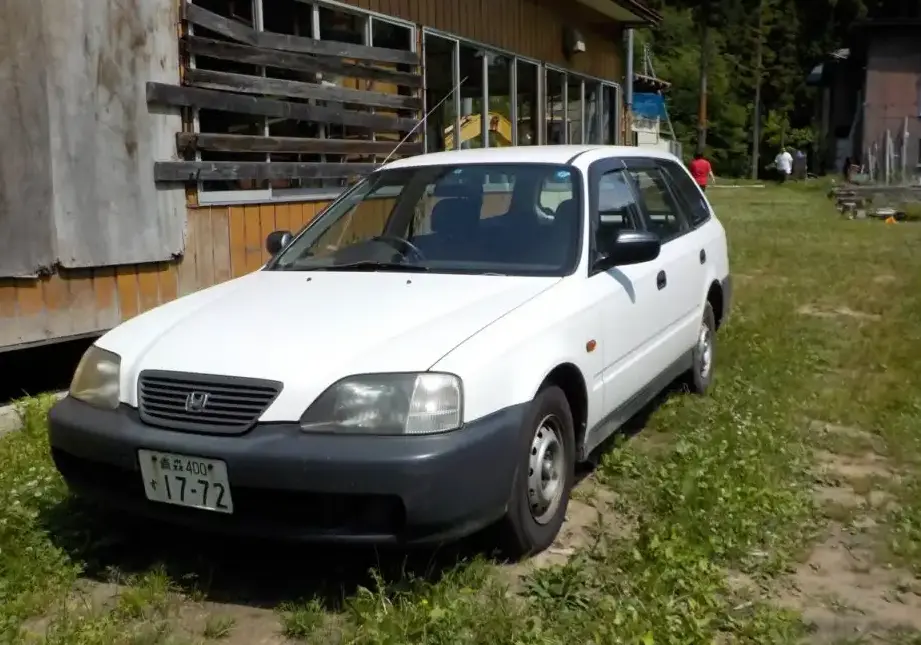
The Honda Partner 1.3 i (91 hp) was a compact station wagon produced by Honda between 2000 and 2004. Positioned as an entry-level variant within the broader Honda Partner range, it served as a practical and affordable vehicle primarily aimed at fleet buyers and families seeking a utilitarian vehicle. The Partner, and its nearly identical twin the Honda Vamos, were designed specifically for the Japanese domestic market (JDM) and were not widely exported. This particular 1.3 i trim represented the base engine and transmission option, offering a balance between fuel efficiency and acceptable performance for everyday use. It was built on the AA platform, a subcompact vehicle architecture used by Honda for several models during this period.
Technical Specifications
| Brand | Honda |
| Model | Partner |
| Generation | Partner |
| Type (Engine) | 1.3 i (91 Hp) |
| Start of production | 2000 |
| End of production | 2004 |
| Powertrain Architecture | Internal Combustion Engine |
| Body type | Station Wagon (Estate) |
| Fuel Type | Petrol (Gasoline) |
| Power | 91 Hp |
| Engine Aspiration | Naturally Aspirated |
Powertrain & Engine Architecture
The Honda Partner 1.3 i was powered by the D13C3 engine, a 1.3-liter, inline-four cylinder gasoline engine. This engine was a member of Honda’s D-series, known for its reliability and simplicity. The D13C3 featured a single overhead camshaft (SOHC) valvetrain with eight valves (two per cylinder). Fuel delivery was managed by a multi-point fuel injection system, contributing to improved fuel efficiency and reduced emissions compared to earlier carbureted engines. The engine produced 91 horsepower at approximately 5,500 rpm and 88 lb-ft of torque at 3,500 rpm.
The transmission paired with the 1.3 i engine was a four-speed automatic. This transmission was chosen to provide ease of use, particularly appealing to the target demographic of fleet buyers and drivers prioritizing convenience. While not offering the sporty engagement of a manual transmission, the four-speed automatic was known for its smooth operation and durability. The automatic transmission featured typical torque converter technology, providing smooth launches and gear changes. The gear ratios were optimized for fuel economy and everyday driving conditions, rather than outright acceleration.
Driving Characteristics
The driving experience in the Honda Partner 1.3 i was characterized by its practicality and ease of use. With 91 horsepower, acceleration was adequate for city driving and highway merging, but it wasn’t particularly brisk. The four-speed automatic transmission contributed to a relaxed driving style, with smooth gear changes and a focus on fuel efficiency. The relatively low weight of the vehicle – around 2,200 lbs – helped to mitigate the effects of the modest power output.
Compared to the available manual transmission options, the automatic version offered less driver involvement and slightly reduced fuel economy. Higher trim levels of the Partner, equipped with larger engines (typically 1.5L), provided significantly more power and a more engaging driving experience. However, these trims came at a higher price point, making the 1.3 i automatic a more accessible option for budget-conscious buyers. The suspension was tuned for comfort, providing a reasonably smooth ride over typical road surfaces, although it wasn’t particularly sporty or responsive.
Equipment & Trim Levels
The Honda Partner 1.3 i, as the base trim level, was equipped with a relatively modest set of standard features. Interior upholstery was typically a durable cloth material, designed for practicality and longevity. The dashboard layout was functional and straightforward, with easy-to-read gauges and controls. Standard equipment generally included power steering, air conditioning (often optional), and a basic audio system.
Optional extras available for the 1.3 i trim included power windows, power door locks, and upgraded audio systems. Higher trim levels offered more luxurious features such as alloy wheels, upgraded interior trim, and advanced audio systems. The Partner was designed with a focus on maximizing interior space, offering a surprisingly roomy cabin for its compact exterior dimensions. The rear seats could be folded down to create a larger cargo area, enhancing its versatility.
Chassis & Braking
The Honda Partner 1.3 i utilized a relatively simple chassis design, featuring a MacPherson strut front suspension and a torsion beam rear suspension. This suspension setup provided a good balance between ride comfort and handling stability. The torsion beam rear suspension was a cost-effective solution that minimized complexity and weight.
The braking system consisted of disc brakes on the front wheels and drum brakes on the rear wheels. This configuration was typical for vehicles in this price range during the early 2000s. While adequate for everyday driving, the drum brakes on the rear wheels offered less stopping power and fade resistance compared to disc brakes. The Partner did not feature ABS (Anti-lock Braking System) as standard equipment on the base 1.3 i trim, although it was available as an option on higher trim levels.
Market Reception & Comparison
The Honda Partner 1.3 i was generally well-received in the Japanese domestic market as a practical and affordable station wagon. Critics praised its fuel efficiency, spacious interior, and reliable powertrain. However, some reviewers noted its lack of power and relatively basic equipment level. Compared to other compact station wagons available in Japan at the time, such as the Toyota Corolla Wagon and the Nissan AD Wagon, the Partner offered a competitive combination of price, fuel economy, and practicality.
The 1.3 i engine and automatic transmission combination was particularly popular with fleet buyers, who valued its low running costs and ease of maintenance. The higher-trim Partner models, with their larger engines and more luxurious features, appealed to individual buyers seeking a more refined driving experience. Fuel economy for the 1.3 i automatic was typically in the range of 35-40 mpg, making it an attractive option for drivers concerned about fuel costs.
Legacy
The Honda Partner 1.3 i, while not a performance icon, has proven to be a remarkably reliable and durable vehicle. The D13C3 engine is known for its longevity, and the four-speed automatic transmission is generally trouble-free. In the used car market, these vehicles are often sought after for their affordability and practicality.
Due to its JDM origins, finding a well-maintained example outside of Japan can be challenging. However, those that are available often represent a good value for buyers seeking a dependable and fuel-efficient station wagon. The Partner’s simple design and robust construction contribute to its continued viability as a daily driver, even after two decades of service. The Honda Partner, in all its trims, remains a testament to Honda’s commitment to building reliable and practical vehicles.