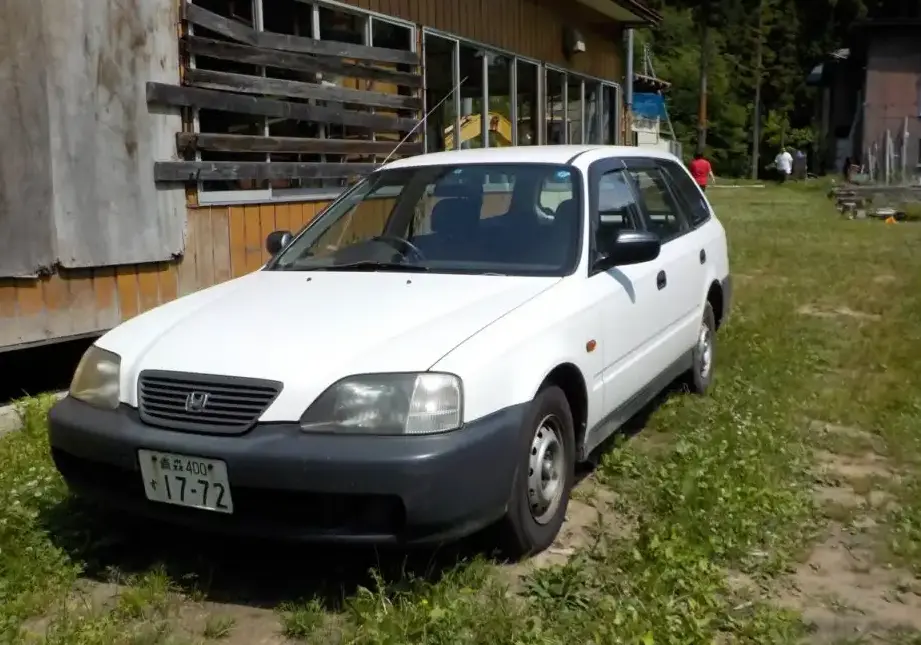
The Honda Partner 1.6 i 16V 4WD, produced between 1999 and 2004, represents a practical and versatile offering within Honda’s compact station wagon lineup. This variant, positioned as a mid-range option, catered to buyers seeking a blend of fuel efficiency, all-weather capability, and cargo space. The Partner, essentially a rebadged and slightly modified Rover 200/400 series following Honda’s acquisition of Rover Group in 1999, was primarily aimed at the European market, offering a more affordable and utilitarian alternative to Honda’s more mainstream offerings like the Civic. The 1.6L engine and four-wheel-drive configuration were key features distinguishing this trim level, appealing to those needing enhanced traction in varied conditions.
Technical Specifications
| Brand | Honda |
| Model | Partner |
| Generation | Partner |
| Type (Engine) | 1.6 i 16V 4WD (105 Hp) |
| Start of production | 1999 |
| End of production | 2004 |
| Powertrain Architecture | Internal Combustion Engine |
| Body Type | Station Wagon (Estate) |
| Fuel Type | Petrol (Gasoline) |
| Power | 105 Hp |
| Engine Aspiration | Naturally Aspirated |
Powertrain & Engine Architecture
The heart of the Honda Partner 1.6 i 16V 4WD is a 1.6-liter, naturally aspirated inline-four cylinder engine. While based on Honda’s own designs, the engine shares significant lineage with the Rover K-series engine, reflecting the collaborative engineering during the period of Honda’s ownership. The “16V” designation indicates a four-valve-per-cylinder configuration, enhancing breathing and contributing to the engine’s power output. Fuel delivery is managed by a multi-point fuel injection system, providing precise fuel metering for improved efficiency and reduced emissions. The engine code is typically found as D16V1, though variations may exist depending on specific market requirements. The engine produces 105 horsepower at approximately 6,000 rpm and around 108 lb-ft of torque at 4,500 rpm.
The Partner 1.6 i 16V 4WD utilizes a four-speed automatic transmission. This transmission, while providing convenience, is not known for its particularly sporty or efficient operation. Gear ratios are geared towards providing adequate acceleration and maintaining reasonable fuel economy, but it lacks the responsiveness of a manual transmission or more modern automatic gearboxes. The four-wheel-drive system is a part-time system, typically engaging automatically when wheel slip is detected. It doesn’t feature a locking differential, relying instead on a viscous coupling to distribute torque between the front and rear axles. This system provides enhanced traction on slippery surfaces but isn’t intended for serious off-road use.
Driving Characteristics
The driving experience in the Honda Partner 1.6 i 16V 4WD is characterized by practicality and ease of use. The 105 hp engine provides adequate power for everyday driving, but acceleration is not particularly brisk. The automatic transmission contributes to a smooth, if somewhat uninspired, driving experience. The four-wheel-drive system noticeably improves traction in wet or snowy conditions, making it a suitable vehicle for regions with inclement weather. Compared to the manual transmission versions of the Partner, the automatic suffers a slight performance penalty due to the transmission’s inherent inefficiencies. The manual transmission offered quicker acceleration and slightly better fuel economy. Compared to higher-powered variants (which were not commonly available on the Partner), the 1.6L engine feels noticeably less potent, particularly when fully loaded with passengers and cargo. The suspension is tuned for comfort, providing a reasonably smooth ride, but it doesn’t offer particularly sharp handling characteristics.
Equipment & Trim Levels
The Honda Partner 1.6 i 16V 4WD typically came equipped with a reasonable level of standard features for its price point. These generally included power steering, central locking, electric front windows, and an AM/FM radio. Interior upholstery was typically cloth, with a relatively simple and functional dashboard layout. Optional extras available for this trim level included air conditioning, alloy wheels, and a sunroof. Higher trim levels, if offered in specific markets, might have included features such as upgraded audio systems, leather upholstery, and additional safety equipment. The Partner prioritized functionality over luxury, so even in higher trims, the interior remained relatively spartan.
Chassis & Braking
The Honda Partner utilizes a MacPherson strut front suspension and a torsion beam rear suspension. This setup provides a good balance between ride comfort and handling. The torsion beam rear suspension is a cost-effective solution that contributes to the vehicle’s overall affordability. Braking is typically accomplished with disc brakes on the front wheels and drum brakes on the rear wheels. This configuration was common for vehicles in this class during the production period. Anti-lock Braking System (ABS) was often available as an option, enhancing braking performance and safety, particularly on slippery surfaces. Stabilizer bars were fitted to both the front and rear axles to reduce body roll during cornering, improving handling stability.
Market Reception & Comparison
The Honda Partner 1.6 i 16V 4WD was generally well-received as a practical and affordable station wagon. Critics praised its fuel efficiency, spacious interior, and all-weather capability. However, the automatic transmission was often criticized for its lack of responsiveness and the engine’s performance was considered adequate but not exciting. Compared to other trims in the Partner lineup, the 1.6L automatic offered a good balance between price and features. It was more affordable than higher-powered variants but offered the convenience of an automatic transmission and the added security of four-wheel drive. Fuel economy was typically in the range of 28-32 mpg combined, depending on driving conditions. Reliability was generally good, benefiting from Honda’s reputation for building durable vehicles, although the Rover-derived components sometimes presented potential long-term maintenance concerns.
Legacy
The Honda Partner 1.6 i 16V 4WD, while not a particularly iconic vehicle, remains a reasonably popular choice in the used car market, particularly in regions where all-wheel drive is valued. The powertrain, while not known for its exceptional performance, has proven to be relatively reliable with proper maintenance. Common issues include wear and tear on suspension components, corrosion (particularly in areas with harsh winters), and potential problems with the automatic transmission. Parts availability can be a challenge, as some components are specific to the Rover-derived platform. However, the Partner’s affordability and practicality continue to appeal to budget-conscious buyers seeking a versatile and dependable station wagon. Its legacy lies in providing a functional and accessible vehicle for those needing a blend of space, efficiency, and all-weather capability.