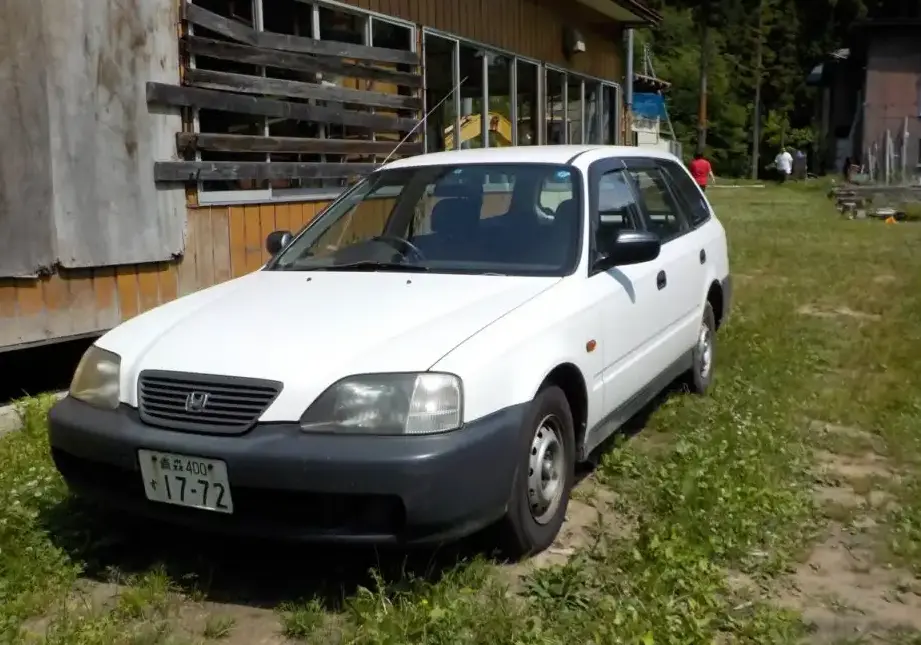
The Honda Partner II 1.5i 4WD (90 hp) was a compact station wagon produced by Honda between 2006 and 2010. Positioned as a practical and affordable vehicle, it primarily served the Japanese domestic market (JDM) as a light commercial vehicle and family transport. The Partner II, based on the AA platform, represented a significant update to the original Partner, offering improved space, safety, and efficiency. This particular 1.5i 4WD variant occupied a mid-range position within the Partner II lineup, offering all-wheel drive capability alongside a relatively economical engine and automatic transmission. It catered to buyers needing a versatile vehicle for both urban commuting and occasional rural use.
Technical Specifications
| Brand | Honda |
| Model | Partner |
| Generation | Partner II |
| Type (Engine) | 1.5i 4WD (90 Hp) |
| Start of production | 2006 |
| End of production | 2010 |
| Powertrain Architecture | Internal Combustion engine |
| Body type | Station wagon (estate) |
| Seats | 5 |
| Doors | 5 |
| Fuel Type | Petrol (Gasoline) |
| Weight-to-power ratio | 13.6 kg/Hp, 73.8 Hp/tonne |
| Weight-to-torque ratio | 9.3 kg/Nm, 107.4 Nm/tonne |
| Power | 90 Hp @ 5500 rpm |
| Power per litre | 60.2 Hp/l |
| Torque | 131 Nm @ 2700 rpm, 96.62 lb.-ft. @ 2700 rpm |
| Engine layout | Front, Transverse |
| Engine displacement | 1496 cm3, 91.29 cu. in. |
| Number of cylinders | 4 |
| Engine configuration | Inline |
| Number of valves per cylinder | 4 |
| Fuel injection system | Multi-port manifold injection |
| Engine aspiration | Naturally aspirated engine |
| Valvetrain | OHC |
| Kerb Weight | 1220 kg, 2689.64 lbs |
| Fuel tank capacity | 42 l, 11.1 US gal | 9.24 UK gal |
| Length | 4350 mm, 171.26 in |
| Width | 1695 mm, 66.73 in |
| Height | 1515 mm, 59.65 in |
| Wheelbase | 2550 mm, 100.39 in |
| Front track | 1475 mm, 58.07 in |
| Rear (Back) track | 1465 mm, 57.68 in |
| Drive wheel | All wheel drive (4×4) |
| Number of gears and type of gearbox | 5 gears, automatic transmission |
| Front suspension | Independent type McPherson |
| Rear suspension | Torsion |
| Front brakes | Disc |
| Rear brakes | Drum |
| Tires size | 165/65 R13 |
| Wheel rims size | 13 |
Powertrain & Engine Architecture
The heart of the Partner II 1.5i 4WD was the Honda L15A 1.5-liter inline-four cylinder engine. This engine, part of Honda’s L-series, utilized a single overhead camshaft (SOHC) valvetrain with four valves per cylinder. The engine employed multi-point fuel injection, delivering fuel directly into the intake ports. While not a particularly high-performance engine, the L15A was known for its reliability and fuel efficiency. The 90 horsepower output at 5500 rpm and 131 Nm (96.62 lb-ft) of torque at 2700 rpm were adequate for everyday driving, though acceleration was modest. Paired with this engine was a 5-speed automatic transmission. This transmission was a conventional torque converter automatic, prioritizing smooth shifts and ease of use over outright performance. The 4WD system was a part-time system, engaging automatically when wheel slip was detected, enhancing traction in slippery conditions.
Driving Characteristics
The 1.5i 4WD automatic version of the Partner II offered a comfortable, if uninspiring, driving experience. The automatic transmission, while smooth, resulted in a noticeable delay in response compared to the available manual transmission. The gear ratios were tuned for fuel economy and drivability rather than sporty acceleration. The all-wheel drive system provided enhanced stability and traction, particularly on loose surfaces, but added to the vehicle’s overall weight. Compared to the more powerful 1.8-liter variants, the 1.5i felt noticeably slower, especially when fully loaded. However, for typical urban and suburban driving, the power was sufficient. The suspension, tuned for comfort, absorbed bumps reasonably well, but the torsion beam rear suspension didn’t offer the same level of sophistication as independent rear setups found in some competitors.
Equipment & Trim Levels
The Partner II 1.5i 4WD typically came with a fairly basic level of equipment, reflecting its positioning as a practical and affordable vehicle. Standard features generally included power steering, air conditioning, and a basic audio system. Interior upholstery was typically cloth, and the dashboard featured a functional, if somewhat utilitarian, design. Optional extras could include power windows, central locking, and upgraded audio systems. Safety features were relatively modest for the time, typically including dual airbags and ABS brakes. The trim level of the 1.5i 4WD often sat between the base model and the more luxurious variants, offering a balance of features and affordability.
Chassis & Braking
The Partner II utilized a front independent McPherson strut suspension and a rear torsion beam suspension. This setup prioritized cost-effectiveness and space efficiency. The front brakes were disc brakes, providing adequate stopping power, while the rear brakes were drum brakes, a cost-saving measure. The 13-inch wheels were fitted with 165/65 R13 tires. The chassis was designed for durability and practicality, rather than sporty handling. The all-wheel drive system added weight, but also improved stability and traction, particularly in adverse weather conditions. Stabilizer bars were present, but relatively thin, contributing to a softer ride but less precise handling.
Market Reception & Comparison
The Honda Partner II 1.5i 4WD was generally well-received in the Japanese market as a practical and reliable vehicle. Critics praised its spacious interior, fuel efficiency, and all-wheel drive capability. However, the engine’s modest power output and the automatic transmission’s lack of responsiveness were often cited as drawbacks. Compared to other compact station wagons available in Japan at the time, such as the Toyota Raum or the Nissan Cube, the Partner II offered a more utilitarian and work-oriented appeal. The 1.5i 4WD variant offered a good balance between affordability and functionality, making it a popular choice for families and small businesses.
Legacy
The Honda Partner II, and specifically the 1.5i 4WD variant, has proven to be a remarkably durable vehicle. Many examples remain on the road today, testament to Honda’s reputation for reliability. The L15A engine is known for its longevity, and the automatic transmission, while not particularly sophisticated, is generally reliable if properly maintained. In the used car market, the Partner II 1.5i 4WD is often sought after for its affordability, practicality, and all-wheel drive capability. While it may not offer the performance or refinement of more modern vehicles, it remains a viable option for those seeking a dependable and economical station wagon. Its simplicity and robust construction contribute to relatively low maintenance costs, making it a popular choice for budget-conscious buyers.