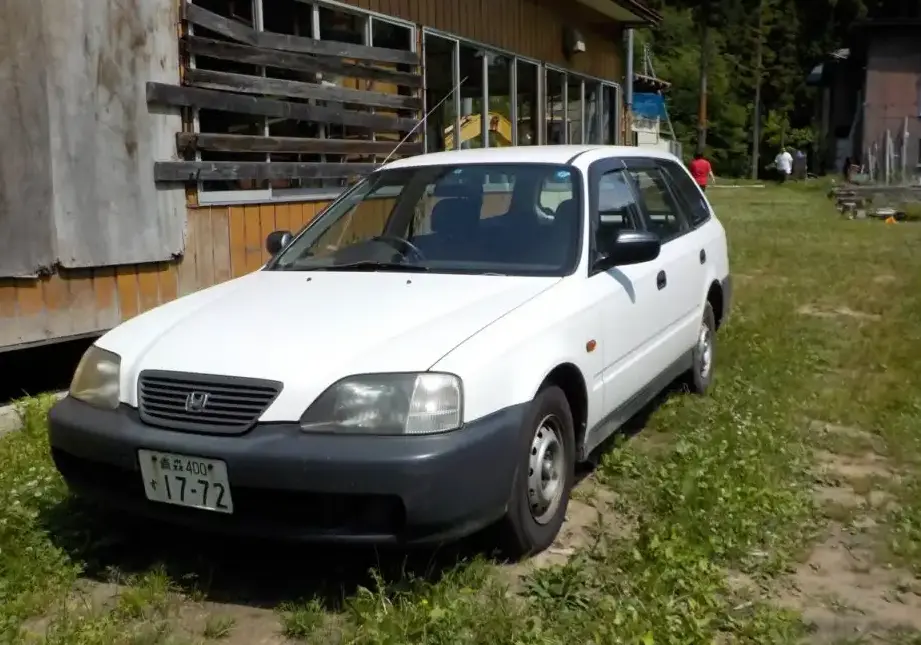
The Honda Partner II 1.5i AWD, produced between 2006 and 2010, represents a practical and versatile offering within the second generation of the Honda Partner series. This variant, characterized by its 1.5-liter engine producing 90 horsepower and an all-wheel-drive system, was primarily aimed at the Japanese domestic market (JDM) as a compact, functional station wagon. It served as a workhorse vehicle for small businesses, families, and individuals requiring a reliable and spacious vehicle capable of handling varied road conditions. The Partner II, built on the AA platform, was a rebadged version of the Nissan Cube, reflecting a strategic partnership between the two manufacturers.
Technical Specifications
| Brand | Honda |
| Model | Partner |
| Generation | Partner II |
| Type (Engine) | 1.5i (90 Hp) AWD |
| Start of production | 2006 |
| End of production | 2010 |
| Powertrain Architecture | Internal Combustion engine |
| Body type | Station wagon (estate) |
| Seats | 5 |
| Doors | 5 |
| Fuel Type | Petrol (Gasoline) |
| Weight-to-power ratio | 12.8 kg/Hp, 78.3 Hp/tonne |
| Weight-to-torque ratio | 8.8 kg/Nm, 113.9 Nm/tonne |
| Power | 90 Hp @ 5500 rpm |
| Power per litre | 60.2 Hp/l |
| Torque | 131 Nm @ 2700 rpm (96.62 lb.-ft. @ 2700 rpm) |
| Engine layout | Front, Transverse |
| Engine displacement | 1496 cm3 (91.29 cu. in.) |
| Number of cylinders | 4 |
| Engine configuration | Inline |
| Number of valves per cylinder | 4 |
| Fuel injection system | Multi-port manifold injection |
| Engine aspiration | Naturally aspirated engine |
| Valvetrain | OHC |
| Kerb Weight | 1150 kg (2535.32 lbs) |
| Fuel tank capacity | 42 l (11.1 US gal | 9.24 UK gal) |
| Length | 4350 mm (171.26 in) |
| Width | 1695 mm (66.73 in) |
| Height | 1515 mm (59.65 in) |
| Wheelbase | 2550 mm (100.39 in) |
| Front track | 1475 mm (58.07 in) |
| Rear (Back) track | 1465 mm (57.68 in) |
| Drive wheel | All wheel drive (4×4) |
| Number of gears and type of gearbox | 5 gears, automatic transmission |
| Front suspension | Independent type McPherson |
| Rear suspension | Torsion |
| Front brakes | Disc |
| Rear brakes | Drum |
| Tires size | 165/65 R13 |
| Wheel rims size | 13 |
Powertrain & Engine Architecture
The heart of the Partner II 1.5i AWD is the Honda L15A series engine, a 1.5-liter inline-four cylinder powerplant. This engine utilizes a single overhead camshaft (OHC) valvetrain and a multi-point fuel injection system. While not a particularly advanced engine in terms of technology, it was known for its reliability and fuel efficiency. The L15A produces 90 horsepower at 5500 rpm and 131 Nm (96.62 lb-ft) of torque at 2700 rpm. The engine’s relatively low output was a deliberate design choice, prioritizing fuel economy and ease of maintenance over outright performance. The engine is transversely mounted in the front of the vehicle. The automatic transmission is a conventional 5-speed unit, chosen for its simplicity and ease of use, catering to the target demographic who preferred convenience over driver engagement.
Driving Characteristics
The 1.5i AWD variant of the Partner II offers a comfortable, if uninspiring, driving experience. The automatic transmission, while smooth, contributes to a somewhat leisurely acceleration. The 90 horsepower engine feels adequate for city driving and light highway use, but struggles when fully loaded or tackling steep inclines. The all-wheel-drive system provides enhanced traction in slippery conditions, making it a suitable choice for regions with inclement weather. The gear ratios are tuned for fuel efficiency, resulting in a relatively high cruising speed at lower engine revolutions. Compared to potential manual transmission versions (not commonly available in this configuration), the automatic sacrifices some responsiveness and fuel economy. It also differs significantly from any potential higher-output variants, which were not offered in the Partner II lineup.
Equipment & Trim Levels
The Honda Partner II 1.5i AWD was typically equipped with a fairly basic level of standard features, reflecting its utilitarian purpose. Standard equipment generally included air conditioning, power steering, and a basic audio system. Interior upholstery was typically cloth, and the dashboard featured a functional, no-frills design. Optional extras, depending on the specific package, could include power windows, power door locks, and upgraded audio systems. The trim level was generally considered entry-level within the Partner II range, focusing on providing essential functionality at an affordable price point. The interior space was a key selling point, offering ample room for passengers and cargo.
Chassis & Braking
The Partner II utilizes a McPherson strut independent suspension system at the front, providing a reasonable level of ride comfort. The rear suspension employs a torsion beam setup, which is a cost-effective and space-saving solution. The braking system features disc brakes on the front wheels and drum brakes on the rear. This configuration was typical for vehicles in this class and price range. The 13-inch wheels are fitted with 165/65 R13 tires. The chassis is designed for durability and practicality, rather than sporty handling. Stabilizer bars were not typically included as standard equipment, further emphasizing the vehicle’s focus on comfort and functionality.
Market Reception & Comparison
The Honda Partner II 1.5i AWD was well-received in the Japanese market as a practical and reliable vehicle. Critics praised its spacious interior, fuel efficiency, and all-wheel-drive capability. However, the engine’s modest power output was often noted as a drawback. Compared to other compact station wagons available in Japan at the time, the Partner II offered a competitive combination of features and price. Its fuel economy was generally comparable to other 1.5-liter gasoline engines, and its reliability was considered to be above average. The automatic transmission, while convenient, was often criticized for its lack of responsiveness compared to manual transmission options.
Legacy
The Honda Partner II 1.5i AWD has proven to be a durable and reliable vehicle, with many examples still on the road today. The L15A engine is known for its longevity, and the automatic transmission, while not particularly sophisticated, is generally dependable. In the used car market, these vehicles are often sought after for their affordability and practicality. Maintenance costs are relatively low, and spare parts are readily available. While not a particularly collectible vehicle, the Partner II 1.5i AWD represents a significant example of Honda’s commitment to producing functional and reliable transportation for the everyday driver. Its enduring presence on Japanese roads is a testament to its build quality and practicality.