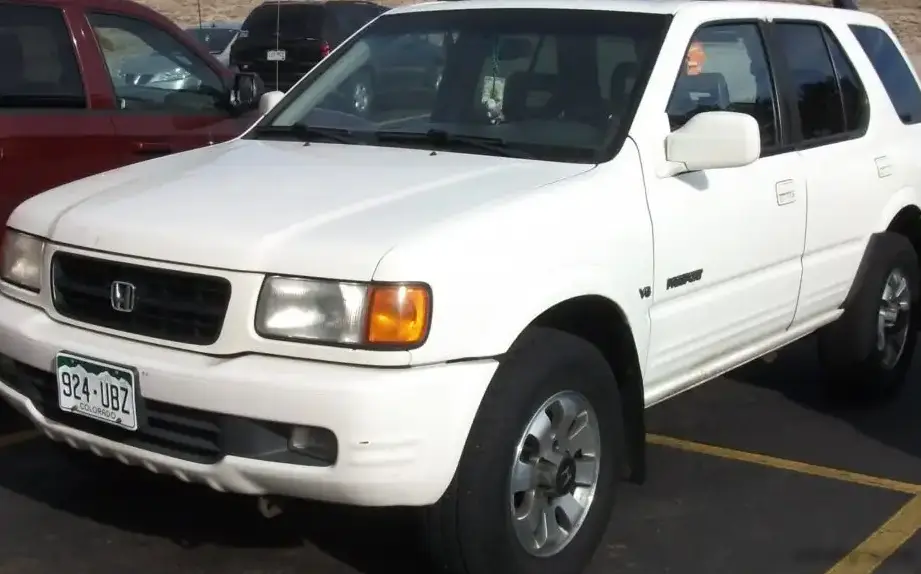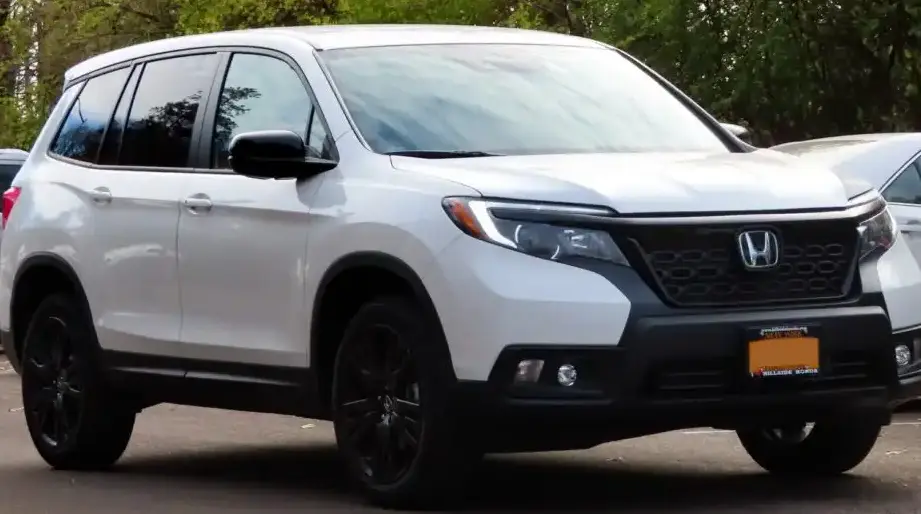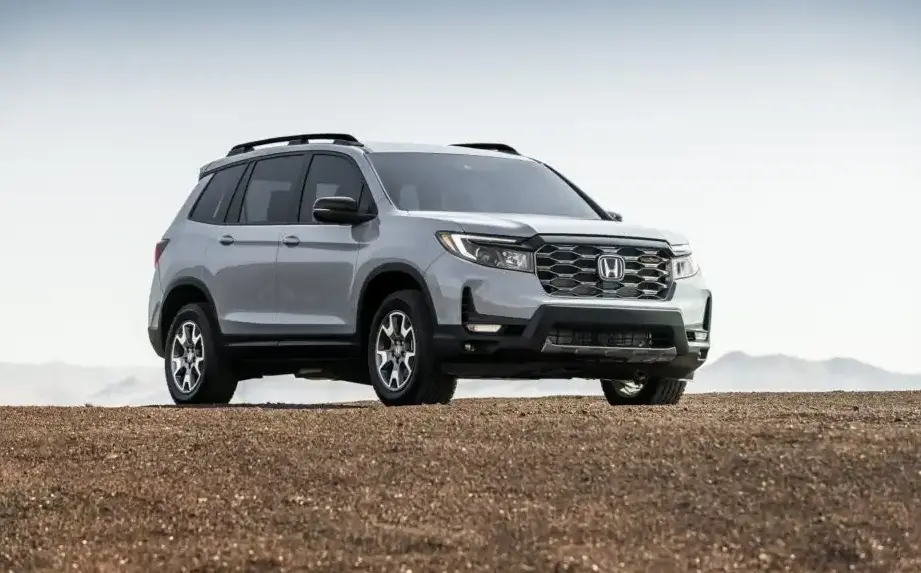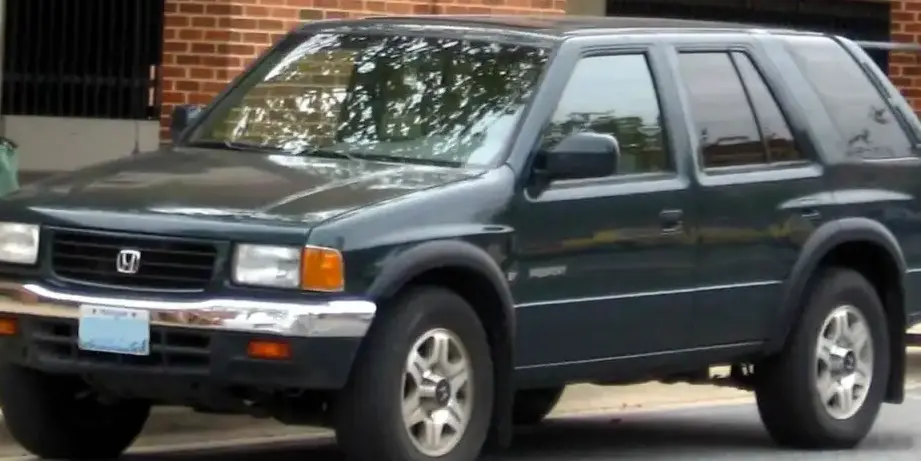
The Honda Passport, introduced for the 1994 model year and continuing through 1997, represented Honda’s entry into the burgeoning mid-size SUV market in North America. Developed specifically for the US market, it was based on the Honda Accord platform, but with a rugged, truck-like construction. The 3.2i V6 24V 4WD variant, producing 177 horsepower, was a key offering within the Passport lineup, positioned as a capable all-weather, all-terrain vehicle aimed at buyers seeking practicality and moderate off-road capability. This generation, designated the Passport I, served as a precursor to the later, more refined Honda Pilot.
Technical Specifications
| Brand | Honda |
| Model | Passport |
| Generation | Passport I |
| Type (Engine) | 3.2i V6 24V (177 Hp) 4WD |
| Start of production | 1993 |
| End of production | 1997 |
| Powertrain Architecture | Internal Combustion engine |
| Body type | SUV |
| Seats | 5 |
| Doors | 5 |
| Fuel consumption (combined) | 13.2 l/100 km (17.8 US mpg, 21.4 UK mpg, 7.6 km/l) |
| Fuel Type | Petrol (Gasoline) |
| Weight-to-power ratio | 10.4 kg/Hp, 96.5 Hp/tonne |
| Weight-to-torque ratio | 7.1 kg/Nm, 141.7 Nm/tonne |
| Power | 177 Hp @ 5200 rpm |
| Power per litre | 55.9 Hp/l |
| Torque | 260 Nm @ 3750 rpm (191.77 lb.-ft. @ 3750 rpm) |
| Engine layout | Front, Longitudinal |
| Engine displacement | 3165 cm3 (193.14 cu. in.) |
| Number of cylinders | 6 |
| Engine configuration | V-engine |
| Cylinder Bore | 93.4 mm (3.68 in.) |
| Piston Stroke | 77 mm (3.03 in.) |
| Compression ratio | 9.3:1 |
| Number of valves per cylinder | 4 |
| Fuel injection system | Multi-port manifold injection |
| Engine aspiration | Naturally aspirated engine |
| Valvetrain | OHC |
| Kerb Weight | 1835 kg (4045.48 lbs.) |
| Fuel tank capacity | 83 l (21.93 US gal | 18.26 UK gal) |
| Length | 4480 mm (176.38 in.) |
| Width | 1690 mm (66.54 in.) |
| Height | 1660 mm (65.35 in.) |
| Wheelbase | 2760 mm (108.66 in.) |
| Front track | 1440 mm (56.69 in.) |
| Rear track | 1445 mm (56.89 in.) |
| Drive wheel | All wheel drive (4×4) |
| Number of gears and type of gearbox | 5 gears, manual transmission |
| Front suspension | Double wishbone |
| Rear suspension | Leaf spring |
| Front brakes | Ventilated discs |
| Rear brakes | Ventilated discs |
| Assisting systems | ABS (Anti-lock braking system) |
| Steering type | Steering rack and pinion |
| Power steering | Hydraulic Steering |
| Tires size | 225/75 R15 |
Powertrain & Engine Architecture
The heart of the 3.2i Passport was Honda’s 3.2-liter SOHC 24-valve V6 engine, internally designated as the G25A. This engine, while sharing some lineage with Honda’s earlier V6 designs, was specifically engineered for truck applications, prioritizing low-end torque and durability. The multi-port fuel injection system delivered fuel directly to each cylinder, optimizing combustion efficiency. The engine featured a relatively conservative 9.3:1 compression ratio, contributing to its reliability and ability to run on readily available fuel grades. The five-speed manual transmission was the standard offering, providing drivers with direct control over the engine’s power. The transmission was chosen for its robustness and ability to handle the engine’s torque output in off-road conditions.
Driving Characteristics
The 177-horsepower V6, coupled with the five-speed manual transmission, provided adequate, though not exhilarating, performance. Acceleration was respectable, but the Passport’s substantial weight (approximately 4,045 lbs) limited its outright speed. The engine’s strength lay in its mid-range torque, making it well-suited for towing and navigating challenging terrain. The manual transmission allowed for precise gear selection, maximizing control in off-road situations. Compared to potential higher-output variants (which weren’t offered in the US market), the 3.2i provided a balance between performance and fuel economy. The 4WD system, selectable between 2WD, 4WD High, and 4WD Low, enhanced traction in slippery conditions, making it a capable all-weather vehicle.
Equipment & Trim Levels
The 3.2i 4WD Passport typically came standard with features such as air conditioning, power windows and locks, and an AM/FM stereo. The interior was functional and durable, with cloth upholstery and a straightforward dashboard layout. Optional extras included a sunroof, upgraded stereo systems, and alloy wheels. The trim level was relatively basic, focusing on providing essential features for utility and practicality. The emphasis was on a rugged, no-frills experience, appealing to buyers who prioritized functionality over luxury.
Chassis & Braking
The Passport’s chassis was a body-on-frame construction, providing a robust foundation for off-road use. The front suspension utilized a double wishbone design, offering a comfortable ride and good handling characteristics. The rear suspension employed leaf springs, a traditional setup for trucks and SUVs, prioritizing load-carrying capacity and durability. Braking duties were handled by ventilated discs on all four wheels, providing adequate stopping power. An anti-lock braking system (ABS) was included as standard equipment, enhancing safety in emergency braking situations.
Market Reception & Comparison
The Honda Passport was generally well-received by automotive critics, who praised its ruggedness, reliability, and off-road capability. However, some reviewers noted its relatively basic interior and lack of refinement compared to some of its competitors, such as the Jeep Grand Cherokee. Fuel economy, at 17.8 US mpg combined, was typical for a vehicle of its size and class. Compared to other trims within the Passport lineup (none were offered in the US), the 3.2i 4WD represented the core offering, balancing performance, capability, and price. It was a popular choice for buyers seeking a practical and reliable SUV for everyday use and occasional off-road adventures.
Legacy
The Honda Passport, while only produced for a short period, established Honda as a serious contender in the mid-size SUV market. The 3.2i V6 engine proved to be a durable and reliable powerplant, and many examples remain on the road today. The Passport’s body-on-frame construction and robust 4WD system have contributed to its longevity. In the used car market, the Passport is often sought after by enthusiasts looking for a classic, capable, and affordable SUV. Its simplicity and durability make it a relatively easy vehicle to maintain and repair, further enhancing its appeal to those seeking a practical and reliable transportation option.