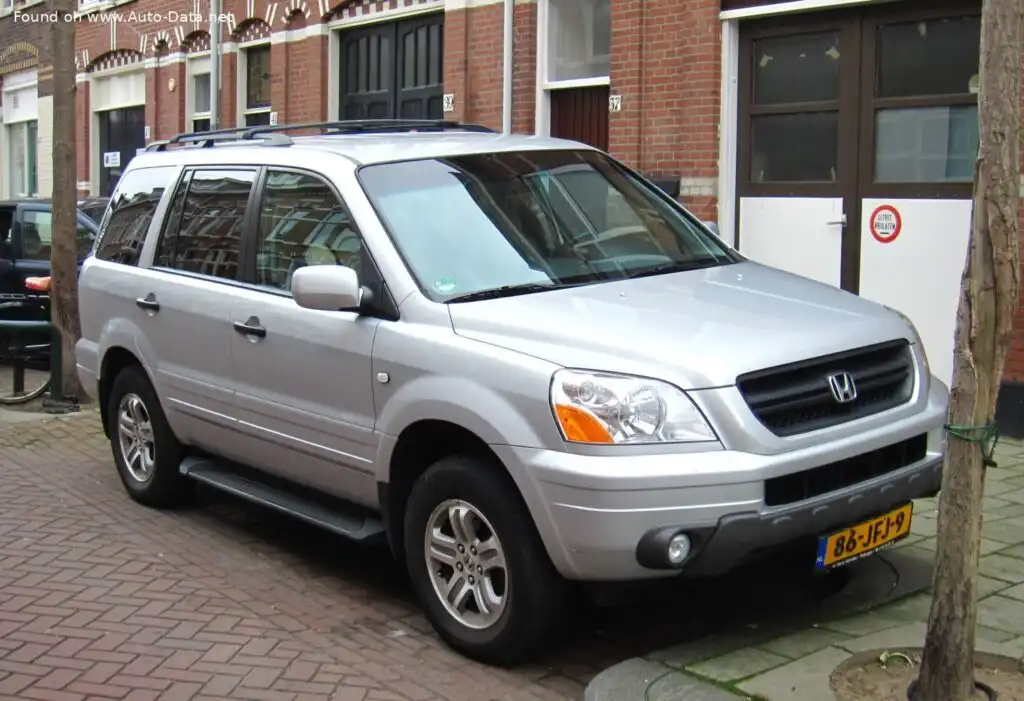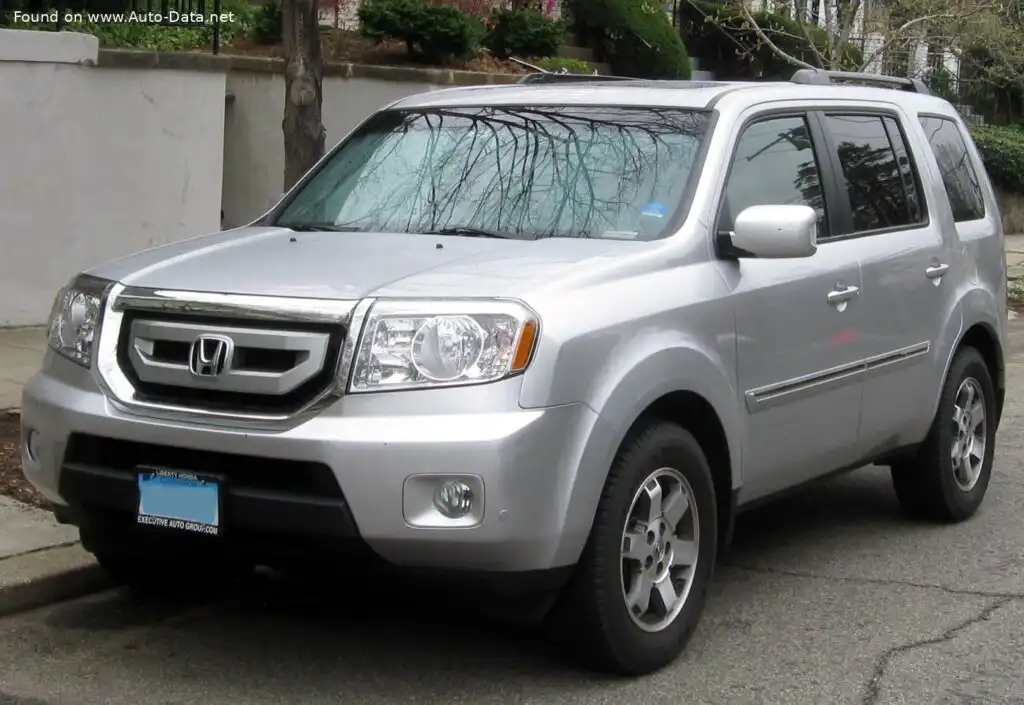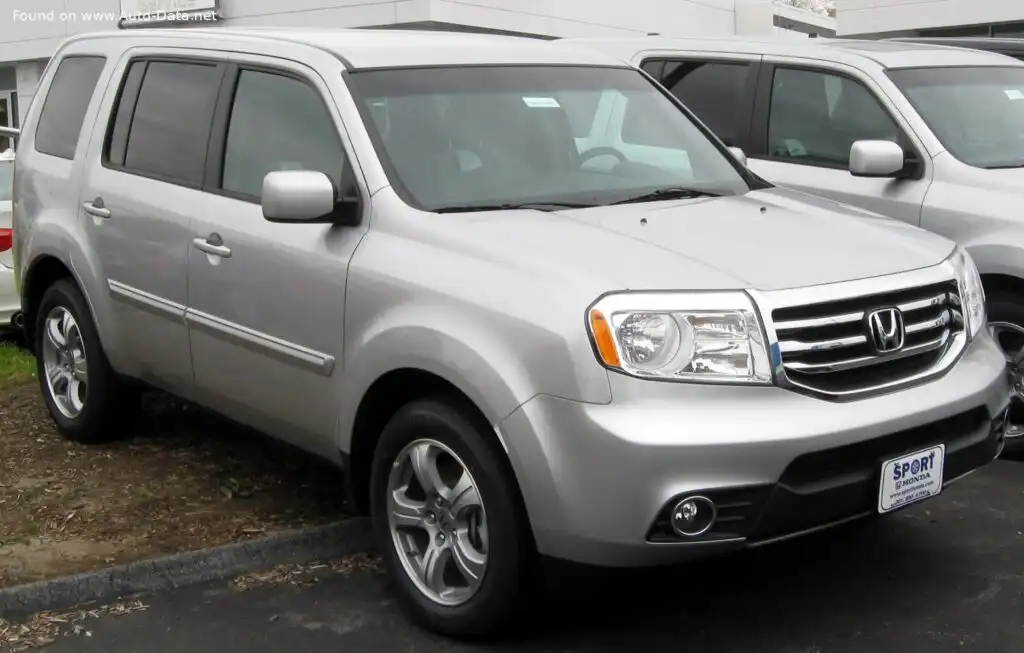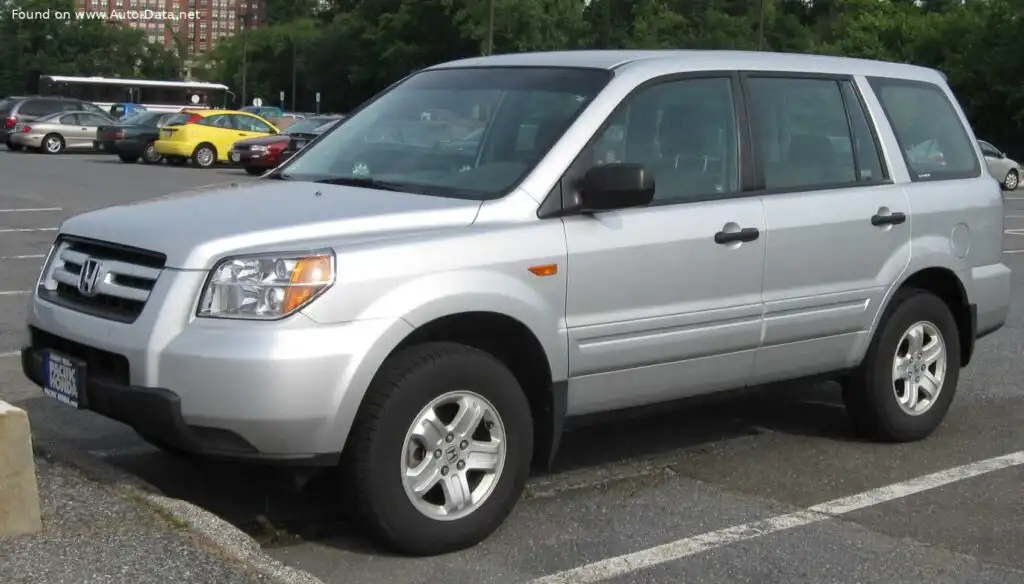
The Honda Pilot, launched in 2003, represented Honda’s entry into the burgeoning mid-size SUV market. The first generation Pilot underwent a significant facelift in 2006, bringing revised styling, improved interior materials, and refinements to the powertrain. This particular variant, the 3.5 V6 with a five-speed automatic transmission and four-wheel drive, was a mainstay of the Pilot lineup from 2006 through 2008. It occupied a mid-to-upper trim position, offering a balance of power, space, and family-friendly features. The 2006 facelift aimed to address some initial criticisms of the first-generation Pilot, enhancing its appeal to a broader range of buyers seeking a versatile and reliable SUV.
Technical Specifications
| Brand | Honda |
| Model | Pilot |
| Generation | Pilot I (facelift 2006) |
| Type (Engine) | 3.5 V6 (248 Hp) 4WD Automatic |
| Start of production | 2006 |
| End of production | 2008 |
| Powertrain Architecture | Internal Combustion engine |
| Body type | SUV, Crossover |
| Seats | 8 |
| Doors | 5 |
| Fuel consumption (urban) | 13.8 l/100 km (17 US mpg, 20.5 UK mpg) |
| Fuel consumption (extra urban) | 10.7 l/100 km (22 US mpg, 26.4 UK mpg) |
| Fuel Type | Petrol (Gasoline) |
| Emission standard | ULEV-2 |
| Weight-to-power ratio | 8.1 kg/Hp, 122.8 Hp/tonne |
| Weight-to-torque ratio | 6.2 kg/Nm, 160.9 Nm/tonne |
| Power | 248 Hp @ 5600 rpm |
| Power per litre | 71.4 Hp/l |
| Torque | 325 Nm @ 4500 rpm (239.71 lb.-ft. @ 4500 rpm) |
| Maximum engine speed | 6300 rpm |
| Engine layout | Front, Transverse |
| Engine Model/Code | J35A9 |
| Engine displacement | 3471 cm3 (211.81 cu. in.) |
| Number of cylinders | 6 |
| Engine configuration | V-engine |
| Cylinder Bore | 89 mm (3.5 in.) |
| Piston Stroke | 93 mm (3.66 in.) |
| Compression ratio | 10:1 |
| Number of valves per cylinder | 4 |
| Fuel injection system | Multi-port manifold injection |
| Engine aspiration | Naturally aspirated engine |
| Valvetrain | SOHC |
| Engine oil capacity | 4.3 l (4.54 US qt | 3.78 UK qt) |
| Coolant capacity | 7.3 l (7.71 US qt | 6.42 UK qt) |
| Kerb Weight | 2020-2052 kg (4453.34 – 4523.89 lbs.) |
| Trunk (boot) space – minimum | 450 l (15.89 cu. ft.) |
| Trunk (boot) space – maximum | 2480 l (87.58 cu. ft.) |
| Fuel tank capacity | 77 l (20.34 US gal | 16.94 UK gal) |
| Permitted trailer load with brakes (12%) | 2039 kg (4495.23 lbs.) |
| Length | 4775 mm (187.99 in.) |
| Width | 1968 mm (77.48 in.) |
| Height | 1821 mm (71.69 in.) |
| Wheelbase | 2700 mm (106.3 in.) |
| Front track | 1684 mm (66.3 in.) |
| Rear (Back) track | 1689 mm (66.5 in.) |
| Ride height (ground clearance) | 203 mm (7.99 in.) |
| Minimum turning circle (turning diameter) | 11.5 m (37.73 ft.) |
| Approach angle | 28.8° |
| Departure angle | 23.1° |
| Drivetrain Architecture | All wheel drive (4×4). ICE drives front wheels, rear wheels engaged via clutch. |
| Number of gears and type of gearbox | 5 gears, automatic transmission |
| Front suspension | Independent type McPherson |
| Rear suspension | Independent multi-link suspension |
| Front brakes | Ventilated discs, 300 mm |
| Rear brakes | Disc, 312 mm |
| Assisting systems | ABS (Anti-lock braking system) |
| Steering type | Steering rack and pinion |
| Power steering | Electric Steering |
| Tires size | 235/70 R16 |
| Wheel rims size | 16 |
Powertrain & Engine Architecture
The heart of this Pilot variant is the 3.5-liter J35A9 V6 engine. This engine is part of Honda’s well-regarded J-series family, known for its reliability and smooth operation. The J35A9 features a single overhead camshaft (SOHC) valvetrain, with four valves per cylinder. Fuel delivery is handled by a multi-port fuel injection system. The engine produces 248 horsepower at 5600 rpm and 325 Nm (239.71 lb-ft) of torque at 4500 rpm. The five-speed automatic transmission was chosen for its balance of responsiveness and fuel efficiency. It’s a conventional torque converter automatic, offering smooth shifts but lacking the efficiency of more modern transmissions. The four-wheel-drive system is a viscous coupling system, engaging the rear wheels when front wheel slip is detected. This system provides enhanced traction in inclement weather or on loose surfaces, but isn’t intended for serious off-roading.
Driving Characteristics
The 3.5L V6 and five-speed automatic combination provided adequate, though not exhilarating, performance. Acceleration from 0 to 60 mph was typically in the 8-9 second range. The automatic transmission’s gear ratios were tuned for everyday drivability rather than outright speed. While it offered sufficient power for highway merging and passing, it didn’t feel as nimble as the Pilot variants equipped with a manual transmission. The automatic transmission did contribute to a more relaxed driving experience, particularly in city traffic. Compared to the later V6 models with six-speed transmissions, this variant felt slightly less refined and fuel-efficient. The four-wheel-drive system added weight and a slight reduction in fuel economy, but provided added confidence in slippery conditions.
Equipment & Trim Levels
The 2006-2008 Honda Pilot 3.5 V6 4WD Automatic typically came standard with features such as air conditioning, power windows and locks, a CD player, and cruise control. Higher trim levels, such as the EX-L and Touring, added features like leather upholstery, a sunroof, a navigation system, and upgraded audio systems. The interior was designed with family use in mind, offering ample space for passengers and cargo. The third-row seats were relatively easy to access and fold flat, maximizing cargo capacity. Optional extras included rear-seat entertainment systems and a towing package.
Chassis & Braking
The Pilot’s chassis featured an independent McPherson strut front suspension and an independent multi-link rear suspension. This setup provided a comfortable ride quality, absorbing bumps and irregularities in the road surface effectively. The front brakes were ventilated discs measuring 300mm, while the rear brakes were solid discs measuring 312mm. Anti-lock brakes (ABS) were standard. The steering was a rack-and-pinion system with electric power steering, providing a light and easy steering feel. The suspension was tuned for comfort rather than sporty handling, prioritizing a smooth and stable ride.
Market Reception & Comparison
The 2006 facelifted Honda Pilot was generally well-received by critics and consumers. It was praised for its spacious interior, comfortable ride, and strong reliability. However, some reviewers noted that the engine could feel strained when fully loaded or climbing hills. Fuel economy was considered average for its class. Compared to other mid-size SUVs like the Toyota Highlander and Ford Explorer, the Pilot offered a compelling combination of features and value. The Highlander was often seen as more fuel-efficient, while the Explorer offered more powerful engine options. The Pilot’s ULEV-2 emissions standard was a positive attribute, demonstrating Honda’s commitment to environmental responsibility.
Legacy
The Honda Pilot 3.5 V6 4WD Automatic has proven to be a remarkably reliable powertrain. Many examples are still on the road today, with well-maintained vehicles exceeding 200,000 miles. The J35A9 engine is known for its durability and relatively low maintenance costs. Common issues include occasional oil leaks and sensor failures, but these are generally inexpensive to repair. In the used car market, these Pilots represent a good value for buyers seeking a spacious, reliable, and family-friendly SUV. While not the most exciting vehicle to drive, its practicality and dependability have cemented its place as a popular choice among used car shoppers.