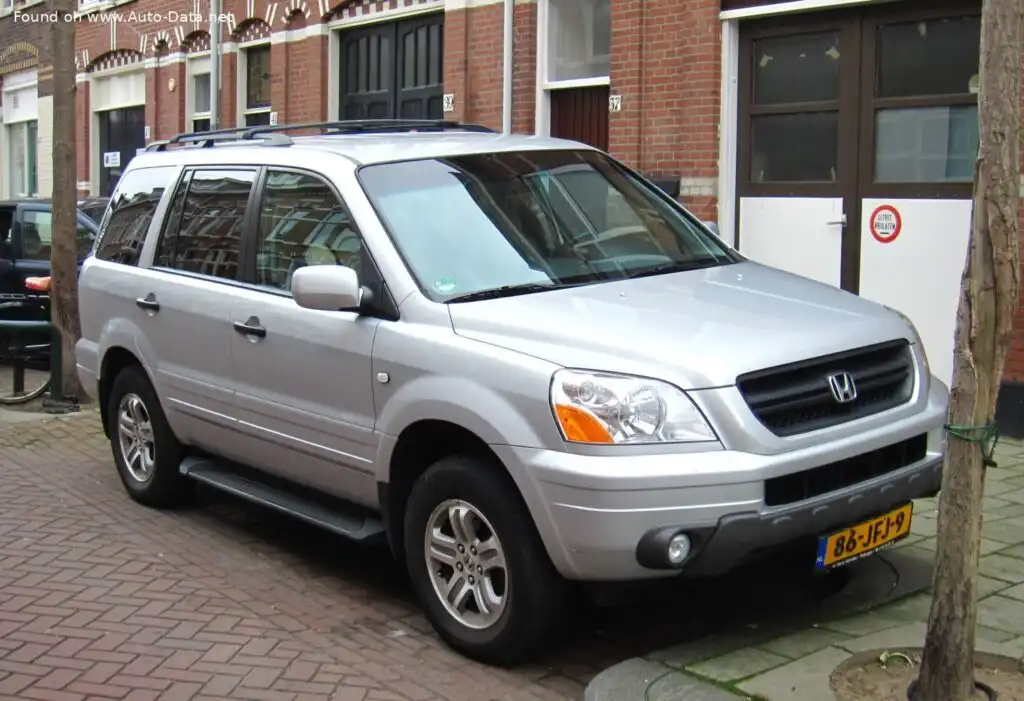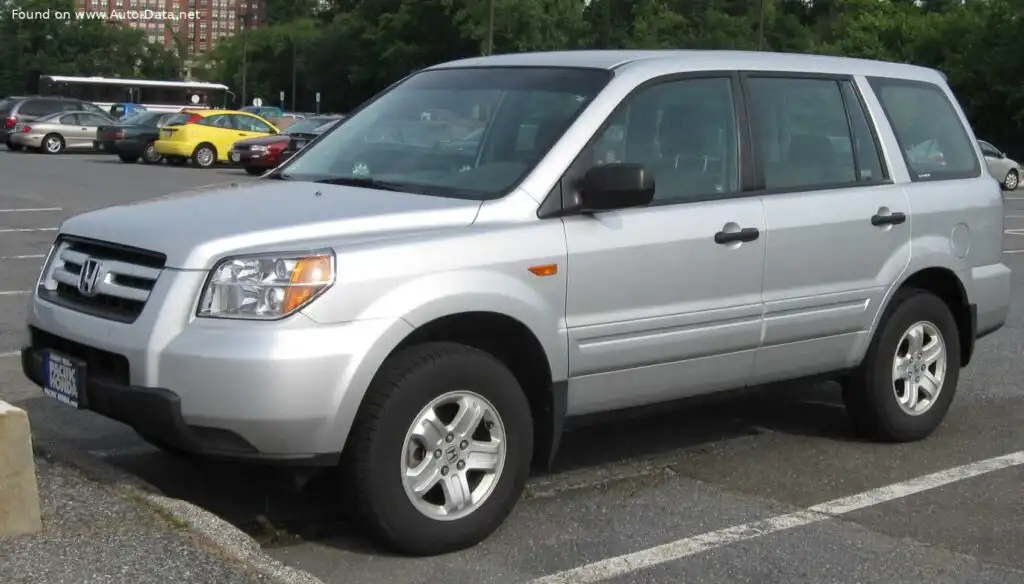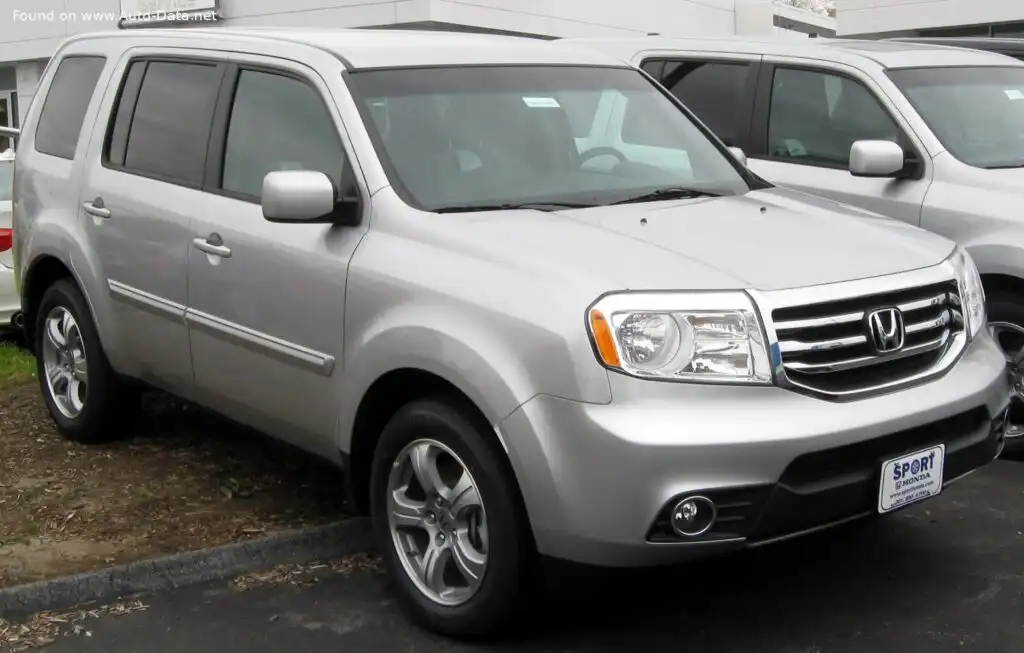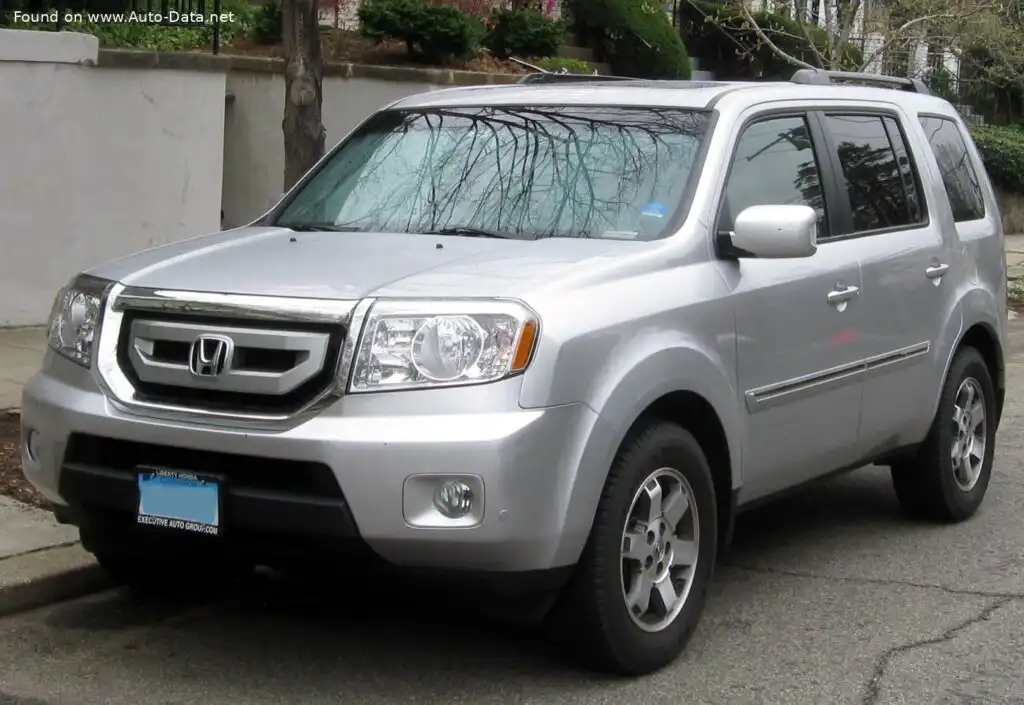
The Honda Pilot II, specifically the 3.5 V6 variant with an automatic transmission, was produced from 2008 to 2012. This second generation of the Pilot SUV represented a significant step forward in terms of size, refinement, and features compared to its predecessor. Positioned as a mid-range offering within the Pilot lineup, the 3.5 V6 Automatic catered to families seeking a spacious, comfortable, and reliable three-row SUV with adequate power for everyday driving and occasional towing. It served as a popular alternative to vehicles like the Toyota Highlander and Ford Explorer in the North American market.
Technical Specifications
| Brand | Honda |
| Model | Pilot |
| Generation | Pilot II |
| Type (Engine) | 3.5 V6 (253 Hp) Automatic |
| Start of production | 2008 |
| End of production | 2012 |
| Powertrain Architecture | Internal Combustion engine |
| Body type | SUV, Crossover |
| Seats | 8 |
| Doors | 5 |
| Fuel consumption (urban) | 13.8 l/100 km (17 US mpg, 20.5 UK mpg, 7.2 km/l) |
| Fuel consumption (extra urban) | 10.2 l/100 km (23.1 US mpg, 27.7 UK mpg, 9.8 km/l) |
| Fuel consumption (combined) | 12.4 l/100 km (19 US mpg, 22.8 UK mpg, 8.1 km/l) |
| Fuel Type | Petrol (Gasoline) |
| Emission standard | ULEV-2 |
| Weight-to-power ratio | 7.7 kg/Hp, 129.1 Hp/tonne |
| Weight-to-torque ratio | 5.7 kg/Nm, 175.1 Nm/tonne |
| Power | 253 Hp @ 5700 rpm |
| Power per litre | 72.9 Hp/l |
| Torque | 343 Nm @ 4800 rpm (252.98 lb.-ft. @ 4800 rpm) |
| Engine layout | Front, Transverse |
| Engine Model/Code | J35Z4 |
| Engine displacement | 3471 cm3 (211.81 cu. in.) |
| Number of cylinders | 6 |
| Engine configuration | V-engine |
| Cylinder Bore | 89 mm (3.5 in.) |
| Piston Stroke | 93 mm (3.66 in.) |
| Compression ratio | 10.5:1 |
| Number of valves per cylinder | 4 |
| Fuel injection system | Multi-port manifold injection |
| Engine aspiration | Naturally aspirated engine |
| Valvetrain | SOHC i-VTEC |
| Engine oil capacity | 4.3 l (4.54 US qt | 3.78 UK qt) |
| Coolant | 7.5 l (7.93 US qt | 6.6 UK qt) |
| Kerb Weight | 1959-1999 kg (4318.86 – 4407.04 lbs.) |
| Trunk (boot) space – minimum | 509 l (17.98 cu. ft.) |
| Trunk (boot) space – maximum | 2463 l (86.98 cu. ft.) |
| Fuel tank capacity | 79 l (20.87 US gal | 17.38 UK gal) |
| Permitted trailer load with brakes (12%) | 1585 kg (3494.33 lbs.) |
| Length | 4849 mm (190.91 in.) |
| Width | 1994 mm (78.5 in.) |
| Height | 1803-1846 mm (70.98 – 72.68 in.) |
| Wheelbase | 2774 mm (109.21 in.) |
| Front track | 1719 mm (67.68 in.) |
| Rear (Back) track | 1715 mm (67.52 in.) |
| Ride height (ground clearance) | 203 mm (7.99 in.) |
| Minimum turning circle (turning diameter) | 11.5 m (37.73 ft.) |
| Approach angle | 27.8° |
| Departure angle | 24.5° |
| Drivetrain Architecture | The Internal combustion engine (ICE) drives the front wheels of the vehicle. |
| Drive wheel | Front wheel drive |
| Number of gears and type of gearbox | 5 gears, automatic transmission |
| Front suspension | Independent type McPherson |
| Rear suspension | Independent multi-link suspension |
| Front brakes | Ventilated discs, 330 mm |
| Rear brakes | Disc, 333 mm |
| Assisting systems | ABS (Anti-lock braking system) |
| Steering type | Steering rack and pinion |
| Power steering | Electric Steering |
| Tires size | 245/65 R17 |
| Wheel rims size | 7.5J x 17 |
Powertrain & Engine Architecture
At the heart of the 2008-2012 Honda Pilot II 3.5 V6 Automatic lies the J35Z4 engine, a 3.5-liter naturally aspirated V6. This engine is part of Honda’s well-regarded J-series family, known for its reliability and smooth operation. The J35Z4 utilizes a single overhead camshaft (SOHC) cylinder head with Honda’s Variable Valve Timing and Lift Electronic Control (VTEC) system. This technology optimizes valve timing for improved performance and fuel efficiency across the engine’s operating range. Fuel delivery is managed by a multi-point fuel injection system. The engine produces 253 horsepower at 5700 rpm and 253 lb-ft of torque at 4800 rpm. The engine is transversely mounted in the front of the vehicle. The transmission paired with this engine is a 5-speed automatic, designed for smooth shifts and comfortable cruising. This automatic transmission was a standard feature and did not offer manual shift capabilities.
Driving Characteristics
The 3.5 V6 Automatic Pilot offered a comfortable and predictable driving experience. While not a performance-oriented SUV, the engine provided sufficient power for merging onto highways and passing other vehicles. Acceleration from a standstill was adequate, but not particularly brisk. The 5-speed automatic transmission was tuned for fuel economy and smooth operation, sometimes resulting in slightly hesitant downshifts. Compared to the higher-output V6 variants (which were not commonly available in the US market), this version felt less responsive. However, compared to potential four-cylinder options (which were not offered in the US), the V6 provided a noticeable improvement in performance. The front-wheel-drive configuration contributed to decent fuel economy for a vehicle of its size, but also limited its off-road capabilities.
Equipment & Trim Levels
The 3.5 V6 Automatic Pilot typically came standard with features such as air conditioning, power windows and locks, a CD player with auxiliary input, and basic cloth upholstery. Higher trim levels, such as the EX and EX-L, added features like leather upholstery, a sunroof, a navigation system, and upgraded audio systems. Optional extras included rear-seat entertainment systems and all-wheel drive. Safety features such as anti-lock brakes (ABS) and multiple airbags were standard across all trims.
Chassis & Braking
The Pilot II utilized an independent McPherson strut suspension in the front and an independent multi-link suspension in the rear. This setup provided a comfortable ride quality, absorbing bumps and irregularities in the road effectively. The front brakes were ventilated discs measuring 330mm, while the rear brakes were solid discs measuring 333mm. ABS was standard, providing enhanced braking control in emergency situations. The steering system was a rack-and-pinion setup with electric power steering, offering light and easy steering feel.
Market Reception & Comparison
The Honda Pilot II 3.5 V6 Automatic was generally well-received by automotive critics and consumers alike. It was praised for its spacious interior, comfortable ride, and strong reliability record. Fuel economy was considered average for its class. Compared to other V6-powered SUVs of the time, the Pilot offered a competitive combination of features, space, and value. Some critics noted that the automatic transmission could be slow to respond at times, and the handling was not as sporty as some competitors. However, the Pilot’s overall practicality and dependability made it a popular choice for families.
Legacy
The Honda Pilot II 3.5 V6 Automatic has proven to be a durable and reliable vehicle. Many examples are still on the road today, often with high mileage. The J35 engine family is known for its longevity, and with proper maintenance, these engines can last for well over 200,000 miles. The automatic transmission is also generally reliable, although some owners have reported issues with torque converter failure at higher mileage. In the used car market, these Pilots represent a good value for buyers seeking a spacious, dependable, and affordable SUV. However, potential buyers should be aware of the potential for age-related maintenance issues, such as worn suspension components and aging cooling system parts.