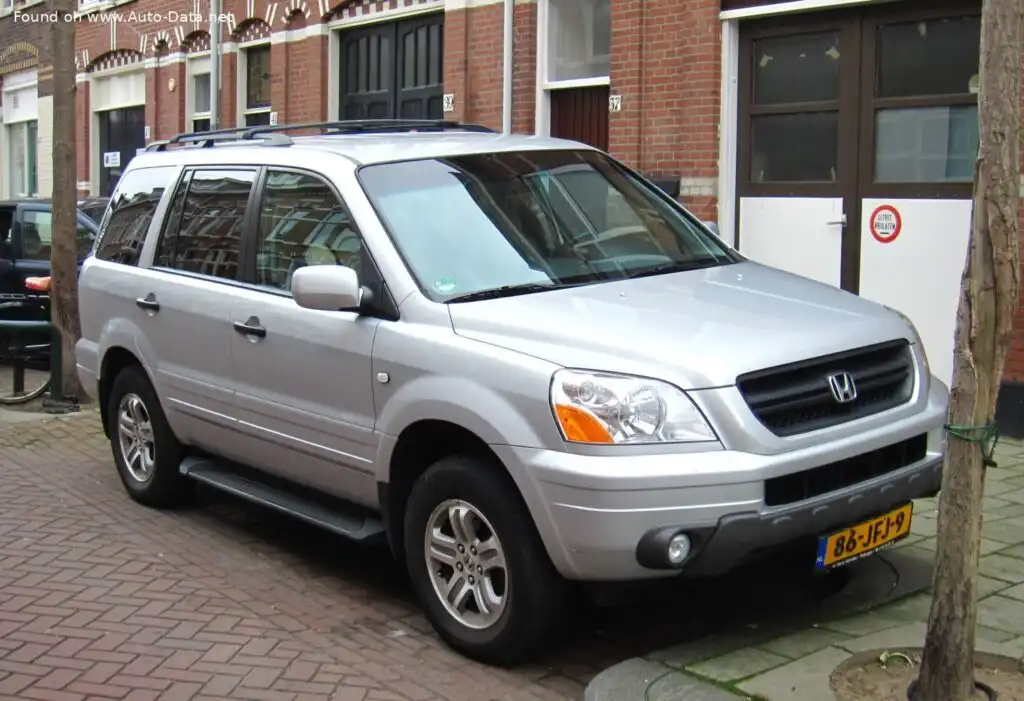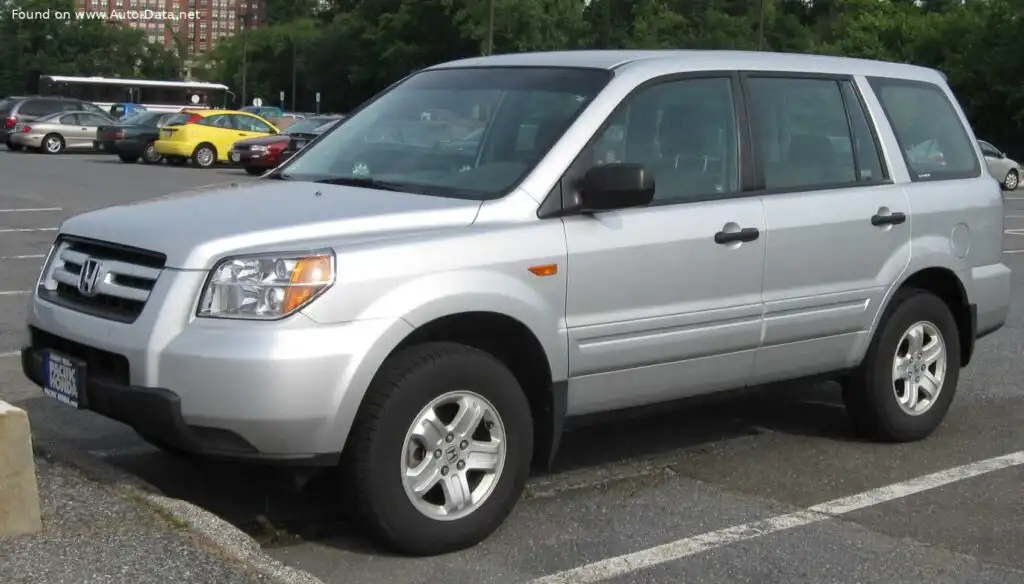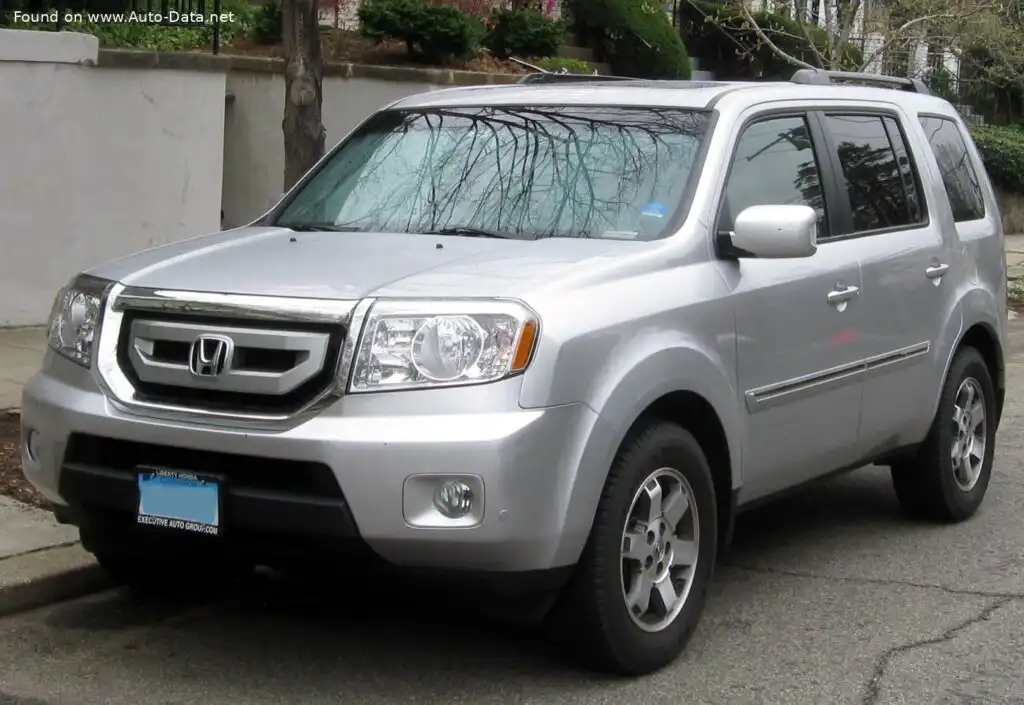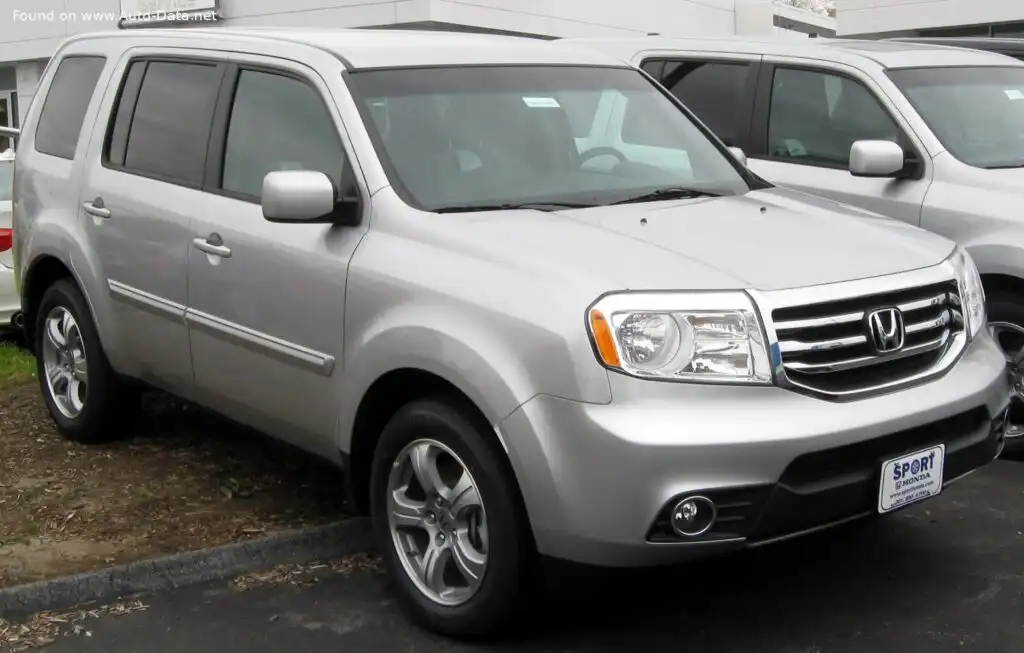
The Honda Pilot III, specifically the 3.5 V6 variant paired with a 6-speed automatic transmission, was produced from 2016 to 2019. This iteration of the Pilot represented the third generation of Honda’s mid-size crossover SUV, built on the Honda Global Light Platform. Positioned as a mainstream family hauler, the 3.5 V6 Automatic served as a popular choice within the Pilot lineup, offering a balance of power, space, and practicality. It aimed to compete with vehicles like the Toyota Highlander, Ford Explorer, and Nissan Pathfinder in the North American market.
Technical Specifications
| Brand | Honda |
| Model | Pilot |
| Generation | Pilot III |
| Type (Engine) | 3.5 V6 (280 Hp) Automatic 6-speed |
| Start of production | 2016 |
| End of production | 2019 |
| Powertrain Architecture | Internal Combustion engine |
| Body type | SUV, Crossover |
| Seats | 8 |
| Doors | 5 |
| Fuel consumption (urban) | 12.4 l/100 km (19 US mpg) |
| Fuel consumption (extra urban) | 8.7 l/100 km (27 US mpg) |
| Fuel consumption (combined) | 10.7 l/100 km (22 US mpg) |
| Fuel Type | Petrol (Gasoline) |
| Weight-to-power ratio | 6.6 kg/Hp |
| Weight-to-torque ratio | 5.2 kg/Nm |
| Power | 280 Hp @ 6000 rpm |
| Power per litre | 80.7 Hp/l |
| Torque | 355 Nm @ 4700 rpm (261.83 lb.-ft. @ 4700 rpm) |
| Maximum engine speed | 6800 rpm |
| Engine layout | Front, Transverse |
| Engine Model/Code | J35Y6 |
| Engine displacement | 3471 cm3 (211.81 cu. in.) |
| Number of cylinders | 6 |
| Engine configuration | V-engine |
| Cylinder Bore | 89 mm (3.5 in.) |
| Piston Stroke | 93 mm (3.66 in.) |
| Compression ratio | 11.5:1 |
| Number of valves per cylinder | 4 |
| Fuel injection system | Direct injection |
| Engine aspiration | Naturally aspirated engine |
| Valvetrain | SOHC, i-VTEC |
| Engine oil capacity | 5.4 l (5.71 US qt | 4.75 UK qt) |
| Coolant capacity | 7.3 l (7.71 US qt | 6.42 UK qt) |
| Kerb Weight | 1839-1876 kg (4054.3 – 4135.87 lbs.) |
| Trunk (boot) space – minimum | 467 l (16.49 cu. ft.) |
| Trunk (boot) space – maximum | 3092 l (109.19 cu. ft.) |
| Fuel tank capacity | 74 l (19.55 US gal | 16.28 UK gal) |
| Permitted trailer load with brakes (12%) | 1588 kg (3500.94 lbs.) |
| Length | 4940 mm (194.49 in.) |
| Width | 1996 mm (78.58 in.) |
| Height | 1773 mm (69.8 in.) |
| Wheelbase | 2819 mm (110.98 in.) |
| Front track | 1684 mm (66.3 in.) |
| Rear track | 1684 mm (66.3 in.) |
| Ride height (ground clearance) | 185 mm (7.28 in.) |
| Minimum turning circle | 12.0 m (39.37 ft.) |
| Drivetrain Architecture | Front wheel drive |
| Number of gears | 6 |
| Gearbox type | Automatic transmission |
| Front suspension | Independent type McPherson |
| Rear suspension | Independent multi-link suspension |
| Front brakes | Ventilated discs |
| Rear brakes | Disc |
| Steering type | Steering rack and pinion |
| Power steering | Electric Steering |
| Tires size | 245/60 R18 |
| Wheel rims size | 18 |
INTRODUCTION
The 2016-2019 Honda Pilot III, powered by the 3.5-liter V6 engine and paired with a 6-speed automatic transmission, represented a significant step forward for Honda’s family SUV. This generation Pilot moved away from the boxy styling of its predecessor, adopting a more streamlined and modern aesthetic. The J35Y6 engine, a staple in Honda’s lineup, was refined for improved efficiency and power delivery. This particular configuration was a mid-range offering, slotting between the base LX trim and the higher-end Elite and Touring trims. It provided a good balance of features and performance for families seeking a versatile and reliable vehicle.
Powertrain & Engine Architecture
At the heart of the Pilot 3.5 V6 Automatic lies the J35Y6 engine, a 3.5-liter naturally aspirated V6. This engine utilizes Honda’s i-VTEC (Intelligent Variable Valve Timing and Lift Electronic Control) system, which optimizes valve timing and lift based on engine speed and load, enhancing both power and fuel efficiency. The J35Y6 features direct fuel injection, further improving combustion efficiency and reducing emissions. The engine produces 280 horsepower at 6000 rpm and 262 lb-ft of torque at 4700 rpm. The 6-speed automatic transmission, while not as advanced as some of the continuously variable transmissions (CVTs) found in competitors, provided smooth and predictable shifts. It was chosen for its robustness and ability to handle the engine’s torque output. The transmission’s gear ratios were tuned for a balance of acceleration and highway cruising efficiency.
Driving Characteristics
The 3.5 V6 Automatic Pilot offered a comfortable and composed driving experience. While not a performance-oriented SUV, the engine provided ample power for everyday driving situations, including merging onto highways and passing other vehicles. The 6-speed automatic transmission delivered smooth shifts, although it wasn’t particularly quick or sporty. Compared to the base 4-cylinder engine option (available in some markets), the V6 offered a noticeable improvement in acceleration and overall responsiveness. The front-wheel-drive configuration, standard on this trim, contributed to decent fuel economy, but all-wheel drive was available as an option for enhanced traction in inclement weather. The steering was light and precise, making the Pilot easy to maneuver in urban environments. The suspension absorbed bumps and imperfections in the road well, providing a comfortable ride for passengers.
Equipment & Trim Levels
The 3.5 V6 Automatic Pilot typically came standard with a generous array of features. These included tri-zone automatic climate control, a rearview camera, Bluetooth connectivity, a 5-inch touchscreen infotainment system, and Honda’s LaneWatch blind spot display. Higher trim levels added features such as a larger touchscreen display, navigation, a premium audio system, leather upholstery, and power-adjustable front seats. Optional extras included a rear entertainment system, a panoramic sunroof, and advanced safety features like adaptive cruise control and lane departure warning. Interior upholstery was typically cloth on lower trims, with leather available on higher-end models. The dashboard layout was functional and user-friendly, with logically placed controls.
Chassis & Braking
The Pilot III utilized a unibody construction, providing a good balance of strength and rigidity. The front suspension featured independent MacPherson struts, while the rear suspension employed an independent multi-link setup. This configuration contributed to a comfortable ride and predictable handling. Braking duties were handled by ventilated discs up front and solid discs in the rear. Anti-lock brakes (ABS) were standard, along with electronic brake-force distribution (EBD) and brake assist. The steering system was a rack-and-pinion setup with electric power steering, providing light and responsive steering feel.
Market Reception & Comparison
The Honda Pilot III 3.5 V6 Automatic was generally well-received by automotive critics. It was praised for its spacious interior, comfortable ride, and strong V6 engine. However, some reviewers noted that the 6-speed automatic transmission felt a bit dated compared to the CVTs offered by some competitors. Fuel economy was considered average for the segment. Compared to the 4-cylinder Pilot, the V6 offered a significant performance advantage, but at the cost of slightly lower fuel efficiency. The Pilot’s reliability and resale value were also strong points, contributing to its popularity among families.
Legacy
The Honda Pilot III 3.5 V6 Automatic has proven to be a reliable and durable vehicle. The J35Y6 engine is known for its longevity, and the 6-speed automatic transmission is generally robust. In the used car market, these Pilots hold their value relatively well, thanks to Honda’s reputation for quality and reliability. Common maintenance items include routine oil changes, brake pad replacements, and tire rotations. While some owners have reported minor issues with the infotainment system, overall, the Pilot III 3.5 V6 Automatic remains a popular choice for buyers seeking a dependable and spacious family SUV.