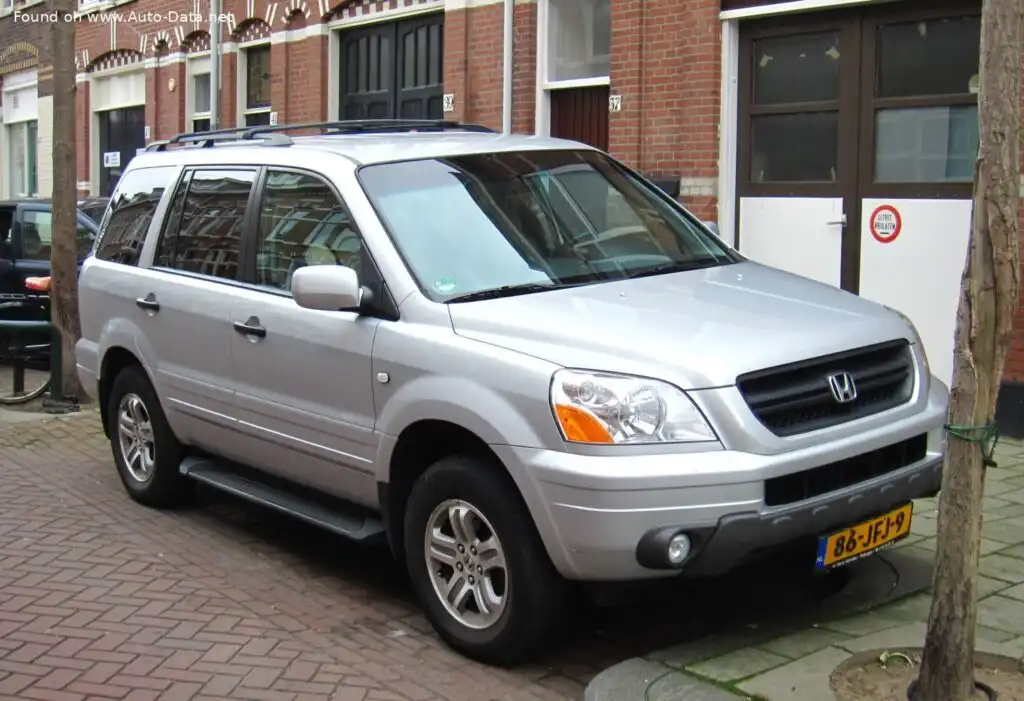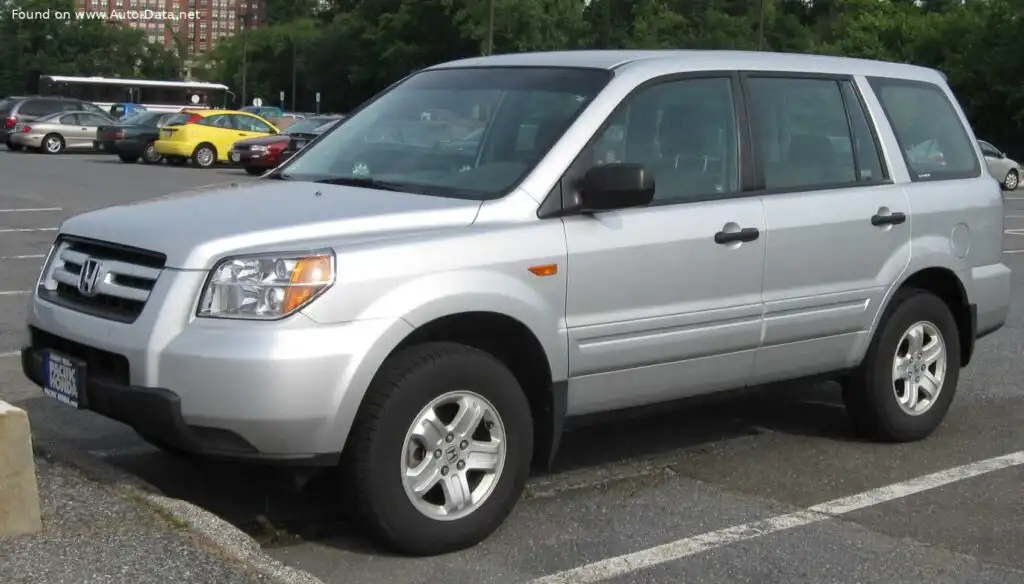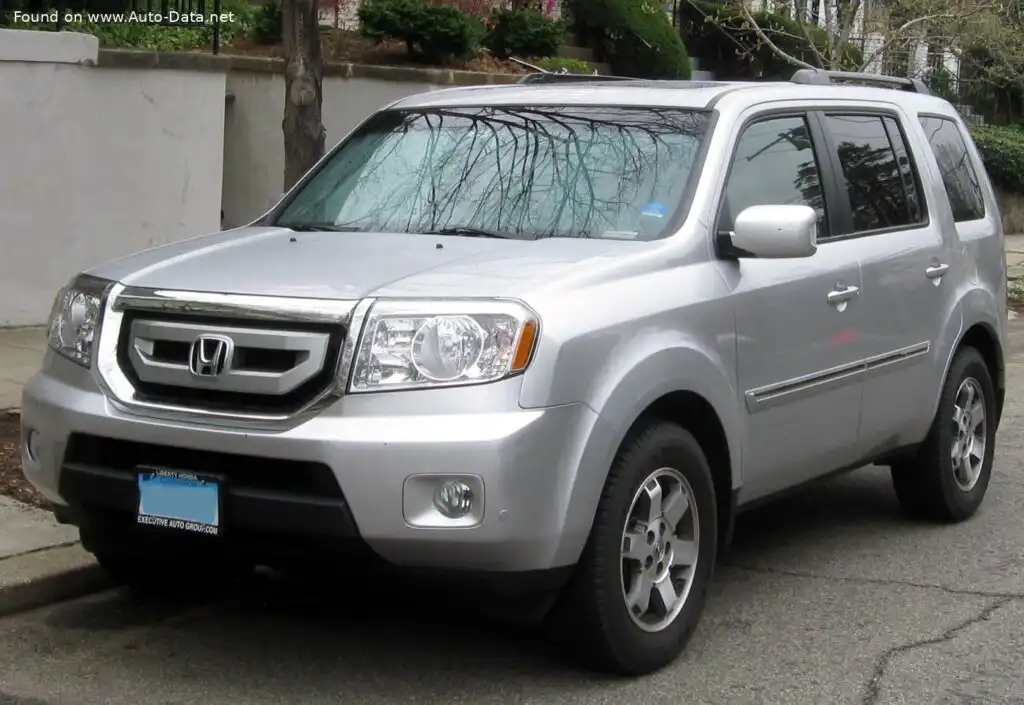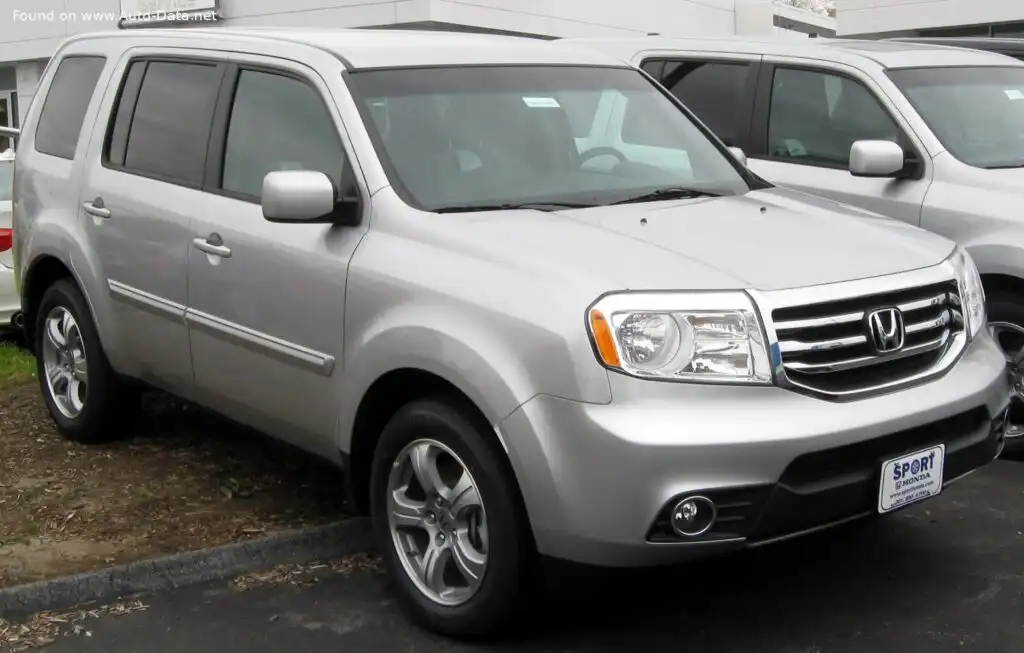
The Honda Pilot III, specifically the 3.5 V6 variant with 280 horsepower and a six-speed automatic transmission coupled with all-wheel drive (AWD), was produced from 2016 to 2019. This iteration represented the third generation of Honda’s popular mid-size SUV, positioned as a family-oriented vehicle offering three-row seating and a focus on practicality. It was a key model for Honda in the North American market, competing with vehicles like the Toyota Highlander, Ford Explorer, and Chevrolet Traverse. The Pilot III aimed to improve upon its predecessor with a more refined interior, updated technology, and a more robust powertrain.
Technical Specifications
| Brand | Honda |
| Model | Pilot |
| Generation | Pilot III |
| Type (Engine) | 3.5 V6 (280 Hp) AWD Automatic 6-speed |
| Start of production | 2016 |
| End of production | 2019 |
| Powertrain Architecture | Internal Combustion engine |
| Body type | SUV, Crossover |
| Seats | 8 |
| Doors | 5 |
| Fuel consumption (urban) | 13.1 l/100 km (18 US mpg, 21.6 UK mpg, 7.6 km/l) |
| Fuel consumption (extra urban) | 9 l/100 km (26.1 US mpg, 31.4 UK mpg, 11.1 km/l) |
| Fuel consumption (combined) | 11.2 l/100 km (21 US mpg, 25.2 UK mpg, 8.9 km/l) |
| Fuel Type | Petrol (Gasoline) |
| Weight-to-power ratio | 6.8 kg/Hp, 146.3 Hp/tonne |
| Weight-to-torque ratio | 5.4 kg/Nm, 185.5 Nm/tonne |
| Power | 280 Hp @ 6000 rpm |
| Power per litre | 80.7 Hp/l |
| Torque | 355 Nm @ 4700 rpm (261.83 lb.-ft. @ 4700 rpm) |
| Maximum engine speed | 6800 rpm |
| Engine layout | Front, Transverse |
| Engine Model/Code | J35Y6 |
| Engine displacement | 3471 cm3 (211.81 cu. in.) |
| Number of cylinders | 6 |
| Engine configuration | V-engine |
| Cylinder Bore | 89 mm (3.5 in.) |
| Piston Stroke | 93 mm (3.66 in.) |
| Compression ratio | 11.5:1 |
| Number of valves per cylinder | 4 |
| Fuel injection system | Direct injection |
| Engine aspiration | Naturally aspirated engine |
| Valvetrain | SOHC, i-VTEC |
| Engine oil capacity | 5.4 l (5.71 US qt | 4.75 UK qt) |
| Coolant capacity | 7.3 l (7.71 US qt | 6.42 UK qt) |
| Kerb Weight | 1914-1951 kg (4219.65 – 4301.22 lbs.) |
| Trunk (boot) space – minimum | 467 l (16.49 cu. ft.) |
| Trunk (boot) space – maximum | 3092 l (109.19 cu. ft.) |
| Fuel tank capacity | 74 l (19.55 US gal | 16.28 UK gal) |
| Permitted trailer load with brakes (12%) | 2268 kg (5000.08 lbs.) |
| Length | 4940 mm (194.49 in.) |
| Width | 1996 mm (78.58 in.) |
| Height | 1773 mm (69.8 in.) |
| Wheelbase | 2819 mm (110.98 in.) |
| Front track | 1684 mm (66.3 in.) |
| Rear (Back) track | 1684 mm (66.3 in.) |
| Ride height (ground clearance) | 185 mm (7.28 in.) |
| Minimum turning circle (turning diameter) | 12.0 m (39.37 ft.) |
| Approach angle | 18.0° |
| Departure angle | 19.7° |
| Drive wheel | All wheel drive (4×4) |
| Number of gears and type of gearbox | 6 gears, automatic transmission |
| Front suspension | Independent type McPherson |
| Rear suspension | Independent multi-link suspension |
| Front brakes | Ventilated discs |
| Rear brakes | Disc |
| Assisting systems | ABS (Anti-lock braking system) |
| Steering type | Steering rack and pinion |
| Power steering | Electric Steering |
| Tires size | 245/60 R18 |
| Wheel rims size | 18 |
INTRODUCTION
The 2016-2019 Honda Pilot III 3.5 V6 AWD Automatic represented a significant step forward for Honda’s three-row SUV. Built on the Honda global light truck platform, it offered a more spacious interior, improved ride quality, and a host of new technology features compared to the second-generation Pilot. This particular configuration – the 3.5L V6 paired with a six-speed automatic and Honda’s Intelligent All-Wheel Drive (i-AWD) – was a popular choice, sitting in the mid-to-upper range of the Pilot lineup. Lower trims offered a V6 engine with a two-wheel drive configuration, while no other engine options were available for this generation.
Powertrain & Engine Architecture
At the heart of the Pilot III 3.5 V6 AWD was the J35Y6 engine, a 3.5-liter naturally aspirated V6. This engine utilized Honda’s i-VTEC (Variable Valve Timing and Lift Electronic Control) system, optimizing valve timing for improved performance and fuel efficiency. Direct fuel injection further enhanced combustion efficiency and power output. The engine produced 280 horsepower at 6,000 rpm and 262 lb-ft of torque at 4,700 rpm. The six-speed automatic transmission was chosen for its balance of responsiveness and fuel economy. While not as technologically advanced as some of the continuously variable transmissions (CVTs) becoming prevalent at the time, it provided a more traditional driving experience. The i-AWD system was reactive, meaning it primarily operated in front-wheel drive and engaged the rear wheels when slip was detected. This system prioritized fuel efficiency while still providing all-weather capability.
Driving Characteristics
The 3.5L V6 and six-speed automatic combination in the Pilot III delivered adequate, though not exhilarating, performance. Acceleration was sufficient for everyday driving and highway merging, but the Pilot wasn’t designed for sporty driving. The six-speed automatic offered smooth shifts, but could sometimes feel hesitant during quick acceleration. Compared to a hypothetical manual transmission version (which wasn’t offered), the automatic prioritized convenience over outright performance. The i-AWD system provided confident traction in inclement weather, but didn’t transform the Pilot into an off-road vehicle. The gear ratios were tuned for cruising comfort and fuel efficiency, rather than maximizing acceleration. The overall driving experience was comfortable and refined, prioritizing a smooth ride over sporty handling.
Equipment & Trim Levels
The 3.5 V6 AWD Automatic trim was typically available in EX-L, Touring, and Elite sub-trims. Standard features on the EX-L included leather upholstery, heated front seats, a power moonroof, and a multi-angle rearview camera. The Touring trim added features like navigation, rear entertainment system, and premium audio. The top-of-the-line Elite trim included unique exterior styling elements, ventilated front seats, and a panoramic sunroof. Optional extras included a rear seat DVD player, and various accessory packages. Interior materials were generally of good quality, with a focus on durability and practicality.
Chassis & Braking
The Pilot III utilized an independent McPherson strut front suspension and an independent multi-link rear suspension. This setup provided a comfortable ride and decent handling characteristics. The suspension was tuned for comfort, prioritizing absorbing bumps and minimizing body roll. Front brakes were ventilated discs, while rear brakes were solid discs. Anti-lock brakes (ABS) were standard, along with electronic brake-force distribution and brake assist. The steering was electric power steering, providing light and easy steering effort. The chassis was designed to provide a stable and predictable driving experience, even when fully loaded with passengers and cargo.
Market Reception & Comparison
The Honda Pilot III was generally well-received by critics and consumers alike. It was praised for its spacious interior, comfortable ride, and strong resale value. The 3.5L V6 engine was considered adequate for most drivers, but some reviewers noted that it lacked the punch of some competitors’ turbocharged engines. Fuel economy was average for the segment, with the combined rating of 21 mpg being competitive but not class-leading. Compared to the lower-trim 2WD versions, the AWD model offered added peace of mind in inclement weather, but at a slight fuel economy penalty. Compared to the higher-output trims, the 3.5L V6 offered a more affordable entry point into the Pilot lineup.
Legacy
The Honda Pilot III 3.5 V6 AWD Automatic has proven to be a reliable and durable vehicle. The J35 engine family has a long-standing reputation for longevity, and the six-speed automatic transmission is generally considered to be robust. Common issues are relatively minor, often related to routine maintenance items like oil leaks or sensor failures. On the used car market, these Pilots hold their value well, reflecting their reputation for reliability and practicality. They remain a popular choice for families seeking a spacious, comfortable, and dependable SUV.