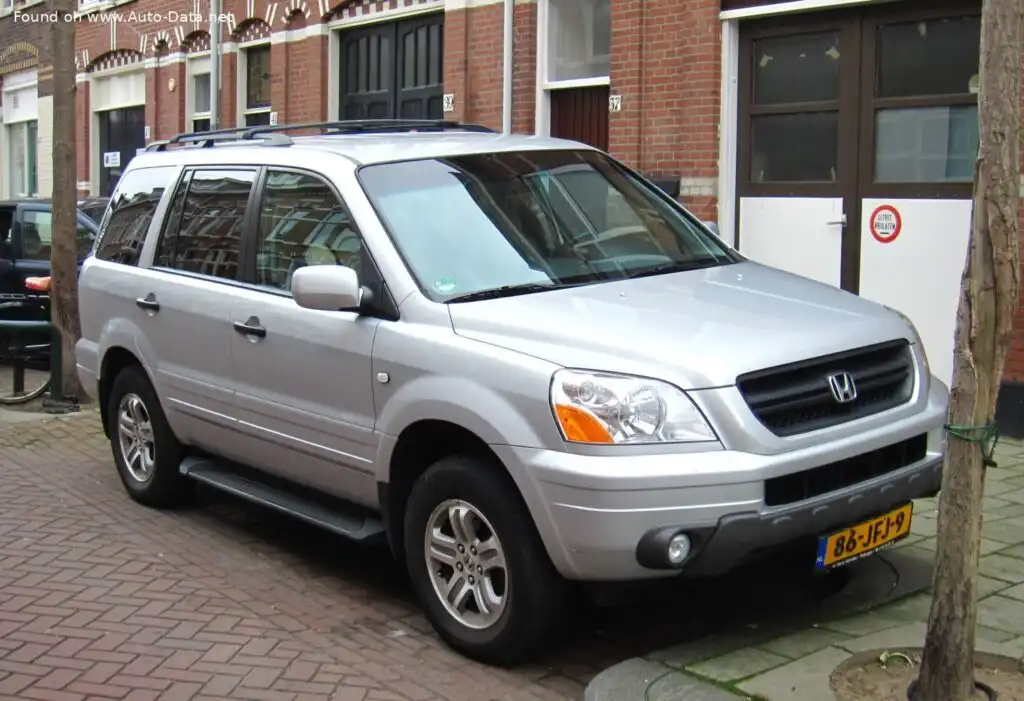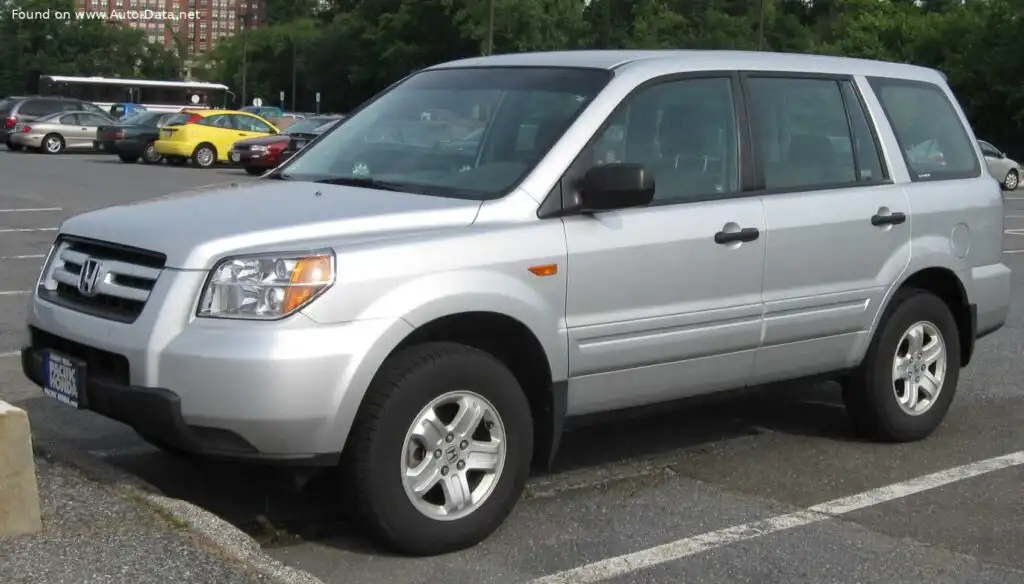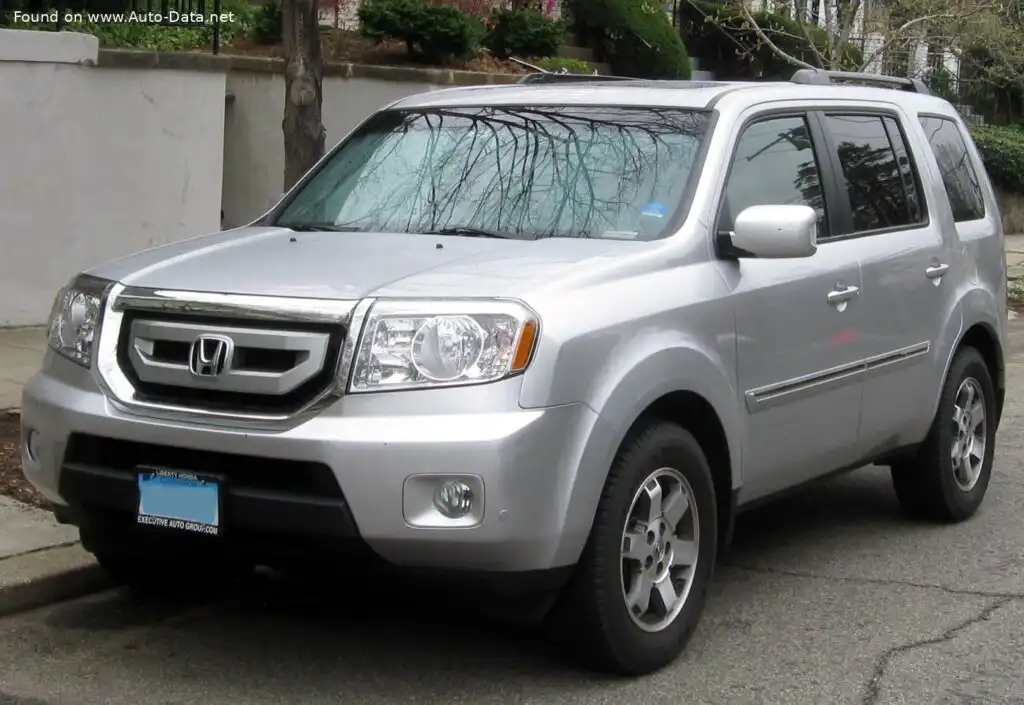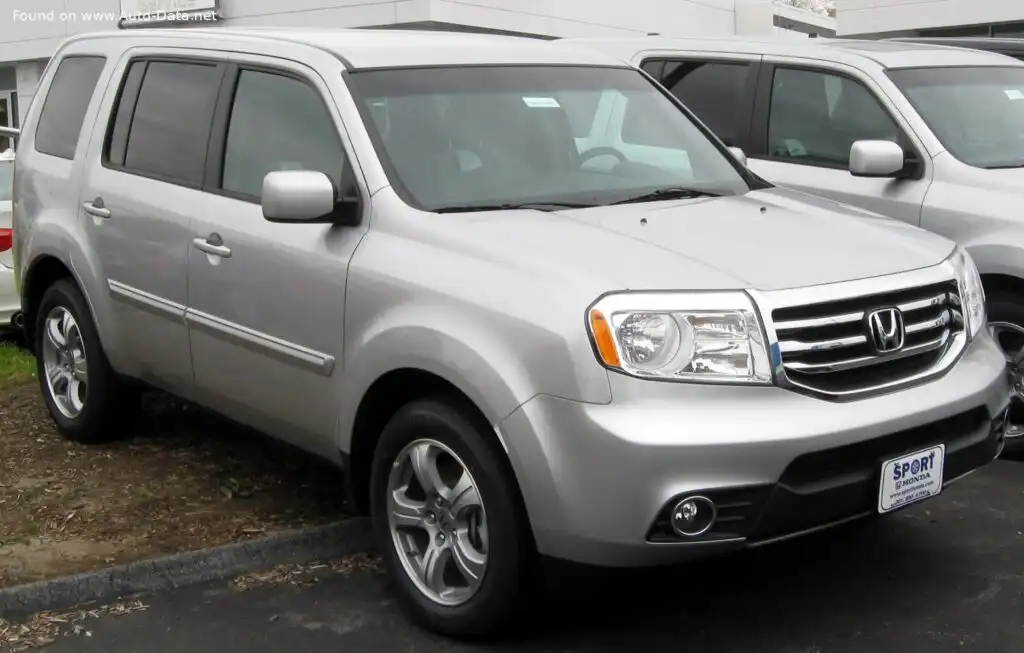
The Honda Pilot III, produced from 2016 to 2019, represented a significant evolution in Honda’s mid-size SUV offerings. This generation, built on the extended Honda Global Light Platform, aimed to provide a more refined driving experience, increased interior space, and improved fuel efficiency compared to its predecessor. The 3.5 V6 AWD Automatic 9-speed variant occupied the upper echelon of the Pilot III lineup, offering a balance of power, capability, and family-friendly features. It served as the primary offering for buyers seeking a well-equipped, all-weather capable SUV with three-row seating.
Technical Specifications
| Brand | Honda |
| Model | Pilot |
| Generation | Pilot III |
| Type (Engine) | 3.5 V6 (280 Hp) AWD Automatic 9-speed |
| Start of production | 2016 |
| End of production | 2019 |
| Powertrain Architecture | Internal Combustion engine |
| Body type | SUV, Crossover |
| Seats | 7-8 |
| Doors | 5 |
| Fuel consumption (urban) | 12.4 l/100 km (19 US mpg, 22.8 UK mpg, 8.1 km/l) |
| Fuel consumption (extra urban) | 9 l/100 km (26.1 US mpg, 31.4 UK mpg, 11.1 km/l) |
| Fuel consumption (combined) | 10.7 l/100 km (22 US mpg, 26.4 UK mpg, 9.3 km/l) |
| Fuel Type | Petrol (Gasoline) |
| Weight-to-power ratio | 7 kg/Hp, 143.4 Hp/tonne |
| Weight-to-torque ratio | 5.5 kg/Nm, 181.9 Nm/tonne |
| Power | 280 Hp @ 6000 rpm |
| Power per litre | 80.7 Hp/l |
| Torque | 355 Nm @ 4700 rpm (261.83 lb.-ft. @ 4700 rpm) |
| Maximum engine speed | 6800 rpm |
| Engine layout | Front, Transverse |
| Engine Model/Code | J35Y6 |
| Engine displacement | 3471 cm3 (211.81 cu. in.) |
| Number of cylinders | 6 |
| Engine configuration | V-engine |
| Cylinder Bore | 89 mm (3.5 in.) |
| Piston Stroke | 93 mm (3.66 in.) |
| Compression ratio | 11.5:1 |
| Number of valves per cylinder | 4 |
| Fuel injection system | Direct injection |
| Engine aspiration | Naturally aspirated engine |
| Valvetrain | SOHC, i-VTEC |
| Engine oil capacity | 5.4 l (5.71 US qt | 4.75 UK qt) |
| Coolant capacity | 7.3 l (7.71 US qt | 6.42 UK qt) |
| Kerb Weight | 1952-1958 kg (4303.42 – 4316.65 lbs.) |
| Trunk (boot) space – minimum | 453 l (16 cu. ft.) |
| Trunk (boot) space – maximum | 3092 l (109.19 cu. ft.) |
| Fuel tank capacity | 74 l (19.55 US gal | 16.28 UK gal) |
| Permitted trailer load with brakes (12%) | 2268 kg (5000.08 lbs.) |
| Length | 4940 mm (194.49 in.) |
| Width | 1996 mm (78.58 in.) |
| Height | 1788 mm (70.39 in.) |
| Wheelbase | 2819 mm (110.98 in.) |
| Front track | 1684 mm (66.3 in.) |
| Rear track | 1684 mm (66.3 in.) |
| Ride height (ground clearance) | 185 mm (7.28 in.) |
| Minimum turning circle | 12.0 m (39.37 ft.) |
| Approach angle | 18.0° |
| Departure angle | 19.7° |
| Drive wheel | All wheel drive (4×4) |
| Number of gears and type of gearbox | 9 gears, automatic transmission SBW |
| Front suspension | Independent type McPherson |
| Rear suspension | Independent multi-link suspension |
| Front brakes | Ventilated discs |
| Rear brakes | Disc |
| Assisting systems | ABS (Anti-lock braking system) |
| Steering type | Steering rack and pinion |
| Power steering | Electric Steering |
| Tires size | 245/50 R20 |
| Wheel rims size | 20 |
INTRODUCTION
The 2016-2019 Honda Pilot III 3.5 V6 AWD, equipped with a nine-speed automatic transmission, represented a significant step forward for Honda in the competitive three-row SUV segment. Positioned as a premium offering within the Pilot range, it catered to families needing space, capability, and a more refined driving experience than the base four-cylinder models. The Pilot III moved away from the boxy styling of previous generations, adopting a more modern and aerodynamic design. This variant was a key player in Honda’s North American strategy, where large SUVs remain highly popular.
Powertrain & Engine Architecture
At the heart of this Pilot variant lies the J35Y6 engine, a 3.5-liter naturally aspirated V6. This engine is part of Honda’s well-regarded J-series family, known for its reliability and smooth power delivery. The J35Y6 utilizes Honda’s i-VTEC (intelligent Variable valve Timing and lift Electronic Control) system, optimizing valve timing and lift for improved performance and fuel efficiency across the rev range. Direct fuel injection further enhances combustion efficiency. The engine produces 280 horsepower at 6000 rpm and 262 lb-ft of torque at 4700 rpm. The nine-speed automatic transmission (sourced from ZF) replaced the six-speed unit found in earlier Pilots, offering closer gear ratios for improved acceleration and fuel economy. This transmission features a torque converter and utilizes shift-by-wire technology, eliminating the traditional mechanical linkage.
Driving Characteristics
The 3.5L V6 and nine-speed automatic combination delivers a noticeably more responsive driving experience compared to the base four-cylinder engine. While not a sports SUV, the Pilot III provides ample power for everyday driving, highway merging, and even towing. The nine-speed transmission allows the engine to stay within its optimal power band more frequently, resulting in smoother acceleration. The AWD system provides enhanced traction in inclement weather conditions, making it a capable all-season vehicle. Compared to the earlier Pilot generations, the III offers a more composed ride quality, thanks to improvements in suspension tuning and chassis rigidity. However, the nine-speed transmission was sometimes criticized for occasional hesitant shifts, particularly at lower speeds, although software updates addressed some of these concerns.
Equipment & Trim Levels
The 3.5 V6 AWD Automatic typically came in higher trim levels such as EX-L, Touring, and Elite. Standard features often included leather upholstery, heated front seats, a power moonroof, a multi-angle rearview camera, and Honda’s Display Audio infotainment system with an 8-inch touchscreen. Higher trims added features like navigation, rear entertainment system, premium audio systems, and advanced safety technologies such as blind spot monitoring and lane departure warning. Optional extras included all-season floor mats, roof rails, and various accessory packages.
Chassis & Braking
The Pilot III utilizes a unibody construction, contributing to its improved rigidity and lighter weight. The front suspension features independent MacPherson struts, while the rear employs a multi-link independent suspension. This setup provides a comfortable ride and predictable handling. Braking duties are handled by ventilated discs at all four corners, providing ample stopping power. The ABS (Anti-lock Braking System) is standard, along with electronic brake-force distribution and brake assist. The AWD system is primarily front-wheel drive, automatically engaging the rear wheels when slip is detected.
Market Reception & Comparison
The 2016-2019 Honda Pilot III was generally well-received by automotive critics. It was praised for its spacious interior, comfortable ride, and improved styling. The 3.5 V6 engine was considered a strong performer, and the nine-speed automatic transmission, while occasionally criticized, offered improved fuel economy compared to the previous six-speed unit. Compared to competitors like the Toyota Highlander and Ford Explorer, the Pilot III offered a compelling combination of features, reliability, and value. Fuel economy was rated at around 22 mpg combined, which was competitive for its class. Reliability proved to be generally good, although some owners reported minor issues with the infotainment system and transmission.
Legacy
The Honda Pilot III 3.5 V6 AWD Automatic has proven to be a reliable and durable SUV in the used car market. The J35Y6 engine is known for its longevity, and the nine-speed transmission, while having some early issues, has generally proven to be robust with proper maintenance. These Pilots continue to be popular choices for families seeking a spacious, capable, and well-equipped SUV. Their strong resale value reflects their reputation for reliability and practicality. The Pilot III laid the groundwork for the current generation Pilot, continuing Honda’s success in the mid-size SUV segment.