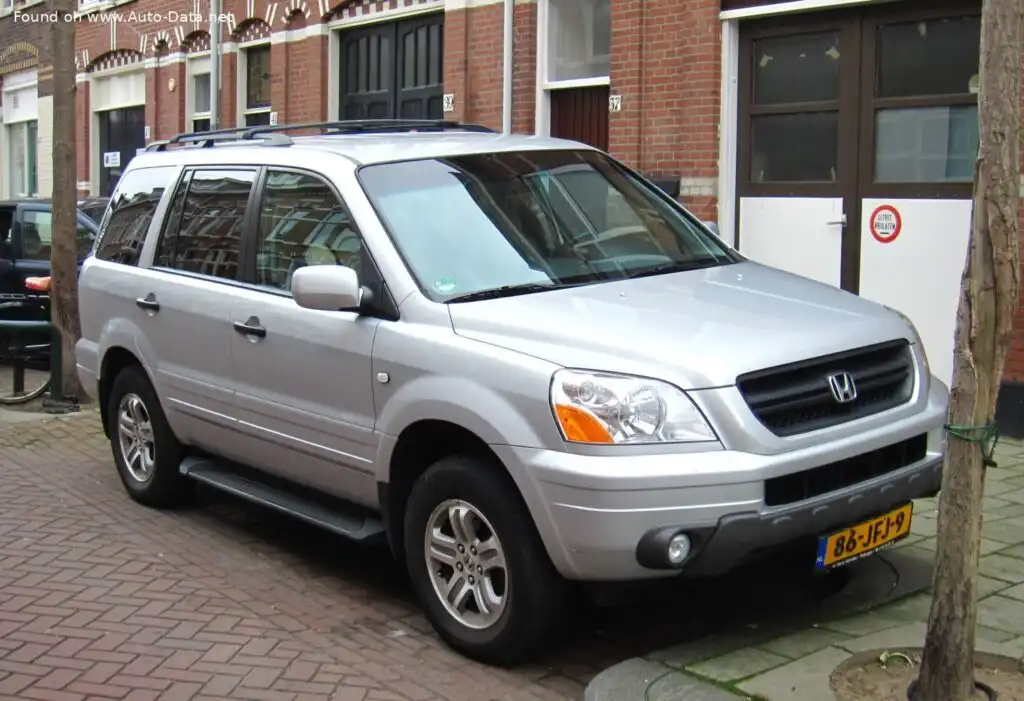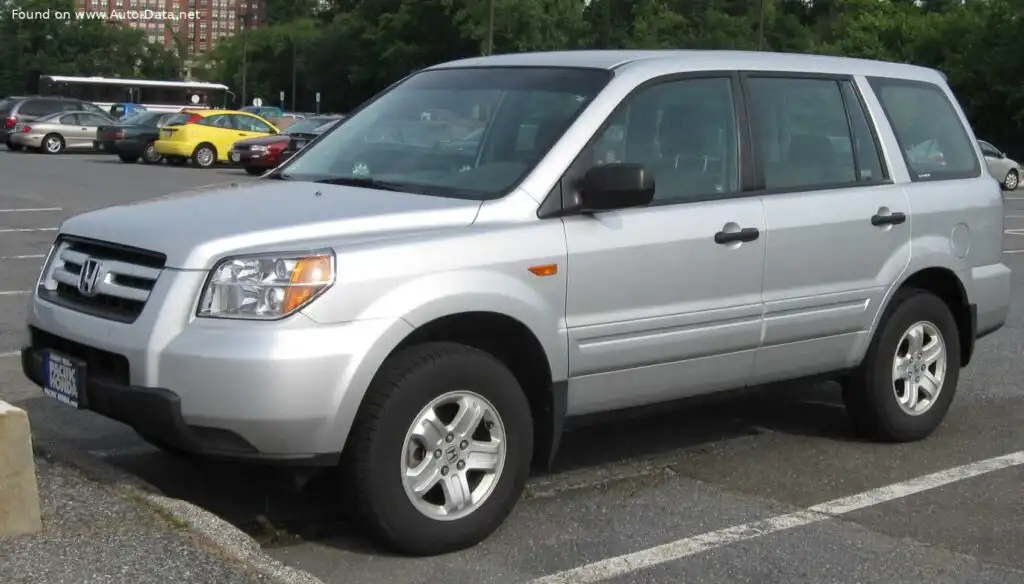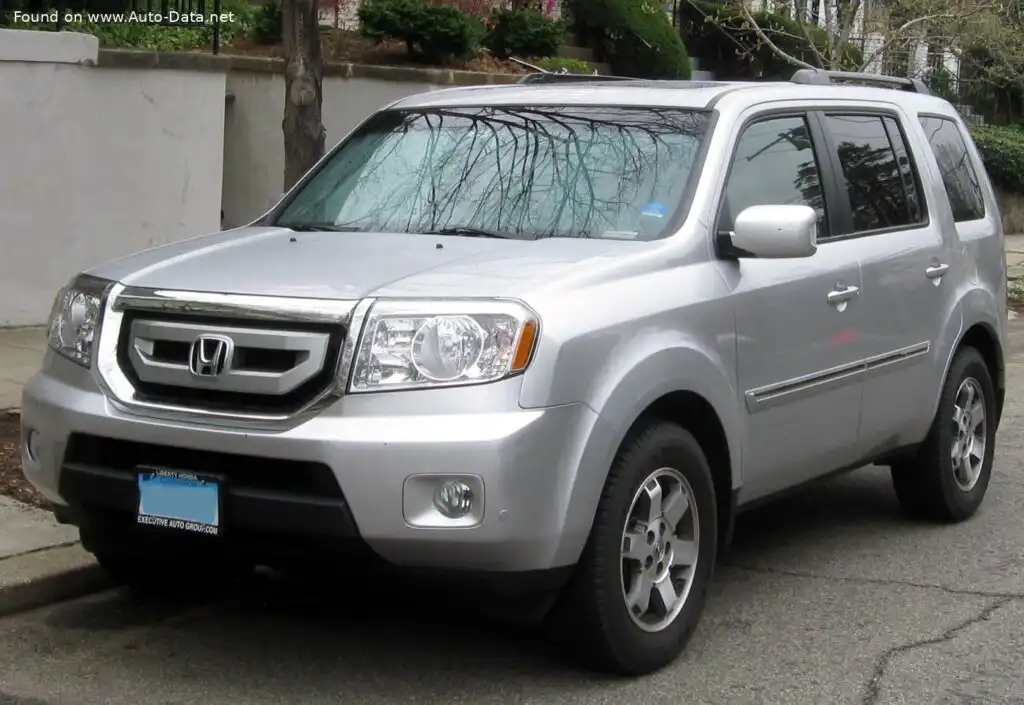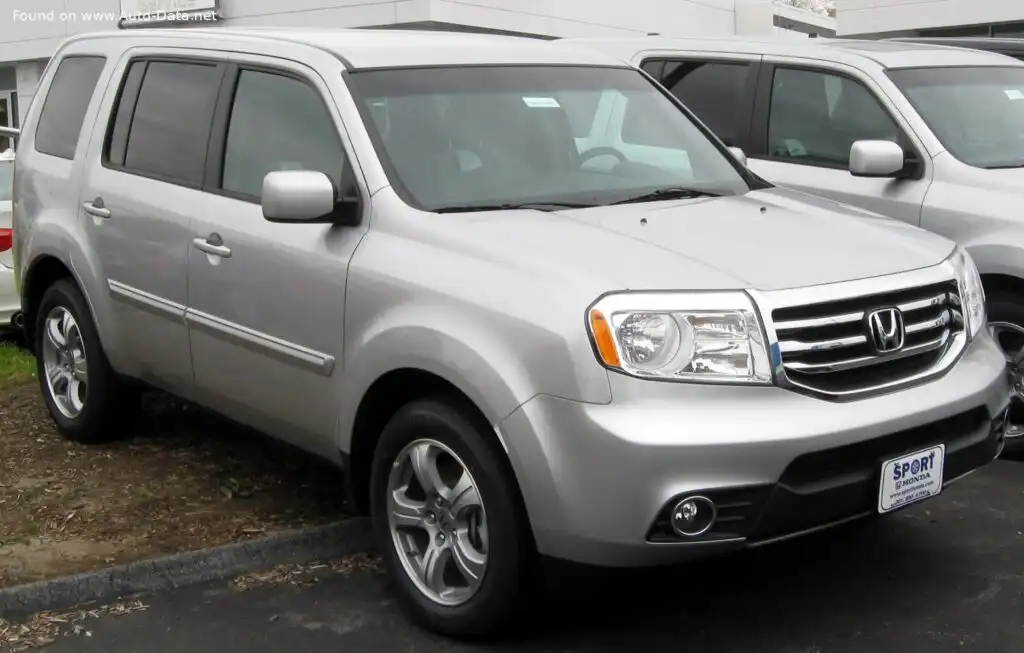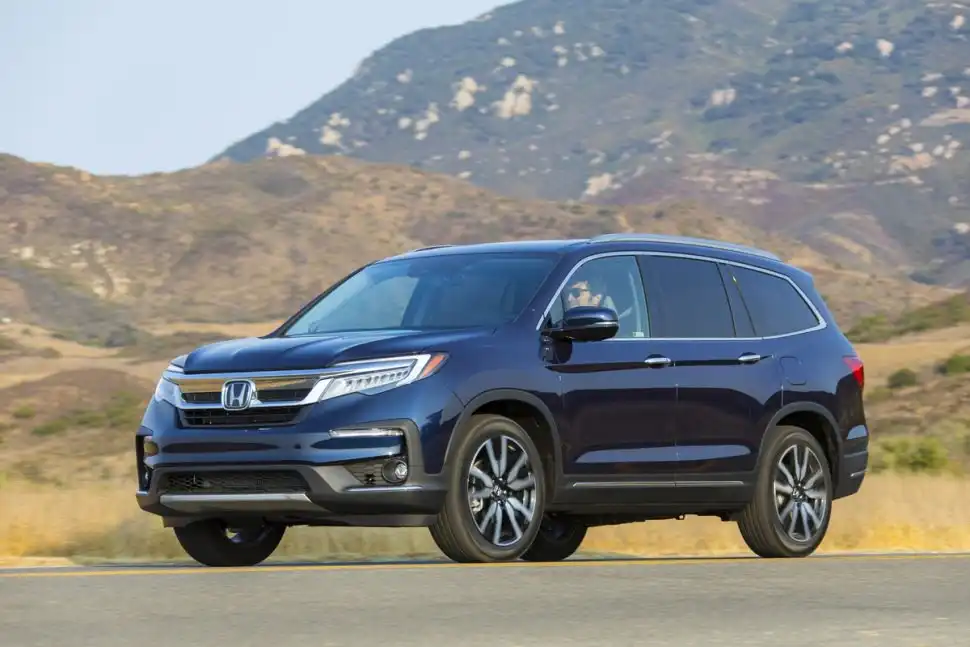
The Honda Pilot III, specifically the facelifted version introduced in 2019, represented a significant update to Honda’s three-row mid-size SUV. This iteration of the Pilot, produced through December 2022, continued to serve as a key model for families seeking a spacious and reliable vehicle. The 3.5 V6 (280 Hp) Automatic variant occupied a central position within the Pilot lineup, offering a balance of power, efficiency, and features. It was positioned as the mainstream offering, appealing to a broad customer base, while lower trims featured a V6 with slightly less power and higher trims offered more luxurious appointments and available all-wheel drive. This version was primarily sold in North America, where the demand for three-row SUVs remained consistently high.
Technical Specifications
| Brand | Honda |
| Model | Pilot |
| Generation | Pilot III (facelift 2019) |
| Type (Engine) | 3.5 V6 (280 Hp) Automatic |
| Start of production | 2019 |
| End of production | December, 2022 |
| Powertrain Architecture | Internal Combustion engine |
| Body type | SUV, Crossover |
| Seats | 8 |
| Doors | 5 |
| Fuel consumption (urban) | 12.4 l/100 km (19 US mpg, 22.8 UK mpg, 8.1 km/l) |
| Fuel consumption (extra urban) | 8.7 l/100 km (27 US mpg, 32.5 UK mpg, 11.5 km/l) |
| Fuel consumption (combined) | 10.7 l/100 km (22 US mpg, 26.4 UK mpg, 9.3 km/l) |
| Fuel Type | Petrol (Gasoline) |
| Weight-to-power ratio | 6.5 kg/Hp, 153 Hp/tonne |
| Weight-to-torque ratio | 5.2 kg/Nm, 194 Nm/tonne |
| Power | 280 Hp @ 6000 rpm |
| Power per litre | 80.7 Hp/l |
| Torque | 355 Nm @ 4700 rpm (261.83 lb.-ft. @ 4700 rpm) |
| Engine layout | Front, Transverse |
| Engine Model/Code | J35Y6 |
| Engine displacement | 3471 cm3 (211.81 cu. in.) |
| Number of cylinders | 6 |
| Engine configuration | V-engine |
| Cylinder Bore | 89 mm (3.5 in.) |
| Piston Stroke | 93 mm (3.66 in.) |
| Compression ratio | 11.5:1 |
| Number of valves per cylinder | 4 |
| Fuel injection system | Direct injection |
| Engine aspiration | Naturally aspirated engine |
| Valvetrain | SOHC |
| Engine oil capacity | 5.4 l (5.71 US qt | 4.75 UK qt) |
| Coolant capacity | 7.4 l (7.82 US qt | 6.51 UK qt) |
| Kerb Weight | 1830-1871 kg (4034.46 – 4124.85 lbs.) |
| Trunk (boot) space – minimum | 467 l (16.49 cu. ft.) |
| Trunk (boot) space – maximum | 2375 l (83.87 cu. ft.) |
| Fuel tank capacity | 74 l (19.55 US gal | 16.28 UK gal) |
| Permitted trailer load with brakes (12%) | 1588 kg (3500.94 lbs.) |
| Length | 4991 mm (196.5 in.) |
| Width | 1996 mm (78.58 in.) |
| Height | 1793 mm (70.59 in.) |
| Wheelbase | 2819 mm (110.98 in.) |
| Front track | 1684 mm (66.3 in.) |
| Rear (Back) track | 1684 mm (66.3 in.) |
| Ride height (ground clearance) | 185 mm (7.28 in.) |
| Minimum turning circle (turning diameter) | 12 m (39.37 ft.) |
| Approach angle | 19.7° |
| Departure angle | 20.8° |
| Drivetrain Architecture | The Internal combustion engine (ICE) drives the front wheels of the vehicle. |
| Drive wheel | Front wheel drive |
| Number of gears and type of gearbox | 6 gears, automatic transmission |
| Front suspension | Independent type McPherson |
| Rear suspension | Independent multi-link suspension |
| Front brakes | Ventilated discs, 320 mm |
| Rear brakes | Disc, 330 mm |
| Assisting systems | ABS (Anti-lock braking system) |
| Steering type | Steering rack and pinion |
| Power steering | Electric Steering |
| Tires size | 245/60 R18 105H; 245/50 R20 102H |
| Wheel rims size | 18; 20 |
INTRODUCTION
The 2019-2022 Honda Pilot facelift brought refreshed styling, upgraded technology, and a more refined driving experience to Honda’s popular three-row SUV. The 3.5-liter V6 engine paired with a six-speed automatic transmission was the mainstay of the lineup, providing ample power for everyday driving and family hauling. Built on the Honda PA platform (a derivative of the global Honda Odyssey minivan platform), the Pilot aimed to deliver a comfortable and practical experience. The facelift included changes to the front fascia, interior materials, and infotainment system, addressing some criticisms of the previous generation. This variant was a key player in the competitive mid-size SUV segment, going up against vehicles like the Toyota Highlander, Ford Explorer, and Chevrolet Traverse.
Powertrain & Engine Architecture
At the heart of the 2019-2022 Honda Pilot 3.5 V6 Automatic lies the J35Y6 engine, a 3.5-liter naturally aspirated V6. This engine utilizes Honda’s i-VTEC (intelligent Variable Valve Timing and Lift Electronic Control) system, optimizing valve timing for improved performance and fuel efficiency across the rev range. The J35Y6 features direct fuel injection, enhancing combustion efficiency and contributing to increased power output. The engine produces 280 horsepower at 6000 rpm and 262 lb-ft of torque at 4700 rpm. The six-speed automatic transmission, while not the most modern in terms of gear count compared to some competitors, was known for its smooth operation and reliability. It was calibrated to prioritize comfortable cruising and adequate acceleration rather than outright sportiness. The transmission featured a torque converter for smooth launches and low-speed driving.
Driving Characteristics
The 3.5 V6 Automatic Pilot offered a comfortable and predictable driving experience. Acceleration was adequate for merging onto highways and passing other vehicles, but it wasn’t particularly sporty. The six-speed automatic transmission provided smooth shifts, but some drivers noted that it could be hesitant to downshift quickly when needing extra power. Compared to the available all-wheel-drive versions, the front-wheel-drive model offered slightly better fuel economy but less traction in inclement weather. The gear ratios were tuned for highway cruising, resulting in a relatively relaxed driving experience at higher speeds. Compared to a manual transmission (which wasn’t offered on this generation Pilot), the automatic prioritized convenience over driver engagement.
Equipment & Trim Levels
The 3.5 V6 Automatic trim level typically included standard features such as tri-zone automatic climate control, a touchscreen infotainment system with Apple CarPlay and Android Auto compatibility, Honda Sensing suite of safety features (including adaptive cruise control, lane keeping assist, and automatic emergency braking), and a rearview camera. Interior upholstery was typically cloth, with available upgrades to leather in higher trims. Optional extras included a panoramic sunroof, a rear entertainment system, and premium audio system. The EX trim level, a common configuration, added features like heated front seats, a power driver’s seat, and Honda LaneWatch. The Elite and Touring trims offered even more luxury features, such as ventilated front seats, a navigation system, and a premium sound system.
Chassis & Braking
The Pilot’s chassis featured an independent McPherson strut front suspension and an independent multi-link rear suspension, providing a comfortable ride quality. Stabilizer bars were fitted to both the front and rear axles to reduce body roll during cornering. Front-wheel-drive models utilized ventilated discs on the front wheels and solid discs on the rear. The braking system was equipped with ABS (Anti-lock Braking System) and electronic brake-force distribution. Steering was provided by an electric power steering system, offering light and easy steering feel.
Market Reception & Comparison
The 2019-2022 Honda Pilot 3.5 V6 Automatic was generally well-received by critics and consumers alike. It was praised for its spacious interior, comfortable ride, and strong resale value. However, some reviewers noted that the six-speed automatic transmission felt dated compared to the eight or nine-speed transmissions offered by some competitors. Fuel economy was considered average for the segment. Compared to the V6 models with less horsepower, the 280 hp version offered a noticeable improvement in acceleration and overall performance. Compared to the higher trims with all-wheel drive, the front-wheel-drive model offered a more affordable price point and slightly better fuel economy.
Legacy
The Honda Pilot III (facelift 2019) 3.5 V6 Automatic has proven to be a reliable and durable vehicle. The J35 engine family has a long-standing reputation for longevity, and the six-speed automatic transmission is generally considered to be robust. On the used car market, these Pilots hold their value well, reflecting their reputation for reliability and practicality. Common maintenance items include routine oil changes, brake pad replacements, and tire rotations. While not known for any major widespread issues, it’s important to check for proper maintenance records and inspect the transmission for any signs of slippage or rough shifting when considering a used example.