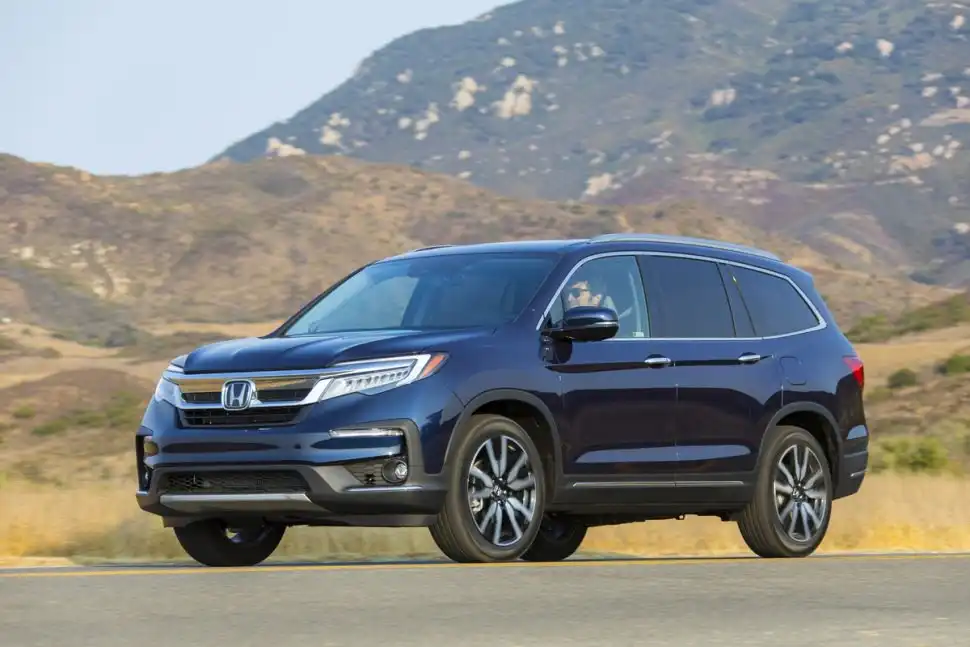
The Honda Pilot III, specifically the facelifted model produced from 2019 to 2022, represents a significant evolution in Honda’s mid-size SUV offerings. This generation, built on the Honda global light truck platform, aimed to provide a more refined and spacious experience for families. The 3.5 V6 (280 Hp) AWD variant, equipped with Honda’s Shift-By-Wire (SBW) automatic transmission, occupied a prominent position in the Pilot lineup, serving as a well-equipped, all-weather capable option for buyers prioritizing performance and convenience. It was positioned as a step up from the base LX trim, offering more power and features while remaining below the more luxurious Elite and Black Edition models.
Technical Specifications
| Brand | Honda |
| Model | Pilot |
| Generation | Pilot III (facelift 2019) |
| Type (Engine) | 3.5 V6 (280 Hp) AWD SBW |
| Start of production | 2019 |
| End of production | December, 2022 |
| Powertrain Architecture | Internal Combustion engine |
| Body type | SUV, Crossover |
| Seats | 7-8 |
| Doors | 5 |
| Fuel consumption (urban) | 12.3 l/100 km (19.1 US mpg, 23 UK mpg, 8.1 km/l) |
| Fuel consumption (extra urban) | 9 l/100 km (26.1 US mpg, 31.4 UK mpg, 11.1 km/l) |
| Fuel consumption (combined) | 10.7 l/100 km (22 US mpg, 26.4 UK mpg, 9.3 km/l) |
| Fuel Type | Petrol (Gasoline) |
| Weight-to-power ratio | 6.7 kg/Hp, 150.3 Hp/tonne |
| Weight-to-torque ratio | 5.2 kg/Nm, 190.6 Nm/tonne |
| Power | 280 Hp @ 6000 rpm |
| Power per litre | 80.7 Hp/l |
| Torque | 355 Nm @ 4700 rpm (261.83 lb.-ft. @ 4700 rpm) |
| Engine layout | Front, Transverse |
| Engine Model/Code | J35Y6 |
| Engine displacement | 3471 cm3 (211.81 cu. in.) |
| Number of cylinders | 6 |
| Engine configuration | V-engine |
| Cylinder Bore | 89 mm (3.5 in.) |
| Piston Stroke | 93 mm (3.66 in.) |
| Compression ratio | 11.5:1 |
| Number of valves per cylinder | 4 |
| Fuel injection system | Direct injection |
| Engine aspiration | Naturally aspirated engine |
| Valvetrain | SOHC |
| Engine oil capacity | 5.4 l (5.71 US qt | 4.75 UK qt) |
| Coolant capacity | 7.4 l (7.82 US qt | 6.51 UK qt) |
| Kerb Weight | 1863-1871 kg (4107.21 – 4124.85 lbs.) |
| Trunk (boot) space – minimum | 467 l (16.49 cu. ft.) |
| Trunk (boot) space – maximum | 2375 l (83.87 cu. ft.) |
| Fuel tank capacity | 74 l (19.55 US gal | 16.28 UK gal) |
| Permitted trailer load with brakes (12%) | 1943-1960 kg (4283.58 – 4321.06 lbs.) |
| Length | 4991 mm (196.5 in.) |
| Width | 1996 mm (78.58 in.) |
| Height | 1793 mm (70.59 in.) |
| Wheelbase | 2819 mm (110.98 in.) |
| Front track | 1684 mm (66.3 in.) |
| Rear (Back) track | 1684 mm (66.3 in.) |
| Ride height (ground clearance) | 185 mm (7.28 in.) |
| Minimum turning circle (turning diameter) | 12 m (39.37 ft.) |
| Approach angle | 19.7° |
| Departure angle | 20.8° |
| Drive wheel | All wheel drive (4×4) |
| Number of gears and type of gearbox | 9 gears, automatic transmission SWB |
| Front suspension | Independent type McPherson |
| Rear suspension | Independent multi-link suspension |
| Front brakes | Ventilated discs, 320 mm |
| Rear brakes | Disc, 330 mm |
| Assisting systems | ABS (Anti-lock braking system) |
| Steering type | Steering rack and pinion |
| Power steering | Electric Steering |
| Tires size | 245/60 R18 105H; 245/50 R20 102H |
| Wheel rims size | 18; 20 |
Powertrain & Engine Architecture
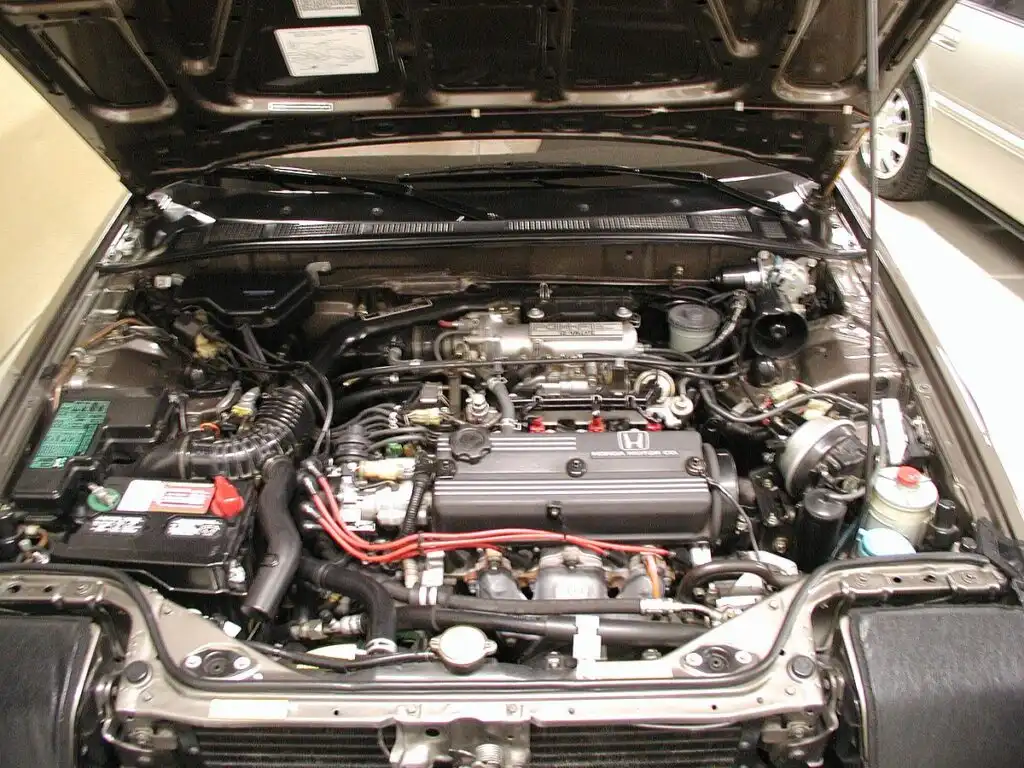
At the heart of the 2019-2022 Honda Pilot 3.5 V6 AWD SBW lies the J35Y6 engine, a 3.5-liter naturally aspirated V6. This engine is a member of Honda’s well-regarded J-series family, known for its reliability and smooth power delivery. The J35Y6 utilizes Honda’s i-VTEC (intelligent Variable Valve Timing and Lift Electronic Control) system, optimizing valve timing and lift based on engine speed and load. This contributes to both improved fuel efficiency and enhanced performance. Direct fuel injection further refines combustion, increasing power and reducing emissions. The engine produces 280 horsepower at 6000 rpm and 262 lb-ft of torque at 4700 rpm. The engine’s transverse mounting and front-wheel-drive-based architecture are typical for modern crossovers. The “SBW” designation refers to the Shift-By-Wire automatic transmission, a 9-speed unit. This system replaces the traditional mechanical linkage between the gear selector and the transmission with an electronic signal, allowing for smoother and more precise gear changes.
Driving Characteristics
The 9-speed automatic transmission, while offering a wide range of gears for optimized fuel economy, sometimes exhibited hesitant downshifts in earlier iterations. Later software updates addressed some of these concerns. The 280 hp V6 provides ample power for everyday driving and highway passing maneuvers. While not a sports car, the Pilot 3.5 V6 AWD offers a responsive driving experience. The all-wheel-drive system provides enhanced traction in inclement weather, making it a capable vehicle in a variety of conditions. Compared to the base 3.5L engine with front-wheel drive, the AWD variant offers improved stability and handling. Compared to potential higher-output trims (had Honda offered them), this configuration prioritized a balance of performance, fuel economy, and affordability.
Equipment & Trim Levels
The 3.5 V6 AWD trim typically included features such as tri-zone automatic climate control, an 8-inch touchscreen infotainment system with Apple CarPlay and Android Auto compatibility, Honda Sensing suite of safety features (including adaptive cruise control, lane keeping assist, and automatic emergency braking), and heated front seats. Higher trim levels added features like leather upholstery, a panoramic sunroof, and a premium audio system. Optional extras included rear-seat entertainment systems and all-weather floor mats.
Chassis & Braking
The Pilot III utilizes an independent McPherson strut front suspension and an independent multi-link rear suspension. This setup provides a comfortable ride quality while maintaining reasonable handling characteristics. The AWD system employs Honda’s Intelligent Traction Management system, which automatically distributes torque between the front and rear wheels based on driving conditions. Braking duties are handled by ventilated discs up front and solid discs at the rear. Anti-lock brakes (ABS) and electronic brake-force distribution (EBD) are standard features.
Market Reception & Comparison
The 2019-2022 Honda Pilot 3.5 V6 AWD was generally well-received by automotive critics. It was praised for its spacious interior, comfortable ride, and comprehensive suite of safety features. Fuel economy was considered average for its class. Compared to competitors like the Toyota Highlander and Kia Telluride, the Pilot offered a compelling combination of features and value. The 9-speed transmission received some criticism for its occasional hesitation, but overall, the Pilot was considered a strong contender in the mid-size SUV segment.
Legacy
The Honda Pilot III, particularly the 3.5 V6 AWD variant, has proven to be a reliable and durable vehicle. The J35 engine family has a long-standing reputation for longevity, and the 9-speed transmission, after initial software refinements, has also demonstrated good reliability. On the used car market, these Pilots hold their value relatively well, reflecting their reputation for quality and dependability. They remain a popular choice for families seeking a spacious, safe, and reliable SUV.