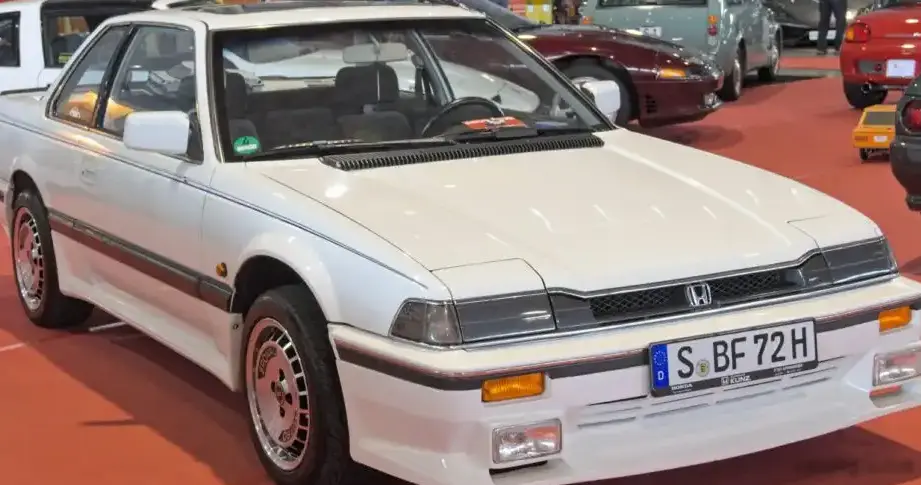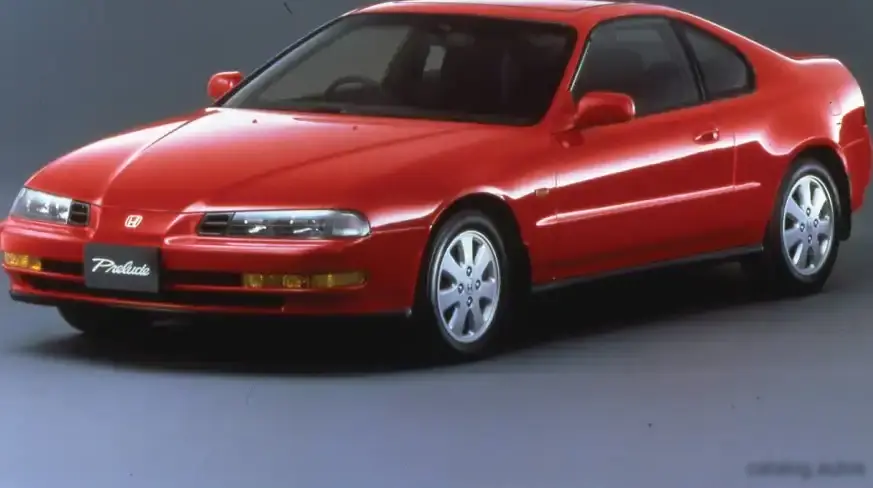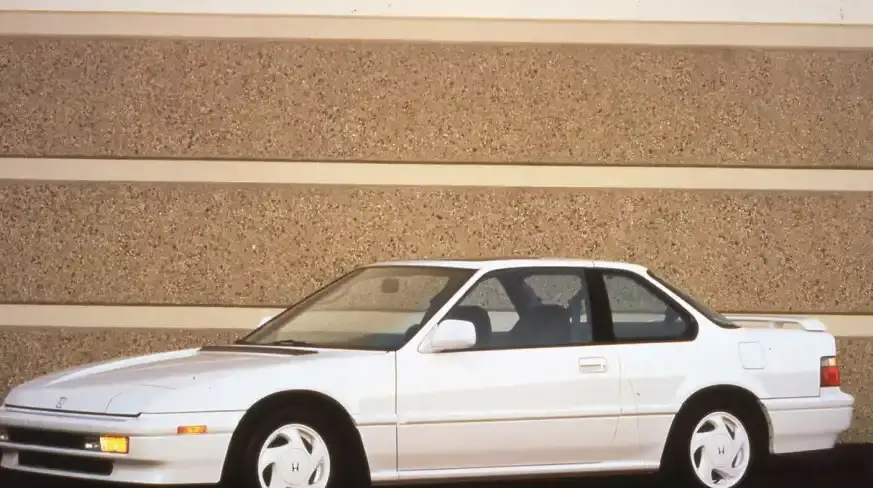
The Honda Prelude III (BA4) 2.0 EX, produced from September 1987 to June 1992, represents a significant evolution in Honda’s personal luxury coupe offerings. Part of the third generation (BA) Prelude lineup, the BA4 variant was positioned as a mid-range model, offering a balance between performance and affordability. It served as a key competitor to other sporty coupes like the Toyota Celica and Nissan NX in the North American and Japanese markets, and found a niche audience in Europe as well. The BA series, built on the Honda Accord platform, aimed to deliver a more refined and sophisticated driving experience than its predecessors.
Technical Specifications
| Brand | Honda |
| Model | Prelude |
| Generation | Prelude III (BA) |
| Type | 2.0 EX (BA4) (114 Hp) |
| Start of production | September, 1987 |
| End of production | June, 1992 |
| Powertrain Architecture | Internal Combustion engine |
| Body type | Coupe |
| Seats | 4 |
| Doors | 2 |
| Fuel consumption (urban) | 11.6 l/100 km (20.3 US mpg) |
| Fuel consumption (extra urban) | 7.1 l/100 km (33.1 US mpg) |
| Fuel Type | Petrol (Gasoline) |
| Acceleration 0 – 100 km/h | 9.8 sec |
| Acceleration 0 – 62 mph | 9.8 sec |
| Acceleration 0 – 60 mph | 9.3 sec |
| Maximum speed | 190 km/h (118.06 mph) |
| Weight-to-power ratio | 9.2 kg/Hp |
| Weight-to-torque ratio | 6.7 kg/Nm |
| Power | 114 Hp @ 5800 rpm |
| Power per litre | 58.2 Hp/l |
| Torque | 157 Nm @ 4500 rpm (115.8 lb.-ft. @ 4500 rpm) |
| Engine layout | Front, Transverse |
| Engine Model/Code | B20A4 |
| Engine displacement | 1958 cm3 (119.48 cu. in.) |
| Number of cylinders | 4 |
| Engine configuration | Inline |
| Cylinder Bore | 81 mm (3.19 in.) |
| Piston Stroke | 95 mm (3.74 in.) |
| Compression ratio | 9.2:1 |
| Number of valves per cylinder | 3 |
| Fuel injection system | Carburettor |
| Engine aspiration | Naturally aspirated engine |
| Valvetrain | SOHC |
| Engine oil capacity | 3.8 l (4.02 US qt | 3.34 UK qt) |
| Kerb Weight | 1050 kg (2314.85 lbs.) |
| Max. weight | 1560 kg (3439.21 lbs.) |
| Max load | 510 kg (1124.36 lbs.) |
| Trunk (boot) space – minimum | 380 l (13.42 cu. ft.) |
| Fuel tank capacity | 60 l (15.85 US gal | 13.2 UK gal) |
| Length | 4460 mm (175.59 in.) |
| Width | 1695 mm (66.73 in.) |
| Height | 1295 mm (50.98 in.) |
| Wheelbase | 2565 mm (100.98 in.) |
| Front track | 1480 mm (58.27 in.) |
| Rear (Back) track | 1470 mm (57.87 in.) |
| Minimum turning circle | 11.4 m (37.4 ft.) |
| Drivetrain Architecture | Front wheel drive |
| Number of gears and type of gearbox | 5 gears, manual transmission |
| Front suspension | Double wishbone, Transverse stabilizer |
| Rear suspension | Double wishbone, Transverse stabilizer |
| Front brakes | Ventilated discs |
| Rear brakes | Disc |
| Steering type | Steering rack and pinion |
| Power steering | Hydraulic Steering |
| Tires size | 185/70 R13 |
| Wheel rims size | 5J x 13 |
Powertrain & Engine Architecture
The BA4 2.0 EX is powered by Honda’s B20A4 engine, a 1.958-liter (119.48 cubic inches) inline-four cylinder powerplant. This engine utilizes a single overhead camshaft (SOHC) valvetrain with three valves per cylinder – two intake and one exhaust – a configuration Honda referred to as “3-Valve Technology.” While not as sophisticated as the later DOHC engines found in higher-spec Preludes, the B20A4 offered a good balance of power and fuel efficiency. The engine employed a carburetor fuel delivery system, which was becoming less common in the late 1980s as fuel injection gained prominence. This carburetor setup, while simpler and less expensive, contributed to slightly lower performance and emissions compared to fuel-injected counterparts. The engine produced 114 horsepower at 5800 rpm and 157 Nm (115.8 lb-ft) of torque at 4500 rpm. The engine was transversely mounted, driving the front wheels. The BA4 was exclusively offered with a 5-speed manual transmission.
Driving Characteristics
The 2.0 EX, with its 114 hp and 5-speed manual, provided a reasonably engaging driving experience. Acceleration from 0 to 60 mph took approximately 9.3 seconds, and it could achieve a top speed of around 118 mph. While not a performance leader, the Prelude’s well-tuned suspension – featuring double wishbones at all four corners and a transverse stabilizer – provided good handling and a comfortable ride. The steering was precise and responsive, contributing to a feeling of control. Compared to the more powerful 2.1-liter engine options available in other Prelude trims, the 2.0 EX felt less urgent in acceleration, particularly at higher speeds. However, its lighter weight and simpler engine configuration made it more nimble and fuel-efficient.
Equipment & Trim Levels
The 2.0 EX trim offered a good level of standard equipment for its price point. Interior features typically included cloth upholstery, a basic stereo system, and power windows. Optional extras could include a sunroof, upgraded sound system, and alloy wheels. The dashboard layout was functional and driver-focused, with easy-to-read gauges. The interior space was adequate for a coupe, offering comfortable seating for two adults and limited space for rear passengers. The BA4 aimed for a balance between sporty aesthetics and everyday practicality.
Chassis & Braking
The Prelude BA4 featured a front-engine, front-wheel-drive layout. The suspension system, as mentioned, utilized double wishbones all around, providing a good balance between ride comfort and handling precision. The braking system consisted of ventilated discs on the front wheels and solid discs on the rear. Power-assisted steering was standard, making maneuvering at low speeds easier. The tires were typically 185/70 R13, providing adequate grip for everyday driving conditions.
Market Reception & Comparison
The 2.0 EX variant of the Prelude BA was generally well-received by automotive critics as an affordable and stylish coupe. It was praised for its handling, comfortable ride, and relatively fuel-efficient engine. However, some reviewers noted that the carburetor-equipped engine lacked the refinement and performance of fuel-injected alternatives. Compared to the higher-spec Prelude models with larger engines and more features, the 2.0 EX offered a more accessible entry point into the Prelude lineup. It appealed to buyers who prioritized fuel economy and affordability over outright performance.
Legacy
The Honda Prelude BA4 2.0 EX, while not the most powerful or technologically advanced version of the third-generation Prelude, remains a fondly remembered vehicle among enthusiasts. The B20A4 engine, while simple, proved to be relatively reliable and durable. Today, well-maintained examples are sought after by collectors and enthusiasts who appreciate the Prelude’s classic styling and engaging driving dynamics. Parts availability is generally good, making it a relatively easy car to maintain and restore. The BA4 represents a significant chapter in Honda’s history, showcasing the company’s commitment to building sporty, reliable, and affordable vehicles.