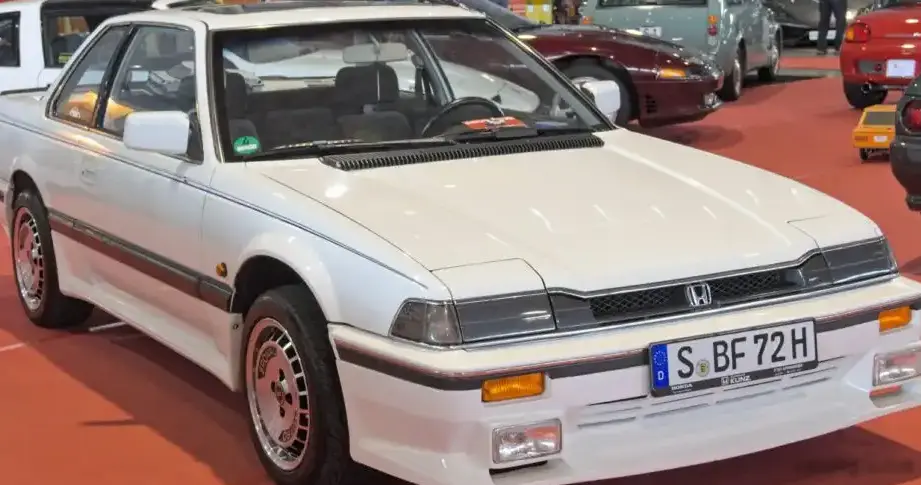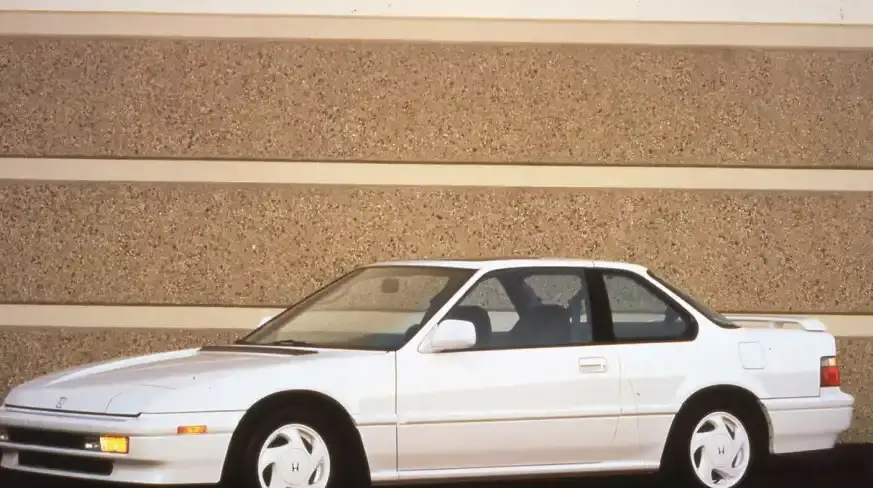
The Honda Prelude III (BA) 2.0i EX 16V, produced from May 1987 to August 1989, represented a significant evolution in Honda’s personal luxury coupe offerings. Positioned as a near-top-of-the-line trim within the BA generation (1987-1991), the 2.0i EX 16V offered a compelling blend of performance, refinement, and technology for its time. It built upon the success of the second-generation Prelude, aiming to attract buyers seeking a sporty yet comfortable grand tourer. The BA series, internally designated as the third generation, moved the Prelude into a more sophisticated market segment, competing with vehicles like the Toyota Celica and Nissan 240SX.
Technical Specifications
| Brand | Honda |
| Model | Prelude |
| Generation | Prelude III (BA) |
| Type (Engine) | 2.0 i EX 16V (150 Hp) |
| Start of production | May, 1987 |
| End of production | August, 1989 |
| Powertrain Architecture | Internal Combustion engine |
| Body type | Coupe |
| Seats | 4 |
| Doors | 2 |
| Fuel consumption (urban) | 11.3 l/100 km (20.8 US mpg) |
| Fuel consumption (extra urban) | 6.6 l/100 km (35.6 US mpg) |
| Fuel Type | Petrol (Gasoline) |
| Acceleration 0 – 100 km/h | 7.9 sec |
| Acceleration 0 – 62 mph | 7.9 sec |
| Acceleration 0 – 60 mph | 7.5 sec |
| Maximum speed | 212 km/h (131.73 mph) |
| Weight-to-power ratio | 7.3 kg/Hp |
| Weight-to-torque ratio | 6.1 kg/Nm |
| Power | 150 Hp @ 6000 rpm |
| Power per litre | 76.6 Hp/l |
| Torque | 180 Nm @ 5500 rpm (132.76 lb.-ft. @ 5500 rpm) |
| Engine layout | Front, Transverse |
| Engine Model/Code | B20A |
| Engine displacement | 1958 cm3 (119.48 cu. in.) |
| Number of cylinders | 4 |
| Engine configuration | Inline |
| Cylinder Bore | 81 mm (3.19 in.) |
| Piston Stroke | 95 mm (3.74 in.) |
| Compression ratio | 10.5:1 |
| Number of valves per cylinder | 4 |
| Fuel injection system | Multi-port manifold injection |
| Engine aspiration | Naturally aspirated engine |
| Valvetrain | DOHC |
| Engine oil capacity | 4 l (4.23 US qt | 3.52 UK qt) |
| Kerb Weight | 1095 kg (2414.06 lbs.) |
| Max. weight | 1620 kg (3571.49 lbs.) |
| Max load | 525 kg (1157.43 lbs.) |
| Trunk (boot) space – minimum | 380 l (13.42 cu. ft.) |
| Fuel tank capacity | 60 l (15.85 US gal | 13.2 UK gal) |
| Max. roof load | 75 kg (165.35 lbs.) |
| Permitted trailer load with brakes (12%) | 1200 kg (2645.55 lbs.) |
| Permitted trailer load without brakes | 460 kg (1014.13 lbs.) |
| Permitted towbar download | 50 kg (110.23 lbs.) |
| Length | 4460 mm (175.59 in.) |
| Width | 1695 mm (66.73 in.) |
| Height | 1295 mm (50.98 in.) |
| Wheelbase | 2565 mm (100.98 in.) |
| Front track | 1480 mm (58.27 in.) |
| Rear (Back) track | 1470 mm (57.87 in.) |
| Minimum turning circle | 10.4 m (34.12 ft.) |
| Drivetrain Architecture | Front wheel drive |
| Number of gears and type of gearbox | 5 gears, manual transmission |
| Front suspension | Double wishbone, Transverse stabilizer |
| Rear suspension | Double wishbone, Transverse stabilizer |
| Front brakes | Ventilated discs |
| Rear brakes | Disc |
| Assisting systems | ABS (Anti-lock braking system) |
| Steering type | Steering rack and pinion |
| Power steering | Hydraulic Steering |
| Tires size | 195/60 R14 |
| Wheel rims size | 5.5J x 14 |
Powertrain & Engine Architecture
The heart of the 2.0i EX 16V was the B20A engine, a 1.958-liter (119.48 cubic inches) inline-four cylinder powerplant. This engine featured a 10.5:1 compression ratio and utilized multi-port fuel injection, a significant advancement over earlier carburetor-equipped models. The “16V” designation indicated the engine’s dual overhead camshaft (DOHC) valvetrain, which allowed for more precise control of the intake and exhaust valves, contributing to improved breathing and higher-RPM performance. The B20A produced 150 horsepower at 6000 rpm and 180 Nm (132.76 lb-ft) of torque at 5500 rpm. The engine was transversely mounted, driving the front wheels. The transmission was a 5-speed manual, offering precise gear changes and enhancing the driving experience.
Driving Characteristics
The 2.0i EX 16V offered a noticeably more engaging driving experience than the base model Preludes. The 150 hp engine provided brisk acceleration, with a 0-60 mph time of around 7.5 seconds. While not a sports car in the modern sense, the Prelude’s well-tuned suspension – featuring double wishbones at all four corners and a transverse stabilizer – provided a comfortable ride with minimal body roll during cornering. The manual transmission allowed drivers to fully exploit the engine’s powerband, while the ABS-equipped disc brakes offered confident stopping power. Compared to the lower-powered 1.6-liter models, the 2.0i EX 16V felt significantly more responsive and capable, making it a popular choice for drivers who enjoyed spirited driving.
Equipment & Trim Levels
The 2.0i EX 16V was a well-equipped trim level for its time. Standard features typically included power windows, power locks, a premium sound system, and upgraded interior trim. The interior featured comfortable cloth seats and a well-designed dashboard layout. Optional extras could include a sunroof, cruise control, and upgraded audio components. The EX trim generally offered a more refined and luxurious interior compared to the base models, with higher-quality materials and attention to detail.
Chassis & Braking
The Prelude III utilized a monocoque chassis construction, providing a good balance of rigidity and weight. The suspension system, as mentioned, employed double wishbones all around, contributing to excellent handling characteristics. The braking system featured ventilated discs on the front wheels and solid discs on the rear, providing ample stopping power. The inclusion of ABS (Anti-lock Braking System) was a significant safety feature for the time, helping to prevent wheel lockup during hard braking.
Market Reception & Comparison
The 2.0i EX 16V was generally well-received by automotive critics. It was praised for its stylish design, comfortable interior, and engaging driving dynamics. Compared to other coupes in its class, the Prelude offered a compelling combination of features and performance. While the 1.6-liter models were more affordable, the 2.0i EX 16V provided a noticeable step up in performance and refinement. Fuel economy was respectable for the era, averaging around 20.8 mpg in the city and 35.6 mpg on the highway. Reliability was generally good, although like any vehicle of its age, regular maintenance was essential.
Legacy
The Honda Prelude III 2.0i EX 16V remains a popular choice among classic car enthusiasts today. The B20A engine is known for its durability and relatively simple maintenance requirements. While finding parts can sometimes be a challenge, a strong aftermarket support network exists. Well-maintained examples command a premium in the used car market, reflecting the model’s enduring appeal and reputation for reliability. The BA generation Prelude, and particularly the 2.0i EX 16V, is remembered as a stylish, capable, and enjoyable coupe that helped solidify Honda’s reputation for building high-quality automobiles.