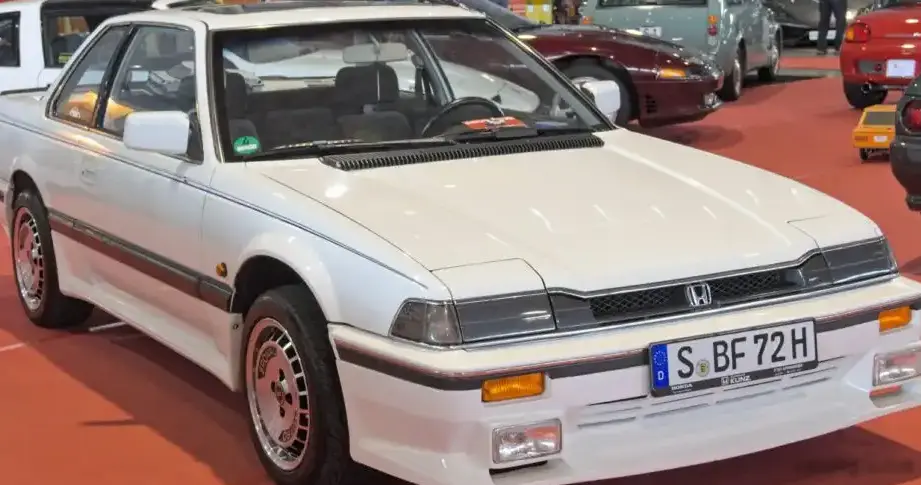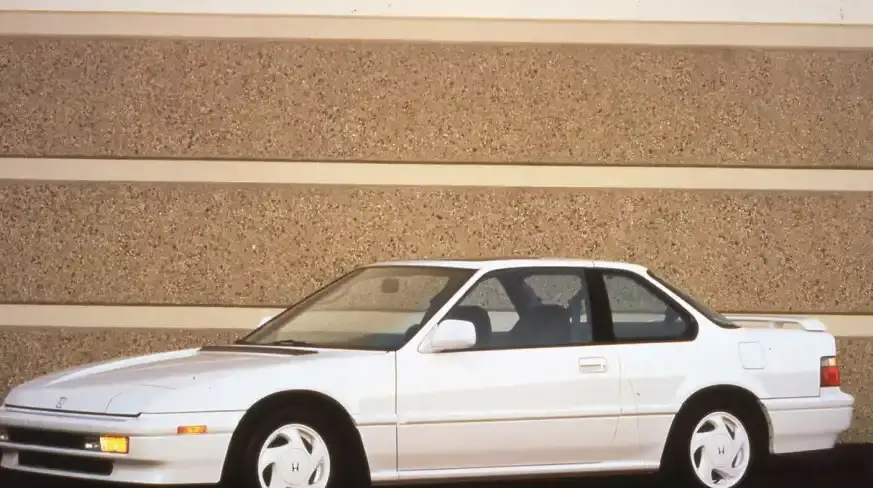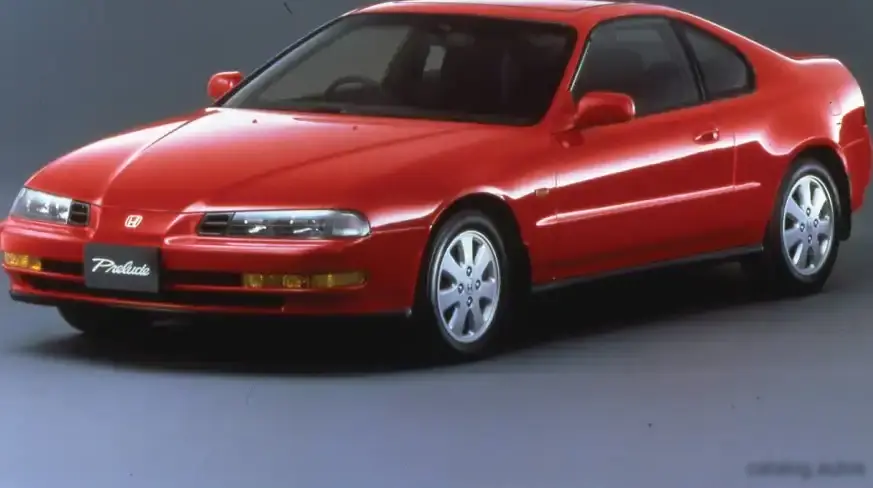
The Honda Prelude IV (BB), produced between 1992 and 1996, represented a significant evolution in Honda’s sports coupe lineage. The BB1 variant, equipped with the 2.2-liter inline-four cylinder engine featuring VTEC technology and producing 185 horsepower, was a key model within the fourth-generation Prelude range. Positioned as a performance-oriented trim, it sat above the base models and below the limited-production Si models in many markets. The BB1 was primarily sold in Japan and North America, offering a blend of sporty handling, refined comfort, and Honda’s renowned engineering. It was built on the 1HX0/A3 platform, shared with the Honda Accord of the same era.
Technical Specifications
| Brand | Honda |
| Model | Prelude |
| Generation | Prelude IV (BB) |
| Type (Engine) | 2.2 i 16V Vtec (BB1) (185 Hp) |
| Start of production | 1993 |
| End of production | 1996 |
| Powertrain Architecture | Internal Combustion engine |
| Body type | Coupe |
| Seats | 4 |
| Doors | 2 |
| Fuel consumption (combined) | 8.8 l/100 km |
| Fuel consumption (US mpg) | 26.7 US mpg |
| Fuel consumption (UK mpg) | 32.1 UK mpg |
| Fuel consumption (km/l) | 11.4 km/l |
| Fuel Type | Petrol (Gasoline) |
| Acceleration 0 – 100 km/h | 7.1 sec |
| Acceleration 0 – 62 mph | 7.1 sec |
| Acceleration 0 – 60 mph | 6.7 sec |
| Maximum speed | 228 km/h (141.67 mph) |
| Weight-to-power ratio | 7.1 kg/Hp, 141.8 Hp/tonne |
| Weight-to-torque ratio | 6.1 kg/Nm, 164.8 Nm/tonne |
| Power | 185 Hp @ 6800 rpm |
| Power per litre | 85.8 Hp/l |
| Torque | 215 Nm @ 5300 rpm (158.58 lb.-ft. @ 5300 rpm) |
| Engine layout | Front, Transverse |
| Engine Model/Code | H22A2 |
| Engine displacement | 2156 cm3 (131.57 cu. in.) |
| Number of cylinders | 4 |
| Engine configuration | Inline |
| Cylinder Bore | 85 mm (3.35 in.) |
| Piston Stroke | 95 mm (3.74 in.) |
| Compression ratio | 10:1 |
| Number of valves per cylinder | 4 |
| Fuel injection system | Multi-port manifold injection |
| Engine aspiration | Naturally aspirated engine |
| Valvetrain | DOHC |
| Engine oil capacity | 4.8 l (5.07 US qt | 4.22 UK qt) |
| Kerb Weight | 1305 kg (2877.03 lbs.) |
| Max. weight | 1720 kg (3791.95 lbs.) |
| Max load | 415 kg (914.92 lbs.) |
| Trunk (boot) space – minimum | 278 l (9.82 cu. ft.) |
| Fuel tank capacity | 60 l (15.85 US gal | 13.2 UK gal) |
| Length | 4440 mm (174.8 in.) |
| Width | 1765 mm (69.49 in.) |
| Height | 1290 mm (50.79 in.) |
| Wheelbase | 2550 mm (100.39 in.) |
| Front track | 1525 mm (60.04 in.) |
| Rear (Back) track | 1515 mm (59.65 in.) |
| Drivetrain Architecture | The Internal combustion engine (ICE) drives the front wheels of the vehicle. |
| Drive wheel | Front wheel drive |
| Number of gears and type of gearbox | 5 gears, manual transmission |
| Front suspension | Double wishbone |
| Rear suspension | Double wishbone |
| Front brakes | Ventilated discs |
| Rear brakes | Disc |
| Assisting systems | ABS (Anti-lock braking system) |
| Steering type | Steering rack and pinion |
| Power steering | Hydraulic Steering |
| Tires size | 205/55 R15 |
Powertrain & Engine Architecture
The heart of the BB1 Prelude is the H22A2 engine, a 2.2-liter inline-four cylinder powerplant. This engine is notable for its use of Honda’s Variable Valve Timing and Lift Electronic Control (VTEC) system. VTEC allows the engine to switch between two different camshaft profiles – a mild profile for low-speed efficiency and a more aggressive profile for high-speed power. This results in a broad powerband and a noticeable surge in performance as the engine approaches its 6800 rpm redline. The H22A2 utilizes multi-port fuel injection for precise fuel delivery. The engine’s design emphasizes smooth operation and relatively high specific output (85.8 hp per liter). The BB1 was exclusively offered with a five-speed manual transmission, providing drivers with full control over the engine’s power. This transmission was known for its precise shifts and robust construction.
Driving Characteristics
The 185 hp and 158.58 lb-ft of torque delivered by the H22A2 engine, coupled with the five-speed manual transmission, provided the BB1 Prelude with brisk acceleration. Zero to sixty mph times were consistently reported in the 6.7-7.1 second range, making it competitive with other sports coupes of the era. The VTEC engagement point at around 5300 rpm is clearly felt, providing an exciting boost in power. The Prelude’s front-wheel-drive configuration, while offering good traction, could exhibit some torque steer under hard acceleration. The suspension, featuring double wishbones at all four corners, provided a comfortable ride while maintaining good handling characteristics. Steering was precise and well-weighted, contributing to a confident driving experience. Compared to the lower-powered base models, the BB1 offered a significantly more engaging and rewarding driving experience. It lacked the ultimate performance of the later Si models, but provided a more accessible and balanced package for everyday driving.
Equipment & Trim Levels
The BB1 Prelude typically came well-equipped, reflecting its position as a performance-oriented trim. Standard features included power windows, power locks, air conditioning, and a decent sound system. The interior featured supportive sport seats, often upholstered in a combination of cloth and leather. Dashboard design was driver-focused, with easy-to-read gauges and logically placed controls. Optional extras included a sunroof, upgraded audio systems, and alloy wheels. The BB1 often featured unique exterior styling cues, such as a rear spoiler and specific wheel designs, to differentiate it from the base models.
Chassis & Braking
The BB1 Prelude utilized a robust unibody chassis, designed for both rigidity and crash safety. The suspension system, with its double wishbone design, provided a good balance between ride comfort and handling performance. The front brakes were ventilated discs, providing ample stopping power, while the rear brakes were solid discs. Anti-lock braking system (ABS) was standard, enhancing safety and control during emergency braking situations. The steering system employed a rack-and-pinion setup with hydraulic power assistance, offering precise and responsive steering feel.
Market Reception & Comparison
The BB1 Prelude was generally well-received by automotive critics. It was praised for its sporty handling, refined interior, and powerful engine. The VTEC technology was a major selling point, attracting enthusiasts who appreciated its performance benefits. Compared to other coupes in its class, such as the Nissan 240SX and the Mazda MX-6, the Prelude offered a more sophisticated and refined driving experience. Fuel economy was respectable for a performance coupe, averaging around 26.7 mpg in combined driving. Reliability was generally good, consistent with Honda’s reputation for building durable vehicles. However, some owners reported issues with the automatic transmission in other Prelude trims, though this was not a common concern with the manual-transmission BB1.
Legacy
The H22A2 engine and the BB1 Prelude have maintained a loyal following among Honda enthusiasts. The engine is known for its durability and potential for modification. Well-maintained examples of the BB1 are becoming increasingly collectible, particularly those with low mileage and original parts. The Prelude IV, in general, is remembered as a stylish and capable sports coupe that represented a high point in Honda’s engineering and design. Today, the BB1 offers a compelling blend of classic styling, engaging driving dynamics, and Honda reliability, making it a desirable choice for enthusiasts seeking a rewarding and affordable sports coupe.