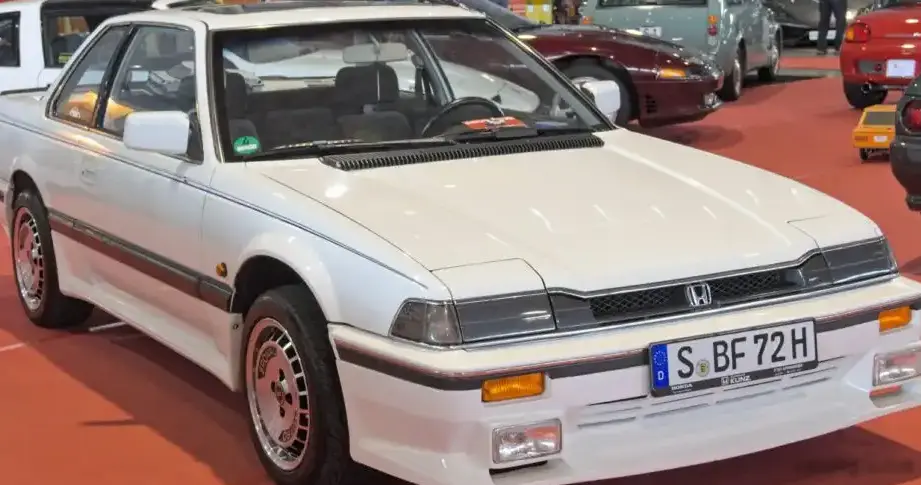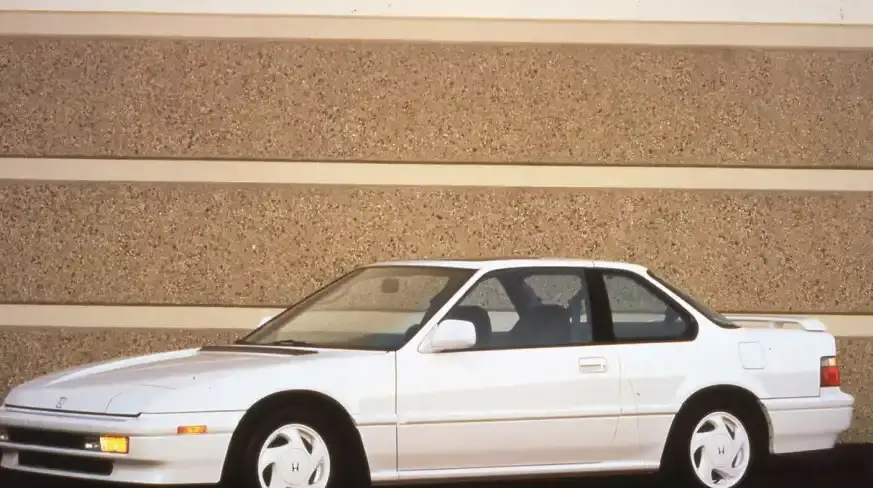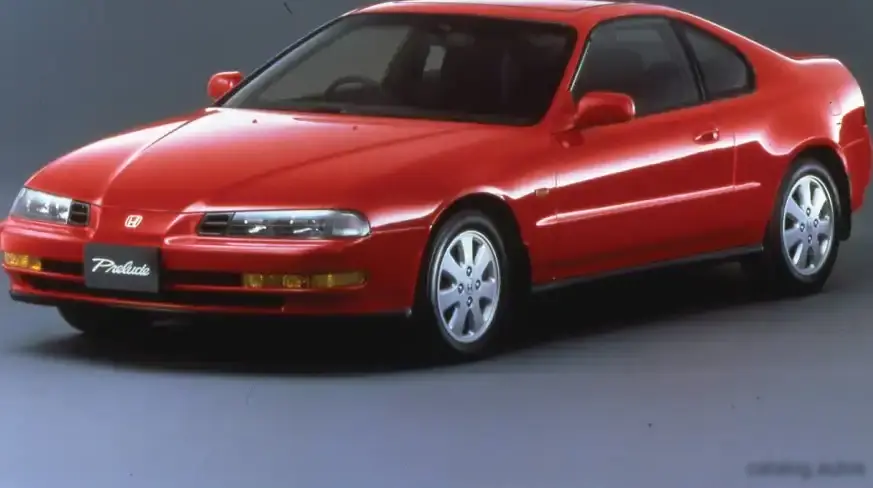
The Honda Prelude IV (BB2), specifically the 2.3i 16V variant produced between 1992 and 1996, represents a high point in Honda’s grand touring coupe development. Part of the fourth generation Prelude (BB) series, the BB2 was positioned as the performance-oriented model, slotting above the base 2.2i and offering a more engaging driving experience than its more economical sibling. Built on the 1HX0 platform, the BB2 aimed to blend sporty handling with a comfortable and refined interior, appealing to buyers seeking a sophisticated and capable coupe.
Technical Specifications
| Brand | Honda |
| Model | Prelude |
| Generation | Prelude IV (BB) |
| Type (Engine) | 2.3i 16V (BB2) (160 Hp) |
| Start of production | 1992 |
| End of production | 1996 |
| Powertrain Architecture | Internal Combustion engine |
| Body type | Coupe |
| Seats | 4 |
| Doors | 2 |
| Fuel consumption (combined) | 8.8 l/100 km |
| Fuel consumption (US mpg) | 26.7 US mpg |
| Fuel consumption (UK mpg) | 32.1 UK mpg |
| Fuel consumption (km/l) | 11.4 km/l |
| Fuel Type | Petrol (Gasoline) |
| Acceleration 0 – 100 km/h | 7.7 sec |
| Acceleration 0 – 62 mph | 7.7 sec |
| Acceleration 0 – 60 mph | 7.3 sec |
| Maximum speed | 217 km/h (134.84 mph) |
| Weight-to-power ratio | 7.8 kg/Hp, 128 Hp/tonne |
| Weight-to-torque ratio | 6 kg/Nm, 167.2 Nm/tonne |
| Power | 160 Hp @ 5800 rpm |
| Power per litre | 70.8 Hp/l |
| Torque | 209 Nm @ 4500 rpm (154.15 lb.-ft. @ 4500 rpm) |
| Engine layout | Front, Transverse |
| Engine Model/Code | H23A2 |
| Engine displacement | 2259 cm3 (137.85 cu. in.) |
| Number of cylinders | 4 |
| Engine configuration | Inline |
| Cylinder Bore | 87 mm (3.43 in.) |
| Piston Stroke | 95 mm (3.74 in.) |
| Compression ratio | 9.8:1 |
| Number of valves per cylinder | 4 |
| Fuel injection system | Multi-port manifold injection |
| Engine aspiration | Naturally aspirated engine |
| Valvetrain | DOHC |
| Engine oil capacity | 4.3 l (4.54 US qt | 3.78 UK qt) |
| Kerb Weight | 1250 kg (2755.78 lbs.) |
| Max. weight | 1720 kg (3791.95 lbs.) |
| Max load | 470 kg (1036.17 lbs.) |
| Trunk (boot) space – minimum | 278 l (9.82 cu. ft.) |
| Fuel tank capacity | 60 l (15.85 US gal | 13.2 UK gal) |
| Length | 4440 mm (174.8 in.) |
| Width | 1765 mm (69.49 in.) |
| Height | 1290 mm (50.79 in.) |
| Wheelbase | 2550 mm (100.39 in.) |
| Front track | 1525 mm (60.04 in.) |
| Rear (Back) track | 1515 mm (59.65 in.) |
| Drivetrain Architecture | The Internal combustion engine (ICE) drives the front wheels of the vehicle. |
| Drive wheel | Front wheel drive |
| Number of gears and type of gearbox | 5 gears, manual transmission |
| Front suspension | Double wishbone |
| Rear suspension | Double wishbone |
| Front brakes | Ventilated discs |
| Rear brakes | Disc |
| Assisting systems | ABS (Anti-lock braking system) |
| Steering type | Steering rack and pinion |
| Power steering | Hydraulic Steering |
| Tires size | 205/55 R15 |
Powertrain & Engine Architecture
The heart of the BB2 is the H23A2 2.3-liter inline-four cylinder engine. This engine is a naturally aspirated powerplant featuring a 16-valve dual overhead camshaft (DOHC) cylinder head. The H23A2 utilized multi-port fuel injection, a system that delivers fuel directly to each intake valve for improved efficiency and responsiveness. The engine’s 9.8:1 compression ratio was a compromise between performance and the ability to run on readily available gasoline grades. The engine’s design emphasized smooth power delivery and reliability, rather than outright peak horsepower. The BB2 was exclusively offered with a 5-speed manual transmission, providing drivers with full control over the engine’s powerband. This transmission was known for its precise shifts and robust construction.
Driving Characteristics
The 160 horsepower and 154 lb-ft of torque produced by the H23A2 engine provided the BB2 with brisk acceleration. Zero to sixty mph times were consistently in the low 7-second range, making it a competitive performer in its class. The 5-speed manual transmission allowed drivers to keep the engine in its optimal power range, resulting in a responsive and engaging driving experience. The BB2’s front-wheel-drive configuration, combined with its well-tuned suspension, provided good handling characteristics. While not as sharp as some rear-wheel-drive competitors, the BB2 offered a balanced and predictable driving experience suitable for both daily commuting and spirited driving on winding roads. The gear ratios were well-matched to the engine’s powerband, providing strong acceleration in each gear.
Equipment & Trim Levels
The BB2 Prelude typically came well-equipped, reflecting its positioning as a premium coupe. Standard features included power windows, power locks, air conditioning, and a decent sound system. The interior featured comfortable and supportive seats, often upholstered in a combination of cloth and leather. Optional extras included a sunroof, upgraded audio systems, and alloy wheels. The dashboard layout was driver-focused, with easy-to-read gauges and logically placed controls. The BB2’s interior was designed to provide a comfortable and refined environment for both driver and passengers.
Chassis & Braking
The BB2 Prelude utilized a fully independent double wishbone suspension system at both the front and rear. This suspension design provided excellent ride quality and handling characteristics. The front suspension featured stabilizer bars to reduce body roll during cornering. Braking duties were handled by ventilated discs at the front and solid discs at the rear. An anti-lock braking system (ABS) was standard, enhancing safety and control during hard braking. The chassis was designed to be rigid and lightweight, contributing to the car’s overall handling performance.
Market Reception & Comparison
The 1992-1996 Honda Prelude BB2 was generally well-received by automotive critics. It was praised for its stylish design, comfortable interior, and engaging driving experience. Compared to the base 2.2i Prelude, the BB2 offered a significant performance upgrade. While it didn’t have the raw power of some of its competitors, such as the Nissan 240SX or Mazda MX-6, the BB2 offered a more refined and balanced driving experience. Fuel economy was respectable for a performance coupe, averaging around 26 mpg in combined driving. Reliability was also a strong point, as with most Honda products of this era.
Legacy
The Honda Prelude BB2 has developed a loyal following among enthusiasts. The H23A2 engine is known for its durability and relatively simple maintenance requirements. While parts availability can be a challenge due to the car’s age, many components are still readily available through aftermarket suppliers. Today, well-maintained BB2 Preludes are sought after by collectors and enthusiasts who appreciate their blend of style, performance, and reliability. The BB2 represents a high point in Honda’s coupe history and remains a popular choice for those seeking a classic Japanese sports coupe.