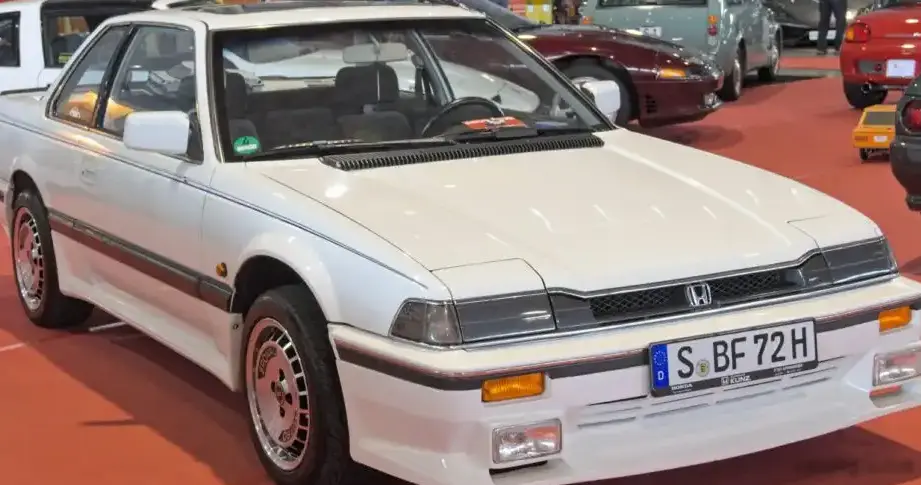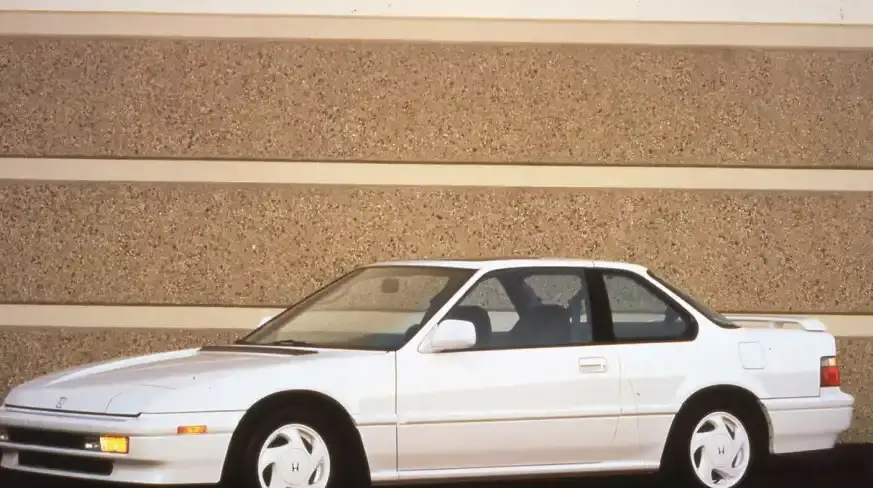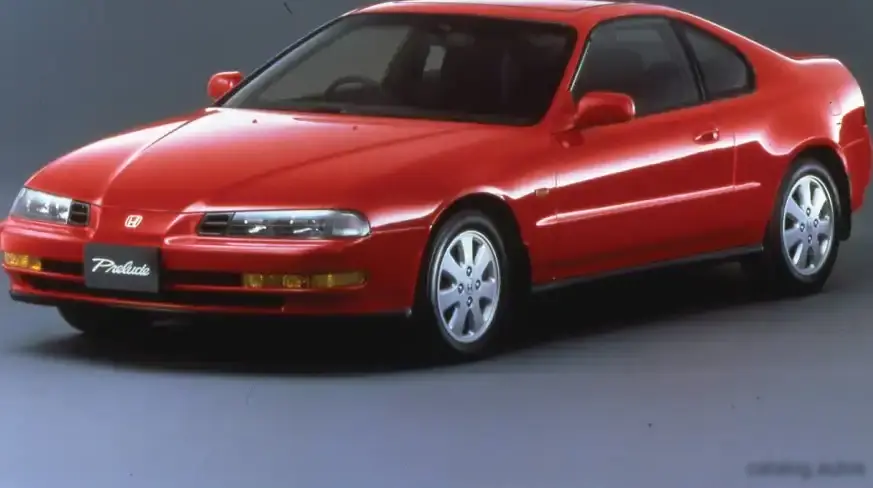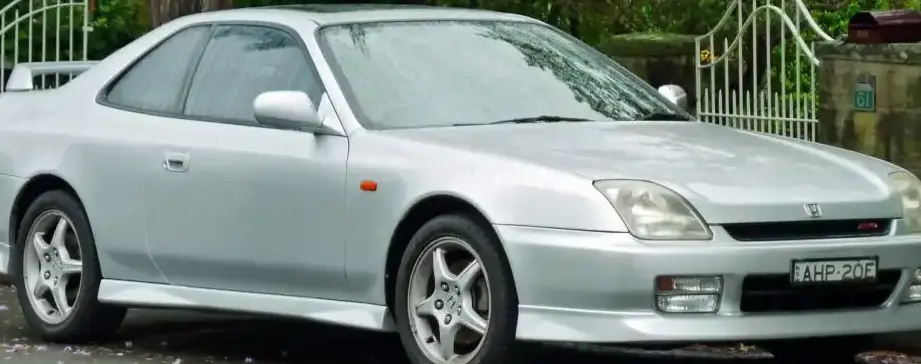
The Honda Prelude V (BB), produced between 1996 and 2001, represented the fifth and final generation of Honda’s iconic sports coupe. Built on the BB platform (shared with the Honda Accord of the same era), the Prelude V aimed to blend sporty handling with a comfortable grand touring experience. Within the BB generation, the 2.2 16V (BB6 and BB8 chassis codes) models, producing 185 horsepower, occupied the upper echelon of the lineup, offering a significant performance upgrade over the base 2.0-liter variants. The BB6 and BB8 designations primarily differentiated between regional specifications and minor equipment variations, with the BB8 typically representing the North American market version.
Technical Specifications
| Brand | Honda |
| Model | Prelude |
| Generation | Prelude V (BB) |
| Type (Engine) | 2.2 16V (BB6,BB8) (185 Hp) |
| Start of production | 1996 |
| End of production | 2001 |
| Powertrain Architecture | Internal Combustion engine |
| Body type | Coupe |
| Seats | 4 |
| Doors | 2 |
| Fuel consumption (urban) | 12.8 l/100 km (18.4 US mpg) |
| Fuel consumption (extra urban) | 7.7 l/100 km (30.5 US mpg) |
| Fuel Type | Petrol (Gasoline) |
| Acceleration 0 – 100 km/h | 7.5 sec |
| Acceleration 0 – 62 mph | 7.5 sec |
| Acceleration 0 – 60 mph | 7.1 sec |
| Maximum speed | 228 km/h (141.67 mph) |
| Weight-to-power ratio | 7.3 kg/Hp |
| Weight-to-torque ratio | 6.5 kg/Nm |
| Power | 185 Hp @ 7000 rpm |
| Torque | 206 Nm @ 5300 rpm (151.94 lb.-ft. @ 5300 rpm) |
| Engine layout | Front, Transverse |
| Engine Model/Code | H22A5, H22A8 |
| Engine displacement | 2157 cm3 (131.63 cu. in.) |
| Number of cylinders | 4 |
| Engine configuration | Inline |
| Cylinder Bore | 87 mm (3.43 in.) |
| Piston Stroke | 90.7 mm (3.57 in.) |
| Compression ratio | 10:1 |
| Number of valves per cylinder | 4 |
| Fuel injection system | Multi-port manifold injection |
| Engine aspiration | Naturally aspirated engine |
| Valvetrain | DOHC |
| Engine oil capacity | 4.8 l (5.07 US qt | 4.22 UK qt) |
| Coolant capacity | 6.9 l (7.29 US qt | 6.07 UK qt) |
| Kerb Weight | 1346 kg (2967.42 lbs.) |
| Max. weight | 1740 kg (3836.04 lbs.) |
| Max load | 394 kg (868.62 lbs.) |
| Trunk (boot) space – minimum | 284 l (10.03 cu. ft.) |
| Fuel tank capacity | 60 l (15.85 US gal | 13.2 UK gal) |
| Length | 4545 mm (178.94 in.) |
| Width | 1750 mm (68.9 in.) |
| Height | 1315 mm (51.77 in.) |
| Wheelbase | 2585 mm (101.77 in.) |
| Front track | 1525 mm (60.04 in.) |
| Rear track | 1515 mm (59.65 in.) |
| Drivetrain Architecture | Front wheel drive |
| Number of gears | 5 gears, manual transmission |
| Front suspension | Coil spring |
| Rear suspension | Coil spring |
| Front brakes | Ventilated discs |
| Rear brakes | Disc |
| Assisting systems | ABS (Anti-lock braking system) |
| Steering type | Steering rack and pinion |
| Power steering | Hydraulic Steering |
| Tires size | 205/50 R16 |
Powertain & Engine Architecture
The heart of the Prelude V 2.2 16V was the H22A5 (North America) or H22A8 (Japan/Europe) inline-four cylinder engine. This 2.2-liter powerplant featured a double overhead camshaft (DOHC) valvetrain with 16 valves, and multi-point fuel injection. The H22A series engines were known for their robust construction and willingness to rev. The engine’s design prioritized a broad torque curve, making it responsive in everyday driving situations. The 5-speed manual transmission was the standard pairing, offering precise shifts and a direct connection to the engine. The engine’s block was cast iron, while the cylinder head was aluminum, contributing to a relatively lightweight design. Honda’s VTEC (Variable Valve Timing and Lift Electronic Control) system was not implemented in this engine, unlike some of its higher-performance counterparts.
Driving Characteristics
The 185-horsepower 2.2-liter engine, coupled with the five-speed manual transmission, provided a spirited driving experience. Acceleration from 0-60 mph was achieved in approximately 7.1-7.5 seconds, making it competitive with other sports coupes of the era. The engine delivered a linear powerband, with usable torque available from low RPMs. The manual transmission’s gear ratios were well-matched to the engine’s characteristics, allowing for quick and precise shifts. Compared to the base 2.0-liter models, the 2.2-liter offered a noticeable improvement in acceleration and overall performance. While not as raw or track-focused as some of its rivals, the Prelude V 2.2 16V provided a balanced and enjoyable driving experience suitable for both daily commuting and weekend spirited drives.
Equipment & Trim Levels
The 2.2 16V Prelude V typically came standard with features such as power windows, power locks, air conditioning, and a decent audio system. Higher trim levels, often denoted by the BB8 designation in North America, added features like a sunroof, leather upholstery, upgraded sound systems, and alloy wheels. Optional extras included a navigation system (a relatively new feature at the time), and various cosmetic enhancements. The interior design was driver-focused, with well-placed controls and comfortable seating. The dashboard featured a sporty instrument cluster with clear and easy-to-read gauges.
Chassis & Braking
The Prelude V utilized a fully independent suspension system, with coil springs and shock absorbers at all four corners. This setup provided a comfortable ride while maintaining good handling characteristics. The front suspension featured MacPherson struts, while the rear utilized a double-wishbone configuration. Braking duties were handled by ventilated discs at the front and solid discs at the rear. Anti-lock brakes (ABS) were standard equipment, enhancing safety and control during hard braking situations. The steering was a rack-and-pinion system with hydraulic power assistance, providing precise and responsive steering feel.
Market Reception & Comparison
The Honda Prelude V 2.2 16V was generally well-received by automotive critics. It was praised for its sporty handling, comfortable ride, and refined interior. However, some critics noted that it lacked the outright performance of some of its rivals, such as the Mitsubishi Eclipse GSX or the Toyota Celica GT-Four. Compared to the lower-powered 2.0-liter Prelude models, the 2.2 16V offered a significant performance upgrade, justifying its higher price tag. Fuel economy was respectable for a sports coupe, averaging around 22-30 mpg depending on driving conditions. Reliability was also a strong point, as Honda had a reputation for building durable and dependable vehicles.
Legacy
The Honda Prelude V 2.2 16V has maintained a loyal following among enthusiasts. The H22A engine is known for its durability and potential for modification. Well-maintained examples are becoming increasingly collectible, particularly those with low mileage and original features. While the Prelude line was discontinued in 2001, its legacy as a stylish and sporty coupe continues to endure. The 2.2 16V variant, with its balanced performance and refined driving experience, remains a desirable and respected member of the Prelude family. Common issues with these vehicles, when found, often relate to age-related wear and tear on suspension components and occasional oil leaks from engine seals. However, parts availability remains relatively good, making it a viable option for those seeking a classic Japanese sports coupe.