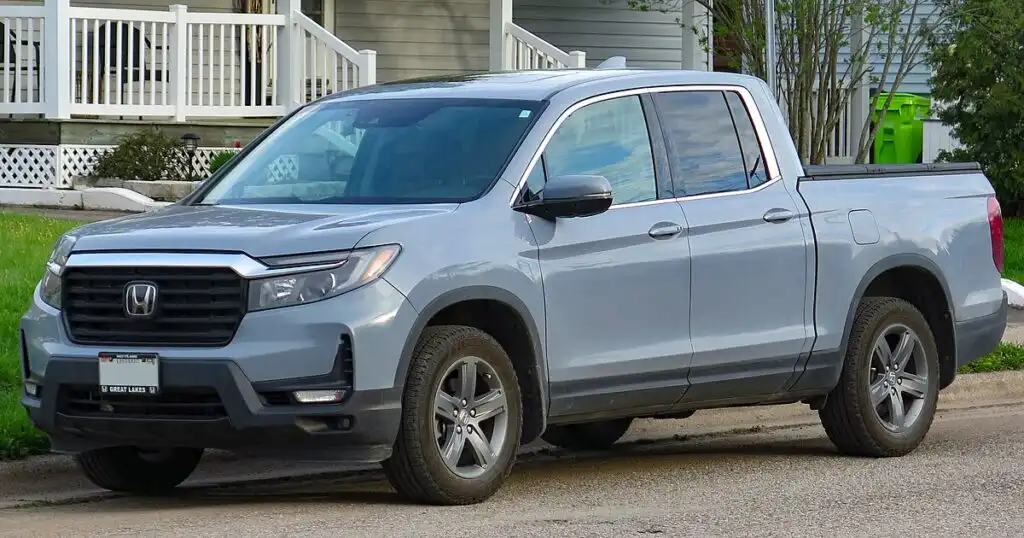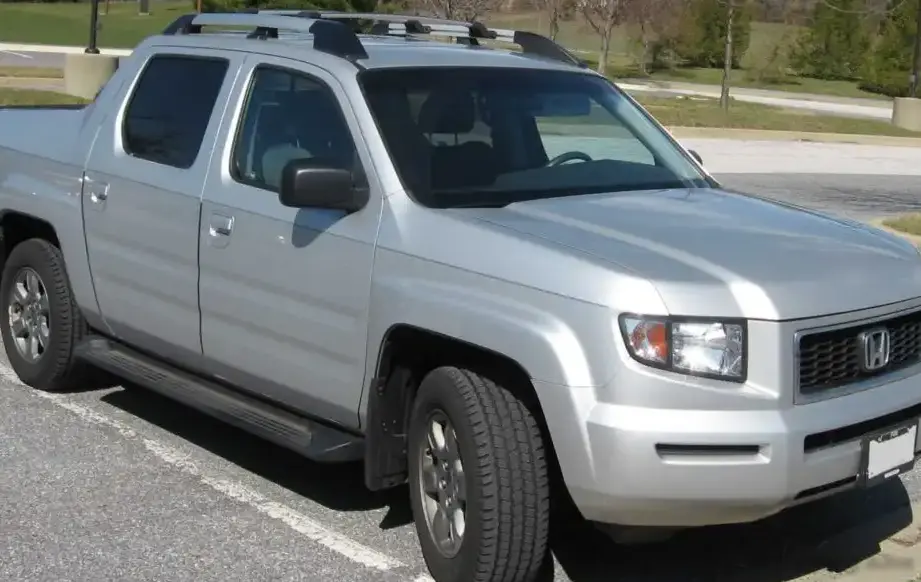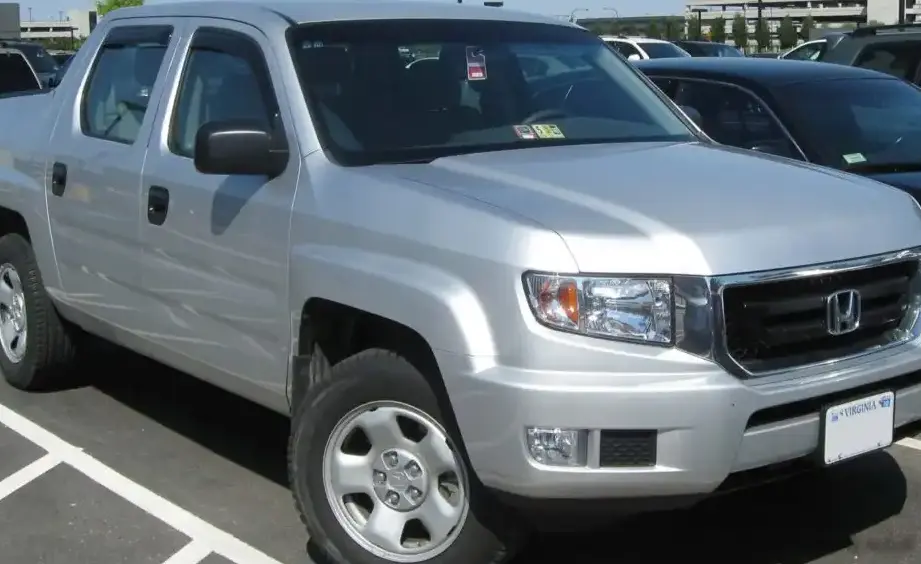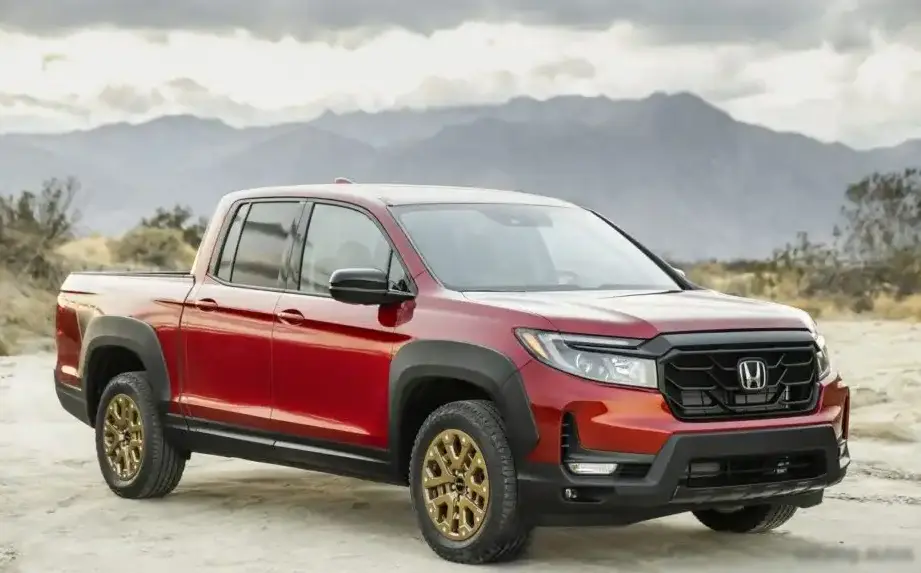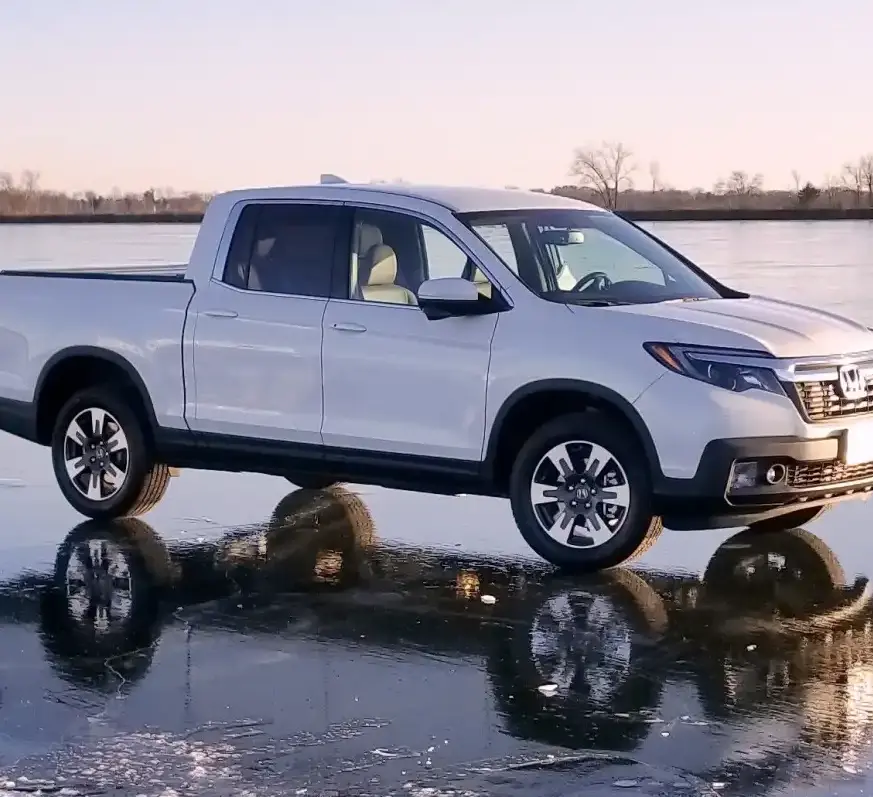
The Honda Ridgeline II, produced from 2017 to 2019, represented a significant evolution of Honda’s unique mid-size pickup truck. Unlike traditional body-on-frame designs common in the segment, the Ridgeline II continued to utilize a unibody construction, prioritizing on-road comfort and refinement. The 3.5 V6 AWD Automatic variant occupied the top trim level within the Ridgeline II lineup, offering a blend of capability, technology, and Honda’s reputation for reliability. It aimed to appeal to buyers seeking a pickup truck for everyday use, light-duty hauling, and comfortable passenger transport, rather than heavy-duty work applications.
Technical Specifications
| Brand | Honda |
| Model | Ridgeline |
| Generation | Ridgeline II |
| Type (Engine) | 3.5 V6 (280 Hp) AWD Automatic |
| Start of production | 2017 |
| End of production | 2019 |
| Powertrain Architecture | Internal Combustion engine |
| Body type | Pick-up |
| Seats | 5 |
| Doors | 4 |
| Fuel consumption (economy) – urban | 13.1 l/100 km (18 US mpg, 21.6 UK mpg, 7.6 km/l) |
| Fuel consumption (economy) – extra urban | 9.4 l/100 km (25 US mpg, 30.1 UK mpg, 10.6 km/l) |
| Fuel consumption (economy) – combined | 11.2 l/100 km (21 US mpg, 25.2 UK mpg, 8.9 km/l) |
| Fuel Type | Petrol (Gasoline) |
| Weight-to-power ratio | 7.2 kg/Hp, 139.2 Hp/tonne |
| Weight-to-torque ratio | 5.7 kg/Nm, 176.5 Nm/tonne |
| Power | 280 Hp @ 6000 rpm |
| Power per litre | 80.7 Hp/l |
| Torque | 355 Nm @ 4700 rpm (261.83 lb.-ft. @ 4700 rpm) |
| Maximum engine speed | 6800 rpm |
| Engine layout | Front, Transverse |
| Engine Model/Code | J35Y6 |
| Engine displacement | 3471 cm3 (211.81 cu. in.) |
| Number of cylinders | 6 |
| Engine configuration | V-engine |
| Cylinder Bore | 89 mm (3.5 in.) |
| Piston Stroke | 93 mm (3.66 in.) |
| Compression ratio | 11.5:1 |
| Number of valves per cylinder | 4 |
| Fuel injection system | Direct injection |
| Engine aspiration | Naturally aspirated engine |
| Valvetrain | SOHC, i-VTEC |
| Engine oil capacity | 5.4 l (5.71 US qt | 4.75 UK qt) |
| Coolant | 7.13 l (7.53 US qt | 6.27 UK qt) |
| Kerb Weight | 2011-2048 kg (4433.5 – 4515.07 lbs.) |
| Max. weight | 2730 kg (6018.62 lbs.) |
| Max load | 682-719 kg (1503.55 – 1585.12 lbs.) |
| Trunk (boot) space – minimum | 960 l (33.9 cu. ft.) |
| Fuel tank capacity | 74 l (19.55 US gal | 16.28 UK gal) |
| Permitted trailer load with brakes (12%) | 2268 kg (5000.08 lbs.) |
| Length | 5334 mm (210 in.) |
| Width | 1996 mm (78.58 in.) |
| Height | 1798 mm (70.79 in.) |
| Wheelbase | 3180 mm (125.2 in.) |
| Front track | 1679 mm (66.1 in.) |
| Rear (Back) track | 1676 mm (65.98 in.) |
| Ride height (ground clearance) | 200 mm (7.87 in.) |
| Minimum turning circle (turning diameter) | 13.5 m (44.29 ft.) |
| Approach angle | 20.1° |
| Departure angle | 22.1° |
| Ramp-over (brakeover) angle | 19.6° |
| Drive wheel | All wheel drive (4×4) |
| Number of gears and type of gearbox | 6 gears, automatic transmission |
| Front suspension | Independent, type McPherson with coil spring and anti-roll bar |
| Rear suspension | Independent multi-link spring suspension with stabilizer |
| Front brakes | Ventilated discs, 320 mm |
| Rear brakes | Disc, 330 mm |
| Assisting systems | ABS (Anti-lock braking system) |
| Steering type | Steering rack and pinion |
| Power steering | Electric Steering |
| Tires size | 245/60 R18 |
| Wheel rims size | 18 |
Powertrain & Engine Architecture
The heart of the Ridgeline II 3.5 V6 AWD Automatic is the J35Y6 engine, a 3.5-liter naturally aspirated V6. This engine is part of Honda’s J-series family, known for its durability and smooth operation. The J35Y6 features a single overhead camshaft (SOHC) cylinder head with Honda’s i-VTEC (Variable Valve Timing and Lift Electronic Control) system. This technology optimizes valve timing and lift based on engine speed and load, improving both fuel efficiency and performance. Direct fuel injection further enhances combustion efficiency and power output. The engine produces 280 horsepower at 6000 rpm and 262 lb-ft of torque at 4700 rpm. The engine is transversely mounted, contributing to a more compact engine bay and improved front-end weight distribution. The engine is paired with a six-speed automatic transmission, specifically tuned for smooth shifts and responsive acceleration. The automatic transmission features torque converter lock-up for improved fuel economy at highway speeds.
Driving Characteristics
The 3.5 V6 and six-speed automatic combination in the Ridgeline II delivers a refined and comfortable driving experience. While not a high-performance pickup, the powertrain provides adequate power for everyday driving and light hauling. Acceleration is brisk, and the transmission shifts smoothly and predictably. The automatic transmission’s gear ratios are optimized for both fuel economy and towing capability. Compared to a manual transmission equipped Ridgeline (which wasn’t offered), the automatic prioritizes ease of use and convenience. The AWD system provides enhanced traction in various weather conditions, making it a capable all-season vehicle. The unibody construction contributes to a more car-like ride quality compared to traditional body-on-frame trucks, absorbing bumps and imperfections in the road with greater ease.
Equipment & Trim Levels
The Ridgeline II 3.5 V6 AWD Automatic typically came well-equipped, even as a base trim. Standard features included automatic climate control, a multi-function steering wheel, a rearview camera, and a basic infotainment system with a touchscreen display. Higher trim levels added features such as leather upholstery, heated front seats, a premium audio system, and advanced safety technologies like lane departure warning and collision mitigation braking. Optional extras included a navigation system, a power moonroof, and a bed liner for the truck bed.
Chassis & Braking
The Ridgeline II’s chassis is a key differentiator from its competitors. The unibody construction provides a stiffer and more refined platform than traditional body-on-frame designs. The front suspension utilizes a McPherson strut design with coil springs and an anti-roll bar, while the rear suspension employs an independent multi-link setup with a stabilizer bar. This configuration provides a comfortable ride and predictable handling. Braking duties are handled by ventilated discs at all four corners, providing ample stopping power. An Anti-lock Braking System (ABS) is standard, enhancing safety and control during emergency braking situations.
Market Reception & Comparison
The Ridgeline II received generally positive reviews from automotive critics. It was praised for its comfortable ride, refined interior, and unique blend of pickup truck functionality and car-like driving dynamics. However, some critics noted its lower towing capacity and off-road capability compared to traditional body-on-frame trucks. Fuel economy was considered average for the segment, with combined ratings around 21 mpg. Compared to other Ridgeline II trims, the 3.5 V6 AWD Automatic offered the best balance of performance and capability. It was a popular choice for buyers who prioritized on-road comfort and everyday usability over heavy-duty work applications.
Legacy
The Honda Ridgeline II, particularly the 3.5 V6 AWD Automatic variant, has proven to be a reliable and durable vehicle. The J35Y6 engine is known for its longevity, and the six-speed automatic transmission has also demonstrated good reliability. In the used car market, Ridgeline II models are generally well-regarded and hold their value reasonably well. The unibody construction and independent suspension contribute to a comfortable and refined driving experience that continues to appeal to buyers seeking a unique and versatile pickup truck.