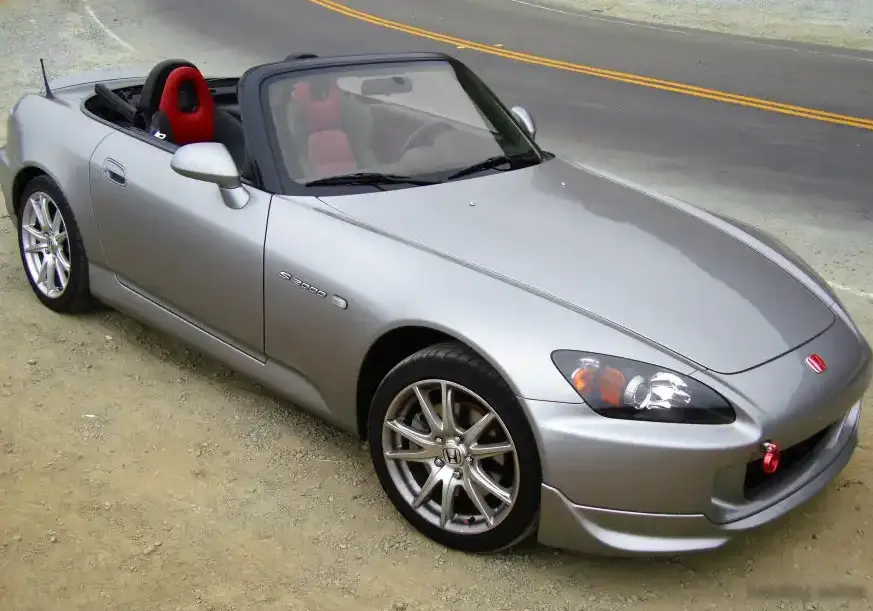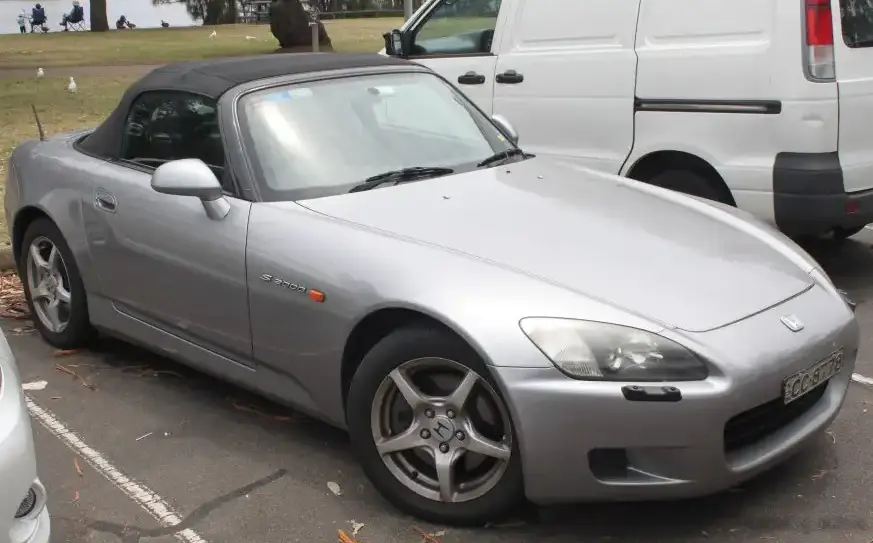
The Honda S2000 AP1, produced from 1999 to 2004, represents a pivotal moment in Honda’s history, showcasing a return to high-revving, naturally aspirated sports car engineering. Positioned as a direct successor to the beloved Honda CR-X and Integra, the S2000 aimed to deliver a pure, unfiltered driving experience. The AP1, the initial iteration, was characterized by its 2.0-liter engine and focused handling, establishing a benchmark for roadsters. It was primarily marketed towards driving enthusiasts seeking a thrilling, engaging sports car experience, and quickly gained a dedicated following in both North America and Japan, with limited sales in Europe.
Technical Specifications
| Brand | Honda |
| Model | S2000 |
| Generation | S2000 (AP1) |
| Type (Engine) | 2.0 (240 Hp) |
| Start of production | 1999 |
| End of production | 2004 |
| Powertrain Architecture | Internal Combustion engine |
| Body type | Cabriolet |
| Seats | 2 |
| Doors | 2 |
| Fuel consumption (economy) – urban | 13.2 l/100 km (17.8 US mpg, 21.4 UK mpg, 7.6 km/l) |
| Fuel consumption (economy) – extra urban | 7.9 l/100 km (29.8 US mpg, 35.8 UK mpg, 12.7 km/l) |
| Fuel consumption (economy) – combined | 9.9 l/100 km (23.8 US mpg, 28.5 UK mpg, 10.1 km/l) |
| CO2 emissions | 235 g/km |
| Fuel Type | Petrol (Gasoline) |
| Acceleration 0 – 100 km/h | 6.2 sec |
| Acceleration 0 – 62 mph | 6.2 sec |
| Acceleration 0 – 60 mph | 5.9 sec |
| Maximum speed | 240 km/h (149.13 mph) |
| Emission standard | Euro 3 |
| Weight-to-power ratio | 5.3 kg/Hp, 189 Hp/tonne |
| Weight-to-torque ratio | 6.1 kg/Nm, 163.8 Nm/tonne |
| Power | 240 Hp @ 8300 rpm |
| Power per litre | 120.2 Hp/l |
| Torque | 208 Nm @ 7500 rpm (153.41 lb.-ft. @ 7500 rpm) |
| Engine layout | Front, Longitudinal |
| Engine Model/Code | F20C |
| Engine displacement | 1997 cm3 (121.86 cu. in.) |
| Number of cylinders | 4 |
| Engine configuration | Inline |
| Cylinder Bore | 87 mm (3.43 in.) |
| Piston Stroke | 84 mm (3.31 in.) |
| Compression ratio | 11:1 |
| Number of valves per cylinder | 4 |
| Fuel injection system | Multi-port manifold injection |
| Engine aspiration | Naturally aspirated engine |
| Valvetrain | DOHC |
| Kerb Weight | 1270 kg (2799.87 lbs.) |
| Max. weight | 1535 kg (3384.1 lbs.) |
| Max load | 265 kg (584.22 lbs.) |
| Trunk (boot) space – minimum | 143 l (5.05 cu. ft.) |
| Fuel tank capacity | 50 l (13.21 US gal | 11 UK gal) |
| Length | 4135 mm (162.8 in.) |
| Width | 1750 mm (68.9 in.) |
| Height | 1270 mm (50 in.) |
| Wheelbase | 2400 mm (94.49 in.) |
| Front track | 1470 mm (57.87 in.) |
| Rear (Back) track | 1510 mm (59.45 in.) |
| Ride height (ground clearance) | 129.3 mm (5.09 in.) |
| Minimum turning circle (turning diameter) | 11.4 m (37.4 ft.) |
| Drivetrain Architecture | The Internal combustion engine (ICE) drives the rear wheels of the vehicle. |
| Drive wheel | Rear wheel drive |
| Number of gears and type of gearbox | 6 gears, manual transmission |
| Front suspension | Double wishbone |
| Rear suspension | Double wishbone |
| Front brakes | Ventilated discs, 300 mm |
| Rear brakes | Disc, 282 mm |
| Assisting systems | ABS (Anti-lock braking system) |
| Steering type | Steering rack and pinion |
| Power steering | Electric Steering |
| Tires size | Front wheel tires: 215/45 R17 89W Rear wheel tires: 245/40 R17 92W |
| Wheel rims size | Front wheel rims: 7.0J x 17 Rear wheel rims: 8.5J x 17 |
Powertrain & Engine Architecture
The heart of the S2000 AP1 is the F20C, a 2.0-liter inline-four engine. This engine is renowned for its high-revving nature and impressive specific output. The F20C utilized a cast iron block with aluminum cylinder head, featuring double overhead camshafts (DOHC) and four valves per cylinder. Fuel delivery was managed by a multi-point fuel injection system. A key element of the F20C’s design was its high compression ratio of 11:1, contributing to its power output. The engine’s redline was set at an impressive 9,000 rpm, encouraging drivers to exploit its full potential. The sole transmission option for the AP1 was a close-ratio six-speed manual gearbox, designed to complement the engine’s characteristics and provide precise gear changes. The drivetrain is rear-wheel drive, contributing to the car’s balanced handling.
Driving Characteristics
The S2000 AP1 delivers a distinctly sporty driving experience. The high-revving engine requires the driver to maintain momentum, and power delivery is strongest in the upper RPM range. While 240 horsepower might not seem excessive by modern standards, the S2000’s relatively light weight (around 2800 lbs) and responsive chassis make it feel significantly faster. The six-speed manual transmission is a joy to operate, with short throws and a precise feel. The car exhibits excellent balance and predictable handling, making it confidence-inspiring on winding roads. Compared to later S2000 models with more torque, the AP1 demands more frequent gear changes to stay in the powerband. It’s a car that rewards skilled drivers who appreciate a connected and engaging driving experience.
Equipment & Trim Levels
The S2000 AP1 was relatively sparsely equipped, focusing on the core driving experience. Standard features included power windows, power locks, and a basic audio system. Air conditioning was a common option. The interior featured supportive bucket seats upholstered in black or red leather. The dashboard layout was simple and functional, with clearly visible gauges. Optional extras included a hardtop, upgraded audio systems, and various cosmetic enhancements. The AP1 was not offered with a wide range of trim levels; the focus was on providing a pure sports car experience with minimal distractions.
Chassis & Braking
The S2000 AP1 boasts a rigid chassis, contributing to its precise handling. It utilizes a double wishbone suspension system at both the front and rear, providing excellent control and minimizing body roll. Braking duties are handled by ventilated discs at the front and solid discs at the rear, equipped with an Anti-lock Braking System (ABS). The car’s relatively low weight helps to ensure effective stopping power. The steering is a rack and pinion system with electric power assistance, providing a direct and responsive feel.
Market Reception & Comparison
The S2000 AP1 was widely praised by automotive critics for its engaging driving dynamics and high-revving engine. It was often compared to other roadsters of the era, such as the Mazda MX-5 Miata and the BMW Z3. While the Miata offered a more affordable and accessible entry point to the roadster market, the S2000 provided significantly more power and a more focused driving experience. The BMW Z3, while offering a more luxurious interior, lacked the S2000’s raw athleticism. Fuel economy was reasonable for a sports car of its performance level, but not a primary selling point. Reliability was generally good, although some owners reported issues with the early production models’ crankshafts.
Legacy
The Honda S2000 AP1 has become a highly sought-after sports car among enthusiasts. Its combination of a high-revving engine, precise handling, and relatively simple design has made it a favorite for track days and spirited driving. Well-maintained examples command premium prices in the used car market. The F20C engine is considered a masterpiece of naturally aspirated engine design. The S2000 AP1’s influence can be seen in subsequent generations of sports cars, and it remains a benchmark for driving engagement and purity. The car’s enduring popularity is a testament to Honda’s commitment to creating a truly driver-focused machine.