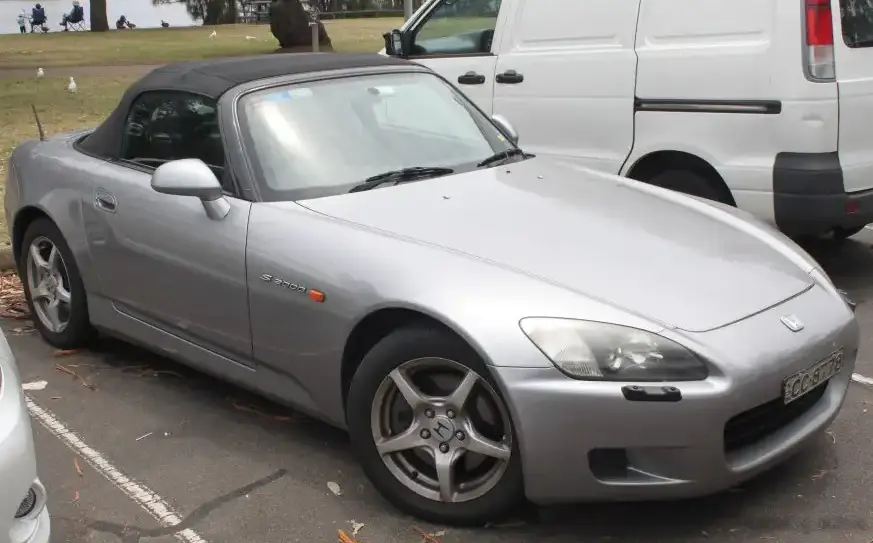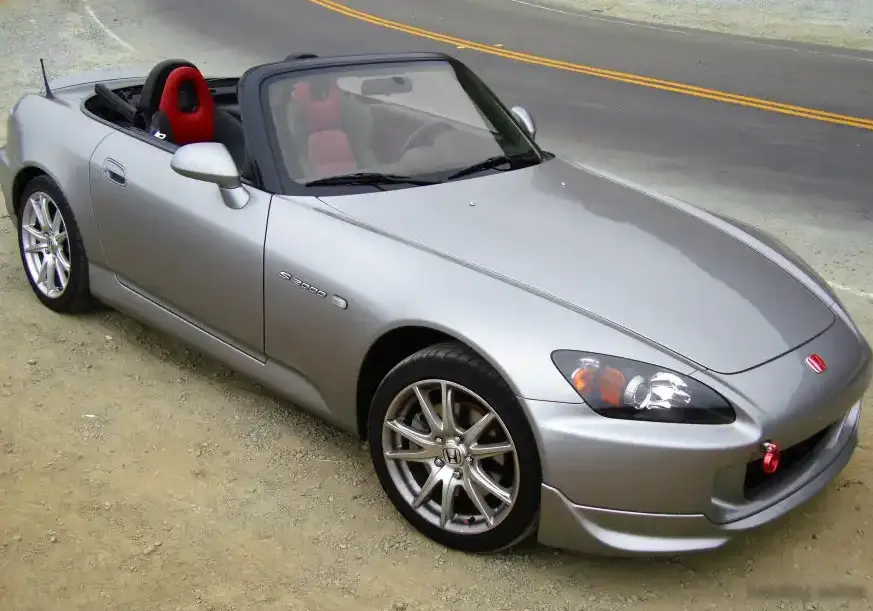
The Honda S2000, specifically the AP1 variant produced from 2004 to 2008, represents a high-water mark in Honda’s sports car lineage. This facelifted version of the original AP1 (introduced in 1999) refined the formula with subtle styling changes and, crucially, engine modifications to meet stricter emissions standards while maintaining its exhilarating driving experience. Built on the S2000 platform, a dedicated rear-wheel-drive roadster, the 2004-2008 S2000 aimed to deliver a pure, unfiltered connection between driver and machine, embodying Honda’s engineering prowess and commitment to performance.
Technical Specifications
| Brand | Honda |
| Model | S2000 |
| Generation | S2000 (AP1, facelift 2004) |
| Type (Engine) | 2.0 (240 Hp) |
| Start of production | January, 2004 |
| End of production | January, 2008 |
| Powertrain Architecture | Internal Combustion engine |
| Body type | Cabriolet |
| Seats | 2 |
| Doors | 2 |
| Fuel consumption (economy) – urban | 13.2 l/100 km (17.8 US mpg, 21.4 UK mpg, 7.6 km/l) |
| Fuel consumption (economy) – extra urban | 7.9 l/100 km (29.8 US mpg, 35.8 UK mpg, 12.7 km/l) |
| Fuel consumption (economy) – combined | 9.9 l/100 km (23.8 US mpg, 28.5 UK mpg, 10.1 km/l) |
| CO2 emissions | 235 g/km |
| Fuel Type | Petrol (Gasoline) |
| Acceleration 0 – 100 km/h | 6.2 sec |
| Acceleration 0 – 62 mph | 6.2 sec |
| Acceleration 0 – 60 mph | 5.9 sec |
| Maximum speed | 240 km/h (149.13 mph) |
| Emission standard | Euro 4 |
| Weight-to-power ratio | 5.3 kg/Hp, 189 Hp/tonne |
| Weight-to-torque ratio | 6.1 kg/Nm, 163.8 Nm/tonne |
| Power | 240 Hp @ 8300 rpm |
| Power per litre | 120.2 Hp/l |
| Torque | 208 Nm @ 7500 rpm (153.41 lb.-ft. @ 7500 rpm) |
| Engine layout | Front, Longitudinal |
| Engine Model/Code | F20C |
| Engine displacement | 1997 cm3 (121.86 cu. in.) |
| Number of cylinders | 4 |
| Engine configuration | Inline |
| Cylinder Bore | 87 mm (3.43 in.) |
| Piston Stroke | 84 mm (3.31 in.) |
| Compression ratio | 11:1 |
| Number of valves per cylinder | 4 |
| Fuel injection system | Multi-port manifold injection |
| Engine aspiration | Naturally aspirated engine |
| Valvetrain | DOHC |
| Engine oil capacity | 4.8 l (5.07 US qt | 4.22 UK qt) |
| Coolant | 6.5 l (6.87 US qt | 5.72 UK qt) |
| Kerb Weight | 1270 kg (2799.87 lbs.) |
| Max. weight | 1535 kg (3384.1 lbs.) |
| Max load | 265 kg (584.22 lbs.) |
| Trunk (boot) space – minimum | 143 l (5.05 cu. ft.) |
| Fuel tank capacity | 50 l (13.21 US gal | 11 UK gal) |
| Length | 4135 mm (162.8 in.) |
| Width | 1750 mm (68.9 in.) |
| Height | 1285 mm (50.59 in.) |
| Wheelbase | 2400 mm (94.49 in.) |
| Front track | 1470 mm (57.87 in.) |
| Rear (Back) track | 1510 mm (59.45 in.) |
| Ride height (ground clearance) | 108 mm (4.25 in.) |
| Minimum turning circle (turning diameter) | 11.3 m (37.07 ft.) |
| Drivetrain Architecture | The Internal combustion engine (ICE) drives the rear wheels of the vehicle. |
| Drive wheel | Rear wheel drive |
| Number of gears and type of gearbox | 6 gears, manual transmission |
| Front suspension | Double wishbone |
| Rear suspension | Double wishbone |
| Front brakes | Ventilated discs |
| Rear brakes | Disc |
| Assisting systems | ABS (Anti-lock braking system) |
| Steering type | Steering rack and pinion |
| Power steering | Electric Steering |
| Tires size | Front wheel tires: 215/45 R17Rear wheel tires: 245/40 R17 |
| Wheel rims size | Front wheel rims: 7.0J x 17Rear wheel rims: 8.5J x 17 |
Powertrain & Engine Architecture
The heart of the 2004-2008 S2000 is the F20C 2.0-liter inline-four engine. This engine is a naturally aspirated masterpiece, renowned for its high-revving character and impressive specific output. The facelifted AP1 received revisions to the engine management system and exhaust to comply with Euro 4 emissions regulations. These changes resulted in a slight reduction in peak torque compared to the earlier AP1 models, but the horsepower remained at 240 hp at a screaming 8300 rpm. The engine features a high 11:1 compression ratio, multi-point fuel injection, and a double overhead camshaft (DOHC) valvetrain with four valves per cylinder. The F20C’s VTEC (Variable Valve Timing and Lift Electronic Control) system is a key component, providing a distinct transition in performance at higher engine speeds. The engine is longitudinally mounted, driving the rear wheels. The sole transmission option was a close-ratio six-speed manual gearbox, emphasizing the driver-focused nature of the car.
Driving Characteristics
The S2000 AP1 delivers a driving experience that is both engaging and demanding. The high-revving engine requires the driver to actively manage the gears to stay within the optimal power band. While the 208 lb-ft of torque is sufficient for spirited driving, it’s the engine’s eagerness to climb towards its 8300 rpm redline that truly defines its character. The six-speed manual transmission is precise and offers short throws, enhancing the connection between driver and machine. The rear-wheel-drive layout and well-tuned suspension contribute to excellent handling balance and responsiveness. The car feels nimble and communicative, providing ample feedback to the driver. Compared to potential future variants, the AP1’s focus was on pure driving enjoyment rather than outright speed or comfort.
Equipment & Trim Levels
The S2000 AP1 was relatively sparsely equipped, reflecting its focus on performance. Standard features included power windows, power locks, and a basic audio system. Air conditioning was standard. The interior featured supportive bucket seats upholstered in black or red leather. A metal shift knob and aluminum pedal covers added a sporty touch. Optional extras included a hardtop, premium audio system, and various cosmetic enhancements. The S2000 wasn’t about luxury; it was about providing a raw and visceral driving experience.
Chassis & Braking
The S2000’s chassis is a rigid, lightweight structure designed to maximize handling performance. It utilizes a double wishbone suspension system at both the front and rear, providing excellent control and responsiveness. Ventilated disc brakes are fitted to all four wheels, providing ample stopping power. An Anti-lock Braking System (ABS) was standard. The steering is a rack-and-pinion system with electric power assistance, offering precise and communicative steering feel. The car rides on 17-inch alloy wheels, with wider tires at the rear to enhance traction.
Market Reception & Comparison
The S2000 was widely praised by automotive critics for its exceptional handling, high-revving engine, and engaging driving experience. However, some criticized its lack of low-end torque and its relatively firm ride. Compared to other sports cars of the era, the S2000 offered a unique combination of performance and affordability. It was often compared to the Porsche Boxster and BMW Z3, but the S2000’s higher-revving engine and more focused driving experience set it apart. Fuel economy was reasonable for a sports car of its caliber, averaging around 24 mpg in combined driving. Reliability was generally good, although preventative maintenance was crucial to ensure the longevity of the engine.
Legacy
The Honda S2000 has become a modern classic, highly sought after by enthusiasts. The F20C engine is considered a masterpiece of engineering, and the car’s balanced handling and engaging driving experience continue to impress. The 2004-2008 AP1 facelift is particularly desirable due to its refined engine management system and subtle styling updates. Well-maintained examples command premium prices in the used car market. The S2000 represents a high point in Honda’s sports car history, and its legacy as a pure, driver-focused roadster is secure.