
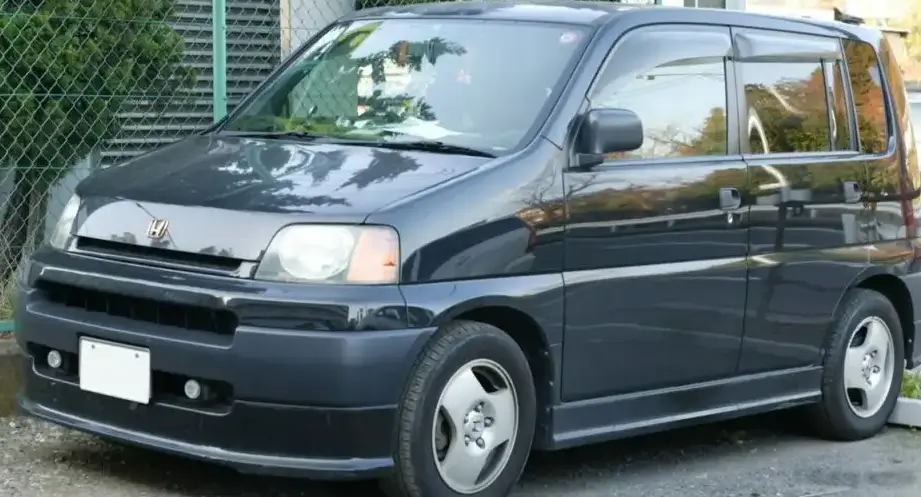
The Honda S-MX, produced between 1996 and 2002, was a unique and somewhat quirky offering from the Japanese automaker. Positioned as a sporty, compact minivan, the S-MX aimed to appeal to a younger demographic seeking a vehicle that blended practicality with a touch of style. It was primarily sold within the Japanese domestic market (JDM), and relatively few examples were officially imported to other regions. The S-MX occupied a niche space, offering an alternative to more conventional minivans and small MPVs. This article will focus specifically on the 2.0 i 16V variant, equipped with the 131 horsepower engine and a four-speed automatic transmission.
Technical Specifications
| Brand | Honda |
| Model | S-MX |
| Generation | S-MX |
| Type (Engine) | 2.0 i 16V (131 Hp) |
| Start of production | 1996 |
| End of production | 2002 |
| Powertrain Architecture | Internal Combustion engine |
| Body type | Minivan |
| Seats | 4 |
| Doors | 4 |
| Fuel consumption (urban) | 8.93 l/100 km (26.3 US mpg) |
| Fuel consumption (extra urban) | 5.43 l/100 km (43.3 US mpg) |
| Fuel Type | Petrol (Gasoline) |
| Acceleration 0 – 100 km/h | 7.2 sec |
| Acceleration 0 – 62 mph | 7.2 sec |
| Acceleration 0 – 60 mph | 6.8 sec |
| Weight-to-power ratio | 10.2 kg/Hp |
| Weight-to-torque ratio | 7.2 kg/Nm |
| Power | 131 Hp @ 5500 rpm |
| Torque | 186 Nm @ 4200 rpm (137.19 lb.-ft. @ 4200 rpm) |
| Engine layout | Front, Transverse |
| Engine displacement | 1973 cm3 (120.4 cu. in.) |
| Number of cylinders | 4 |
| Engine configuration | Inline |
| Cylinder Bore | 84 mm (3.31 in.) |
| Piston Stroke | 89 mm (3.5 in.) |
| Compression ratio | 8.8:1 |
| Number of valves per cylinder | 4 |
| Fuel injection system | Multi-port manifold injection |
| Engine aspiration | Naturally aspirated engine |
| Valvetrain | DOHC |
| Kerb Weight | 1330 kg (2932.15 lbs.) |
| Fuel tank capacity | 65 l (17.17 US gal | 14.3 UK gal) |
| Length | 3950 mm (155.51 in.) |
| Width | 1695 mm (66.73 in.) |
| Height | 1750 mm (68.9 in.) |
| Wheelbase | 2500 mm (98.43 in.) |
| Front track | 1485 mm (58.46 in.) |
| Rear track | 1485 mm (58.46 in.) |
| Drivetrain Architecture | Front wheel drive |
| Number of gears | 4 |
| Gearbox type | Automatic transmission |
| Front suspension | Spring Strut |
| Rear suspension | Double wishbone |
| Front brakes | Disc |
| Rear brakes | Drum |
| Steering type | Steering rack and pinion |
| Power steering | Hydraulic Steering |
| Tires size | 195/65 R15 |
| Wheel rims size | 15 |
Powertrain & Engine Architecture
The heart of the S-MX 2.0 i 16V is the Honda F20B inline-four cylinder engine. This 1.973-liter powerplant featured a double overhead camshaft (DOHC) valvetrain with four valves per cylinder, contributing to its relatively high output for its displacement. The engine utilized multi-point fuel injection, a common feature for engines of this era, ensuring efficient fuel delivery. The F20B produced 131 horsepower at 5,500 rpm and 186 Nm (137.19 lb-ft) of torque at 4,200 rpm. The engine’s design prioritized a balance between performance and fuel efficiency, typical of Honda’s engineering philosophy. Paired with the engine was a four-speed automatic transmission. While not offering the driver engagement of a manual gearbox, the automatic provided smooth shifts and ease of use, appealing to a broader range of drivers. This automatic transmission was a key differentiator from the sportier manual-equipped models.
Driving Characteristics
The S-MX 2.0 i 16V with the automatic transmission offered a comfortable and relatively brisk driving experience. Acceleration from 0 to 60 mph was achieved in approximately 6.8 seconds, which was respectable for a minivan of its size and class. However, compared to the five-speed manual version, the automatic resulted in a slight performance deficit due to the inherent power losses within the torque converter and the less aggressive gear ratios. The automatic transmission was tuned for smooth operation rather than outright speed. The gear ratios were spaced to prioritize fuel economy and comfortable cruising, rather than maximizing acceleration. In real-world driving, the S-MX felt adequately powered for everyday tasks, with sufficient torque for overtaking maneuvers. The front-wheel-drive configuration provided predictable handling, although it wasn’t particularly sporty.
Equipment & Trim Levels
The S-MX 2.0 i 16V typically came equipped with a reasonable level of standard features. Interior appointments included comfortable cloth seats, a basic audio system, and power windows. Air conditioning was also a standard feature. The dashboard layout was functional and straightforward, with easy-to-read gauges. Optional extras included alloy wheels, a sunroof, and upgraded audio systems. The interior trim was generally simple and durable, reflecting the vehicle’s practical nature. The S-MX wasn’t positioned as a luxury vehicle, so the interior materials were not particularly high-end, but they were well-assembled and functional.
Chassis & Braking
The S-MX utilized a front-engine, front-wheel-drive layout. The front suspension employed a MacPherson strut setup, while the rear suspension featured a double wishbone configuration. This suspension design aimed to provide a balance between ride comfort and handling stability. The braking system consisted of disc brakes on the front wheels and drum brakes on the rear wheels. While adequate for normal driving conditions, the rear drum brakes were a cost-saving measure and didn’t offer the same stopping power as disc brakes. Power steering was standard, making the vehicle easy to maneuver at low speeds. The S-MX’s chassis was designed to provide a comfortable ride, prioritizing passenger comfort over sporty handling.
Market Reception & Comparison
The S-MX was generally well-received in Japan as a stylish and practical alternative to traditional minivans. Critics praised its unique design and relatively sporty driving dynamics. However, the automatic transmission version was sometimes criticized for its slightly sluggish performance compared to the manual. Compared to other trims, the 2.0 i 16V automatic offered a good balance between performance and fuel economy. The lower-powered 1.8-liter engine offered better fuel economy but lacked the punch of the 2.0-liter. The manual transmission versions provided a more engaging driving experience but were less appealing to drivers seeking convenience. Fuel economy figures were competitive for its class, averaging around 26.3 US mpg in urban driving and 43.3 US mpg on the highway.
Legacy
The Honda S-MX, while not a mainstream success outside of Japan, has gained a cult following among enthusiasts. The F20B engine is known for its reliability and durability, and well-maintained examples can still provide years of trouble-free service. The automatic transmission, while not as sporty as the manual, is generally reliable. Today, the S-MX is a relatively rare sight on the roads, and prices for well-preserved examples are steadily increasing. Its unique styling and practical features continue to appeal to those seeking a distinctive and versatile vehicle. The S-MX represents a unique chapter in Honda’s history, showcasing the automaker’s willingness to experiment with different vehicle concepts and designs.
